Common Mistakes When Cleaning Bike
When cleaning your bike, avoid using high-pressure water jets since they can force water into seals and bearings, leading to corrosion. Don’t ignore the drivetrain and chain—lack of cleaning and lubrication causes poor shifting and wear. Steer clear of harsh chemicals that can damage paint and rubber. Always rinse and dry thoroughly to prevent rust. Skipping proper lubrication leads to friction and premature wear. Keep these in mind, and you’ll discover even more ways to protect your bike’s performance.
Using High-Pressure Water Jets
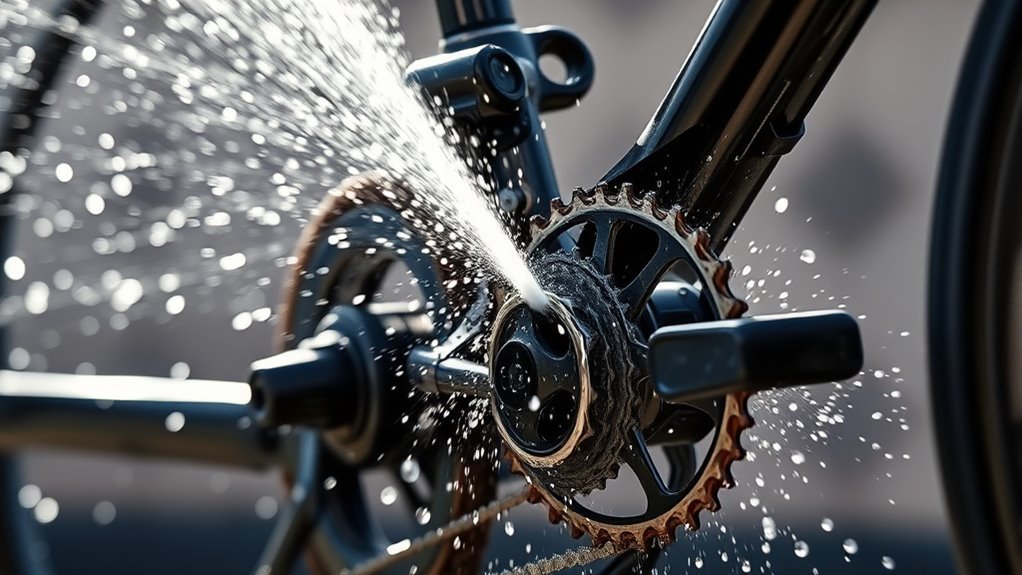
Although it might seem like a quick way to clean your bike, using high-pressure water jets can actually cause more harm than good. You want freedom on the road, not a bike sidelined by hidden damage. High pressure risks include forcing water into bearings, suspension seals, and other sensitive parts, leading to corrosion and premature wear. Water damage inside these components can be costly to fix and can cut your riding time short. Instead, opt for a gentler cleaning method that respects your bike’s design, protecting its integrity while keeping it clean. You deserve a bike that’s ready to roll without the worry of damage from careless cleaning. Keep it simple, safe, and free to explore.
Ignoring the Drivetrain and Chain
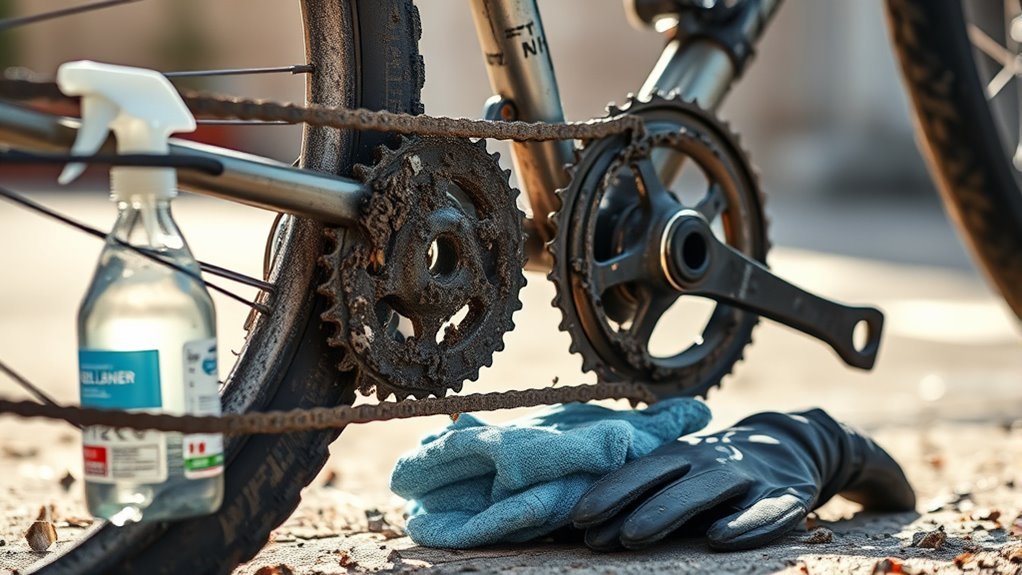
Anyone who skips cleaning the drivetrain and chain is missing an essential step in bike maintenance. Your drivetrain is the heart of your bike’s movement, and neglecting it can lead to poor shifting, increased wear, and wasted energy. Without proper drivetrain maintenance, grime and grit build up, causing friction that slows you down and wears out parts faster. Don’t forget chain lubrication after cleaning—it’s vital to keep your chain running smoothly and protect it from rust. A well-lubricated chain guarantees efficient power transfer and a quieter ride, giving you the freedom to enjoy every mile. So, make cleaning and lubricating your drivetrain and chain a regular habit to keep your bike performing at its best and your adventures uninterrupted.
Applying Harsh Chemicals or Solvents
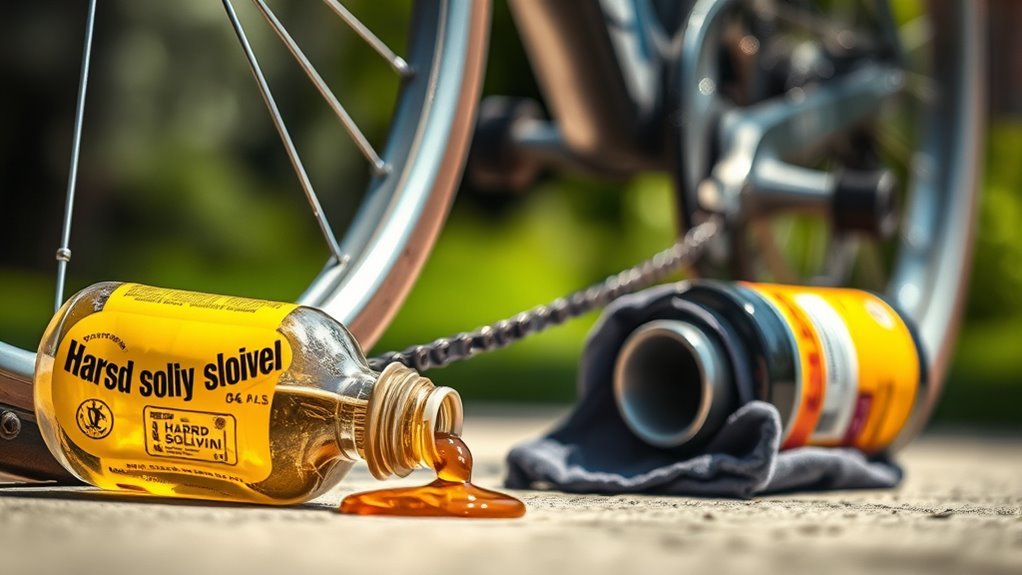
If you want to protect your bike’s components, you shouldn’t use harsh chemicals or solvents when cleaning. These substances can eat away at paint, rubber seals, and delicate parts, limiting your bike’s freedom to perform and last. Instead, opt for chemical alternatives that are designed to be gentle yet effective. Eco friendly options not only safeguard your bike but also protect the environment you ride in. By choosing biodegradable cleaners or simple soap and water mixtures, you keep your bike in top shape without risking damage. Embracing these safer methods lets you enjoy your rides with confidence, knowing your bike is cared for responsibly and ready to take you wherever freedom calls.
Cleaning Without Proper Lubrication
Choosing gentle cleaners is just one part of maintaining your bike’s health; neglecting proper lubrication after cleaning can cause just as much harm. When you skip lubrication, your bike’s moving parts face unnecessary friction and wear, limiting your freedom to ride smoothly. Understanding the right lubrication types—whether dry lube for dusty trails or wet lube for wet conditions—ensures your bike stays protected without attracting excess grime. Pay attention to lubrication frequency, applying it after every thorough cleaning or after riding in challenging conditions. This simple habit preserves your bike’s performance and extends its lifespan. Remember, cleaning alone won’t keep your ride free and fast; proper lubrication is essential to release the full potential of your biking adventures.
Neglecting to Rinse and Dry Thoroughly
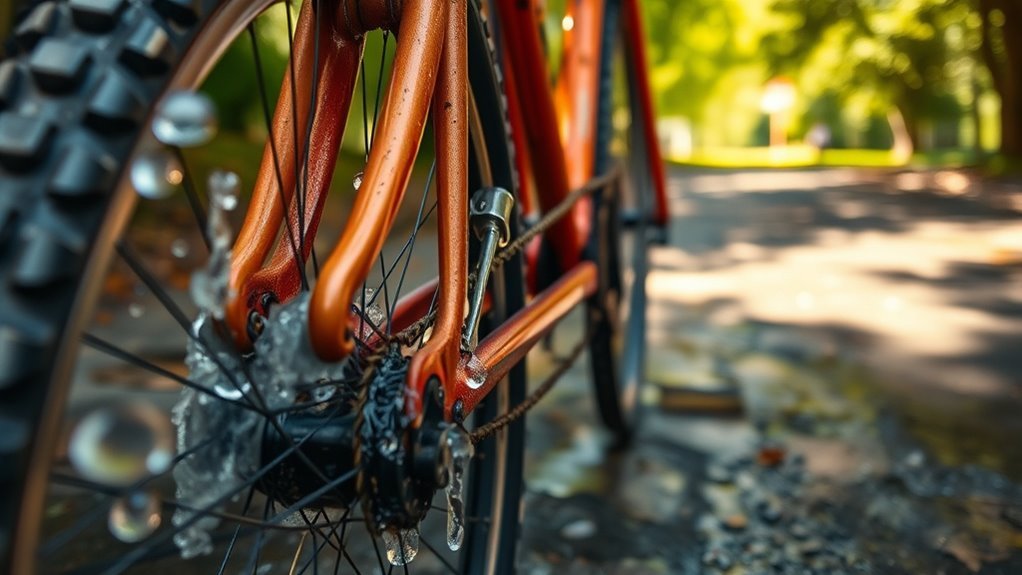
You might think rinsing quickly is enough, but leftover soap and dirt can cause damage over time. Taking the time to dry your bike thoroughly helps prevent rust from forming on metal parts. If you skip these steps, your bike won’t stay in good shape as long as it should.
Importance of Complete Rinsing
Although cleaning your bike is essential, skipping a thorough rinse and dry can cause more harm than good. When you don’t rinse well, soap and grime can stick around, potentially damaging your bike’s finish and components. Using proper rinsing techniques and the right rinsing tools guarantees every nook and cranny is free from residue. Here’s why complete rinsing matters:
- Prevents buildup that can attract dirt and cause wear.
- Avoids soap spots or streaks that degrade paint and metal.
- Guarantees your bike’s moving parts remain clean and function smoothly.
Drying Techniques to Prevent Rust
After rinsing your bike thoroughly, the next step is making certain it’s dried properly to keep rust at bay. Skipping or rushing this part can leave moisture trapped in hidden spots, inviting rust to form and steal your bike’s freedom. Effective drying methods include using a clean microfiber cloth to wipe down every surface, paying close attention to the chain, gears, and spokes. You might also use compressed air to blow out water from hard-to-reach areas. Avoid leaving your bike out in the open to air dry, as this can prolong moisture exposure. By mastering proper drying techniques, you protect your bike’s metal parts and guarantee smooth rides ahead. Prioritizing rust prevention through thorough drying keeps your bike ready for the open road, unburdened and free.
Overlooking Brake Components During Cleaning
When cleaning your bike, it’s easy to focus on the frame and wheels while forgetting the brake components. Overlooking brake pad maintenance and brake caliper inspection can compromise your safety and riding freedom. These parts need attention to keep your brakes responsive and reliable.
Make certain you:
- Remove dirt and grime from brake pads to prevent wear and squeaking.
- Inspect brake calipers for damage or misalignment that affects stopping power.
- Lubricate pivot points carefully without contaminating brake surfaces.
Neglecting these steps can lead to poor brake performance, risking your control and adventure. Keeping brakes clean and well-maintained guarantees you stay free to explore without limits. Don’t let a small oversight hold you back—give your brakes the care they deserve.
Frequently Asked Questions
How Often Should I Clean My Bike for Optimal Performance?
Think of your bike as a wild stallion; it thrives when cared for regularly. Your cleaning frequency should align with how often you ride—after every muddy adventure or weekly if you’re on smooth roads. Keeping it clean isn’t just about looks; it’s the key to performance improvement, ensuring freedom in every ride. A well-maintained bike responds better, lasts longer, and lets you explore without limits.
Can I Use Household Soap Instead of Bike-Specific Cleaners?
You can use household cleaners in a pinch, but you should be cautious. Many household soaps leave behind soap residue that can attract dirt or damage your bike’s finish over time. Bike-specific cleaners are designed to be gentle yet effective, keeping your ride in top shape without harmful buildup. If you want your bike to stay looking sharp and running smoothly, opting for bike-specific products is usually the better choice.
Is It Necessary to Remove Wheels Before Cleaning?
Think of wheel removal like peeling a ripe orange—sometimes it just makes things easier. You don’t always have to remove your wheels before cleaning, but doing so offers great cleaning benefits. It lets you reach tight spots, giving your bike a deeper clean and preventing grime build-up. If you crave freedom on every ride, taking that extra step keeps your bike running smooth and ready to roll whenever you are.
What Tools Are Best for Cleaning Hard-To-Reach Areas?
When tackling hard-to-reach areas on your bike, you’ll want to use the right brush types—like small detail brushes or old toothbrushes—to get into tight spots. Nozzle attachments on your hose or pressure washer can help direct water precisely where you need it without soaking everything. These tools give you the freedom to clean thoroughly without dismantling too much, keeping your ride smooth and ready for your next adventure.
How Do I Prevent Rust After Cleaning My Bike?
Keeping rust at bay after cleaning your bike is like shielding a treasure from the rain. To guarantee rust prevention, you’ll want to dry your bike thoroughly—moisture’s the enemy. Then, apply a light coat of lubricant to the chain and metal parts as a preventative measure. Store your bike in a dry, sheltered spot, and consider using a bike cover. These steps keep your ride ready for the open road, free and fearless.