Common Mistakes When Cleaning Mirror
When cleaning your mirror, avoid using harsh chemicals like bleach, which can damage the reflective backing. Don’t skip dusting first or clean in direct sunlight, as glare hides streaks and quick drying causes marks. Use a clean microfiber cloth—not old rags or paper towels—and apply only a small amount of cleaner to the cloth, not the mirror. Wiping in straight lines prevents streaks, and don’t forget to care for the frame and edges. There’s more to mastering mirror care for a flawless shine.
Using the Wrong Cleaning Products

Although it might seem convenient to grab any cleaner you have on hand, using the wrong cleaning products can damage your mirror’s surface or leave streaks. You need to choose products with proven compatibility to avoid harming the reflective coating. Harsh chemicals, like ammonia or bleach, can degrade the silver backing, reducing your mirror’s lifespan. Instead, consider eco friendly alternatives, which often provide effective cleaning without aggressive ingredients. These options not only protect your mirror but also support a healthier environment, giving you freedom from harmful fumes. Always check product labels to confirm suitability for glass and mirrors specifically. By selecting the right cleaner, you guarantee a streak-free shine while preserving your mirror’s integrity and your peace of mind. For best results, use microfiber cloths to gently clean without scratching or leaving streaks.
Ignoring Surface Preparation
Before you start cleaning your mirror, you need to properly prepare its surface to guarantee effective results. Ignoring surface preparation often leads to smudges and streaks, as surface debris like dust, hair, and dirt can trap moisture or cleaning products. To avoid this, gently remove loose particles with a soft, dry cloth or a microfiber duster before applying any liquid cleaner. This step is vital because it prevents scratching and assures the cleaner can work directly on the glass, enhancing clarity. The preparation importance cannot be overstated—it sets the foundation for a flawless finish. Taking these simple preparatory measures frees you from repeated cleaning and frustration, letting you enjoy a spotless mirror with minimal effort. Using a soft, dry cloth or gentle brush is recommended to clear loose particles without causing damage.
Cleaning Mirrors in Direct Sunlight

Once you’ve prepared the mirror’s surface properly, be mindful of the lighting conditions when cleaning. Avoid cleaning mirrors in direct sunlight, as sunlight glare can hinder your ability to see smudges and streaks clearly. This glare creates intense reflections, making it difficult to gauge if the mirror is truly clean. Furthermore, the heat from direct sunlight can cause cleaning solutions to dry too quickly, leading to streaks and reflection distortion. To maintain clarity, choose a shaded area or wait for indirect natural light. This approach lets you work without interference from glare, ensuring a streak-free finish. By controlling the light, you gain freedom to clean efficiently and achieve a flawless, distortion-free reflection every time. For the best results, always use a microfiber cloth to avoid streaks and scratches while cleaning.
Using Paper Towels Instead of Microfiber Cloths
You might reach for paper towels when cleaning mirrors, but they often leave lint and streaks behind. Microfiber cloths are designed to trap dust and moisture efficiently, giving you a clearer, streak-free finish. Using the right cloth and proper technique guarantees your mirror stays spotless without extra effort. Paper towels can also absorb too much cleaning solution, hindering a streak-free shine.
Paper Towel Drawbacks
A crumpled paper towel might seem like a quick fix for cleaning mirrors, but it often leaves behind lint and streaks that obscure your reflection. Paper towels, designed primarily for absorption, don’t effectively lift dirt without leaving lint residue. Their rough texture can cause micro-scratches on the mirror surface, diminishing clarity over time. While their paper towel absorption is good for spills, this advantage doesn’t translate well to cleaning smooth glass surfaces. Using paper towels means you’ll likely need more effort to achieve a streak-free finish, as the lint residue requires additional wiping. If you want a clean mirror that truly reflects your space without compromise, understanding these paper towel drawbacks is essential before reaching for them again.
Microfiber Cloth Benefits
While paper towels may seem convenient, their limitations become clear when compared to microfiber cloths. Unlike paper towels, microfiber cloth types are designed to trap dust and dirt effectively without scratching delicate surfaces like mirrors. These cleaning cloths offer superior absorbency and durability, allowing you to clean thoroughly without leaving lint or streaks behind. You’ll find that microfiber cloths reduce waste since they’re reusable and easy to wash, unlike disposable paper towels. By choosing the right microfiber cloth type—such as those with finer weaves for glass—you gain better control over cleaning, ensuring clarity and shine. Embracing microfiber cleaning cloths not only improves your mirror’s appearance but also supports a more sustainable, efficient cleaning routine, giving you freedom from constant rewipes and frustration.
Streak-Free Cleaning Tips
Although microfiber cloths are often recommended for cleaning mirrors, you can still achieve streak-free results using paper towels if you follow the right techniques. To maximize streak prevention techniques and maintain your mirror’s clarity, focus on your method and cleaning frequency. Here’s how to get it right:
- Use plain, unscented paper towels to avoid residues.
- Apply cleaner sparingly to prevent over-wetting.
- Wipe in a consistent, circular motion to disperse moisture evenly.
- Replace paper towels frequently during cleaning to avoid redistributing dirt.
Applying Excessive Cleaning Solution
When you apply too much cleaning solution, it can leave streaks and make your mirror look worse. Excess liquid often dries unevenly, leaving behind residue that’s hard to remove. To avoid this, use just enough solution to dampen your cloth, not soak the surface. This approach is similar to how one should clean a computer screen, using a microfiber cloth lightly dampened with solution for the best results.
Overuse Effects
Because mirrors are delicate surfaces, applying too much cleaning solution can cause streaks, residue buildup, and even damage the reflective backing. Overcleaning effects often stem from excessive cleaning frequency combined with heavy solution use, which can degrade the mirror’s surface over time. To maintain clarity and freedom from damage, you should:
- Use a minimal amount of solution to prevent saturation
- Limit cleaning frequency to avoid unnecessary wear
- Wipe gently with a lint-free cloth to reduce streaks
- Allow the solution to dry naturally without overwiping
Solution Residue Issues
If you apply too much cleaning solution, you’ll often end up with a stubborn residue that dulls the mirror’s surface and attracts dust. Different solution types—whether ammonia-based, vinegar, or commercial sprays—vary in concentration, so using them sparingly is key. Residue causes usually stem from excess liquid that evaporates unevenly or leaves behind chemicals not fully wiped away. To prevent this, spray your cleaner onto a microfiber cloth rather than directly on the mirror. Then, wipe systematically, ensuring no pooling occurs. This method lets you control the amount of solution used and reduces streaks or film buildup. Being deliberate about solution quantity maintains your mirror’s clarity, giving you the freedom to enjoy a spotless reflection without extra work or frustration.
Not Removing Dust Before Wiping
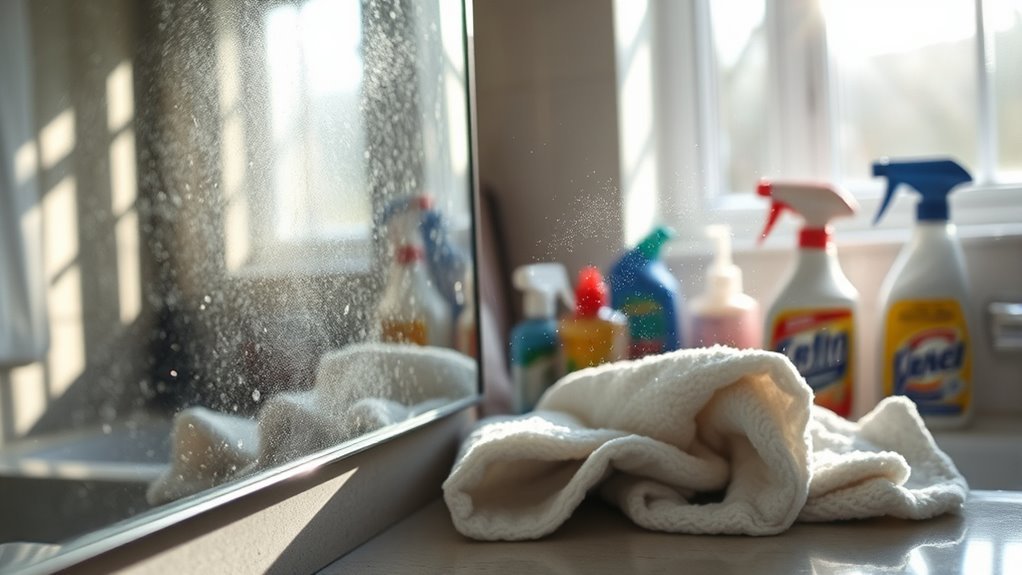
One essential step many people overlook before wiping a mirror is removing the dust. Ignoring dust accumulation can cause scratches and streaks, undermining your cleaning efforts. To maintain clarity and extend the mirror’s life, establish a cleaning frequency that accounts for dust buildup in your environment. Before applying any liquid, gently remove dust using:
- A microfiber cloth to trap particles without scratching
- A soft-bristled brush for corners and edges
- Compressed air for hard-to-reach spots
- A dry, lint-free cloth for quick dust removal
Using a microfiber cloth is especially effective because it cleans gently without leaving lint or causing scratches.
Wiping in Circular Motions
When you wipe a mirror in circular motions, you risk spreading dirt and streaks unevenly across the surface. This wiping technique lacks control, making it hard to track where you’ve cleaned and where residue remains. Instead, adopt straight, horizontal or vertical strokes to guarantee consistent coverage. These wiping techniques allow you to methodically move from one section to another, avoiding overlap that can cause smudges. Circular motion often traps particles within the cloth, redistributing them rather than removing them. For a truly spotless finish, focus on a systematic pattern that works with gravity and lighting conditions, minimizing streaks and maximizing clarity. By avoiding circular motions, you gain better control over your cleaning process and enjoy a mirror that reflects freedom, not frustration. Using a microfiber cloth during this process can further reduce streaks and prevent scratches on the mirror’s surface.
Using Old or Dirty Cloths
You might think using an old or dirty cloth saves time, but it actually causes streaks and smudges on your mirror. These cloths can transfer bacteria, increasing health risks, and greatly reduce your cleaning efficiency. Always opt for a clean, fresh cloth to guarantee a clear, spotless reflection.
Impact on Streaks
Streaks on mirrors often result from using old or dirty cloths during cleaning. When you reuse these cloths, they carry residual dirt and oils, which smear rather than remove grime, especially on delicate mirror types. Your cleaning frequency also matters—less frequent cleaning with dirty cloths worsens streak formation.
To avoid streaks, consider:
- Using a clean, lint-free cloth each time
- Selecting cloths appropriate for different mirror surfaces
- Washing cloths immediately after use to maintain effectiveness
- Adjusting cleaning frequency based on mirror type and usage
Bacteria Transfer Risks
Although it might seem harmless, using old or dirty cloths to clean mirrors can greatly increase the risk of transferring bacteria onto the surface. These cloths often harbor bacteria that thrive in damp, soiled fibers, enabling bacteria survival for extended periods. When you wipe your mirror with such cloths, you inadvertently spread bacteria, causing surface contamination instead of cleaning. This contamination not only undermines hygiene but can also contribute to unpleasant odors and potential health risks. To maintain a clean mirror and a healthy environment, always use fresh, sanitized cloths. Regularly washing your cleaning materials at high temperatures guarantees bacteria are eliminated, preventing their survival. By doing so, you preserve the mirror’s clarity and protect yourself from unwanted bacterial exposure.
Reduced Cleaning Efficiency
Beyond the risk of spreading bacteria, using old or dirty cloths considerably reduces your cleaning effectiveness. When you reuse grimy cloths, they smear dirt instead of removing it, leaving streaks and residue on your mirror. This is especially problematic if your mirror placement exposes it to frequent dust or moisture, requiring higher cleaning frequency. To maintain a spotless reflection:
- Use a fresh, clean cloth for each cleaning session
- Choose microfiber cloths for better dirt and grease absorption
- Replace cloths regularly to avoid buildup of grime
- Store cloths in a dry, clean place to prevent contamination
Neglecting Frame and Edges
When cleaning mirrors, you might focus solely on the glass surface and overlook the frame and edges, which can accumulate dust, grime, and moisture over time. Neglecting frame cleaning and edge detailing leads to deterioration and an unkempt appearance. To maintain your mirror’s overall condition, include these areas in your routine.
| Area | Cleaning Tip |
|---|---|
| Frame Material | Use appropriate cleaner (wood, metal, plastic) |
| Dust Removal | Wipe with a microfiber cloth |
| Edge Detail | Use cotton swabs for corners |
| Moisture Control | Dry thoroughly after cleaning |
| Inspection | Check for damage or mold |
Paying attention to these details guarantees your mirror stays pristine and extends its longevity without restricting your cleaning freedom. For the best results, avoid cleaning mirrors under direct sunlight to prevent streaks and ensure an even drying process, as recommended for optimal window cleaning conditions.
Skipping Regular Cleaning Maintenance
If you don’t keep up with regular cleaning maintenance, dirt and smudges will build up quickly, making your mirror harder to clean over time. Establishing a consistent cleaning schedule guarantees your mirror remains spotless and extends its lifespan. Pay attention to maintenance frequency based on usage and environmental factors to avoid stubborn grime.
Regular cleaning prevents buildup, keeps mirrors spotless, and extends their lifespan.
Consider these tips to maintain your mirror effectively:
- Set a realistic cleaning schedule tailored to your space’s needs.
- Increase maintenance frequency in high-humidity areas like bathrooms.
- Use gentle cleaning solutions regularly to prevent residue buildup.
- Wipe frames and edges alongside the glass to avoid overlooked dirt.
- Incorporate a microfiber cloth for cleaning to prevent scratches and streaks.
Frequently Asked Questions
Can Vinegar Damage Mirror Backing Over Time?
You might wonder if vinegar effects could damage your mirror backing over time. While vinegar is an effective cleaner, its acidity can harm the delicate backing if it seeps behind the glass. To preserve mirror longevity, avoid spraying vinegar directly onto the surface; instead, apply it to a cloth and wipe gently. This method guarantees you clean effectively without risking long-term damage to your mirror’s reflective layer.
How Often Should Mirror Sealant Be Reapplied?
Think of your mirror sealant as a protective shield, guarding against time’s slow erosion. For ideal mirror maintenance, you should reapply sealant every two to three years, depending on exposure to humidity and cleaning frequency. Regular sealant application guarantees your mirror stays pristine and free from backing damage. Stay methodical—inspect your mirror annually; if you notice cloudiness or peeling, it’s time to refresh that protective layer, preserving clarity and freedom in your reflection.
Is It Safe to Use Ammonia-Based Cleaners on Antique Mirrors?
You shouldn’t use ammonia-based cleaners on antique mirrors, as they can damage the delicate backing and frame. For antique preservation, stick to gentle cleaning techniques like a soft, lint-free cloth slightly dampened with distilled water. Avoid harsh chemicals to maintain the mirror’s integrity. Being methodical and precise in your approach guarantees you protect its historical value while enjoying its beauty freely.
What’S the Best Way to Clean Large Bathroom Mirrors?
To clean large bathroom mirrors effectively, start with mirror cleaning techniques that avoid streaks. Use an effective cleaning solution like a mix of equal parts water and vinegar or a gentle glass cleaner. Spray lightly, then wipe with a microfiber cloth in circular motions. For hard-to-reach spots, use a cotton swab. This method guarantees clarity without damage, giving you freedom from streaks and grime while keeping your mirror spotless.
Can Steam Cleaning Harm Mirror Surfaces?
You might wonder if steam cleaning could damage your mirror’s delicate surface. The truth is, steam cleaning effects can be a bit tricky. Excess moisture and heat may compromise the mirror surface integrity, causing potential warping or damage to the backing. To keep your mirror safe, it’s best to avoid direct steam contact. Instead, opt for gentle cleaning methods that preserve both clarity and longevity, giving you freedom to shine without worry.