Common Mistakes When Cleaning Washer
When cleaning your washer, avoid harsh chemicals that can damage seals and hoses. Don’t skip cleaning the detergent dispenser and door seal, as buildup encourages mold. Regularly run maintenance cycles and clean the drain pump filter to prevent clogs. Using too much detergent or fabric softener can also harm performance. Always leave the washer door open to dry and reduce humidity. Understanding these points will help you keep your washer running efficiently and extend its lifespan.
Using Harsh Chemicals That Damage the Washer
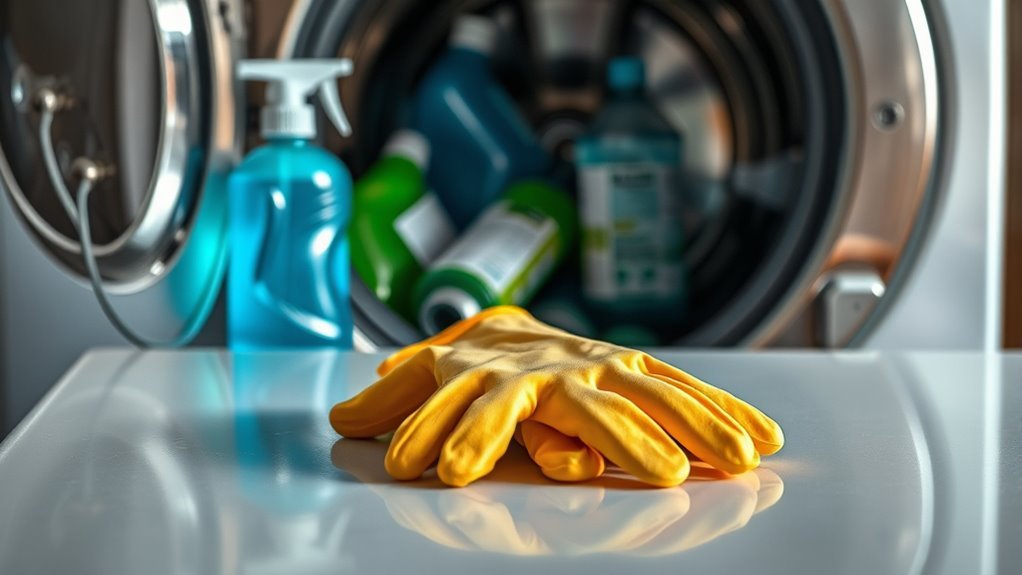
While it might seem effective to use strong chemicals for cleaning your washer, doing so can actually cause damage to its components. Harsh chemicals can corrode seals, degrade hoses, and affect the drum’s integrity, ultimately reducing washer longevity. Instead, you should opt for chemical alternatives like white vinegar or baking soda, which clean effectively without harming internal parts. These alternatives break down residues and neutralize odors safely. Avoid bleach and ammonia-based products unless specified by the manufacturer, as they risk accelerating wear. Regular maintenance with gentle cleaners preserves your washer’s performance and extends its functional life. By choosing safer chemical alternatives, you maintain control over your appliance’s condition and enjoy the freedom of reliable, long-term use without costly repairs.
Neglecting to Clean the Detergent Dispenser
If you don’t regularly clean the detergent dispenser, residue buildup can clog the compartment and hinder proper detergent flow. Neglecting dispenser hygiene not only reduces washing efficiency but also encourages mold and bacteria growth. To maintain peak performance and freedom from frequent repairs, follow these steps:
- Remove the dispenser tray according to your washer’s manual.
- Soak and scrub with warm water and a soft brush to eliminate detergent buildup.
- Wipe the compartment interior to remove residual grime and moisture.
Consistent cleaning prevents clogs that disrupt detergent distribution and protects your washer’s internal components. Prioritize dispenser hygiene to guarantee your appliance runs smoothly and your clothes come out fresh every time. Don’t let detergent buildup limit your washer’s effectiveness or your freedom to enjoy clean laundry effortlessly.
Ignoring the Washer Door Seal and Gasket
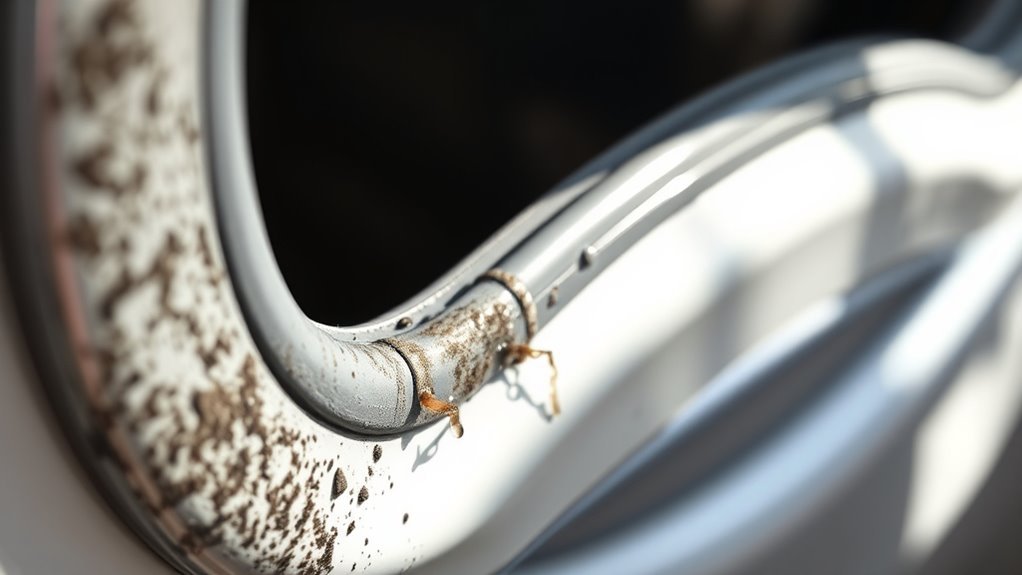
Beyond keeping the detergent dispenser clean, you also need to pay attention to the washer door seal and gasket. Ignoring gasket cleaning allows mold, mildew, and detergent residue to accumulate, leading to odors and potential leaks. For effective seal maintenance, regularly inspect the gasket for tears or debris. Wipe it down with a mixture of water and mild detergent, ensuring you reach folds and crevices where grime collects. After each wash, leave the door ajar to let the gasket dry, preventing moisture buildup. Neglecting these steps not only compromises your washer’s efficiency but also risks damage that restricts your laundry freedom. Consistent gasket cleaning and seal maintenance keep your washer performing at its best and extend its lifespan.
Skipping Regular Maintenance Cycles
You shouldn’t skip regular maintenance cycles, as neglecting their frequency allows detergent residue to build up and cause odors or mechanical issues. Always select the correct cleaning settings to guarantee thorough removal of grime and buildup. Ignoring these steps compromises your washer’s performance and longevity.
Neglecting Maintenance Cycle Frequency
Although modern washers often feature automated maintenance cycles, skipping these regular routines can lead to buildup of residue and decreased performance. To maintain peak function, you need to adhere strictly to your washer’s maintenance schedule. Ignoring cleaning reminders compromises water flow and increases wear on components.
Follow these essential steps:
- Set reminders on your phone or calendar aligned with the washer’s recommended maintenance schedule.
- Run the maintenance cycle using the correct detergent or cleaner to remove detergent residue and mold.
- Inspect the drum and seals immediately after cycles for any signs of buildup or damage.
Using Incorrect Cleaning Settings
Someone might assume that any cleaning cycle will suffice, but using incorrect settings can undermine your washer’s maintenance. Skipping regular maintenance cycles or selecting a low-temperature or short-duration cycle may leave residue and bacteria intact, reducing efficiency and lifespan. To maintain freedom from frequent repairs, always choose the manufacturer-recommended cleaning cycles with appropriate temperature and duration.
| Incorrect Settings | Consequence |
|---|---|
| Low Temperature | Ineffective sanitization |
| Short Cycle Duration | Residue buildup |
| Skipping Maintenance | Increased wear and odor issues |
Ignoring Detergent Residue Buildup
When regular maintenance cycles are skipped, detergent residue can accumulate inside your washer, leading to clogs, unpleasant odors, and reduced cleaning performance. To guarantee effective detergent buildup prevention, you must incorporate residue removal techniques into your routine.
- Run monthly maintenance cycles with hot water and a washer cleaner to dissolve and flush detergent deposits.
- Use the correct detergent amount to minimize excess residue formation.
- Leave the washer door open after cycles to allow moisture evaporation, preventing mold and buildup.
Ignoring these steps restricts your washer’s freedom to operate smoothly and compromises your laundry’s cleanliness. By regularly scheduling maintenance cycles, you maintain peak performance and extend your machine’s lifespan—all while avoiding costly repairs caused by detergent buildup.
Overlooking the Drain Pump Filter
You need to locate the drain pump filter, usually found behind a small access panel near the washer’s base. Cleaning it regularly prevents blockages that can cause drainage issues or damage. Set a routine to check and clean the filter every few months for peak performance.
Filter Location Importance
The drain pump filter plays a critical role in maintaining your washer’s efficiency, yet it’s often overlooked during routine cleaning. Knowing the exact filter location is essential for proper filter maintenance and avoiding clogs or damage. Different filter types require specific handling, so pinpointing its position helps you clean it effectively.
- Check your washer’s manual for the precise filter location—usually near the bottom front or back.
- Identify the filter type—mesh, cartridge, or spin—since each demands distinct cleaning methods.
- Access the filter carefully, ensuring you have a drain pan ready to catch residual water.
Cleaning Frequency Tips
Although the drain pump filter is crucial for your washer’s operation, many overlook its cleaning frequency, leading to performance issues. To maintain ideal function, establish a strict cleaning schedule. Check and clean the filter every 1-3 months, depending on your usage and water quality. Neglecting this step can cause clogs, drainage problems, and even damage to the pump. As part of your maintenance tips, always unplug the washer before accessing the filter to avoid accidents. Remove any debris, rinse the filter under running water, and inspect for damage before reinstalling. Consistent attention to this component guarantees your washer runs efficiently, prevents costly repairs, and gives you the freedom to rely on your machine without interruption. Don’t skip this crucial task in your routine upkeep.
Using Too Much Detergent or Fabric Softener
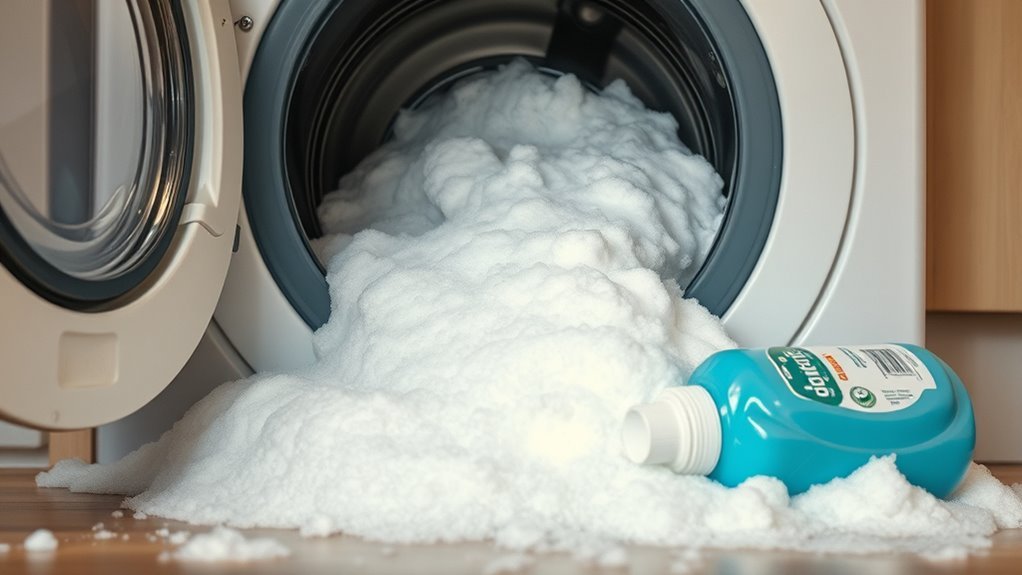
Excess detergent or fabric softener can cause buildup in your washer’s drum and internal components, leading to poor performance and unpleasant odors. To avoid these issues, control detergent concentration and consider fabric softener alternatives. Here’s what you should do:
- Measure detergent precisely, using the manufacturer’s recommended amount to prevent residue.
- Opt for fabric softener alternatives like vinegar or dryer balls to reduce chemical buildup.
- Run occasional maintenance cycles with no detergent to flush out any remaining deposits.
Failing to Leave the Washer Door Open to Dry
Why should you leave your washer door open after a cycle? Leaving the door open allows proper door ventilation, reducing washer humidity inside the drum. Excess moisture trapped in a closed washer creates a perfect environment for mold, mildew, and odors. By keeping the door open, you promote airflow that dries residual water, preventing buildup and extending your washer’s lifespan. Make it a habit to open the door immediately after use. This simple step controls washer humidity levels and guarantees the interior stays dry and fresh. Neglecting door ventilation leads to persistent dampness, which compromises cleaning efficiency and may damage internal components. For peak maintenance and freedom from unpleasant smells, always leave your washer door open to dry after each wash cycle.
Frequently Asked Questions
How Often Should I Deep Clean My Washing Machine?
You should set a deep clean frequency of about once a month for ideal washer maintenance. This prevents residue buildup and odors, ensuring your machine runs efficiently. Run a cleaning cycle with a washing machine cleaner or a mixture of vinegar and baking soda. Regular deep cleaning preserves your washer’s lifespan and keeps your laundry fresh without hassle, giving you the freedom to enjoy clean clothes without worrying about appliance issues.
Can Washing Machine Issues Affect My Clothes?
Yes, washing machine issues can affect your clothes. Detergent residue buildup inside the machine may not rinse out properly, causing fabric damage over time. This residue can lead to stiffness, discoloration, or even weaken fibers. To protect your clothes, regularly inspect and clean the detergent dispenser and drum. Ensuring your washer functions efficiently helps maintain your clothing’s quality and extends their lifespan, giving you freedom from frequent replacements.
What Are Signs My Washer Needs Professional Repair?
Imagine your washer starts making loud banging noises during spin cycles while water leakage appears underneath. These signs mean your machine likely needs professional repair. Unusual washer noises can indicate worn bearings or an unbalanced drum, while water leakage often points to faulty seals or hoses. Don’t ignore these issues—you’ll want to schedule a technician’s visit to avoid further damage and regain your freedom from laundry headaches.
Is It Safe to Use Vinegar in the Washer?
Yes, you can use vinegar in your washer safely to enjoy vinegar benefits like removing odors and mineral buildup. For washing machine safety, always use white distilled vinegar, avoid excessive amounts (about one cup per cycle), and never mix it with bleach or detergents. Using vinegar properly helps maintain your machine’s efficiency without damaging seals or hoses, giving you freedom from harsh chemicals while keeping your washer fresh and clean.
How Do I Prevent Mold Buildup Inside the Machine?
Think of your washer as a garden—neglect invites weeds like mold. For mold prevention, leave the door open after each cycle to air it out and wipe seals dry. Run a monthly cleaning cycle with a washing machine cleaner or vinegar to disrupt mold growth. Regular machine maintenance, including checking and cleaning detergent dispensers and filters, keeps your washer fresh, ensuring freedom from musty odors and prolonging its life.