Daily Maintenance Tips for Allergens
You can cut down allergens daily by wiping surfaces, vacuuming with a HEPA filter, and washing bedding weekly. Keep indoor humidity between 30-50% to prevent mold and use air purifiers for cleaner air. Choose hypoallergenic bedding and easy-to-clean furniture, plus groom pets regularly and wash their bedding often. Stay on top of seasonal tasks like closing windows during high pollen times. There’s plenty more to explore for creating a fresher, allergen-free home.
Regular Cleaning Practices to Minimize Allergens
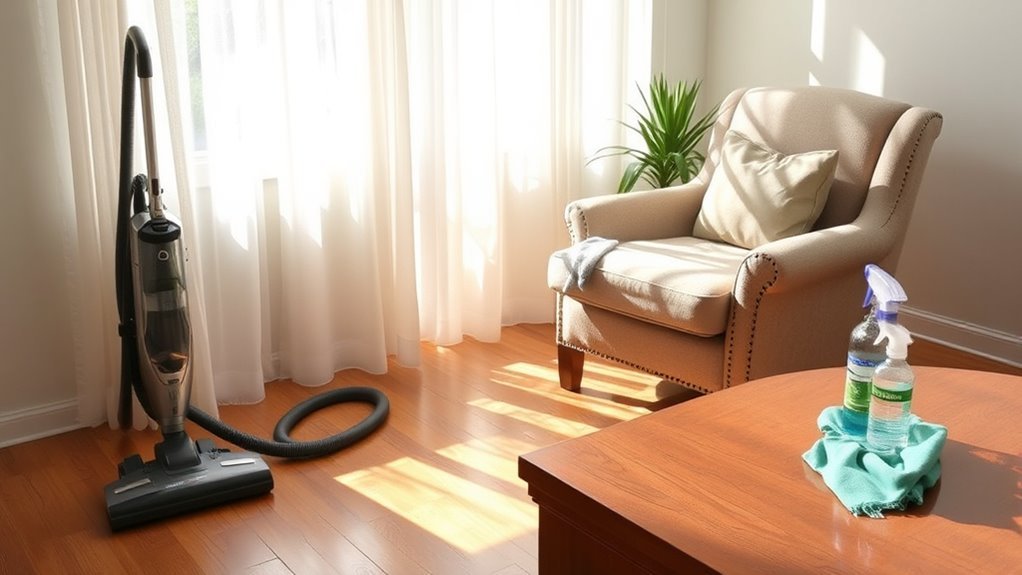
Although it might seem time-consuming, regular cleaning is essential to keep allergens under control in your home. By committing to dust control, you reduce the particles that trigger sneezes and congestion, freeing you to enjoy your space fully. Focus on wiping surfaces, vacuuming with a HEPA filter, and washing bedding weekly to limit dust buildup. Mold prevention is equally important—keep humidity levels low and promptly address leaks or damp spots. This stops mold from gaining a foothold, protecting your health and your home’s integrity. Staying consistent with these practices means fewer allergens lurking around, letting you breathe easy and live freely without the constant drag of allergy symptoms holding you back. Your clean, allergen-minimized environment supports the freedom you want every day.
Managing Indoor Air Quality Effectively
When you want to reduce allergens effectively, managing your indoor air quality is key. Start by using air purifiers with HEPA filters; they trap pollen, dust, and pet dander, giving you fresher, cleaner air to breathe. Don’t overlook humidity control—keeping indoor humidity between 30-50% helps prevent mold growth and dust mite proliferation, both major allergen sources. You can use a dehumidifier or humidifier, depending on your local climate and season, to maintain this balance. Also, make sure your ventilation system works properly to circulate air without spreading allergens around. By taking control of your indoor air quality, you’re not just reducing allergens—you’re creating a freer, healthier space where you can truly breathe easy every day.
Choosing Allergen-Resistant Home Furnishings
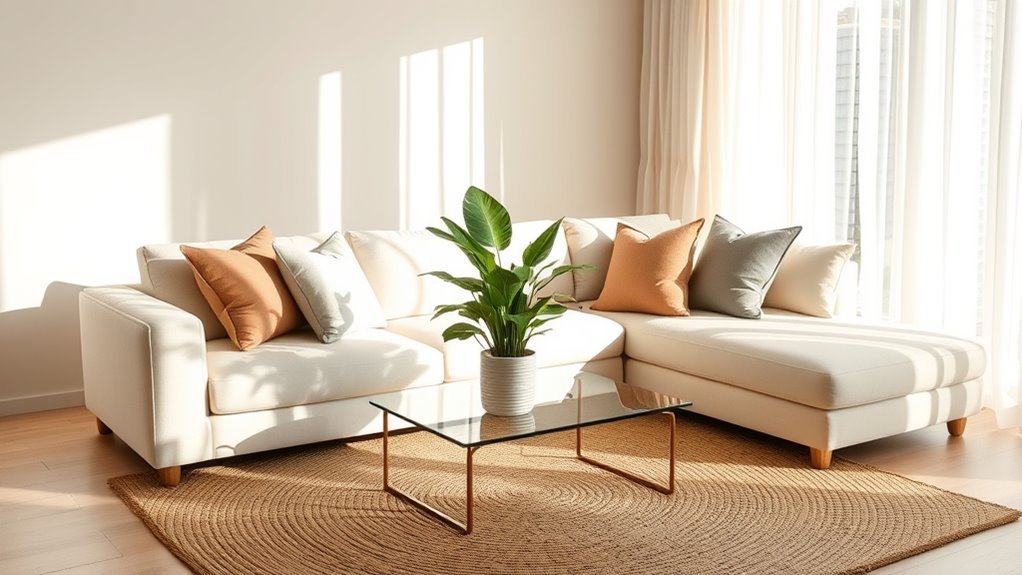
Improving your indoor air quality is a great step, but the furnishings you choose can also impact allergen levels in your home. Opt for allergen resistant fabrics and hypoallergenic materials to keep your space fresh and free from irritants. These materials reduce dust mites, mold, and pet dander buildup, giving you more freedom to enjoy your home comfortably. Here’s a quick guide to help you pick the right furnishings:
| Furniture Type | Recommended Material | Allergen-Resistant Feature |
|---|---|---|
| Sofa | Leather or microfiber | Easy to wipe clean |
| Curtains | Synthetic fibers | Resist dust accumulation |
| Bedding | Hypoallergenic cotton | Prevents dust mite growth |
| Rugs | Low-pile synthetic | Traps fewer allergens |
| Pillows | Memory foam or latex | Naturally hypoallergenic |
Choose wisely to maintain a freer, cleaner living space.
Pet Care Tips to Reduce Allergens
Keeping your pet’s environment clean is one of the best ways to reduce allergens in your home. Start by establishing consistent grooming routines—regular baths and brushing help minimize dander and loose fur that trigger allergies. Use pet-friendly shampoos, and try to do this outside or in a well-ventilated space to avoid spreading allergens indoors. Don’t forget pet bedding; wash it frequently in hot water to eliminate dust mites and allergens that accumulate over time. Consider placing washable covers on furniture where your pet rests, making it easier to keep those areas allergen-free. By maintaining these simple habits, you’ll enjoy your pet’s company without sacrificing your freedom from allergy symptoms. Cleanliness empowers you to live comfortably with your furry friends.
Seasonal Maintenance for Allergy Prevention
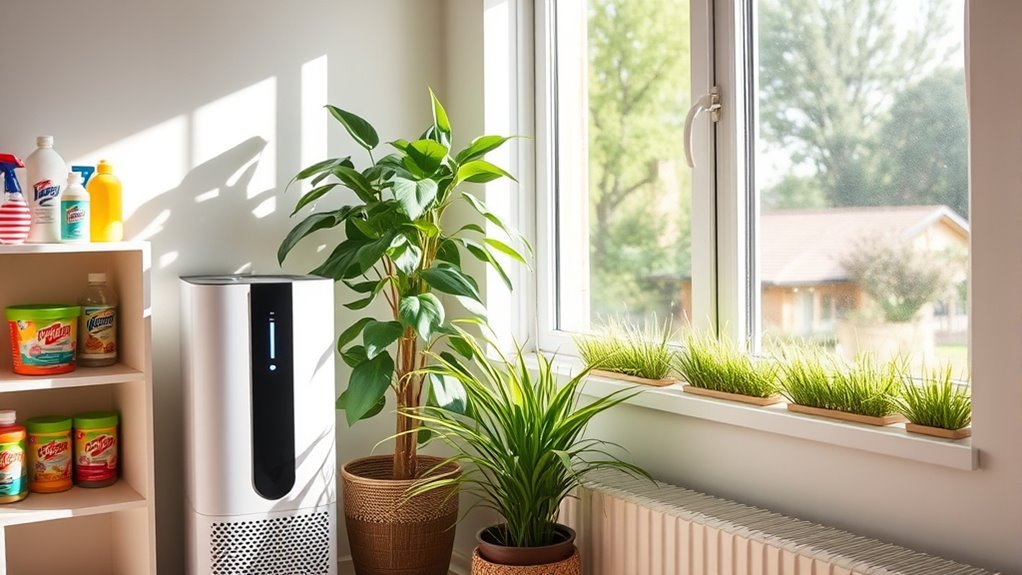
Since allergens change with the seasons, your maintenance routine should adapt accordingly to keep symptoms at bay. You can take charge of pollen control by regularly cleaning outdoor spaces and keeping windows closed during peak pollen times. Seasonal outdoor cleaning prevents allergens from hitching a ride indoors, letting you breathe easier.
| Season | Key Allergen Focus | Maintenance Tip |
|---|---|---|
| Spring | Pollen | Wash clothes, shower daily |
| Summer | Mold | Keep outdoor areas dry |
| Fall | Ragweed pollen | Rake leaves promptly |
| Winter | Dust mites | Use air purifiers indoors |
Adjust your actions seasonally, and you’ll maintain freedom from allergy discomfort year-round.
Frequently Asked Questions
Can Certain Foods Increase Indoor Allergy Symptoms?
Yes, certain foods can increase your indoor allergy symptoms, especially if you have food sensitivities. Some allergy triggers, like dairy or gluten, might worsen inflammation and make your symptoms feel more intense. When you’re mindful of what you eat, you can reduce these reactions and feel freer in your own space. Paying attention to how specific foods affect you helps you take control and live without constant allergy discomfort.
How Do Allergies Affect Mental Health Over Time?
Imagine carrying a backpack filled with tiny, invisible weights—that’s what allergy stress feels like over time. You might not notice it at first, but emotional fatigue can sneak up, making you feel drained and less free to enjoy life. Allergies don’t just affect your body; they wear on your mind, causing irritability and even anxiety. Recognizing this lets you take steps to lighten your load and reclaim your mental freedom.
Are There Natural Remedies to Boost Allergy Immunity?
If you’re looking to strengthen your allergy immunity naturally, herbal supplements like butterbur and stinging nettle can be great immune boosters. They’re known to help reduce inflammation and support your body’s defenses. You don’t have to be stuck relying solely on medications; embracing these natural options gives you the freedom to take control of your health in a gentler, more holistic way. Always check with a healthcare provider before starting anything new.
Can Wearing Masks Indoors Reduce Allergen Exposure?
Wearing masks indoors can definitely help reduce allergen exposure, especially if you’re sensitive to dust or pet dander. Mask effectiveness depends on the type you wear; N95 or similar masks filter out tiny particles better than cloth masks. Plus, masks can improve your indoor air quality experience by limiting what you breathe in. You don’t have to sacrifice your freedom—just choose the right mask and enjoy cleaner air inside!
How Do Humidity Levels Impact Mold Growth in Homes?
Ever wondered why mold suddenly appears in your home? It all comes down to humidity levels. When humidity climbs above 60%, mold spores find the perfect environment to thrive. But you’re not powerless—you can take control with proper humidity control. Keeping indoor humidity between 30-50% helps mold prevention and lets you breathe freely without worry. Don’t let hidden moisture steal your freedom; manage humidity and reclaim your space.