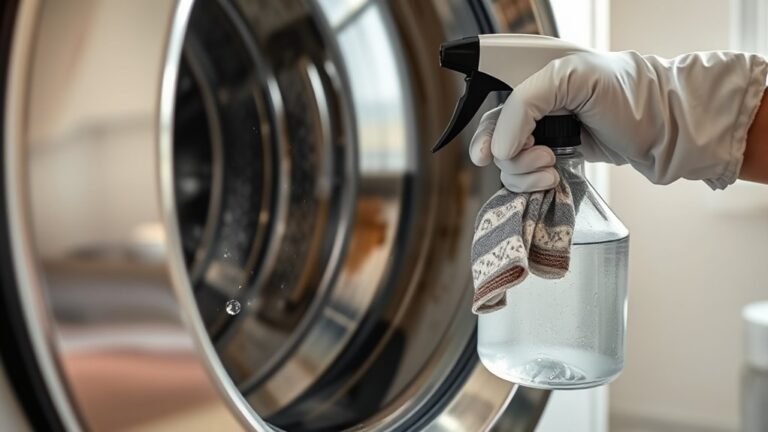
Daily Maintenance Tips for Dishwasher
To keep your dishwasher running smoothly, check and clean the filter regularly to avoid clogs and odors. Wipe down door seals to prevent mildew, and always rinse food debris off dishes before loading. Use the right detergent and amount to avoid buildup. Inspect spray arms for clogs, keep the drain clear, and run a vinegar cycle weekly for freshness. Leave the door slightly open after use for drying, and monitor water temperature for best cleaning. There’s more to guarantee your dishwasher stays in top shape.
Check and Clean the Filter Regularly
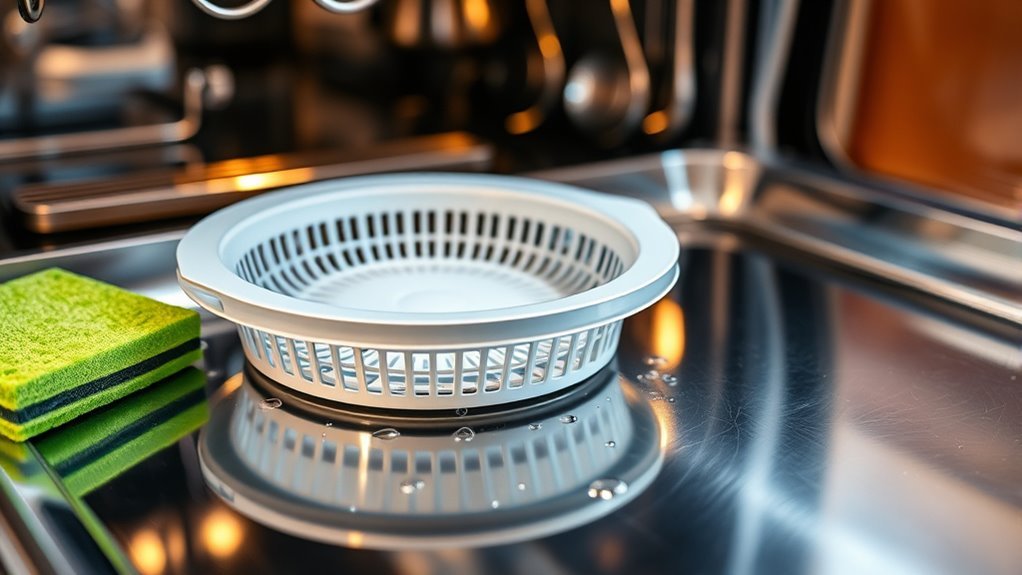
One of the most important steps you can take to keep your dishwasher running smoothly is to check and clean the filter regularly. This simple act of filter maintenance prevents clogs and guarantees your appliance operates efficiently, saving you time and hassle. You don’t have to be a technician to master effective cleaning techniques—just remove the filter, rinse off debris under running water, and scrub gently with a soft brush if needed. Doing this once a week or after heavy use keeps your dishwasher free from trapped food particles, avoiding unpleasant odors and poor cleaning results. By taking control of your dishwasher’s filter maintenance, you’re embracing freedom from costly repairs and prolonging the life of your trusted kitchen companion.
Wipe Down the Door Seals
Although often overlooked, wiping down the door seals is essential for keeping your dishwasher in top shape. You want to avoid mold, mildew, and unpleasant odors that can build up if moisture and food particles get trapped in those tight spaces. Regular inspections of the door seals will help you spot any cracks or wear before they cause leaks. For effective door seal maintenance, grab a damp cloth and gently clean the rubber edges every few days. This simple habit prevents grime accumulation and extends the life of the seal. By staying on top of this small task, you keep your dishwasher running smoothly and free yourself from costly repairs. Freedom from hassle starts with these quick, regular check-ins.
Rinse Off Excess Food Debris Before Loading
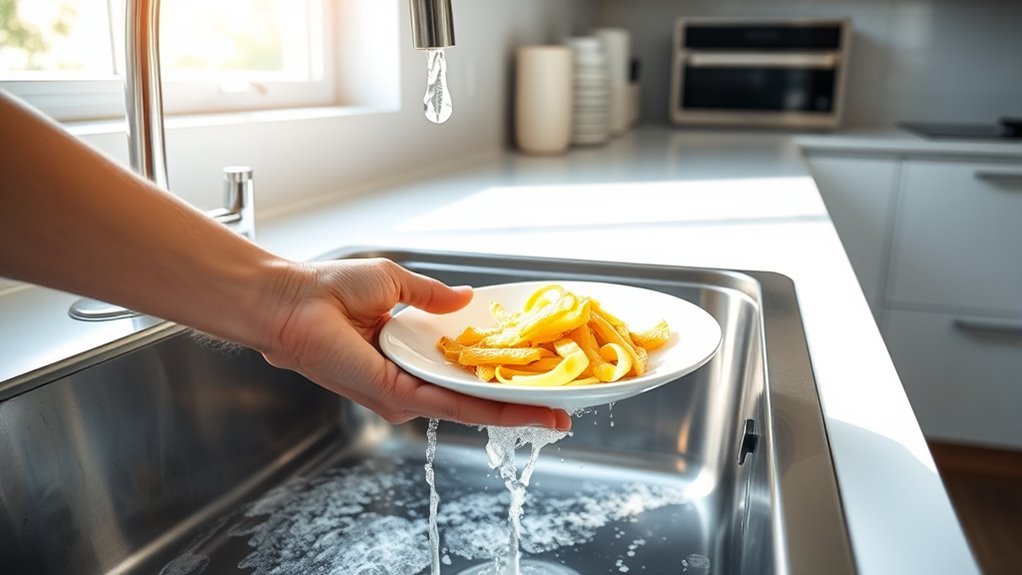
Before loading your dishwasher, make sure to rinse off any excess food debris. This simple step helps prevent the filters from clogging and boosts the overall cleaning performance. Plus, it reduces the chance of odors building up inside your machine.
Prevent Clogging Filters
Since food debris can quickly clog your dishwasher’s filters, it’s important to rinse off excess scraps before loading your dishes. This simple step plays an essential role in filter maintenance and clog prevention, letting you enjoy hassle-free dishwashing freedom. Here’s how to keep your filters clear:
- Rinse plates and utensils under running water to remove large food particles.
- Scrape off sticky or dried-on foods with a utensil before placing dishes inside.
- Avoid overloading the dishwasher to guarantee water flows freely, preventing debris buildup.
Enhance Cleaning Efficiency
When you rinse off excess food debris before loading your dishwasher, you’re setting the stage for a more thorough and efficient clean. This simple step helps prevent leftover bits from redepositing on your dishes, ensuring each wash cycle works at its best. Pair this with smart load optimization—arranging dishes so water flows freely and reaches every surface—for maximum results. Also, make sure to choose the right cycle selection based on your load’s soil level; lighter loads with less grime don’t need the heavy-duty cycle, saving energy and time. By combining these habits, you not only boost cleaning efficiency but also extend your dishwasher’s lifespan. Taking these small actions frees you up to enjoy more of what matters, without worrying about dirty dishes.
Reduce Odor Build-up
Rinsing off excess food debris isn’t just about improving cleaning efficiency—it also plays a key role in keeping odors at bay. When you clear plates before loading, you prevent leftover bits from decomposing and causing that stale smell in your dishwasher. To maintain a fresh scent:
- Rinse plates quickly to remove large food scraps, reducing buildup that leads to odors.
- Occasionally sprinkle baking soda in the bottom of the dishwasher to neutralize smells naturally.
- Toss a few citrus peels into the utensil holder during a rinse cycle for a revitalizing, clean aroma.
Use the Right Detergent and Amount
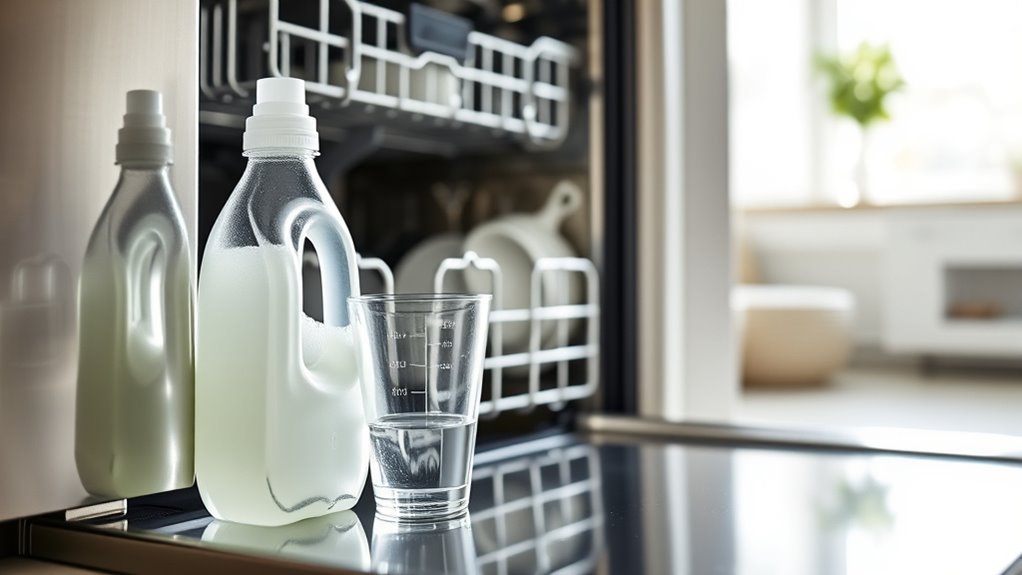
Choosing the right detergent and using the correct amount are essential for keeping your dishwasher running efficiently. You’ll want to select detergent types that suit your water hardness and dishwasher model—powder, gel, or pods each offer different benefits. Sticking to the recommended dosage guidelines prevents buildup and guarantees your dishes come out sparkling without residue. Using too much detergent can cause excess suds and damage, while too little leaves grime behind. Check your detergent packaging and dishwasher manual for specific advice. By mastering the balance of detergent types and dosage, you free yourself from unnecessary repairs and improve cleaning power. This simple step keeps your dishwasher in top shape, giving you more time to enjoy the freedom of a hassle-free kitchen.
Inspect and Clean Spray Arms
To keep your dishwasher running efficiently, you should remove the spray arms and check them carefully. Clear any clogged holes to guarantee water flows properly during each cycle. Once cleaned, make sure to reattach the spray arms securely so they function as intended.
Remove Spray Arms
Start by carefully removing the spray arms from your dishwasher to inspect them for clogs or damage. Proper spray arm maintenance is key to your dishwasher’s freedom from grime and ensuring every load comes out spotless. Here’s how you can master spray arm cleaning:
- Gently twist or unscrew the spray arms, following your model’s instructions to avoid damage.
- Examine the arms for cracks or buildup—any obstruction can limit water flow and cleaning power.
- Rinse under running water and use a soft brush if necessary to clear loose debris.
Clear Clogged Holes
Clogged holes in your dishwasher’s spray arms can seriously reduce water pressure and cleaning efficiency. To keep your dishwasher running freely, inspect each spray arm for blockages. Use a toothpick or small brush to clear debris from each hole, restoring the spray arm’s ability to distribute water evenly. Here’s a simple checklist to help you visualize the cleaning process:
| Step | Action | Tool Needed |
|---|---|---|
| 1 | Remove spray arm | Hands |
| 2 | Inspect holes | Flashlight |
| 3 | Clear clogged holes | Toothpick/brush |
| 4 | Rinse spray arm | Water |
| 5 | Dry before reattaching | Cloth |
Keeping spray arm holes clear means your dishwasher can work at full freedom, washing dishes thoroughly every time.
Reattach Securely
After you’ve thoroughly cleaned the spray arms, make sure you reattach them securely to prevent leaks and guarantee ideal water flow. This step is essential to keep your dishwasher running smoothly and give you the freedom to enjoy spotless dishes without hassle. Here’s how to make sure you attach hinges and maintain secure connections:
- Align the spray arms carefully with their mounting points, making sure the attach hinges fit snugly.
- Press firmly until you hear or feel the spray arms click into place, confirming secure connections.
- Spin the arms gently to check for proper movement and make sure nothing is loose or obstructed.
Run a Vinegar Cycle Weekly
Although it might seem like a small step, running a vinegar cycle weekly can make a big difference in keeping your dishwasher clean and odor-free. Vinegar benefits include breaking down mineral deposits, dissolving grease, and neutralizing odors, which helps maintain your dishwasher’s efficiency. By setting a cleaning frequency of once a week, you free yourself from buildup worries and guarantee every wash is fresh.
| Benefit | Explanation |
|---|---|
| Mineral Removal | Vinegar dissolves hard water scale |
| Grease Breakdown | Cuts through accumulated grime |
| Odor Neutralizer | Eliminates musty smells |
| Efficiency Boost | Keeps dishwasher running smoothly |
Make this simple ritual part of your routine, and enjoy the freedom of a spotless dishwasher without harsh chemicals.
Keep the Drain Clear and Unblocked
If you want your dishwasher to run smoothly, keeping the drain clear and unblocked is essential. Proper drain maintenance prevents water backup and foul odors, ensuring your appliance works at peak freedom. To avoid blockages and maintain flow, follow these simple steps:
Keeping your dishwasher drain clear prevents backups and odors, ensuring smooth, efficient performance every cycle.
- Regularly remove debris: Check the drain area after each cycle and clear out food particles or grease buildup.
- Flush with hot water: Pour boiling water down the drain weekly to dissolve residue and keep pipes clear.
- Use a mild drain cleaner: Once a month, apply a dishwasher-safe cleaner to break down buildup and prevent clogs.
Leave the Door Slightly Ajar After Use
When you leave the dishwasher door slightly ajar after use, you help moisture escape, preventing mold and unpleasant odors. This simple step promotes moisture control by allowing trapped steam to dissipate naturally. By encouraging air circulation inside your dishwasher, you reduce the chances of dampness lingering, which can cause mildew or a musty smell. It’s an easy habit that gives your appliance the freedom to dry out completely between cycles. You don’t have to worry about sealing in wetness or compromising its efficiency. Just crack the door open a bit, and let fresh air do its job. This small action keeps your dishwasher fresh and ready for the next load, freeing you from dealing with unwanted smells or mold buildup.
Monitor and Maintain Water Temperature
Since water temperature plays an essential role in cleaning performance, you’ll want to monitor and maintain it carefully. The right water temperature guarantees your dishes come out spotless without wasting energy or damaging your dishwasher. To keep things running smoothly:
- Check your dishwasher’s manual for the recommended ideal settings—usually between 120°F and 150°F.
- Use a thermometer to verify the water temperature at the tap and adjust your water heater accordingly.
- Run hot water before starting the dishwasher to guarantee it fills with water at the right temperature.
Frequently Asked Questions
Can I Use Dishwasher Tablets With Hard Water?
You can use dishwasher tablets with hard water, but you should know hard water impacts their effectiveness. The minerals in hard water can leave spots and reduce how well tablets clean your dishes. To keep your freedom from constant rewashing, consider using a water softener or tablets designed for hard water. That way, your dishwasher works better, and you spend less time worrying about stubborn residue or film on your glassware.
How Often Should I Replace My Dishwasher’s Racks?
You should replace your dishwasher’s racks when you notice rust, cracks, or broken rack materials that can damage your dishes or reduce cleaning efficiency. Since rack materials vary—some are coated metal while others are plastic—how long they last depends on usage and care. Keeping racks in good shape helps extend your dishwasher lifespan, so don’t wait too long. Trust your instincts and swap them out when they start showing wear.
Is It Safe to Wash Wooden Utensils in the Dishwasher?
They say, “Don’t put all your eggs in one basket,” and that applies to your wooden utensils too. It’s not safe to wash wooden utensils in the dishwasher because the heat and water can cause cracking and warping. For dishwasher safety, it’s best to hand wash them to keep their freedom intact. This way, your wooden utensils stay strong and last longer, giving you the flexibility to enjoy cooking without worry.
What Are Signs My Dishwasher Needs Professional Repair?
If you notice leaking water around your dishwasher or strange noises during a cycle, it’s a clear sign you might need professional repair. You shouldn’t ignore persistent issues like poor cleaning, dishes not drying, or a door that won’t latch properly. Trust your instincts—getting it fixed frees you from constant hassle and keeps your kitchen running smoothly. Don’t wait; calling a pro guarantees your dishwasher works like new.
Can Adding Rinse Aid Improve Drying Performance?
Imagine your dishes stepping out of the dishwasher feeling refreshed and ready to shine. Adding rinse aid can be your secret weapon, enhancing drying efficiency by reducing water spots and speeding up evaporation. The rinse aid benefits go beyond just clean dishes—it’s about giving you the freedom to enjoy spotless, dry dishes without the wait or extra effort. So, yes, it’s a simple upgrade with big perks for your kitchen routine.