Disinfecting High-Touch Areas in Toys
When disinfecting high-touch areas on toys, focus on buttons, handles, and surfaces kids frequently grab or mouth. Use safe, non-toxic cleaners like diluted vinegar or disinfectant wipes, especially for plastic or electronic toys—avoid soaking electronics. Clean plush toys gently with mild detergent and air dry thoroughly to prevent mold. Wiping daily and disinfecting weekly helps keep germs at bay. Curious about the best cleaning routines and natural options to protect your little ones?
Identifying High-Touch Areas on Toys
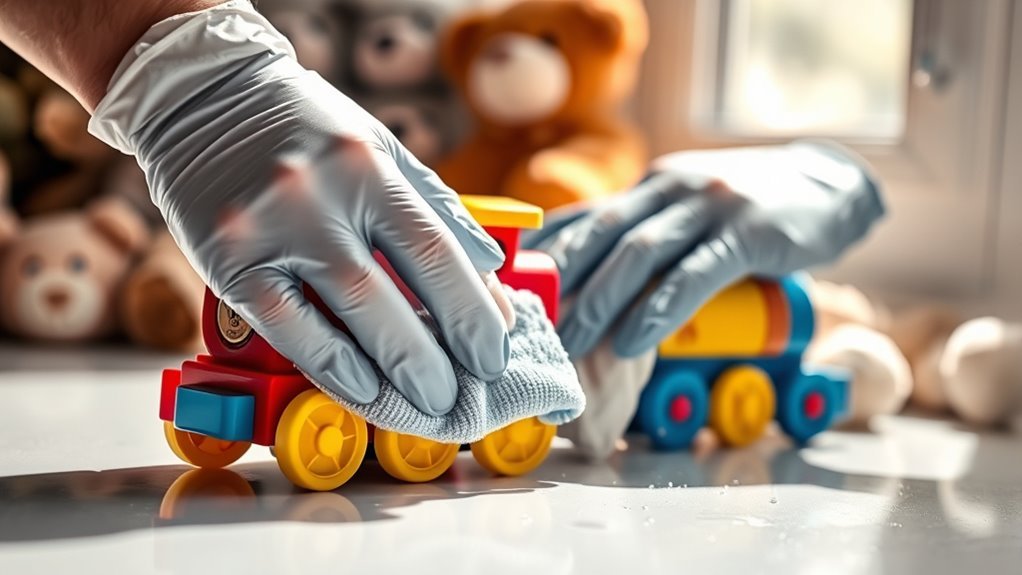
When it comes to disinfecting toys, you’ll want to focus on the high-touch areas that kids handle most often. These high touch surfaces include buttons, handles, and any parts your child frequently grabs, squeezes, or mouths. Identifying these spots is key because germs tend to linger where contact is constant. Different toy materials demand your attention too—plastic, fabric, and wood each absorb and retain bacteria differently. For instance, soft fabric toys may need gentle cleaning on stitched seams where little hands hold on tightly, while smooth plastic surfaces often show fingerprints and grime clearly. By zeroing in on these high touch surfaces and considering the toy materials, you’ll keep the toys cleaner without overdoing it, granting your child the freedom to play safely and confidently.
Choosing Safe Disinfectants for Children’s Toys
Focusing on high-touch areas and understanding toy materials is just the start—you also need to pick disinfectants that are safe for children’s toys. When choosing, look for products with safe ingredients that won’t harm your child or damage the toy’s surface. Harsh chemicals might seem effective but can compromise toddler safety, so avoid bleach or ammonia-based cleaners. Instead, opt for disinfectants labeled non-toxic and free from strong fragrances or dyes. Natural alternatives like diluted vinegar or hydrogen peroxide often do the trick without risking exposure to harmful substances. Remember, your goal is to keep toys germ-free without sacrificing your child’s health or your freedom to let them explore safely. Prioritizing safe ingredients guarantees peace of mind while maintaining a clean play environment.
Step-by-Step Guide to Cleaning Toys
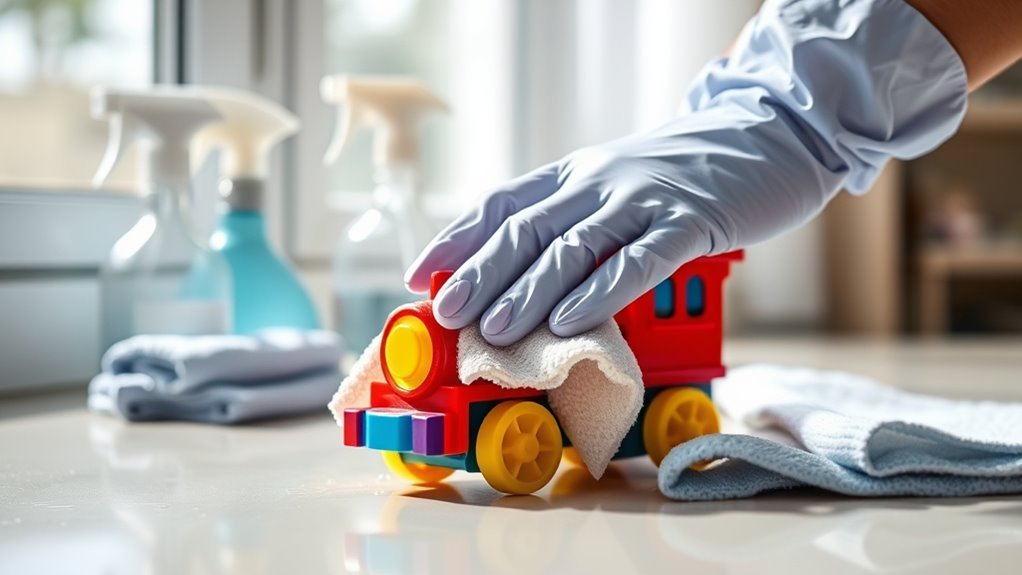
Now that you know which disinfectants are safe, it’s time to walk through the cleaning process step by step. You’ll learn how to pick the right cleaning solutions and use effective techniques to keep toys germ-free. Let’s make sure your child’s playthings stay both safe and spotless.
Selecting Safe Cleaning Solutions
Although it might seem straightforward, choosing the right cleaning solution for toys requires careful consideration to confirm safety and effectiveness. You want to pick products with gentle cleaning ingredients that meet established safety standards, especially since children often put toys in their mouths. Avoid harsh chemicals or anything with strong fragrances that could cause irritation or allergic reactions. Look for solutions labeled non-toxic and free from bleach or ammonia. If you prefer DIY options, simple mixtures like diluted vinegar or mild soap can be effective while staying safe. Always check product labels and safety data to verify what you’re using won’t harm kids or damage the toys. By selecting the right cleaning solution, you maintain a healthy play environment without sacrificing freedom or ease.
Effective Toy Disinfection Techniques
There are several key steps you can follow to effectively disinfect toys and keep them safe for children. Start by sorting toys based on material—this helps you choose the right cleaning method. For disinfecting plushies, use a gentle detergent and wash them in warm water, then air dry completely to avoid damage. When sanitizing building blocks, soak them briefly in a mild bleach solution or use disinfecting wipes, guaranteeing no residue remains. Always rinse toys thoroughly when needed and let them dry fully to prevent mold or bacteria growth.
- Separate toys by material before cleaning
- Use appropriate solutions for each toy type
- Verify toys are completely dry before use
Following these techniques gives you freedom to keep playtime safe without hassle.
Disinfection Techniques for Electronic Toys
When disinfecting electronic toys, you’ll need to be extra careful to avoid damaging their sensitive components. Choosing the right disinfection methods guarantees electronic safety while keeping toys clean. Avoid soaking or spraying liquids directly; instead, use a cloth dampened with disinfectant or alcohol wipes designed for electronics. Let the toy dry completely before use to maintain freedom from damage.
| Disinfection Method | Electronic Safety Tips |
|---|---|
| Alcohol wipes | Use 70% isopropyl alcohol only |
| Damp microfiber cloth | Avoid excess moisture |
| UV light sanitizer | Confirm toy compatibility |
| Spray + cloth | Never spray directly on toy |
| Air drying | Fully dry before powering on |
Stay cautious but confident in keeping your electronic toys both safe and germ-free.
Frequency of Disinfecting Different Types of Toys
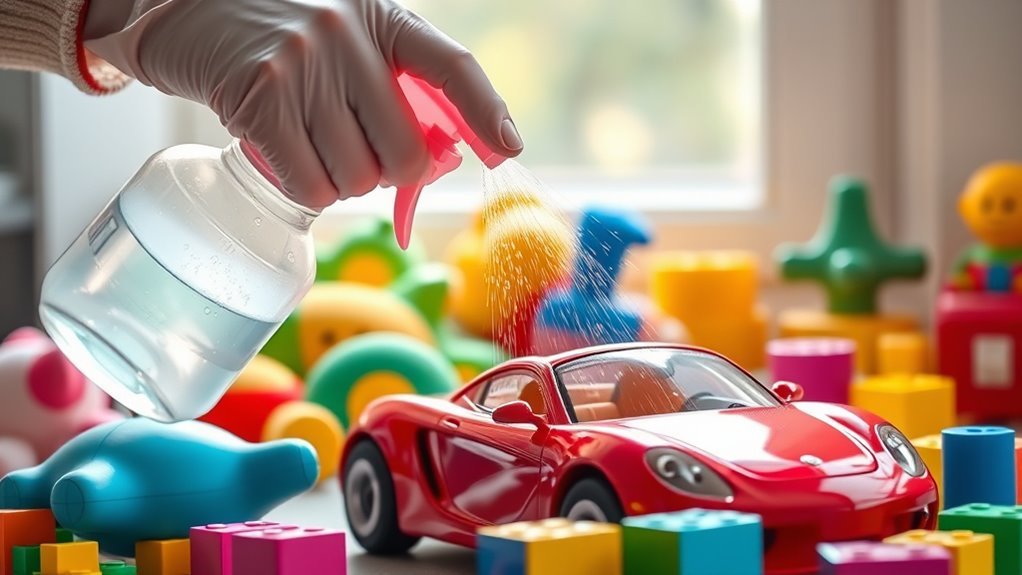
You should clean frequently touched toys daily to keep germs at bay. For toys that aren’t handled as often, a weekly deep disinfection is usually enough. Adjust your routine based on how often the toys are used and who’s playing with them.
Daily Cleaning Essentials
Keeping toys clean requires knowing how often each type needs disinfecting to keep germs at bay. You want to maintain freedom from worry while ensuring your child’s playthings are safe. Daily cleaning and sanitizing toys is the key to balancing hygiene and convenience. Here’s what to focus on daily:
- Plastic and hard toys: Wipe down with disinfectant wipes or a mild bleach solution to remove germs quickly.
- Soft toys and plushies: Spot clean with a damp cloth; wash in the machine weekly to avoid moisture damage.
- Electronic toys: Use alcohol-based wipes carefully, avoiding moisture near batteries or screens.
Weekly Deep Disinfection
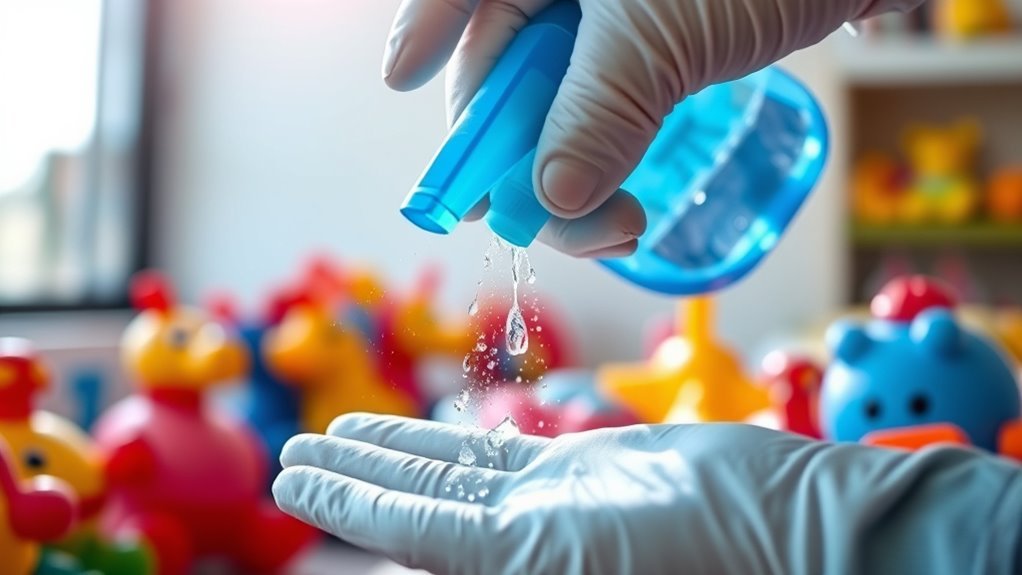
While daily cleaning helps manage surface germs, a weekly deep disinfection routine is necessary to eliminate bacteria and viruses that daily wipes might miss. You want your kids to play freely, but safety comes first. Incorporate weekly routines into your cleaning schedules to guarantee toys like stuffed animals, plastic blocks, and electronic gadgets get a thorough disinfecting. Wash washable toys in hot water or use a disinfectant safe for the material. For non-washables, opt for spray disinfectants or wipes designed for delicate surfaces. Setting a consistent weekly schedule means you’ll avoid buildup, keeping germs at bay without feeling overwhelmed. This balance lets you maintain a healthy play environment without sacrificing your time or freedom. Keep your cleaning routines simple, effective, and stress-free.
Natural Alternatives for Toy Disinfection
Although chemical disinfectants are effective, many parents prefer natural alternatives to keep their children’s toys clean without harsh ingredients. You can embrace eco friendly solutions that protect both your family and the environment. Homemade disinfectants made from everyday ingredients offer a simple, safe way to maintain cleanliness while avoiding chemicals. Consider these options:
- Vinegar and water mix: a mild yet powerful natural cleaner.
- Hydrogen peroxide: breaks down germs without toxic residues.
- Essential oils like tea tree or lavender: add antibacterial properties and fresh scents.
Using these natural alternatives lets you maintain a hygienic play space while staying true to your values. It’s all about freedom—freedom from harsh chemicals and freedom to choose safer cleaning methods for your loved ones.
Preventing Cross-Contamination During Cleaning
To guarantee your efforts to disinfect toys really work, you need to prevent cross-contamination during cleaning. Start by using separate cloths or disposable wipes for each toy or group of toys to avoid spreading germs. Always wash your hands before and after cleaning to keep things safe and hygienic. Make sure cleaning solutions are fresh and used according to instructions—old or diluted solutions reduce effectiveness, risking cross contamination. Clean toys in small batches, allowing time for each to dry completely before handling or storing. This approach supports cross contamination prevention without complicating your routine. By sticking to these safe cleaning practices, you maintain freedom from worry while ensuring toys are truly clean and ready for play.
Tips for Maintaining Toy Hygiene Between Disinfections
Keeping toys free from germs doesn’t stop once they’re disinfected. To truly maintain hygiene between cleanings, you need to be proactive and smart about daily care. Proper toy storage helps minimize exposure to dirt and germs, while routine inspections catch issues before they become problems. You can keep freedom in your routine by adopting simple habits that fit your lifestyle.
Maintaining toy hygiene requires smart daily care and proper storage beyond just disinfecting.
- Store toys in clean, dry containers to prevent dust and bacteria buildup.
- Regularly inspect toys for cracks or worn areas where germs can hide.
- Encourage handwashing before and after play to reduce contaminant transfer.
Educating Children on Clean Toy Habits
When you teach children about clean toy habits early on, you help them develop responsibility and awareness that lasts a lifetime. Encourage them to take part in simple cleaning routines, like wiping down toys after playtime. This involvement not only empowers them but also makes toy hygiene a natural part of their day. Explain why keeping toys clean matters — it protects their health and keeps playtime safe. Make it fun by turning cleaning into a game or a shared activity, fostering freedom in choosing when and how to clean within a structured routine. By guiding children gently and consistently, you set the foundation for lifelong habits that respect both their independence and well-being, ensuring toys stay fresh and ready for endless enjoyment.
Frequently Asked Questions
Can Disinfecting Toys Affect Their Color or Texture?
When you disinfect toys, you might notice color fading or texture changes over time, especially if you use harsh chemicals or bleach. It’s important to choose gentle disinfectants to keep your toys looking vibrant and feeling good. You don’t have to sacrifice freedom or fun; just pick safe cleaning methods that protect the toys’ quality. That way, you maintain both cleanliness and the joy your toys bring without worrying about damage.
Are There Specific Disinfectants to Avoid Due to Toxicity?
Imagine you grabbed a disinfectant with bleach to clean your kid’s favorite toy, only to see it fade or worse, cause a rash. You’ve got to avoid toxic chemicals like bleach and ammonia, which can be harsh and unsafe. Instead, you can opt for safe alternatives like diluted vinegar or alcohol-based sprays. These keep things clean without risking your family’s health or the toy’s integrity, giving you freedom to sanitize confidently.
How Long Should Toys Air Dry After Disinfecting?
When you’re done disinfecting, it’s best to let toys air dry completely to guarantee no moisture lingers, which can breed bacteria. The drying time usually takes about 10 to 30 minutes, depending on the surface and environment. Don’t rush it; letting them air dry naturally keeps things simple and safe. This way, you’re free from worries about harmful residues or dampness, just clean, ready-to-use toys every time.
Can Disinfecting Toys Reduce Allergy Symptoms in Children?
Funny enough, when you’re chasing down allergy relief, you might not think toy hygiene plays a role—but it really does. Keeping toys clean can reduce dust mites and germs that trigger allergies, helping your child breathe easier and feel better. You don’t have to lock yourself up; just a simple routine of disinfecting toys keeps your home safe and your kids freer from sneezing fits and discomfort. It’s a small step with big benefits.
Is UV Light Effective for Disinfecting All Toy Materials?
You might wonder about UV effectiveness on different toy materials. While UV light can be great for disinfecting hard, non-porous surfaces, it’s not equally effective on all toy materials. Porous or uneven surfaces can block UV rays, reducing its ability to kill germs thoroughly. So, if you want to keep things truly clean, you’ll need to take into account the type of toy and maybe combine UV with other cleaning methods for the best results.