Disinfecting High-Touch Areas in Wood
You can disinfect high-touch wooden areas effectively by using gentle, wood-safe cleaners like diluted hydrogen peroxide or alcohol-based solutions applied with a soft cloth. Avoid harsh chemicals like bleach that damage finishes, and never soak the wood to prevent warping. Clean first to remove debris, then apply disinfectant sparingly, allowing it to air dry. Natural options like diluted vinegar or essential oils offer mild antimicrobial benefits. Keep these careful steps in mind to protect your wood’s surface while ensuring cleanliness—and there’s more on maintaining wood’s integrity with each cleaning.
Understanding the Challenges of Disinfecting Wood
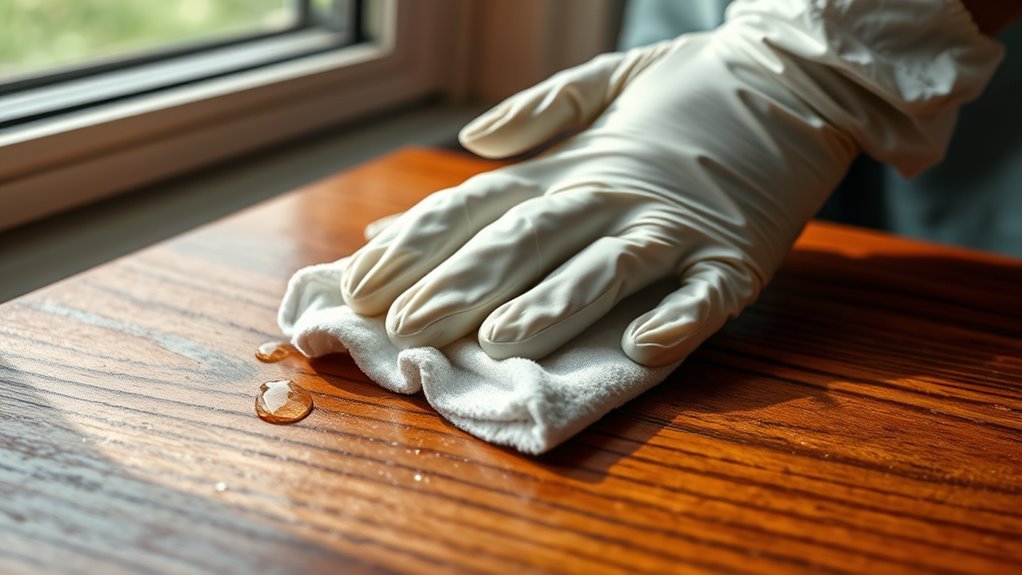
Although wood is a common material for high-touch surfaces, disinfecting it presents unique challenges you need to understand. Wood properties such as its porous and uneven texture can absorb moisture and chemicals, making thorough disinfection difficult without causing damage. You must recognize that contamination sources on wood vary widely—from skin oils and sweat to airborne particles—each demanding careful attention. Because wood can trap microbes in its grain, simply wiping the surface may not suffice. You’re tasked with balancing effective cleaning while preserving the wood’s integrity, which limits your choice of disinfectants and methods. Understanding these factors empowers you to approach wood disinfection thoughtfully, ensuring safety without compromising the material’s natural qualities or your freedom to maintain it as you see fit. Using gentle, non-abrasive cleaners designed for delicate surfaces can help protect wood while maintaining cleanliness.
Choosing the Right Disinfectant for Wooden Surfaces
When selecting a disinfectant for wooden surfaces, you’ll want to focus on ingredients that are effective yet gentle enough to prevent damage. Avoid harsh chemicals like bleach or ammonia, which can degrade the wood’s finish and texture. Applying the disinfectant properly—using a soft cloth and minimal moisture—helps guarantee both cleanliness and wood preservation. Always wear personal protective equipment when handling cleaning chemicals to ensure your safety.
Safe Disinfectant Ingredients
Selecting safe disinfectant ingredients is essential to protect the integrity of wooden surfaces while effectively eliminating germs. You want to choose safe ingredients that provide effective solutions without harsh chemicals that may degrade wood. Look for disinfectants containing hydrogen peroxide, ethanol, or citric acid—these are known for their balance of safety and efficacy. Avoid bleach or ammonia-based products, which can harm wood finishes.
| Ingredient | Safety Level | Effectiveness on Wood Germs |
|---|---|---|
| Hydrogen Peroxide | High | Strong |
| Ethanol | High | Strong |
| Citric Acid | Moderate | Moderate |
| Bleach | Low | Strong but damaging |
| Ammonia | Low | Strong but damaging |
Choosing these safe ingredients guarantees you maintain wood’s natural beauty while keeping it germ-free.
Avoiding Wood Damage
Because wooden surfaces are sensitive to harsh chemicals and moisture, you’ll need to be careful about the disinfectants you use to avoid damage. Choose products specifically designed for wood or those with gentle, non-abrasive ingredients. Avoid bleach or ammonia-based cleaners, as they can strip finishes and weaken the wood fibers. Incorporate wood preservation techniques like applying protective sealants before disinfecting to maintain integrity. Always control moisture by using minimal liquid and promptly drying the surface, employing moisture control methods to prevent warping or swelling. By selecting appropriate disinfectants and managing moisture effectively, you’ll protect your wooden surfaces while keeping them clean and safe. This cautious approach guarantees your wood retains its natural beauty and durability without compromising your freedom to maintain hygiene.
Effective Application Methods
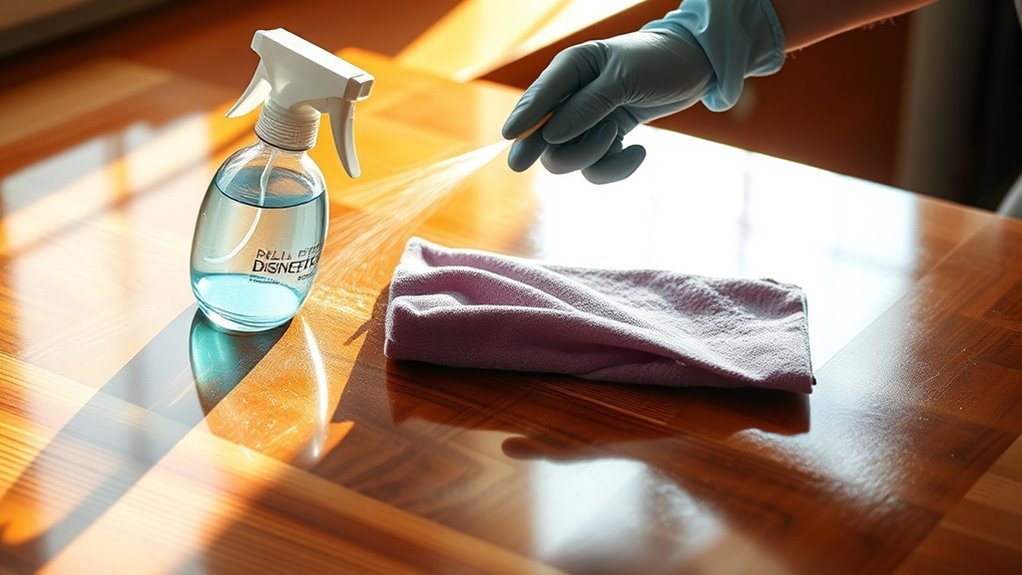
Although disinfecting wooden surfaces is essential for hygiene, you’ll need to choose disinfectants that won’t harm the wood’s finish or structure. Start with proper wood surface preparation: clean dust and debris using a soft cloth to guarantee the disinfectant application is effective. Avoid harsh chemicals like bleach or ammonia, as they can degrade the wood. Opt for disinfectants labeled safe for wood or those with gentle, natural ingredients. Apply the disinfectant sparingly using a microfiber cloth or spray bottle, guaranteeing even coverage without saturating the wood. Allow the surface to air dry completely to maintain its integrity. By following these careful steps, you can confidently disinfect high-touch wooden areas while preserving their appearance and durability, giving you freedom without risking damage.
Preparing Wooden Surfaces Before Disinfection
Before you begin disinfecting wooden surfaces, it’s essential to prepare them properly to guarantee effective cleaning without damaging the wood. Start by inspecting the area for dirt, grime, or residues. Use appropriate sanding techniques to gently smooth rough or worn spots, which helps the disinfectant penetrate evenly. Avoid aggressive sanding that could strip the wood’s protective layer. After sanding, apply a suitable wood conditioning product to restore moisture balance and protect the surface from potential damage during disinfection. Conditioning also prevents the wood from drying out or cracking. Make sure the surface is clean, dry, and free of dust before proceeding. Proper preparation guarantees your disinfectant works efficiently and preserves the wood’s integrity, granting you both cleanliness and longevity in your high-touch wooden areas. Organizing cleaning supplies in a caddy or basket can help streamline the process and ensure efficient organization during preparation.
Step-by-Step Guide to Disinfecting High-Touch Wood Areas
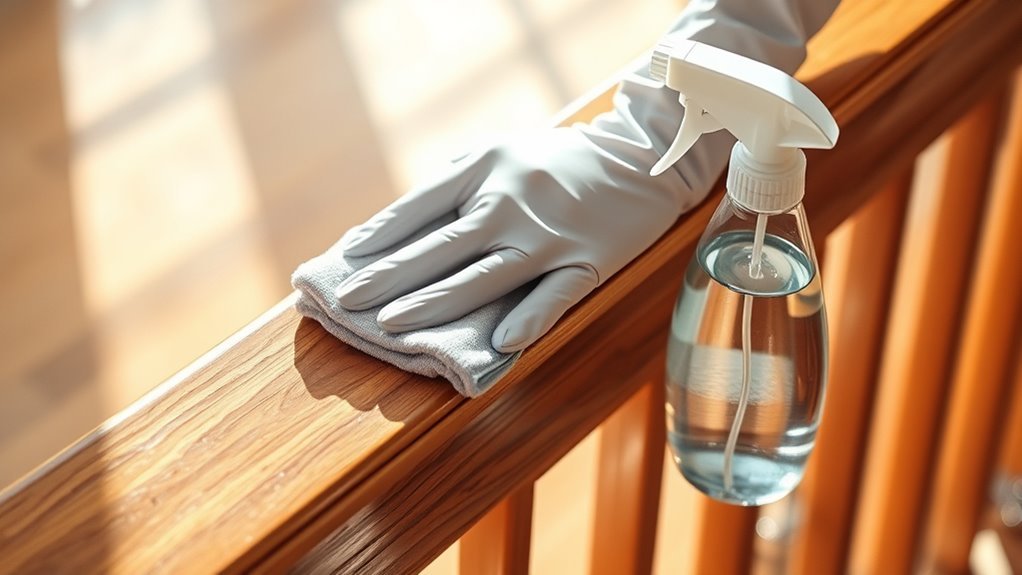
A careful approach is essential when disinfecting high-touch wooden areas to maintain their appearance and durability. Start by selecting a disinfectant compatible with wood to prevent damage. Lightly dampen a soft cloth with the solution—never soak the wood—and gently wipe the surface, focusing on handles and edges. Allow the disinfectant to sit for the recommended time to guarantee effectiveness. Avoid harsh scrubbing that could strip finishes or compromise wood care. Afterward, use a dry cloth to remove any excess moisture, preserving surface protection. Repeat this process regularly, especially in areas exposed to frequent contact, to maintain hygiene without sacrificing the wood’s integrity. With this mindful routine, you can confidently protect your wooden surfaces while enjoying the freedom of a clean, safe environment. Using essential oils as a natural disinfectant can enhance cleaning while minimizing chemical exposure.
Natural Alternatives for Wood Disinfection
You might consider natural alternatives like essential oils and vinegar-based solutions for disinfecting wood. Essential oils offer antimicrobial properties without harsh chemicals, while vinegar provides a mild, effective option. However, it’s important to test these on a small area first to verify they don’t damage the wood finish. Additionally, using essential oils diluted properly and avoiding direct application can help ensure safe maintenance of wood surfaces.
Essential Oils Benefits
While synthetic disinfectants are commonly used, essential oils offer a natural alternative for cleaning high-touch wooden surfaces. You can benefit from their antimicrobial properties without harsh chemicals, preserving the wood’s integrity. Essential oils like tea tree, eucalyptus, and lavender are recognized natural disinfectants, effective against various pathogens. However, dilute them properly to avoid damaging the wood or causing irritation.
Here’s a quick reference for popular essential oils:
| Essential Oil | Key Benefit |
|---|---|
| Tea Tree | Strong antimicrobial |
| Eucalyptus | Antibacterial and antiviral |
| Lavender | Mild disinfectant, fragrant |
Using essential oils gives you freedom to maintain wood safely and naturally, but always perform a spot test first to verify compatibility with your surface.
Vinegar-Based Solutions
Though vinegar is widely known for its cleaning power, using it on wood requires care to prevent damage. Vinegar benefits include natural antibacterial properties, making it a popular choice for disinfecting high-touch wooden surfaces. However, its acidity can erode wood finishes if applied undiluted. To safely harness vinegar solutions, dilute white vinegar with water—typically one part vinegar to four parts water. This mixture provides effective disinfection while minimizing risk. Test the solution on a small, inconspicuous area first to verify it doesn’t dull or discolor the wood. After application, wipe surfaces with a damp cloth to remove residue and dry thoroughly. By approaching vinegar solutions cautiously, you maintain your wood’s integrity while enjoying a natural, freedom-friendly disinfectant option.
Tips to Protect and Maintain Wood After Disinfection
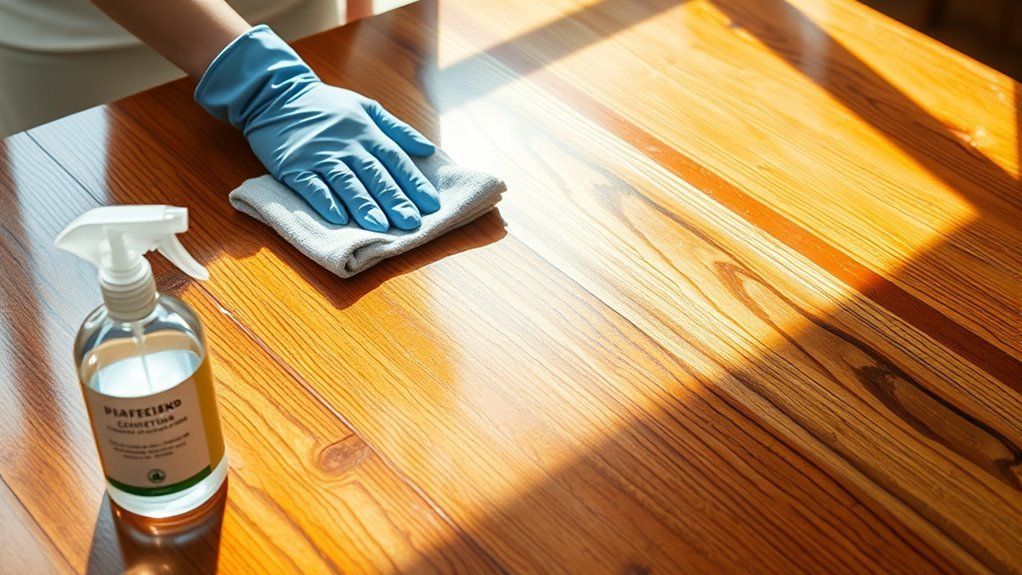
After disinfecting wood surfaces, it’s important to take specific steps to preserve their integrity and appearance. Start by gently wiping the wood with a soft, damp cloth to remove any residue from disinfectants. Avoid harsh chemicals or excessive water, as they can damage the wood’s finish. Incorporate regular wood care by applying a quality wood conditioner or oil to maintain moisture balance and prevent drying or cracking. For ongoing maintenance, use maintenance tips like dusting frequently and protecting surfaces from direct sunlight or heat sources. These practices will help you maintain your wood’s natural beauty and durability after disinfection, giving you freedom to keep your space safe without sacrificing quality or aesthetic appeal. Using wood-safe cleaning solutions ensures effective cleaning while protecting the finish and longevity of your wood surfaces.
Frequency and Best Practices for Disinfecting Wooden Touchpoints
Regularly disinfecting wooden touchpoints is essential to minimize the spread of germs without compromising the wood’s condition. You should adjust your disinfecting frequency based on the touchpoint importance and usage level. High-use areas like door handles need daily attention, while less-frequented spots require weekly care. Always use disinfectants compatible with wood to avoid damage. Applying disinfectants correctly by ensuring surfaces remain wet for the recommended contact time enhances effectiveness and protects the wood finish.
| Touchpoint Type | Disinfecting Frequency | Recommended Method |
|---|---|---|
| Door Handles | Daily | Mild disinfectant, soft cloth |
| Tabletops | Daily to Weekly | Alcohol-based wipes |
| Light Switches | Weekly | Gentle spray & microfiber |
| Decorative Wood | Biweekly | Dry dusting, occasional wipe |
Frequently Asked Questions
Can Disinfecting Wood Cause Discoloration Over Time?
You might think disinfecting wood won’t harm its look, but it can cause discoloration effects over time if you’re not careful. When you apply harsh chemicals repeatedly, they can alter the wood’s natural finish. To avoid this, choose gentle wood treatment products designed for disinfecting, and test them on a small area first. That way, you can keep your wood safe while maintaining its original beauty and enjoy true freedom in your care routine.
Are There Specific Disinfectants Safe for Antique Wooden Furniture?
When caring for antique wooden furniture, you’ll want to choose disinfectants that support antique preservation and wood care without causing damage. Avoid harsh chemicals like bleach or ammonia. Instead, opt for gentle, alcohol-based cleaners diluted with water, or products specifically designed for wood surfaces. Always test on a hidden spot first to guarantee it won’t discolor or degrade the finish. This cautious approach helps you maintain both cleanliness and the piece’s integrity.
How Long Should Disinfectant Remain on Wood Before Wiping?
When using disinfectants, you’ll want to follow the product’s instructions closely—different disinfectant types need varying contact times to work effectively. For example, alcohol-based sprays often require about 30 seconds, while others need up to 10 minutes. Apply gently with a soft cloth to avoid damage, allowing the disinfectant to sit undisturbed for the recommended time before wiping. This cautious approach guarantees effective cleaning without compromising the surface’s integrity.
Can Disinfecting Wood Help Prevent Mold Growth?
Coincidentally, disinfecting wood not only cleans but can aid in mold prevention by reducing microorganisms that cause mold growth. However, you should know disinfectant effectiveness depends on proper application and drying time. While it helps limit mold spores, it’s not a foolproof solution. To truly keep mold at bay, controlling moisture and ensuring good ventilation are just as essential. So, disinfect wisely, but don’t rely on it alone for mold prevention.
Is It Safe to Use UV Light for Disinfecting Wood Surfaces?
You can use UV light for disinfecting wood surfaces, but you should be cautious. UV efficiency depends on exposure time and distance, so it may not kill all pathogens instantly. Also, repeated UV exposure can affect wood durability over time, potentially causing discoloration or weakening. If you want to maintain your wood’s natural strength and appearance while enjoying effective disinfection, consider balancing UV use with other gentle cleaning methods.