Eco-Friendly Alternatives to Fan
If you want to stay cool while saving energy, consider natural ventilation by opening windows on opposite sides for airflow. You can also try evaporative cooling with swamp coolers or misting systems, which use less electricity. Energy-efficient ceiling fans lower power use, and simple DIY methods like placing ice in front of fans provide instant chill. Indoor plants improve air quality and cool your space naturally. There are even solar-powered devices and smart design tricks that boost comfort sustainably. Keep exploring to learn more eco-friendly ways to beat the heat.
Natural Ventilation Techniques
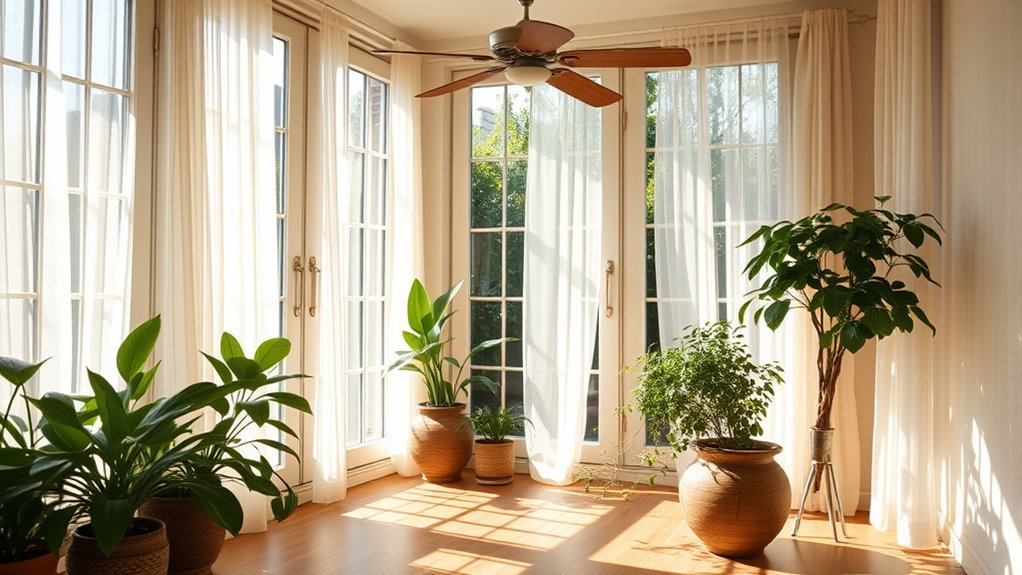
Although modern cooling devices are popular, you can often rely on natural ventilation techniques to keep your space comfortable. By mastering cross ventilation strategies, you’ll encourage fresh air to flow freely through your home, flushing out heat without relying on electricity. Position windows and vents opposite each other to create a natural breeze that cools efficiently. You’ll also want to take into account thermal mass—materials like stone or concrete absorb heat during the day and release it at night, helping regulate indoor temperatures. Embracing these eco-friendly methods means you’re choosing freedom from energy dependence while staying cool. With a bit of planning, natural ventilation will keep your environment fresh and comfortable, allowing you to enjoy your space without compromising sustainability or comfort.
Evaporative Cooling Methods
When you want to cool your space without relying on traditional fans or air conditioning, evaporative cooling methods offer a simple and energy-efficient solution. You can embrace swamp coolers, which use water evaporation to lower air temperature naturally, providing invigorating relief while consuming far less electricity. These devices are perfect for dry climates, giving you freedom from bulky, power-hungry systems. Another option is misting systems, which spray fine water droplets into the air, instantly cooling your surroundings with minimal energy use. Both swamp coolers and misting systems let you take control of your comfort sustainably, making them ideal if you value eco-friendly choices and independence from conventional cooling methods. By choosing these methods, you’ll enjoy cool air and a lighter environmental footprint.
Energy-Efficient Ceiling Fans
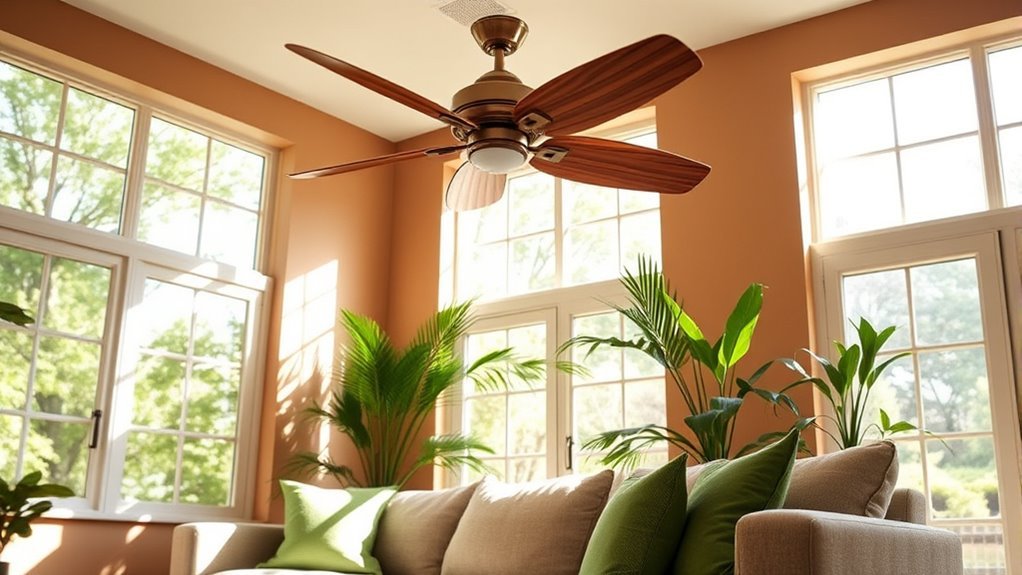
Ceiling fans are a smart way to keep your space comfortable while using less energy than many cooling options. When choosing energy-efficient ceiling fans, you’ll appreciate models equipped with energy saving features that cut your electricity bill without sacrificing comfort. Plus, advanced noise reduction technology means you can enjoy a peaceful atmosphere, perfect for relaxation or focus.
Here’s a quick comparison to help you decide:
| Feature | Benefit |
|---|---|
| Energy Saving Features | Lower power consumption |
| Noise Reduction | Quiet operation for freedom |
| Variable Speeds | Tailor airflow to your needs |
| Durable Materials | Long-lasting and eco-friendly |
DIY Cooling Solutions Using Ice
A simple way to cool down your space without relying on electricity is by using ice in DIY cooling solutions. You can create effective, eco-friendly chillers that give you freedom from power-hungry fans. Here’s how you can get started:
- Fill an ice bucket with ice cubes and place it in front of a fan or open window to circulate cool air naturally.
- Freeze ice packs and position them near your body or work area for personal cooling.
- Make a DIY air conditioner by setting a shallow pan of ice in front of a small fan, letting the breeze pass over the cold surface.
- Use frozen water bottles wrapped in cloth for portable, reusable cooling on-the-go.
These ice-based methods keep you refreshed while cutting energy use and embracing independence.
Using Indoor Plants for Cooling
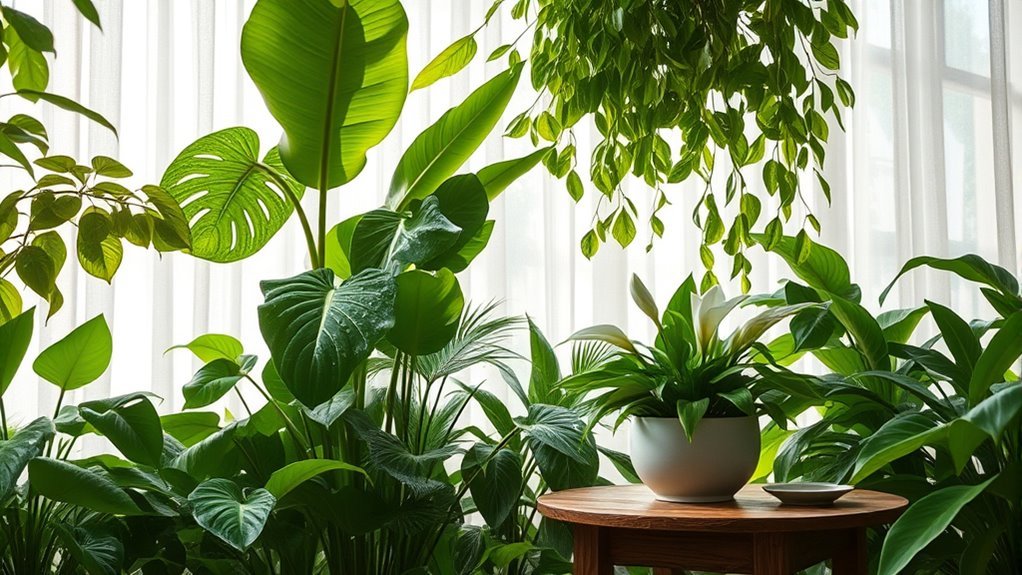
Although you might not realize it, indoor plants can help cool your space naturally by improving air quality and increasing humidity. When you bring air purifying plants into your home, they absorb carbon dioxide and release oxygen, making the air fresher and cooler. Plus, through a process called transpiration, plants release moisture that enhances humidity control, which can lower room temperature. You don’t need a green thumb to benefit—easy-care plants like snake plants, peace lilies, or pothos work wonders. Placing several around your living space creates a natural cooling effect without relying on electricity, giving you more freedom from energy costs and environmental impact. Embracing indoor plants lets you enjoy a comfortable, eco-friendly home that breathes with you.
Solar-Powered Cooling Devices
When you want to keep your space cool without hiking up your energy bill, solar-powered cooling devices offer an excellent solution. These gadgets harness the sun’s energy, giving you freedom from costly electricity and bulky wiring. Thanks to advances in solar panel efficiency, you can now enjoy reliable cooling even on less sunny days. Portable solar coolers add convenience, letting you stay refreshed wherever you go. Here are four great options:
- Solar-powered fans with built-in solar panels for direct sun exposure.
- Portable solar coolers perfect for outdoor adventures.
- Solar air conditioners that blend solar energy with traditional cooling.
- Solar evaporative coolers that use water and sunlight for natural cooling.
Choosing these devices means you’re embracing eco-friendly freedom with smart, sustainable cooling.
Architectural Design for Passive Cooling
If you want to reduce your reliance on mechanical cooling, architectural design plays a crucial role in passive cooling. By incorporating thermal mass materials like concrete or brick, your home can absorb heat during the day and release it at night, keeping indoor temperatures stable. You’re not just saving energy—you’re creating a natural rhythm that works with the environment. Shading techniques are equally important; think overhangs, pergolas, or strategically placed trees to block direct sunlight and prevent overheating. These simple design choices give you freedom from constant fan use while maintaining comfort. Embracing passive cooling means you live smarter, not harder, using nature’s own tools to keep your space cool without relying on electricity or complicated gadgets.
Frequently Asked Questions
Are Eco-Friendly Cooling Options More Expensive Than Traditional Fans?
When it comes to cost comparison, you might find that eco-friendly cooling options aren’t always cheaper upfront, but don’t count them out just yet. They often lead to energy savings that pay off in the long run, freeing you from soaring electricity bills. If you’re looking for freedom from constant expenses, investing a bit more now could be the ticket to a cooler, greener lifestyle without breaking the bank.
How Do Eco-Friendly Cooling Methods Impact Indoor Air Quality?
When you choose eco-friendly cooling methods, you’re often improving indoor air quality because many options include better air filtration systems. These systems help clear out pollutants, giving you fresher air to breathe. Plus, temperature regulation is more natural and energy-efficient, so you don’t have to compromise comfort for sustainability. It’s about freeing yourself from harsh chemicals and noisy devices, creating a healthier, more comfortable space that supports your lifestyle.
Can Eco-Friendly Cooling Solutions Be Used in Humid Climates?
Imagine stepping into a cool, fresh room despite the sticky air outside—sounds impossible, right? But you can use eco-friendly cooling solutions even in humid climates. While humidity challenges can reduce cooling efficiency, options like geothermal cooling, energy-efficient dehumidifiers, and natural ventilation help maintain comfort without heavy energy use. You’ll feel freer knowing you’re beating the heat sustainably, without sacrificing fresh, breathable air indoors.
What Maintenance Is Required for Solar-Powered Cooling Devices?
When using solar-powered cooling devices, you’ll want to focus on regular solar panel upkeep—keep the panels clean and free of debris to maximize sunlight absorption. Battery maintenance is also key; check connections and charge levels to guarantee your system runs smoothly. By staying on top of these tasks, you’ll enjoy reliable, off-grid cooling freedom without being tied down by complicated repairs or high energy bills.
Do Eco-Friendly Cooling Alternatives Work Well During Heatwaves?
When the sun throws a bit of a tantrum, you might wonder about heatwave effectiveness. While eco-friendly cooling technology won’t always blast Arctic chills, it offers a gentle, freeing breeze that keeps things comfortably cool. These alternatives work best when combined with smart habits like shading and ventilation. So, if you’re craving freedom from energy waste, they’re a revitalizing choice, even on those hotter-than-usual days.