Eco-Friendly Alternatives to Kitchen
You can make your kitchen eco-friendly by choosing sustainable surfaces like bamboo or recycled glass countertops that are durable and stylish. Opt for energy-efficient appliances with smart features to save power and water. Use zero-waste storage options such as beeswax wraps and silicone bags to cut plastic use. Switch to biodegradable cleaners and compost food scraps to reduce waste. With these simple swaps, you’ll create a healthier, more sustainable kitchen—there’s more to explore for a greener lifestyle.
Sustainable Materials for Kitchen Surfaces
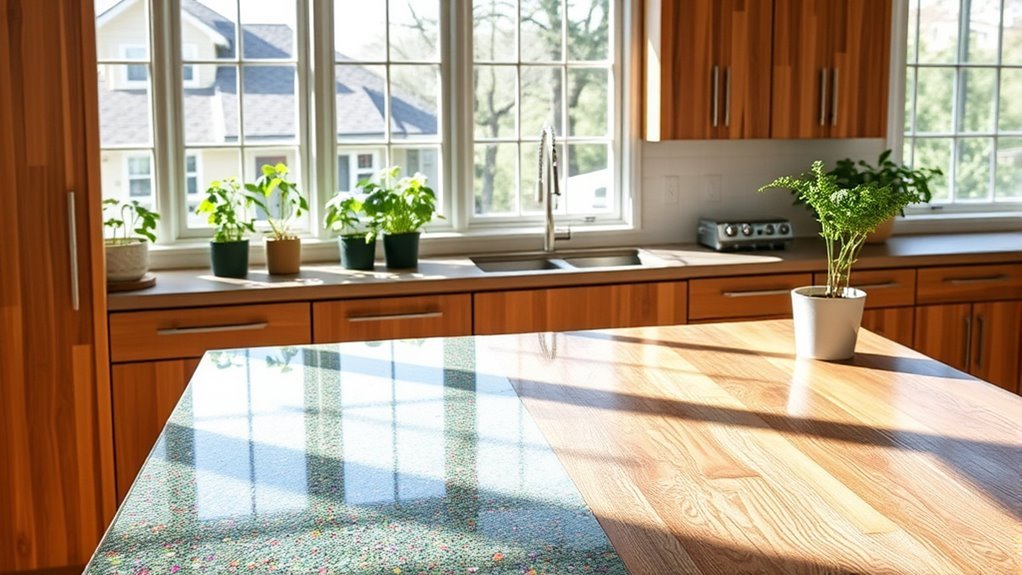
When choosing sustainable materials for your kitchen surfaces, you’ll want options that are both eco-friendly and durable. Bamboo countertops offer a fantastic choice—bamboo grows quickly, regenerates without pesticides, and provides a sturdy, stylish surface. You’ll enjoy the natural warmth and strength it brings to your kitchen, all while reducing your environmental impact. Another great option is recycled glass countertops, crafted from repurposed glass shards. They’re not only visually striking but also help keep waste out of landfills. These surfaces are tough, easy to clean, and unique, giving your kitchen a fresh, modern vibe. By selecting bamboo countertops or recycled glass, you’re embracing materials that respect nature and support your freedom to create a kitchen that reflects your values.
Energy-Efficient Kitchen Appliances
Although upgrading kitchen appliances might seem costly, choosing energy-efficient models can save you money and reduce your environmental footprint over time. With energy saving features and smart kitchen technology, you gain control and freedom in your daily routine while cutting energy waste.
Here’s a quick look at popular appliances with eco benefits:
| Appliance | Energy Saving Features |
|---|---|
| Refrigerator | Inverter compressors, LED lights |
| Dishwasher | Eco-wash cycles, load sensors |
| Oven | Convection heating, smart timers |
Zero-Waste Food Storage Solutions
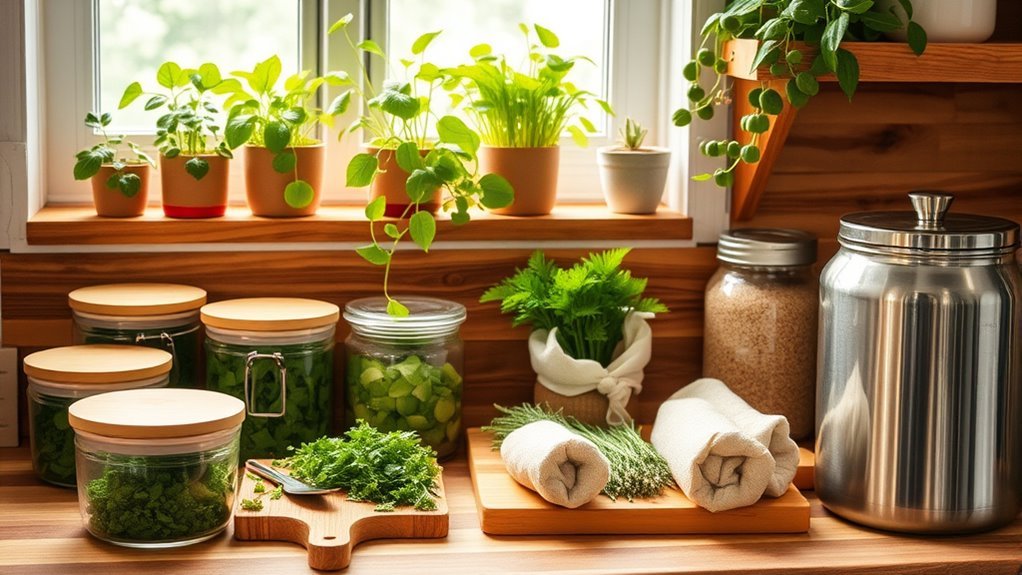
A key step toward an eco-friendly kitchen is adopting zero-waste food storage solutions that cut down on plastic use and food spoilage. You can reclaim freedom from disposable packaging by choosing sustainable alternatives. Here’s how:
- Beeswax wraps replace plastic wrap effortlessly. They’re reusable, breathable, and keep food fresh longer without harmful chemicals.
- Glass containers offer durability and versatility. Perfect for storing leftovers or batch cooking, they don’t leach toxins and are fully recyclable.
- Silicone bags are another great option. They’re leak-proof, freezer-safe, and can be washed repeatedly.
Eco-Friendly Cleaning Products
Keeping your kitchen sustainable doesn’t stop at food storage—you’ll also want to rethink the cleaning products you use. Switching to biodegradable cleaners frees you from harsh chemicals that harm the environment and your health. These eco-friendly options break down naturally, reducing pollution and protecting waterways. You can even make your own cleaning solutions using essential oil blends, which offer natural antibacterial properties and invigorating scents without synthetic additives. This approach not only minimizes waste but also gives you control over what’s in your products. Embracing biodegradable cleaners means you’re choosing freedom from toxins and excess plastic packaging, making your kitchen a cleaner, greener space that aligns with your values. It’s a simple change with a big impact on your lifestyle and the planet.
Water Conservation Techniques
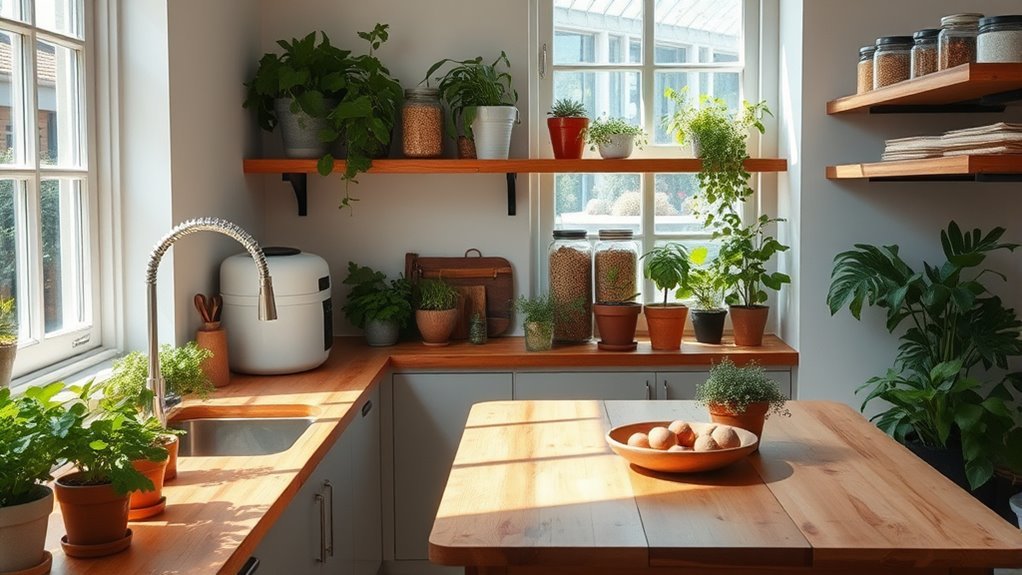
You can save a lot of water by fixing leaky faucets promptly and using efficient dishwashing methods like running the dishwasher only when full. Collecting rainwater is another smart way to reduce your kitchen’s water use. Let’s explore how these simple changes make a big difference.
Fixing Leaky Faucets
Though a dripping faucet might seem minor, it can waste gallons of water each day and substantially increase your utility bill. Taking charge of faucet repair not only saves water but also gives you control over your home’s efficiency. To tackle leaks effectively, follow these steps:
- Identify the source of the leak by inspecting washers, seals, and cartridges.
- Replace worn parts promptly to prevent further water loss.
- Regularly maintain faucets by tightening fittings and cleaning aerators.
Efficient Dishwashing Methods
Since dishwashing can consume a significant amount of water, adopting efficient methods is key to conserving resources and lowering your bills. You can start by using a basin or plugging the sink to wash dishes instead of running water continuously. Opt for cooler water temperatures when possible; hot water uses more energy, and many detergents work well in warm or even cold water. When rinsing, try to do it in a basin or with a spray nozzle that limits flow. For drying methods, skip the dishwasher’s heated drying cycle and let your dishes air dry on a rack. It’s simple, saves energy, and gives you more freedom from appliance use. These small changes put control back in your hands while helping the planet.
Collecting Rainwater Usage
While conserving water inside your kitchen is important, collecting rainwater offers a practical way to reduce your overall water use. You can harness nature’s bounty with simple steps that give you more control and freedom over your resources. Start by:
- Installing a reliable storage system to capture and hold rainwater efficiently.
- Using rainwater filtration to guarantee the water is clean enough for your intended uses, like watering plants or cleaning.
- Regularly maintaining your system to prevent contamination and maximize longevity.
Composting and Organic Waste Management
If you want to reduce your kitchen waste and enrich your garden simultaneously, composting is an excellent place to start. By turning your food scraps and organic waste into nutrient-rich compost, you’re embracing organic recycling that benefits both your plants and the planet. Compost benefits include improved soil structure, better water retention, and reduced need for chemical fertilizers. You don’t need a big yard or fancy equipment—simple kitchen bins or outdoor composters work perfectly. This process frees you from sending waste to landfills, cutting down methane emissions and your overall environmental footprint. Once you get the hang of it, composting feels less like a chore and more like reclaiming control over your waste, making your kitchen truly eco-friendly and sustainable.
Reusable Kitchen Utensils and Tools
You can cut down on waste by choosing reusable kitchen utensils made from sustainable materials like bamboo or stainless steel. These tools not only last longer but also save you money in the long run. With simple care and maintenance, you’ll keep them in great shape for years to come.
Sustainable Material Options
Because your kitchen tools see daily use, choosing sustainable materials for utensils and gadgets can make a big difference in reducing waste. You want options that not only last but also align with your eco-conscious lifestyle. Consider these three materials:
- Bamboo – Much like bamboo countertops, bamboo utensils are renewable, durable, and naturally antimicrobial, giving you freedom from plastics.
- Recycled glass – Perfect for measuring cups or storage containers, recycled glass repurposes waste and adds a sleek look to your kitchen.
- Stainless steel – Tough, recyclable, and rust-resistant, it’s ideal for tools you rely on every day.
Benefits of Reusables
Choosing sustainable materials like bamboo or stainless steel sets the stage for embracing reusable kitchen utensils and tools. When you opt for reusables, you’re not just reducing waste—you’re gaining freedom from constant replacements and single-use disposables. Think about how reusable bags and sustainable packaging have already transformed your shopping habits; the same applies here. Reusables save money, reduce landfill contributions, and promote a cleaner environment.
| Benefit | Impact on You | Environmental Effect |
|---|---|---|
| Cost Savings | Less frequent buying | Less production waste |
| Durability | Longer use lifespan | Reduced resource demand |
| Waste Reduction | Less clutter | Decreased landfill load |
| Health Safety | Non-toxic materials | Avoids harmful chemicals |
Switching to reusables lets you live sustainably without sacrificing convenience or style.
Maintenance and Longevity
Although reusable kitchen utensils are built to last, their longevity depends largely on how well you care for them. Proper kitchen maintenance guarantees your tools stay effective and eco-friendly for years. Here are three longevity tips to keep your utensils in top shape:
- Clean utensils promptly with mild soap and warm water to prevent residue buildup and damage.
- Avoid harsh scrubbing or abrasive cleaners that can wear down surfaces or finishes.
- Store items in a dry, well-ventilated area to prevent mold and warping.
Natural Lighting and Ventilation Ideas
When you design your kitchen to maximize natural lighting and ventilation, you not only reduce energy consumption but also create a healthier, more inviting space. Consider skylight installation to flood your kitchen with sunlight, cutting down on the need for artificial lighting during the day. It’s a simple way to bring freedom into your space, letting nature do the work for you. Pair this with cross ventilation by positioning windows or vents opposite each other. This setup encourages fresh air to flow freely, removing cooking odors and excess heat without relying on fans or air conditioning. By embracing these ideas, you’re choosing a kitchen environment that breathes and shines naturally, giving you more control and comfort while reducing your environmental footprint.
Sustainable Cooking Practices
If you want to reduce your kitchen’s environmental impact, adopting sustainable cooking practices is essential. Embracing freedom in your kitchen means making choices that benefit both you and the planet. Here’s how you can start:
Reducing your kitchen’s environmental impact starts with sustainable cooking choices that benefit you and the planet.
- Prioritize plant based cooking. It’s not only healthier but uses fewer resources, lowering your carbon footprint.
- Opt for minimalistic meal prep. Planning simple, wholesome meals reduces waste and saves energy.
- Use energy-efficient appliances and cook in batches to maximize efficiency and minimize resource use.
Frequently Asked Questions
How Do Eco-Friendly Kitchen Designs Impact Home Resale Value?
You’ll find that eco-friendly kitchen designs can boost your home’s resale value by attracting buyers who appreciate sustainable materials and energy efficiency. When you choose these features, you’re not just saving the planet—you’re adding freedom from high utility bills and future remodeling costs. This makes your home more appealing and marketable, giving you an edge in a competitive market while promoting a lifestyle that values both comfort and responsibility.
Are There Tax Incentives for Installing Green Kitchen Appliances?
You’ll be glad to know there are often tax credits and energy rebates available when you install green kitchen appliances. These incentives can help you save money upfront while reducing your environmental impact. Depending on where you live, you might qualify for federal or state programs that reward your choice for energy-efficient products. Taking advantage of these perks means you get more freedom with your budget and contribute to a greener future.
What Are the Best Plants for Improving Kitchen Air Quality?
Think of plants as silent guardians, breathing life and purity into your kitchen’s air. You’ll love herbs like basil and mint—not just for their herb benefits but for the fresh freedom they bring. Aloe vera stands tall as a natural purifier, while spider plants work tirelessly to cleanse toxins. With simple plant care—watering, sunlight, and love—you create a sanctuary where you’re free to breathe deeply and cook joyfully.
How Can I Encourage Family Members to Adopt Sustainable Kitchen Habits?
To encourage your family to embrace sustainable kitchen habits, you can start by involving them in sustainable meal planning—choosing recipes that minimize waste and use seasonal ingredients. Make recycling education fun and interactive so everyone understands its impact. Give them the freedom to experiment with eco-friendly swaps and celebrate small wins together. When they see how easy and rewarding it is, they’ll naturally want to keep those habits going.
What Are Common Misconceptions About Eco-Friendly Kitchens?
You might think eco-friendly kitchens are expensive or limiting, but that’s not true. People often believe biodegradable materials aren’t durable, yet many options are both sturdy and sustainable. Some assume energy efficient appliances don’t perform well, but they save money and work great. Choosing eco-friendly doesn’t mean sacrificing freedom—it’s about smarter choices that give you control over your impact while still enjoying your kitchen fully.