Essential Tools for Cleaning Curtains
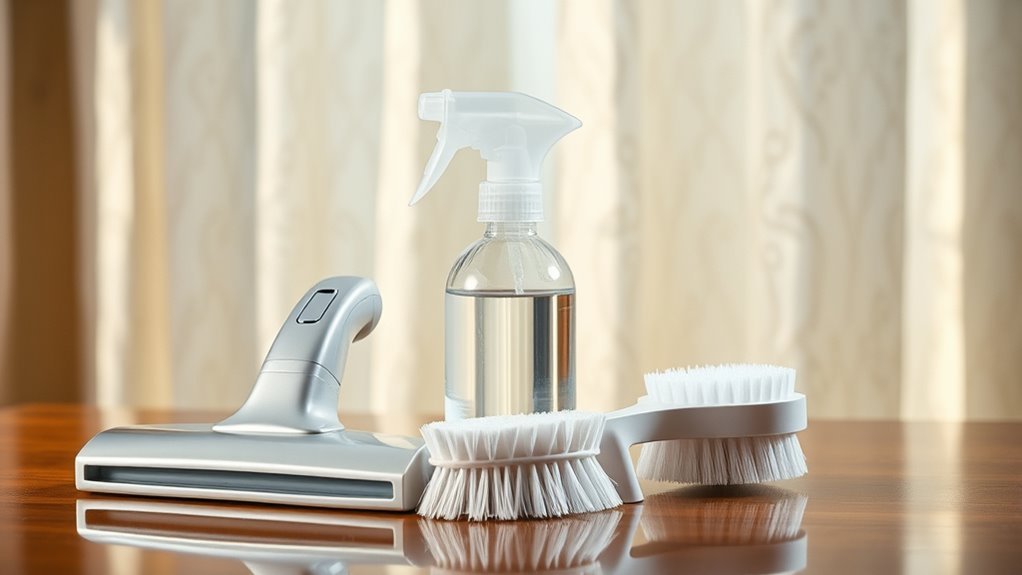
You’ll want a vacuum cleaner with an upholstery attachment to gently remove dust without damaging fabric. Microfiber cloths work great for trapping dust and allergens, while a gentle fabric detergent keeps curtains clean without harsh chemicals. Keep a spray bottle handy for spot cleaning, and use a soft-bristle brush for delicate scrubbing. A ladder or step stool guarantees safe reach, plus protective gloves protect your skin. Measuring cups help you use the right detergent amount, and a drying rack or clothesline finishes the job. There’s more to discover for maintaining your curtains perfectly.
Vacuum Cleaner With Upholstery Attachment
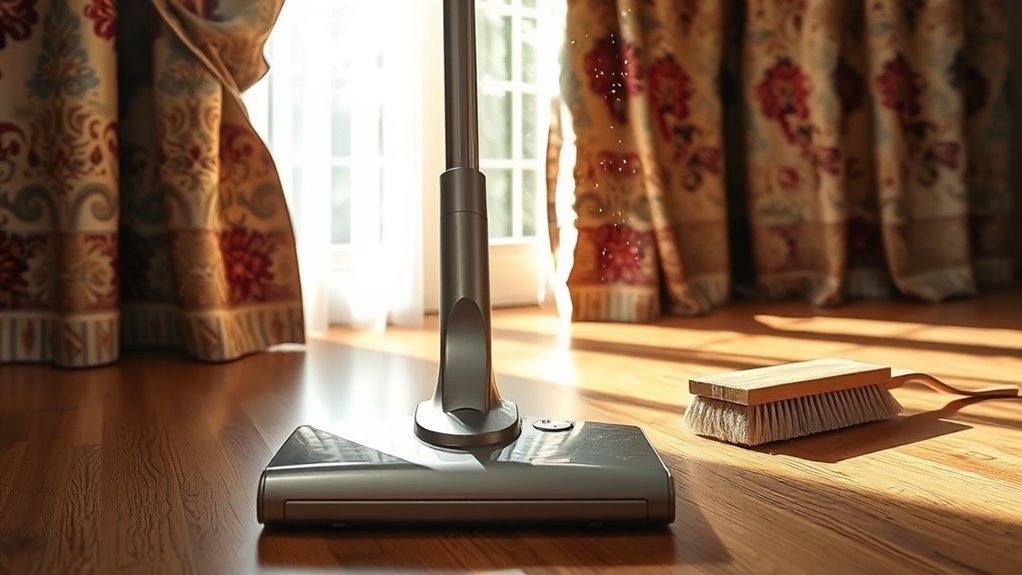
One of the easiest ways to keep your curtains dust-free is by using a vacuum cleaner with an upholstery attachment. You’ll appreciate how this tool lets you maintain your curtains without hassle, giving you the freedom to enjoy a fresh, clean home environment. Before you start, adjust your vacuum settings to a low or medium power to protect delicate fabrics while ensuring effective dust removal. The upholstery attachment is designed specifically for gentle upholstery care, so it won’t damage your curtains’ texture or color. Regularly vacuuming your curtains this way helps prevent dust buildup, keeping your living space healthier and more inviting. Embrace this simple method to stay in control of your home’s cleanliness without sacrificing your time or energy.
Microfiber Cloths
You’ll find microfiber cloths great for trapping dust without harming your curtains’ fabric. They’re gentle enough to keep delicate materials looking fresh while being reusable, which helps cut down on waste. Using these cloths is an easy, eco-friendly way to maintain your curtains between deeper cleanings.
Effective Dust Removal
Microfiber cloths are among the most effective tools for removing dust from curtains without causing damage. When you use them, you’re not just wiping away surface dirt—you’re capturing dust allergens that can affect your health and home comfort. Because microfiber attracts and holds onto dust particles, it helps prevent allergens from spreading back into the air. This means your curtain maintenance routine becomes more efficient, keeping your space fresh and breathable. Plus, microfiber cloths are gentle enough to clean delicate fabrics without harsh chemicals or scrubbing. So, if you want freedom from constant dust buildup and want to protect your family’s well-being, make microfiber cloths a staple in your curtain cleaning toolkit. They’re simple, effective, and get the job done right.
Gentle Fabric Care
Although delicate fabrics require extra care, using microfiber cloths lets you clean your curtains gently without risking damage. These cloths work well across various fabric types, from silk to polyester blends, because their soft texture lifts dust and grime without harsh abrasion. When you’re handling curtains, microfiber cloths offer a freedom that brushes or vacuum attachments might restrict—they adapt to folds and pleats effortlessly. For maintenance tips, dampen the cloth slightly to capture more dirt without soaking the fabric, and always test on a small inconspicuous area first. Regularly washing your microfiber cloths keeps them effective and prevents dirt buildup. By choosing microfiber, you’re embracing a cleaning method that respects your curtains’ delicate nature while making upkeep easier and more efficient.
Reusable and Eco-Friendly
Caring for your curtains gently is important, but it’s also worth considering how your cleaning tools impact the environment. Choosing reusable and eco-friendly options like microfiber cloths lets you clean effectively while staying true to sustainable materials. These cloths are durable, so you won’t need to keep buying disposable wipes that add waste to landfills. Plus, many microfiber cloths now come in biodegradable options, helping reduce your environmental footprint even more. By opting for these eco-conscious tools, you’re not just maintaining your curtains—you’re embracing freedom from single-use products and supporting a cleaner planet. It’s a simple switch that respects both your home and the Earth, giving you peace of mind with every clean.
Gentle Fabric Detergent
When cleaning your curtains, choosing a gentle fabric detergent can make all the difference in preserving their texture and color. You want a detergent that respects fabric care standards, avoiding harsh chemicals that strip fibers or fade hues. Among detergent types, liquid and powder options exist, but liquid detergents often dissolve better, reducing residue. Look for formulas labeled “gentle” or “for delicates,” as they’re designed for sensitive fabrics, allowing your curtains to stay soft and vibrant. Avoid detergents with bleach or strong fragrances, which can damage fabric and limit your freedom to enjoy your home’s natural ambiance. By selecting the right gentle detergent, you maintain your curtains’ beauty longer while embracing a cleaning routine that’s both effective and kind to your fabrics.
Spray Bottle for Spot Cleaning
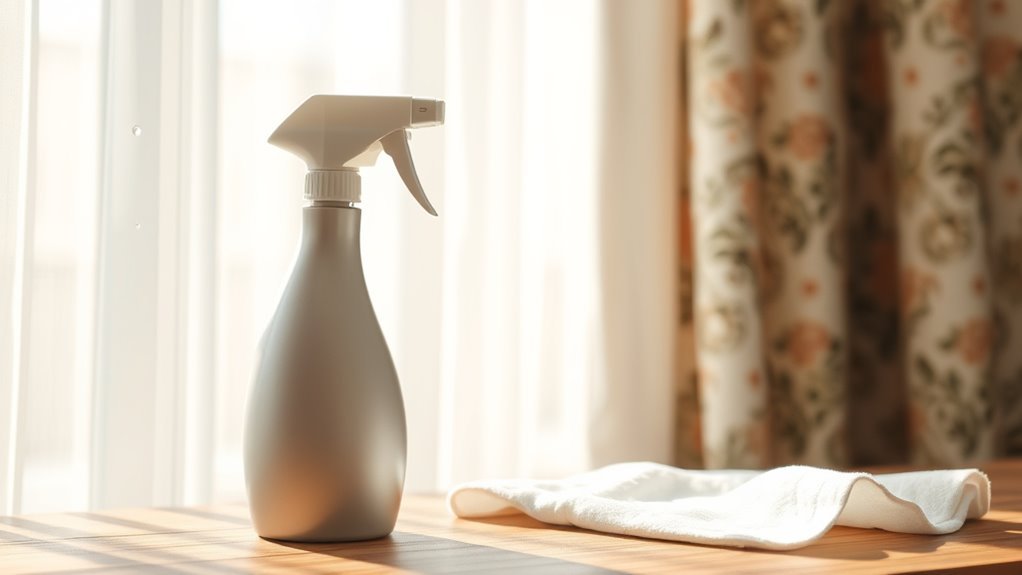
One essential tool you’ll want for maintaining your curtains is a spray bottle, perfect for targeted spot cleaning. It lets you apply just the right amount of cleaning solution directly onto stains without soaking the fabric, preserving your curtains’ freshness and longevity. When choosing your spray bottle, consider the materials; BPA-free plastic or glass options are durable and safe for various solutions. Mastering spot cleaning techniques with a spray bottle means you can quickly tackle spills or marks the moment they happen, avoiding stubborn stains. This tool gives you control and freedom to keep your curtains looking their best without the hassle of full washes. With the right spray bottle, you’re equipped to maintain clean, vibrant curtains effortlessly.
Soft-Bristle Brush
A soft-bristle brush is a handy tool for gently removing dust and dirt from your curtains without damaging the fabric. When you want to keep your curtains looking fresh and extend their life, regular curtain maintenance is key. This brush helps you tackle dust accumulation that settles deep in the fibers, especially in between washes. You’re free to clean delicate fabrics without worrying about fraying or pulling threads, unlike harsher brushes or vacuum attachments. Using a soft-bristle brush also saves you time, allowing quick touch-ups whenever you notice dust buildup. By incorporating this simple tool into your routine, you maintain both the appearance and integrity of your curtains, giving you the freedom to enjoy clean, vibrant window treatments without hassle or damage.
Steamer for Wrinkle Removal
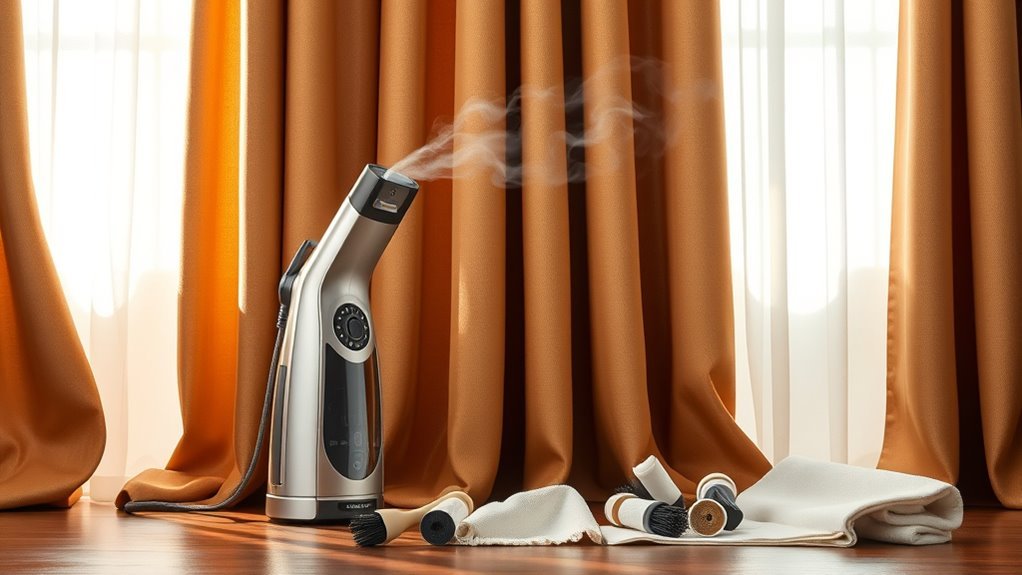
Steamers are a quick and effective way to banish wrinkles from your curtains without taking them down. By adjusting steam settings, you control the heat and moisture to suit different fabrics, ensuring wrinkle prevention without damage. This tool frees you from tedious ironing and gives your curtains a fresh, smooth look instantly.
| Fabric Type | Recommended Steam Setting | Wrinkle Prevention Tip |
|---|---|---|
| Silk | Low | Keep steamer moving continuously |
| Linen | Medium | Steam both sides evenly |
| Cotton | High | Hang curtains taut during steaming |
| Synthetic | Low to Medium | Test on a small area first |
With a steamer, you embrace freedom from wrinkles and extend your curtains’ life effortlessly.
Ladder or Step Stool
When cleaning curtains, picking a ladder or step stool with the right height is key to reaching those high spots safely. You’ll want to follow simple safety tips to avoid any slips or falls while working. Also, consider whether a portable or fixed option fits your space and cleaning needs best.
Choosing the Right Height
How do you guarantee safety and efficiency while cleaning curtains? It all starts with choosing the right height for your ladder or step stool. First, consider your curtain height and the overall room dimensions. If your curtains hang close to the ceiling in a tall room, you’ll need a sturdy ladder tall enough to reach comfortably without overextending yourself. For shorter curtains or smaller spaces, a compact step stool might be perfect, giving you freedom of movement without bulk. Picking the right height tool lets you work confidently and swiftly, avoiding strain or awkward positions. Remember, matching your equipment to both curtain height and room dimensions is key to maintaining your freedom and ease while keeping your curtains spotless.
Safety Tips for Use
Although using a ladder or step stool might seem straightforward, you’ll want to follow key safety tips to prevent accidents. Taking safety precautions seriously helps you avoid cleaning hazards and keeps your freedom intact, letting you focus on sprucing up your curtains without worry.
Remember to:
- Place your ladder or stool on a flat, stable surface to prevent tipping.
- Keep your body centered between the rails, avoiding leaning to reach tricky spots.
- Make sure the ladder is fully open and locked before climbing.
Portable vs. Fixed Options
Keeping safety in mind is important when choosing between a portable ladder or step stool and a fixed option. You want freedom to move easily but also need stability when reaching high curtains. Here’s a quick comparison to help you decide:
| Feature | Portable Options |
|---|---|
| Mobility | Easy to move and store |
| Setup Time | Quick and effortless |
| Space Requirement | Minimal, ideal for small areas |
| Stability | Depends on model, less fixed |
| Cleaning Convenience | Great for quick, varied tasks |
Fixed options offer unmatched stability but limit your freedom to clean different spots without repositioning. For cleaning convenience, portable ladders or stools give you flexibility and speed, making curtain care less of a chore. Choose what fits your space and style best!
Protective Gloves
When you’re handling cleaning solutions or scrubbing stubborn stains on your curtains, wearing protective gloves is essential to shield your skin from harsh chemicals and irritants. Taking protective measures not only safeguards your hands but also lets you clean freely without worry. Choosing the right glove materials is key—look for options that balance durability with comfort.
Protect your hands with gloves when cleaning curtains to avoid harsh chemicals and scrub safely without worry.
Consider these glove features to enhance your cleaning experience:
- Latex gloves for flexibility and fine touch when handling delicate fabrics.
- Nitrile gloves if you need chemical resistance and allergy-free protection.
- Rubber gloves with textured grips to tackle tough scrubbing confidently.
Measuring Cup for Detergent
A measuring cup for detergent helps you use the right amount every time, preventing waste and ensuring your curtains get properly cleaned. When you’re aiming for freedom from guesswork, mastering detergent measurement techniques is key. Using a measuring cup lets you stick to ideal detergent ratios recommended by manufacturers, which protects your fabric and avoids residue buildup. Too much detergent can leave your curtains stiff, while too little won’t get them fully clean. With this simple tool, you gain control and confidence in your cleaning routine without overcomplicating things. So, grab a measuring cup designed for laundry use and make your curtain care efficient, economical, and eco-friendly—because freedom means doing things right the first time.
Drying Rack or Clothesline
When drying your curtains, choosing between a drying rack or clothesline can save you space and protect your fabric. You’ll want to contemplate if you’ll be drying indoors or outdoors, as each option has its pros and cons. Also, make sure the material of your drying tool suits your curtains to avoid damage.
Space Efficiency Tips
Although space might be limited, you can still effectively dry your curtains by using a drying rack or clothesline. Embracing space saving hacks lets you maximize your area without sacrificing freedom or convenience. Choose a foldable drying rack that tucks away easily when not in use, or install a retractable clothesline that disappears into the wall. These solutions keep your curtain storage neat while let you enjoy fresh, clean curtains.
- A compact drying rack unfolded near a sunny window
- A retractable clothesline stretched across a balcony
- Curtains hanging freely, drying without clutter
Outdoor vs. Indoor Use
Maximizing space with foldable racks or retractable clotheslines is great, but deciding whether to dry your curtains indoors or outdoors can impact both drying time and fabric care. If you lean toward outdoor cleaning, fresh air and sunlight speed up drying, leaving your curtains smelling crisp and natural. However, be mindful of direct sun exposure, which might fade delicate fabrics. On the other hand, indoor maintenance offers controlled conditions, protecting your curtains from unpredictable weather and pollutants. Using a drying rack inside gives you flexibility, especially when outdoor space is limited or the weather’s uncooperative. Ultimately, your choice depends on your lifestyle and space, but balancing outdoor freshness with indoor protection lets you keep your curtains clean and vibrant, all while enjoying the freedom to dry them wherever suits you best.
Material Compatibility
Since different curtain fabrics have unique drying needs, choosing the right drying rack or clothesline is key to preserving their texture and color. When you understand your curtain materials, you can select a drying method that complements your cleaning techniques, ensuring freedom from damage or shrinkage. For delicate silks or linens, a flat drying rack prevents stretching, while breathable cottons benefit from gentle outdoor air on a clothesline. Heavy velvets, on the other hand, should air dry indoors to avoid sun fading. Imagine this:
- Lightweight voile gently draped over a padded rack
- Thick velvet hung away from direct sunlight on an indoor rack
- Crisp cotton curtains fluttering on a breezy clothesline
Tailoring your drying setup to the fabric lets you enjoy fresh curtains without compromise.
Frequently Asked Questions
How Often Should I Clean My Curtains?
You might be surprised how often your curtains actually need cleaning. To keep your space fresh and vibrant, curtain maintenance tips suggest washing them every three to six months. However, cleaning frequency guidelines can vary based on factors like sunlight exposure and allergies. By sticking to this rhythm, you’ll enjoy a freer, healthier home environment without feeling tied down by constant chores. It’s all about balancing care with your lifestyle’s flow.
Can I Machine Wash All Types of Curtains?
You can’t machine wash all types of curtains because curtain materials vary widely. Some fabrics like cotton or polyester are usually safe for machine washing, but delicate ones like silk, velvet, or lined curtains need gentler cleaning methods. Always check the care label before tossing them in the washer. If you want freedom from worry, consider spot cleaning or professional cleaning for those tricky fabrics to keep your curtains looking fresh without damage.
What Is the Best Way to Prevent Curtains From Fading?
To prevent your curtains from fading, you’ll want to contemplate the curtain materials first—some fabrics like cotton or silk fade faster under sunlight exposure. You can enjoy your freedom by using UV-protective window films or sheer liners to block harsh rays without sacrificing natural light. Rotating your curtains regularly and keeping them closed during peak sunlight hours can also help maintain their vibrant look longer.
How Do I Remove Mold or Mildew From Curtains?
Imagine your curtains as a fortress guarding your freedom; mold and mildew are the invaders you can’t let win. For mold removal, start by mixing equal parts water and white vinegar in a spray bottle—spritz the affected areas and let it sit. Then, gently scrub and wash as usual. To keep your fortress strong, practice mildew prevention by ensuring curtains stay dry and well-ventilated, so your space remains fresh and free.
Are There Eco-Friendly Alternatives to Fabric Detergents?
Absolutely, you can choose eco friendly options that let you clean without harming the planet. Natural cleaners like vinegar, baking soda, and lemon juice work wonders on fabrics and are gentle yet effective. You don’t have to rely on harsh chemicals to get your curtains fresh. These natural alternatives give you freedom to care for your home in a way that’s safe for you and the environment.