Essential Tools for Cleaning Kitchen
You’ll want microfiber cloths for quick, effective wiping without harsh chemicals, and multi-purpose scrubbers to handle both delicate surfaces and tough grime. Sturdy dish brushes make scrubbing baked-on food easier, while high-quality degreasers break down grease fast. Extendable wands help reach tricky spots, and disposable gloves keep things hygienic. Eco-friendly solutions protect your health and the planet. Keep exploring to find out how these tools can transform your kitchen cleaning routine.
Microfiber Cloths for Effective Surface Cleaning
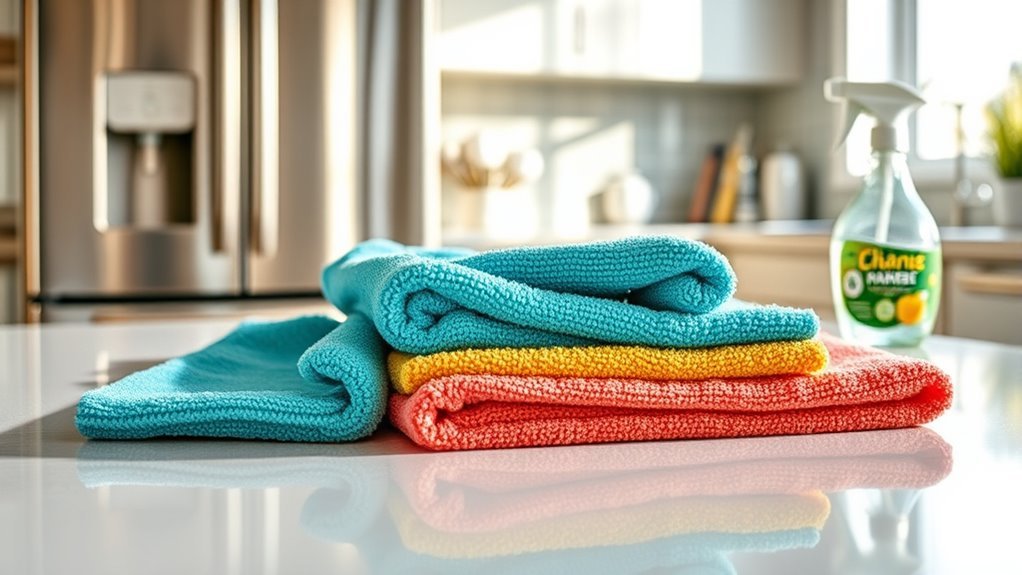
When it comes to cleaning your kitchen surfaces, microfiber cloths are one of the most effective tools you can use. You’ll find various microfiber cloth types designed for specific tasks—some excel at dusting, while others tackle grease or shine glass. The beauty of these cloths lies in their ability to pick up dirt and bacteria without harsh chemicals, giving you a safer, eco-friendly clean. Plus, they dry quickly and last long, saving you money and reducing waste. Using microfiber cloths lets you take control of your kitchen hygiene with ease and efficiency, freeing you from dependence on disposable wipes or sprays. Embracing these benefits means you can enjoy a spotless kitchen while staying true to your values of freedom and sustainability.
Multi-Purpose Scrubbers and Sponges
Alongside microfiber cloths, multi-purpose scrubbers and sponges are key players in keeping your kitchen spotless. You want tools that offer freedom from stubborn grime without wearing down fast. Choosing scrubber materials like cellulose or synthetic fibers can impact how efficiently you clean and how long your sponge lasts. Sponge durability matters—opt for ones that resist odors and tears so you’re not replacing them constantly. Here’s a quick look at what you gain:
| Feature | Benefit |
|---|---|
| Soft sponge side | Gentle on delicate surfaces |
| Abrasive scrubber | Tackles tough messes |
| Quick-drying | Prevents bacteria growth |
| Ergonomic design | Comfortable grip |
| Eco-friendly options | Freedom to choose sustainable |
With the right scrubber, you clean freely and efficiently every time.
Sturdy Dish Brushes for Tough Grime
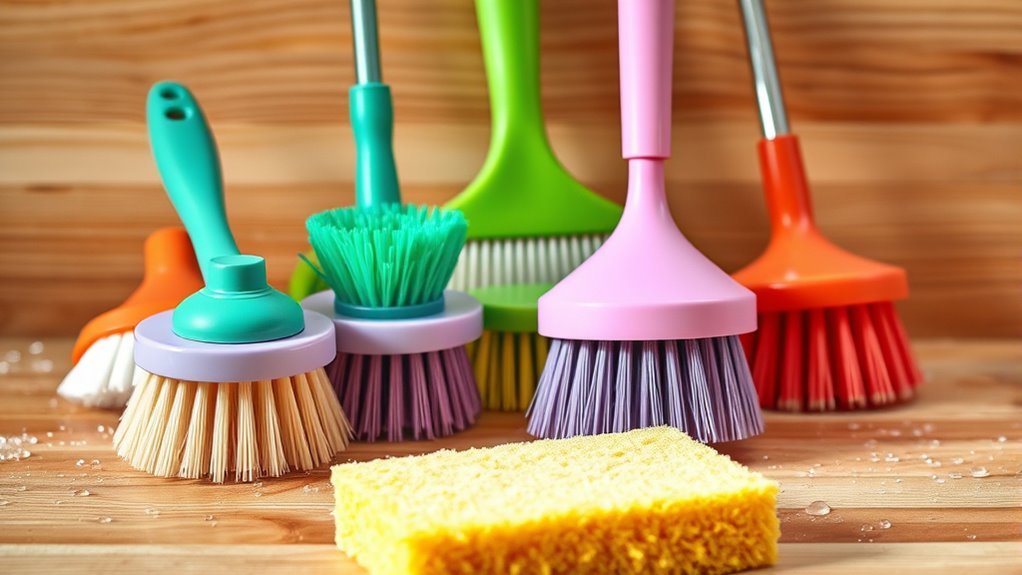
Although sponges handle many tasks, you’ll find that sturdy dish brushes excel at tackling tough grime without wearing out quickly. When choosing among dish brush types, consider bristle stiffness and handle design to match your cleaning needs and comfort. A firm-bristled brush easily scrubs off baked-on food, while softer bristles protect delicate surfaces. You’ll appreciate the freedom to switch brushes based on task, making your kitchen routine more efficient. To keep your brushes effective and hygienic, brush maintenance is key: rinse thoroughly after each use, allow them to air dry, and replace heads or entire brushes regularly. With the right brush and care, you’ll cut through grime effortlessly and enjoy a cleaner kitchen with less hassle.
High-Quality Degreasers and Cleaning Sprays
Since grease can cling stubbornly to kitchen surfaces, having high-quality degreasers and cleaning sprays is essential for a thorough clean. You want products with high performance formulas that break down tough grease quickly, freeing you from endless scrubbing. Look for sprays packed with powerful grease cutting agents that target buildup without harsh chemicals, so you can clean confidently and efficiently. These degreasers save you time and effort, letting you reclaim your kitchen space with ease. When you choose the right sprays, you’re not just cleaning—you’re creating a kitchen environment that feels fresh and inviting. Don’t settle for less; invest in degreasers designed to handle stubborn grease so your cleaning routine stays effective, fast, and liberating.
Extendable Cleaning Wands for Hard-to-Reach Areas
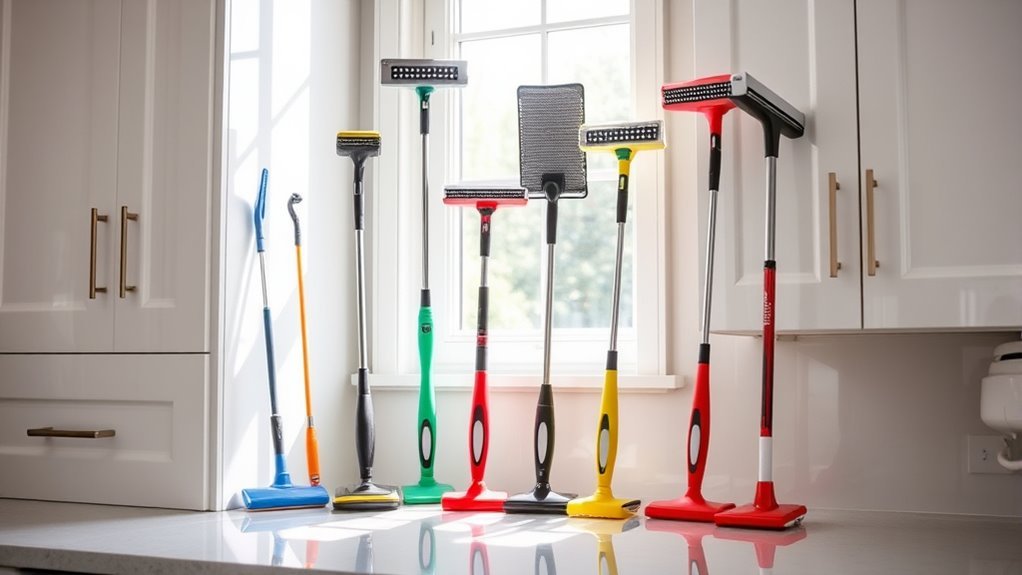
When you need to clean those tricky spots that are out of reach, extendable cleaning wands are a game-changer. They let you tackle ceiling corners, behind appliances, and high shelves without stretching or risking a fall. Using extendable cleaning techniques, you gain freedom to clean effortlessly and safely, reaching places that usually gather dust and grime. Innovative wand designs offer adjustable lengths and interchangeable heads, so you can customize your tool for scrubbing, dusting, or wiping. With these wands, you maximize efficiency while minimizing strain. They’re lightweight, easy to maneuver, and perfect for maintaining a spotless kitchen without limitations. Embrace extendable cleaning wands to reclaim control over your space and make hard-to-reach areas effortlessly accessible.
Stainless Steel Sink Cleaners
Keeping your stainless steel sink spotless means choosing the right cleaning agents that won’t damage the surface. You’ll also want to follow simple maintenance tips to prevent buildup and keep it shiny. Plus, knowing effective stain removal methods makes tackling tough spots quick and easy.
Best Cleaning Agents
Although stainless steel sinks are durable, they still need the right cleaning agents to stay spotless and shiny. You want products that work effectively without harsh chemicals, so natural cleaning agents are your best bet. Ingredients like baking soda, vinegar, and lemon not only clean but also keep your sink looking fresh without damaging its finish. Enzymatic cleaners are another great option—they break down organic matter gently, making them perfect for tackling grime and odors. By choosing these agents, you maintain your sink’s shine while enjoying the freedom of using safe, eco-friendly products. Avoid abrasive cleaners that can scratch or dull the surface. With the right cleaning agents, your stainless steel sink will stay pristine, letting you focus on the joy of a clean kitchen.
Maintenance Tips
Choosing the right cleaning agents is just the start; maintaining your stainless steel sink requires consistent care to keep it looking its best. You’ll want to establish regular cleaning schedules to prevent buildup and dullness. Wipe down your sink daily with a soft cloth and mild cleaner, avoiding harsh abrasives that can scratch the surface. Incorporate sink maintenance into your broader kitchen organization routine, so it becomes a natural part of your cleaning flow. After each use, rinse out residue and dry the sink to prevent water spots and mineral deposits. By staying on top of these simple habits, you’ll enjoy a gleaming sink that enhances your kitchen’s freedom and functionality without extra hassle.
Stain Removal Methods
There are several effective stain removal methods you can use to restore your stainless steel sink’s shine. Different stain types—like water spots, rust, or food stains—require specific approaches. For light stains, a paste made from baking soda and water works wonders; just apply, gently scrub, and rinse. Tougher rust stains might need a bit of white vinegar or a specialized stainless steel cleaner. Remember, stain prevention is just as important as removal. Dry your sink after each use to avoid water spots and promptly clean acidic or salty residues to prevent corrosion. By understanding these simple techniques, you’ll keep your sink looking fresh and free, letting you enjoy your kitchen without the hassle of stubborn stains holding you back.
Disposable Cleaning Gloves for Hygiene
When you’re tackling kitchen messes, disposable cleaning gloves can be a game-changer for maintaining hygiene. They create a barrier between your hands and dirt, bacteria, or harsh chemicals, helping you stick to good hygiene practices without hassle. Choosing the right glove materials matters—latex, nitrile, and vinyl each offer different levels of flexibility, durability, and allergy considerations. Nitrile gloves are popular because they resist punctures and chemicals well, while vinyl gloves are budget-friendly and latex gloves provide great elasticity. Using disposable gloves not only keeps your hands clean but also prevents cross-contamination between surfaces. By slipping on a fresh pair every time you clean, you enjoy freedom from worry and can focus on making your kitchen spotless with confidence.
Eco-Friendly Cleaning Solutions and Tools
While disposable gloves help keep your hands safe and clean, the products you use on your kitchen surfaces matter just as much. Choosing eco-friendly cleaning solutions lets you maintain a spotless kitchen without sacrificing your values or freedom. Biodegradable cleaners break down naturally, reducing environmental impact, while reusable wipes cut down on waste and save you money. You don’t have to compromise cleanliness for sustainability—these tools work effectively and responsibly.
Consider adding these to your cleaning arsenal:
- Biodegradable all-purpose sprays
- Reusable microfiber cloths or wipes
- Natural scrubbing brushes with wooden handles
- Plant-based dish soaps
- Compostable sponges or scrubbers
Using these eco-friendly tools means you’re protecting your kitchen, your health, and the planet—all while enjoying the freedom to choose what’s best.
Frequently Asked Questions
How Often Should I Replace My Kitchen Cleaning Tools?
Think of your cleaning tools as trusty steeds on your journey to a spotless domain. Just like steeds need rest and renewal, your tools require timely replacement. Follow replacement schedules based on each cleaning tool lifespan—sponges every week, brushes monthly—to keep your freedom from grime intact. If you let worn tools linger, they betray your quest for cleanliness. So, stay vigilant and swap them out regularly to maintain your sparkling domain effortlessly.
Can I Use the Same Tools for Both Kitchen and Bathroom?
You shouldn’t use the same tools for both kitchen and bathroom because of cross contamination risks. Bathrooms harbor more harmful bacteria, so mixing tools can spread germs to your kitchen surfaces. To keep things safe, use separate tools for each area, and follow proper tool sanitization methods like soaking in bleach solution or using hot water and soap. This way, you stay free from worries while keeping your home healthy.
Are Electric Cleaning Devices Better Than Manual Tools?
When comparing electric vs. manual cleaning tools, you’ll find electric devices often boost cleaning efficiency, saving you time and effort. They’re great if you want to breeze through chores quickly and enjoy more freedom afterward. However, manual tools give you more control and flexibility, perfect if you prefer a hands-on approach. Ultimately, it depends on your lifestyle and how much you want to invest in convenience versus simplicity. Choose what fits you best!
How Do I Store Cleaning Tools to Prevent Bacteria Growth?
Oh sure, just toss your cleaning tools in a dark, damp corner and watch bacteria throw a party! If you want to avoid that, embrace smart cleaning tool organization—hang brushes to air dry, use ventilated holders, and swap out sponges regularly. These clever bacteria prevention methods keep your gear fresh and your freedom intact, so you’re not chained to constant deep cleans or battling invisible grime dictators. Stay organized, stay free!
What Are the Best Tools for Cleaning Wooden Kitchen Surfaces?
When cleaning wooden kitchen surfaces, you’ll want gentle tools like a soft microfiber cloth to avoid scratches. Avoid harsh chemicals; instead, use a wood polish to nourish and shine the wood naturally. After cleaning, applying a surface protectant helps keep your wood safe from spills and wear, giving you freedom to enjoy your kitchen without worrying about damage. Keep it simple, and your wooden surfaces will stay beautiful and durable.