Essential Tools for Cleaning Stains
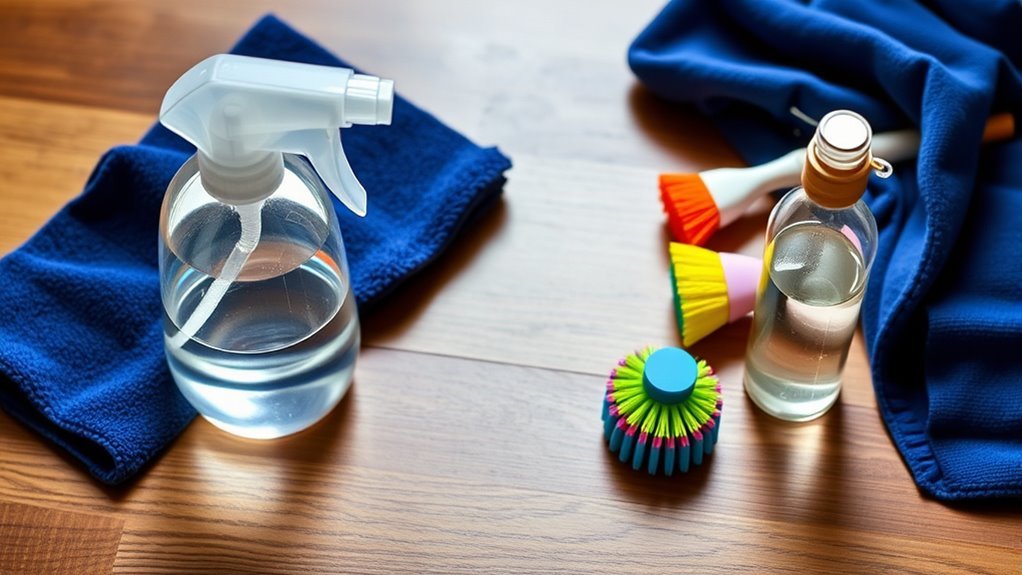
To clean stains effectively, you’ll want microfiber cloths for gentle wiping without damage, along with stiff or soft stain removal brushes for targeted scrubbing. Spray bottles help apply cleaning solutions evenly, while absorbent sponges and towels soak up liquids quickly. Don’t forget protective gloves to keep your hands safe from harsh chemicals. Using these essential tools will make tackling stains easier and faster, setting you up to explore even more tips and tricks.
Microfiber Cloths for Gentle and Effective Cleaning
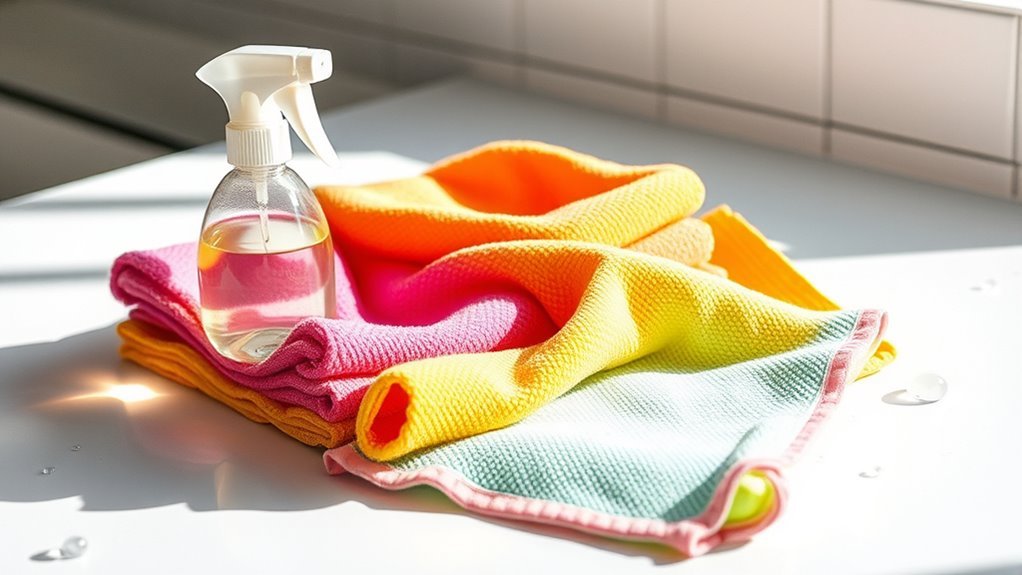
Microfiber cloths are a must-have when you want to tackle stains without damaging surfaces. You’ll appreciate the microfiber benefits, like their ultra-fine fibers that trap dirt and liquids effortlessly. These cloths let you clean thoroughly with just water or minimal cleaning solutions, giving you freedom from harsh chemicals. When using microfiber, remember simple cleaning techniques: gently blot or wipe stains without scrubbing aggressively, preserving the material underneath. You’ll find it’s easy to switch between dry and damp cloths to lift grime and absorb moisture quickly. This versatility means you can handle spills or dusty surfaces with one tool, making your cleaning routine more efficient and eco-friendly. Embracing microfiber cloths empowers you to clean smart and maintain your space confidently.
Stain Removal Brushes and Scrubbers
While microfiber cloths handle many stains gently, some messes need a bit more muscle. That’s where stain removal brushes and scrubbers come in. You’ll want to choose the right brush material types—like stiff nylon for tough grime or softer natural bristles for delicate fabrics. These tools let you tackle stubborn stains with targeted stain removal techniques, giving you control over pressure and movement. Using the right brush helps loosen dirt without damaging surfaces, freeing you from harsh chemicals. Whether it’s a scrubbing pad for carpets or a small brush for upholstery, having a variety of brushes expands your cleaning freedom. Remember, the key is matching brush type to stain and fabric, so you get the best clean without any damage.
Spray Bottles for Applying Cleaning Solutions
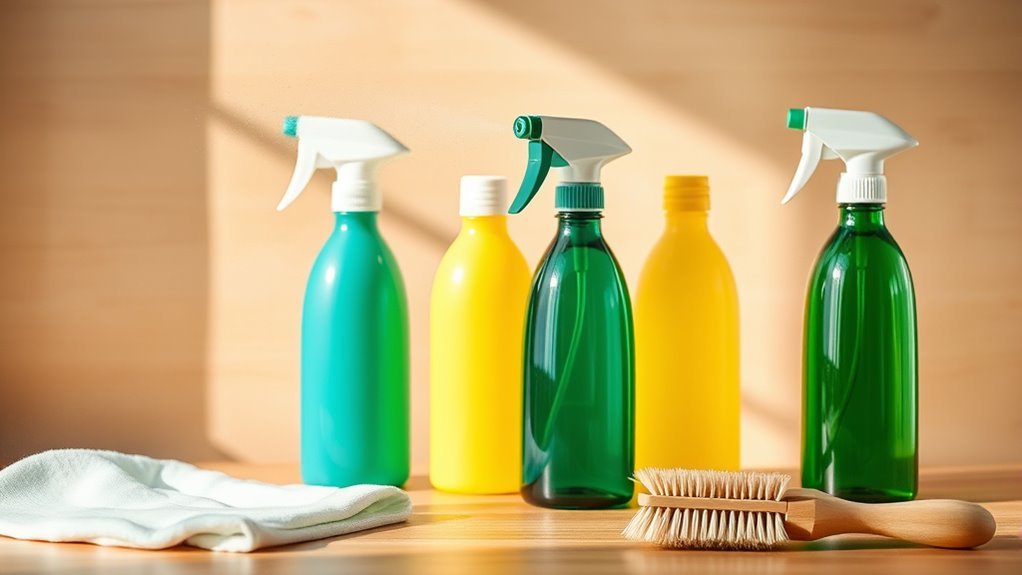
Three key benefits make spray bottles essential for applying cleaning solutions: they offer controlled distribution, reduce waste, and improve reach. When choosing spray bottle types, consider options like fine mist for delicate surfaces or adjustable nozzles for versatile use. This lets you tailor your cleaning approach, giving you freedom to tackle any stain efficiently.
To keep your spray bottles working smoothly, regular spray bottle maintenance is a must. Clean nozzles prevent clogs, and rinsing bottles after use avoids residue buildup.
Here’s why you’ll appreciate using spray bottles:
- Precise application targets stains without over-saturating areas.
- Less chemical waste saves money and the environment.
- Extended reach helps you clean awkward spots effortlessly.
With the right spray bottle and upkeep, you’re equipped to handle stains your way.
Absorbent Sponges and Towels
When tackling stains, choosing the right absorbent sponge or towel can make all the difference. You’ll want to know which materials soak up liquids best and how to use them effectively. Let’s explore the types of towels available and how to pick the perfect one for your cleaning needs.
Types of Absorbent Materials
Because stains often require quick action, having the right absorbent materials on hand can make all the difference. Choosing the right type depends on the stain types and your cleaning style. Here are three common absorbent materials you should consider:
- Cellulose Sponges – Great for soaking up liquid spills quickly. They’re reusable but can hold onto odors if not dried properly.
- Microfiber Towels – Excellent for delicate surfaces and versatile for various stain types. They trap dirt and moisture efficiently without scratching.
- Cotton Towels – Highly absorbent and durable, perfect for heavy liquids. They’re easy to wash and provide a natural option.
Choosing the Right Towel
Selecting the right towel can make stain removal faster and more effective. When choosing towels, consider towel materials carefully—cotton is highly absorbent and gentle, while microfiber grabs stains quickly without spreading them. You want a towel that doesn’t just soak up liquid but also lifts the stain without damaging surfaces. Don’t overlook towel sizes, either. Smaller towels are perfect for targeted stains, giving you control and preventing waste, while larger towels are handy for bigger spills or multiple stain spots. By matching towel materials and towel sizes to your cleaning needs, you gain freedom to tackle stains confidently and efficiently. Remember, the right towel is your ally, helping you clean smarter, not harder.
Proper Usage Techniques
Although choosing the right absorbent sponge or towel is essential, knowing how to use them properly makes all the difference in stain removal. To maximize your cleaning freedom, follow this proper technique when working with cleaning solutions:
- Blot, don’t rub: Gently press your sponge or towel onto the stain to absorb liquids without spreading them further.
- Use the right pressure: Apply enough force to lift the stain but avoid damaging the fabric or surface.
- Rotate and replace: Switch to a clean section or a fresh towel frequently to prevent re-depositing dirt.
Protective Gloves for Safe Handling
When tackling stains, you’ll want to choose the right type of protective gloves, like latex, nitrile, or rubber, to keep your hands safe. Wearing gloves not only protects your skin from harsh chemicals but also helps prevent cross-contamination. Let’s explore how the right gloves can make your cleaning process safer and more effective.
Types of Protective Gloves
Gloves are your first line of defense against harsh chemicals and stubborn stains. Choosing the right type lets you clean confidently and protects your skin without restricting your freedom. Here are three common types you’ll want to know about:
- Latex gloves – Flexible and comfortable, these are perfect for light-duty tasks. They offer great sensitivity but watch out if you have allergies.
- Nitrile gloves – Durable and chemical-resistant, nitrile gloves are excellent for tougher jobs. They’re a smart alternative if latex isn’t an option.
- Vinyl gloves – Cost-effective and suitable for short tasks, vinyl gloves provide basic protection but aren’t as durable as latex or nitrile.
Pick the gloves that fit your needs so you can stay free to tackle any stain safely and effectively.
Benefits of Wearing Gloves
Even if you’re careful, handling cleaning chemicals and stubborn stains can expose your skin to irritants and harmful substances. Wearing gloves offers essential skin protection, creating a barrier between you and harsh elements. Choosing the right glove materials, like nitrile or latex, guarantees durability and comfort while preventing allergic reactions. Gloves not only protect your hands but also give you the freedom to tackle tough stains confidently without worrying about damage or irritation. They help maintain your skin’s health, avoiding dryness and redness caused by direct chemical contact. By incorporating gloves into your cleaning routine, you preserve your skin’s integrity and enjoy a safer, more efficient stain removal experience—giving you peace of mind and the freedom to clean boldly.
Portable Steam Cleaners for Deep Stain Removal
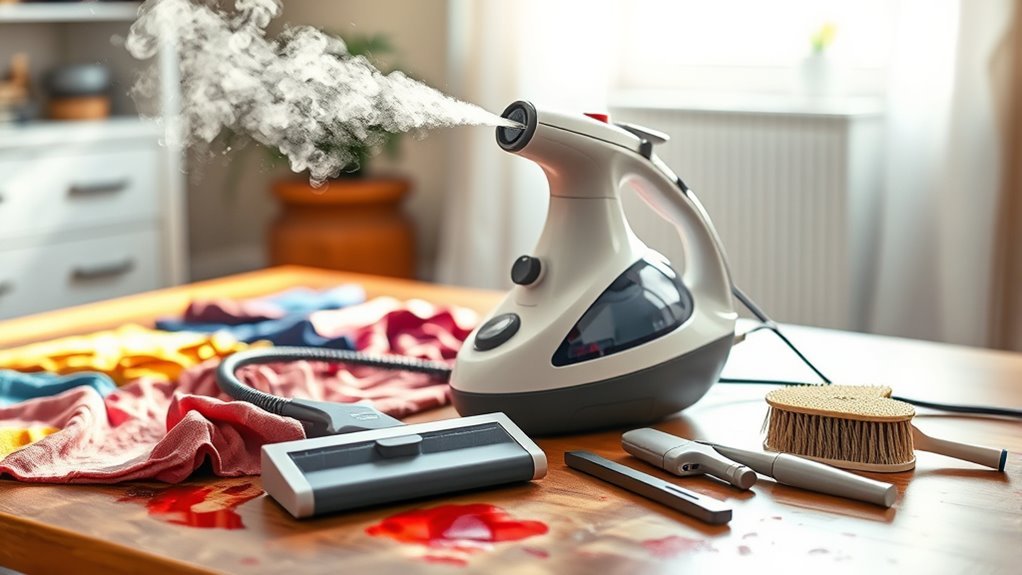
If you’re tackling stubborn stains that won’t budge with traditional methods, portable steam cleaners can be a game-changer. They harness the power of high-temperature steam to break down dirt and grime deep within fabrics and surfaces without harsh chemicals. The steam cleaner benefits include sanitizing and deodorizing while loosening tough stains, giving you a thorough clean wherever you need it.
Portable steam cleaners tackle tough stains, sanitize, and deodorize using high-temperature steam without harsh chemicals.
Here are three portable cleaner features you’ll appreciate:
- Lightweight and cordless design for easy maneuverability and freedom of movement.
- Quick heat-up time, so you’re ready to clean in minutes.
- Versatile attachments that tackle various surfaces—from upholstery to tiles.
With these tools, you’re equipped to reclaim your space from stubborn stains efficiently and effortlessly.
Frequently Asked Questions
Can Natural Ingredients Replace Commercial Stain Removers Effectively?
You might wonder if natural stain removers can really match the effectiveness of commercial ones. While they often work well on everyday spills, their effectiveness comparison shows they may struggle with tougher stains. However, using natural options gives you freedom from harsh chemicals and lets you control what goes on your clothes. So, if you’re after a safer, eco-friendly choice, natural stain removers are worth trying, though they might not always replace commercial products entirely.
How Do I Prevent Stains From Setting Permanently?
Did you know that acting within five minutes of a spill can increase stain removal success by 90%? To prevent stains from setting permanently, you’ve got to take immediate action. Blot, don’t rub, and use cold water initially. Remember, stain prevention tips like treating spots quickly and avoiding heat until the stain’s gone will keep your clothes looking fresh. Stay proactive, and stains won’t hold you back!
Are There Eco-Friendly Alternatives to Conventional Cleaning Tools?
Absolutely, you can choose eco-friendly alternatives that give you freedom from harsh chemicals and waste. Biodegradable sponges break down naturally, so you’re not adding to landfill. Reusable cloths are another great option—they’re durable, washable, and cut down on single-use products. By switching to these tools, you’re making a positive impact on the planet while keeping your space clean and fresh. It’s freedom with responsibility.
What Are the Best Methods for Cleaning Delicate Fabrics?
When cleaning delicate fabrics, you’ll want to choose gentle detergents that respect the fibers and preserve their softness. Avoid harsh chemicals and opt for cold water to prevent damage. Treat stains promptly by dabbing, not rubbing, and always check fabric care labels for specific instructions. By taking these steps, you’ll keep your garments looking fresh and vibrant while enjoying the freedom to wear them without worry.
How Often Should Cleaning Tools Be Replaced or Sanitized?
Imagine the crisp freshness of a newly opened tool versus the dullness of one overused and grimy. You should match your cleaning frequency with your tool lifespan—sanitize brushes and cloths after each use to keep freedom from germs, but replace them when wear dulls their edge or they start to smell. This balance lets you maintain your tools’ effectiveness without being chained to constant replacements, giving you the freedom to clean smart and live easy.