
How Much Does It Cost to Clear Trees? A Comprehensive Breakdown
Clearing trees can cost anywhere from $200 to $2,000 or more, depending on various factors such as the tree size, location, and condition. Understanding these factors is critical for effective budgeting and decision-making when it comes to tree removal. In this article, we will explore the various elements that influence the cost of tree removal, provide average costs based on tree sizes, discuss additional services that may affect pricing, and offer insights into whether to hire professionals or consider a DIY approach.
Factors Influencing Tree Removal Costs
The cost of tree removal is determined by several factors that can significantly influence the final bill.
– Tree Size and Height: Larger trees, which can exceed 60 feet in height, require more specialized equipment and additional manpower for safe removal. The time involved in cutting down, sectioning, and disposing of the tree adds to the overall cost. Conversely, smaller trees can often be removed more quickly and efficiently, leading to lower costs.
– Location: If the tree is situated close to power lines, buildings, or roads, additional precautions must be taken to ensure safety during the removal process. This can lead to higher costs due to the need for specialized equipment and more experienced personnel trained to handle potentially hazardous situations.
– Condition of the Tree: A tree that is diseased or dead can be more challenging to remove safely due to the risk of it breaking apart during the removal process. This could require additional labor and time, thereby increasing costs.
Average Costs by Tree Size
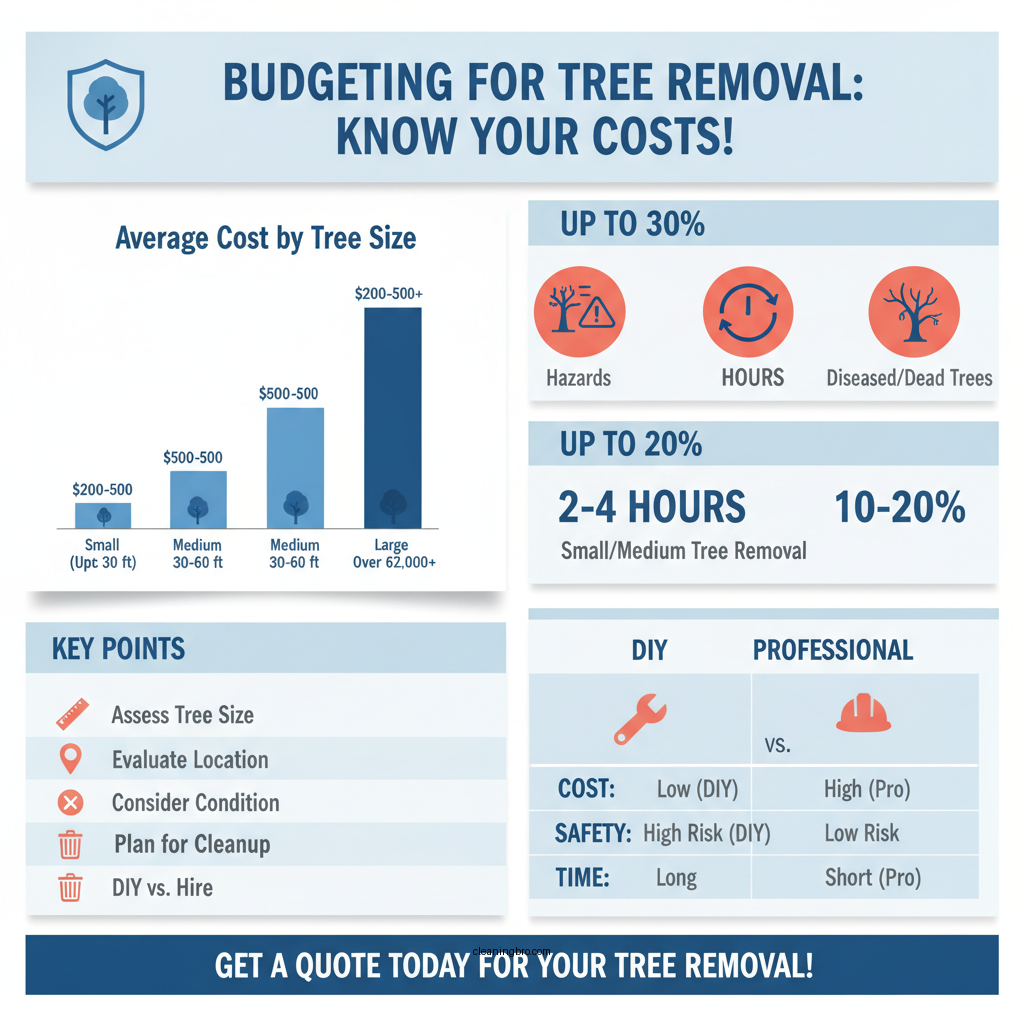
Understanding the average costs associated with different tree sizes can help you better prepare your budget.
– Small Trees (up to 30 feet): Removal costs for small trees typically range from $200 to $500. This price range often includes the basic removal service and may cover minor cleanup.
– Medium Trees (30 to 60 feet): For medium-sized trees, the expected cost is between $500 and $1,000. This cost accounts for the additional time and equipment needed to safely remove trees of this height.
– Large Trees (over 60 feet): Large trees can cost anywhere from $1,000 to $2,000 or more. The complexity of the removal process and the equipment required contribute to the higher price point.
Average Tree Removal Costs by Size (2023)
| # | Tree Size | Height | Average Cost |
|---|---|---|---|
| 1 | Small Trees | Up to 30 feet | $200 – $500 |
| 2 | Medium Trees | 30 to 60 feet | $500 – $1,000 |
| 3 | Large Trees | Over 60 feet | $1,000 – $2,000+ |
Additional Services That Affect Pricing
When budgeting for tree removal, consider additional services that may be necessary and their associated costs.
– Stump Grinding: After a tree is removed, the stump typically remains. Stump grinding can cost between $75 and $300, depending on the size and depth of the stump. This service is essential for preventing new growth and maintaining the aesthetics of your landscape.
– Debris Removal: Many tree removal services provide debris removal, which can add an extra fee to your total cost, usually around $100 to $200. If you choose to handle debris disposal yourself, you may save on costs but will need to factor in your time and effort.
Seasonal Variations in Costs
Tree removal costs can fluctuate based on the season.
– Winter vs. Summer Pricing: Generally, tree removal costs are lower in winter. During this time, demand for tree services decreases, allowing companies to offer more competitive pricing. Conversely, summer often sees higher rates due to increased demand and the need for additional personnel.
– Emergency Services: Following storms, the demand for tree removal spikes, especially if trees pose a danger to homes or roads. Emergency services can come at a premium, sometimes costing 20-50% more than standard removal prices.
DIY vs. Professional Services
When considering tree removal, homeowners often weigh the option of doing it themselves against hiring professionals.
– DIY Considerations: While removing a tree yourself may appear to be cost-effective, it can pose significant dangers. Without proper training and equipment, the risk of injury is high, and mistakes can lead to property damage or even personal injury.
– Benefits of Hiring Professionals: Professional tree removal services possess the necessary expertise, equipment, and insurance to safely remove trees, especially those located near hazards. Hiring a professional can save time and prevent costly errors, making it a worthwhile investment.
Getting Quotes and Estimates
To ensure you receive the best pricing for tree removal, consider the following steps:
– Obtaining Multiple Quotes: Contact several companies for estimates to compare costs and services. This practice allows you to gauge market rates and find a service that fits your budget.
– What to Ask: When seeking quotes, ask about the company’s experience, insurance coverage, and any guarantees they offer. Understanding the scope of their services and their qualifications can help you make an informed decision.
Environmental Considerations
Tree removal can have environmental implications; therefore, it’s essential to consider the following:
– Permits and Regulations: Many municipalities require permits for tree removal, especially for larger trees or those deemed significant to local ecology. Failing to obtain the necessary permits can result in fines and legal complications.
– Replanting Options: Consider discussing replanting options with your tree removal service. Many companies offer these services to help maintain local ecology while ensuring that your landscape remains aesthetically pleasing.
Summarizing the costs associated with tree removal is crucial for effective budgeting. By understanding the factors that influence pricing and considering both DIY and professional options, you can make an informed decision. If you’re ready to clear your trees, start by contacting local tree removal services for quotes, and ensure you choose a reputable provider for the best results.
Frequently Asked Questions
How much does it typically cost to clear trees from my property?
The cost to clear trees from your property can vary widely based on factors such as tree size, location, and the complexity of the job. On average, homeowners can expect to pay between $200 to $2,000 per tree. Larger trees or those in hard-to-reach areas may incur higher costs, while smaller trees may be less expensive to remove.
What factors influence the cost of tree removal services?
Several factors influence the cost of tree removal services, including the tree’s height and diameter, its species, and the proximity to structures or power lines. Additionally, the need for stump grinding, debris removal, and the difficulty of access can also impact the overall price. Obtaining multiple quotes from local tree removal companies can help you find the best deal.
Why is it important to hire a professional for tree clearing?
Hiring a professional for tree clearing is crucial for safety and efficiency. Professionals have the expertise, equipment, and insurance to handle potentially hazardous situations, such as falling branches or trees. Additionally, they can ensure proper disposal of debris and avoid damage to surrounding property.
What is the best time of year to clear trees?
The best time to clear trees is typically during late fall or winter when trees are dormant. This timing minimizes the risk of damage to surrounding vegetation and allows for easier access to the site due to the absence of leaves. Additionally, some tree removal services may offer lower rates during the off-season.
Which types of trees are more expensive to remove?
Certain types of trees, such as oak, pine, and large hardwoods, are generally more expensive to remove due to their size and density. Trees with extensive root systems or those located near structures can also increase removal costs. Always consult with a professional tree removal service to get an accurate estimate based on the specific tree species on your property.
References
- https://www.fs.usda.gov/managing-land/forest-management/forest-resources/tree-removal
https://www.fs.usda.gov/managing-land/forest-management/forest-resources/tree-removal - https://www.extension.purdue.edu/extmedia/for/for-45.html
https://www.extension.purdue.edu/extmedia/for/for-45.html - https://www.ext.colostate.edu/mg/Gardennotes/145.pdf
https://www.ext.colostate.edu/mg/Gardennotes/145.pdf - https://www.ncbi.nlm.nih.gov/pmc/articles/PMC6191619/
https://www.ncbi.nlm.nih.gov/pmc/articles/PMC6191619/ - https://www.nature.com/articles/s41598-019-42520-8
https://www.nature.com/articles/s41598-019-42520-8 - https://www.sciencedirect.com/science/article/pii/S1470160X16303623
https://www.sciencedirect.com/science/article/pii/S1470160X16303623 - Google Scholar Google Scholar
https://scholar.google.com/scholar?q=cost+of+tree+removal - Google Scholar Google Scholar
https://scholar.google.com/scholar?q=tree+removal+expenses - Google Scholar Google Scholar
https://scholar.google.com/scholar?q=tree+clearing+costs+analysis - Google Scholar Google Scholar
https://scholar.google.com/scholar?q=how+much+does+it+cost+to+clear+trees