How Much to Clean and Seal Pavers: A Complete Guide
Cleaning and sealing pavers typically costs between $0.50 to $2.00 per square foot, depending on various factors like location, size of the area, and the condition of the pavers. This comprehensive guide will help you understand the cost breakdown, factors influencing these costs, recommended cleaning and sealing frequencies, and whether to hire professionals or tackle the job yourself. With the right insights, you can make informed decisions about maintaining your pavers.
Understanding the Cost Breakdown
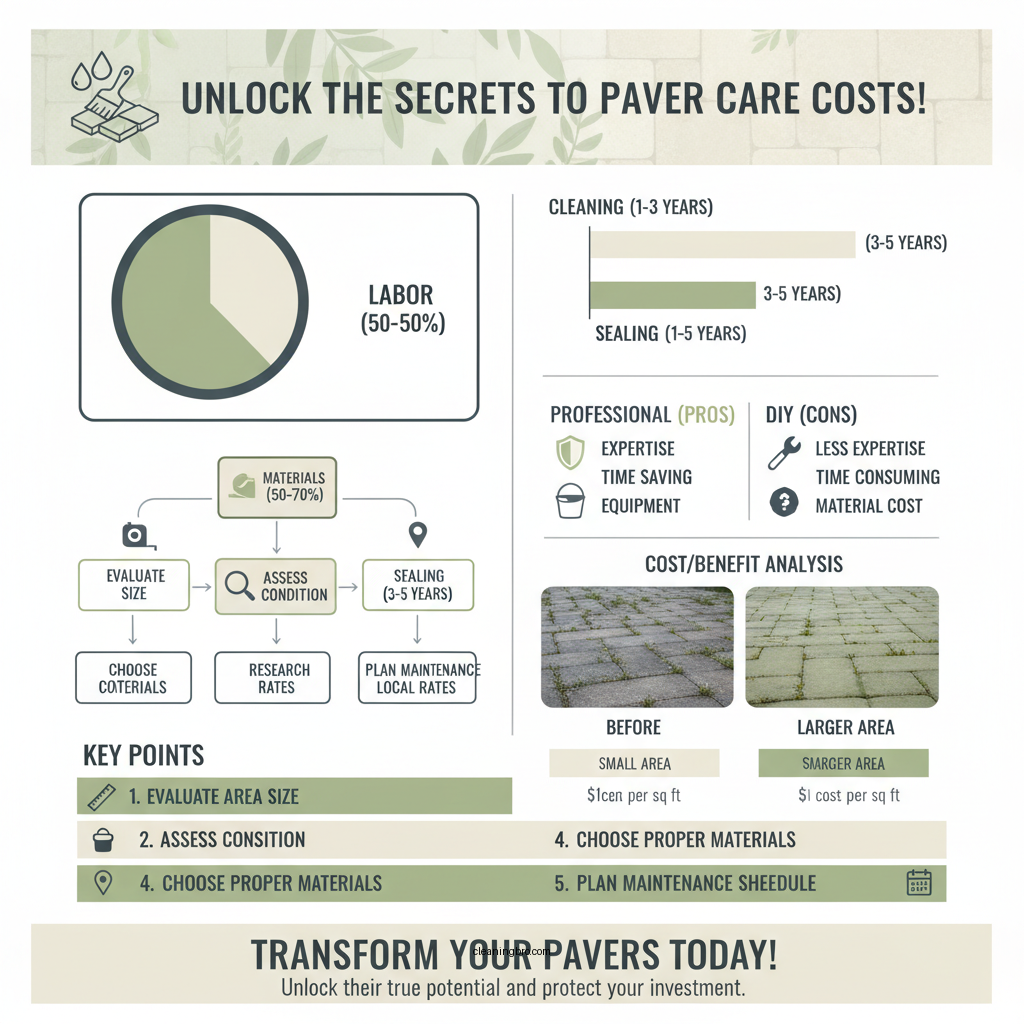
When considering the cost of cleaning and sealing pavers, it’s important to break down the expenses involved. Labor generally accounts for 50-70% of the total price. This includes the time and expertise of the workers who will perform the cleaning, sealing, and any necessary repairs. Depending on the region, labor costs can vary significantly; urban areas often have higher rates than rural locations.
Materials also play a crucial role in the overall expenses. The quality and type of sealant and cleaning solutions you choose can differ widely in price. For instance, eco-friendly sealants may be more expensive but can provide better long-term protection. On average, you might expect to pay between $0.50 to $2.00 per square foot, which includes both labor and materials.
Factors Influencing Cleaning and Sealing Costs
Several factors can influence the costs associated with cleaning and sealing pavers:
– Size of the area: Larger areas may reduce the per-square-foot cost due to economies of scale. For instance, cleaning a driveway may cost less per square foot than cleaning a small patio.
– Condition of pavers: Pavers that are heavily stained, damaged, or overgrown with weeds will require more intensive cleaning and potentially repairs, which can increase costs. If your pavers have not been maintained in years, expect to pay more for restoration services.
– Type of pavers: Different materials (like concrete, brick, or stone) may require specific cleaning and sealing products, which can affect overall costs.
– Geographic location: Pricing can vary significantly by region. Areas with higher labor rates or more expensive materials will see higher costs.
Recommended Cleaning Frequency
Maintaining the cleanliness and integrity of pavers is essential to prolong their lifespan and aesthetic appeal.
– Residential pavers: For most residential pavers, it is recommended to clean them every 1-3 years, depending on factors like foot traffic, weather exposure, and surrounding vegetation. High-traffic areas may require more frequent cleaning to prevent dirt buildup and staining.
– Sealing: Sealing is typically recommended every 3-5 years. This process helps protect pavers from stains, moisture, and UV damage, significantly extending their life when done regularly.
DIY vs. Professional Services
Deciding whether to clean and seal your pavers yourself or hire professionals involves weighing several factors:
– DIY cleaning and sealing: This option can save you money, but it requires a significant investment of time and effort. You will need to buy or rent equipment such as pressure washers and sealant applicators, along with cleaning solutions. Additionally, if you lack experience, you may not achieve the same quality of finish that professionals can provide.
– Hiring professionals: Engaging professionals ensures high-quality results and saves you time, especially for larger projects. Professionals typically come equipped with the right tools and knowledge to handle various paver types and conditions. Although this option is more expensive, the peace of mind and quality of work might justify the cost.
Tools and Materials Needed
If you choose to take on the project yourself, be prepared with the right tools and materials. Here’s a list of essential items:
– Pressure washer: For deep cleaning pavers.
– Brushes: For scrubbing stubborn stains and dirt.
– Sealant applicators: To evenly distribute sealant across the pavers.
– Recommended Cleaning Solutions:
– Paver cleaners: Specifically formulated to remove stains and dirt.
– Degreasers: Helpful for removing oil stains or other tough spots.
– Sealant products: Choose a sealant based on your paver material and desired finish.
Common Mistakes to Avoid
When cleaning and sealing your pavers, there are several common pitfalls to be aware of:
– Skipping the cleaning step before sealing: This can lead to poor adhesion of the sealant, resulting in peeling or flaking. Ensure that pavers are thoroughly cleaned and dried before applying any sealant.
– Over-sealing: Applying too many layers of sealant can create a glossy appearance and trap moisture underneath, leading to mold and damage to the pavers. It’s best to follow the manufacturer’s recommendations for the number of coats.
Average Cost of Cleaning and Sealing Pavers (2023)
| # | Service Type | Average Cost per Sq. Ft. | Recommended Frequency | Effectiveness |
|---|---|---|---|---|
| 1 | Pressure Washing | $0.50-$1.00 | Every 1-3 years | High |
| 2 | Deep Cleaning | $1.00-$1.50 | Every 1-2 years | Very High |
| 3 | Sealing | $1.50-$2.00 | Every 3-5 years | High |
| 4 | Weed Removal | $0.75-$1.25 | As needed | Moderate |
| 5 | Stain Removal | $1.00-$2.00 | As needed | High |
| 6 | Repair Work | $2.00-$3.00 | As needed | High |
| 7 | Joint Sand Replacement | $1.00-$1.50 | Every 5 years | Moderate |
DIY vs Professional Services for Paver Maintenance
| Feature | ⭐ DIY | Professional Services | Cost |
|---|---|---|---|
| Initial Cost | Low | High | $0.50-$2.00/sq ft |
| Quality of Work | Variable | Consistent | N/A |
| Time Commitment | High | Low | N/A |
| Equipment Needed | Yes | No | N/A |
| Availability | Flexible | Scheduled | N/A |
| Expertise Required | Moderate | High | N/A |
| Guarantee | None | Yes | N/A |
| Long-term Value | Variable | High | N/A |
| 🏆 Best For | Budget-conscious homeowners | Those seeking quality | N/A |
In summary, maintaining your pavers is essential to prolonging their lifespan and enhancing their appearance. The average costs for cleaning and sealing can vary based on multiple factors, including area size, geographic location, and condition of the pavers. Whether you choose to do it yourself or hire professionals, be mindful of the common mistakes to avoid and ensure you have the right tools and materials. With consistent care, your pavers will continue to look great for years to come.
Frequently Asked Questions
How much does it typically cost to clean and seal pavers?
The cost to clean and seal pavers generally ranges from $1 to $3 per square foot. Factors influencing the price include the size of the area, the type of sealant used, and the condition of the pavers. For a typical driveway or patio, homeowners can expect to pay between $300 and $800 for professional cleaning and sealing services.
What is the best way to clean and seal pavers?
The best way to clean and seal pavers involves using a pressure washer to remove dirt and grime, followed by applying a high-quality paver sealant. It’s important to allow the pavers to dry completely before sealing, which can take 24 to 48 hours. For optimal results, consider hiring a professional service that specializes in paver maintenance.
Why is it important to seal pavers after cleaning?
Sealing pavers after cleaning is important because it helps protect them from stains, fading, and damage caused by weather and foot traffic. A good sealant fills the pores of the pavers, preventing water infiltration and the growth of weeds and moss. This not only enhances the aesthetic appeal of your outdoor space but also prolongs the life of your pavers.
How often should I clean and seal my pavers?
It is recommended to clean and seal pavers every 1 to 3 years, depending on the level of traffic and exposure to the elements. High-traffic areas may require more frequent maintenance, while less used spaces can go longer between cleanings. Regular maintenance helps preserve the appearance and structural integrity of your pavers.
Which type of sealant is best for pavers?
The best type of sealant for pavers is typically a water-based or solvent-based acrylic sealant, as they provide excellent protection while allowing the pavers to breathe. For natural stone pavers, a penetrating sealant is advisable, as it offers deep protection against stains and moisture. Always choose a sealant that is specifically designed for pavers to ensure optimal performance and longevity.
References
- Home – Indiana Yard and Garden – Purdue Consumer HorticulturePurdue University Indiana Yard and G…
https://www.hort.purdue.edu/ext/cleaning_pavers.pdf - https://www.extension.umn.edu/garden/landscaping/cleaning-pavers/
https://www.extension.umn.edu/garden/landscaping/cleaning-pavers/ - https://www.sciencedirect.com/topics/earth-and-planetary-sciences/paver-sealing
https://www.sciencedirect.com/topics/earth-and-planetary-sciences/paver-sealing - https://www.britannica.com/science/paving
https://www.britannica.com/science/paving - https://www.nal.usda.gov/legacy/legacy/paving-stones
https://www.nal.usda.gov/legacy/legacy/paving-stones - Google Scholar Google Scholar
https://scholar.google.com/scholar?q=how+to+clean+and+seal+pavers - Google Scholar Google Scholar
https://scholar.google.com/scholar?q=paver+maintenance+cleaning+sealing - Google Scholar Google Scholar
https://scholar.google.com/scholar?q=paver+cleaning+methods - Google Scholar Google Scholar
https://scholar.google.com/scholar?q=how+much+to+clean+and+seal+pavers - how much to clean and seal pavers – Search results
https://en.wikipedia.org/wiki/Special:Search?search=how+much+to+clean+and+seal+pavers