How Often Should You Clean Invisalign Aligners?
Cleaning your Invisalign aligners is crucial for maintaining optimal oral hygiene and ensuring that they perform effectively. Ideally, you should clean your aligners every time you remove them, especially after meals. At a minimum, aim for a thorough cleaning twice daily as part of your oral hygiene routine. This article will guide you through the best practices for cleaning your aligners, explain why it’s important, and offer tips for keeping them in top condition throughout your treatment.
Why Cleaning Invisalign Is Important
Cleaning your Invisalign aligners is not just a matter of aesthetics; it plays a vital role in your overall oral health. Regular cleaning helps to prevent bacterial buildup, which can lead to oral health issues such as cavities, gum disease, and bad breath. When aligners are not cleaned properly, they can harbor harmful bacteria that can multiply and contribute to plaque formation.
Additionally, maintaining the clarity and aesthetics of your aligners is essential for a successful treatment. Stains and discoloration can become apparent if aligners are not cleaned frequently, which defeats the purpose of using a nearly invisible orthodontic solution. Furthermore, regular cleaning improves comfort by eliminating residues that can cause irritation and unpleasant odors, making your daily experience more pleasant.
How to Properly Clean Your Aligners
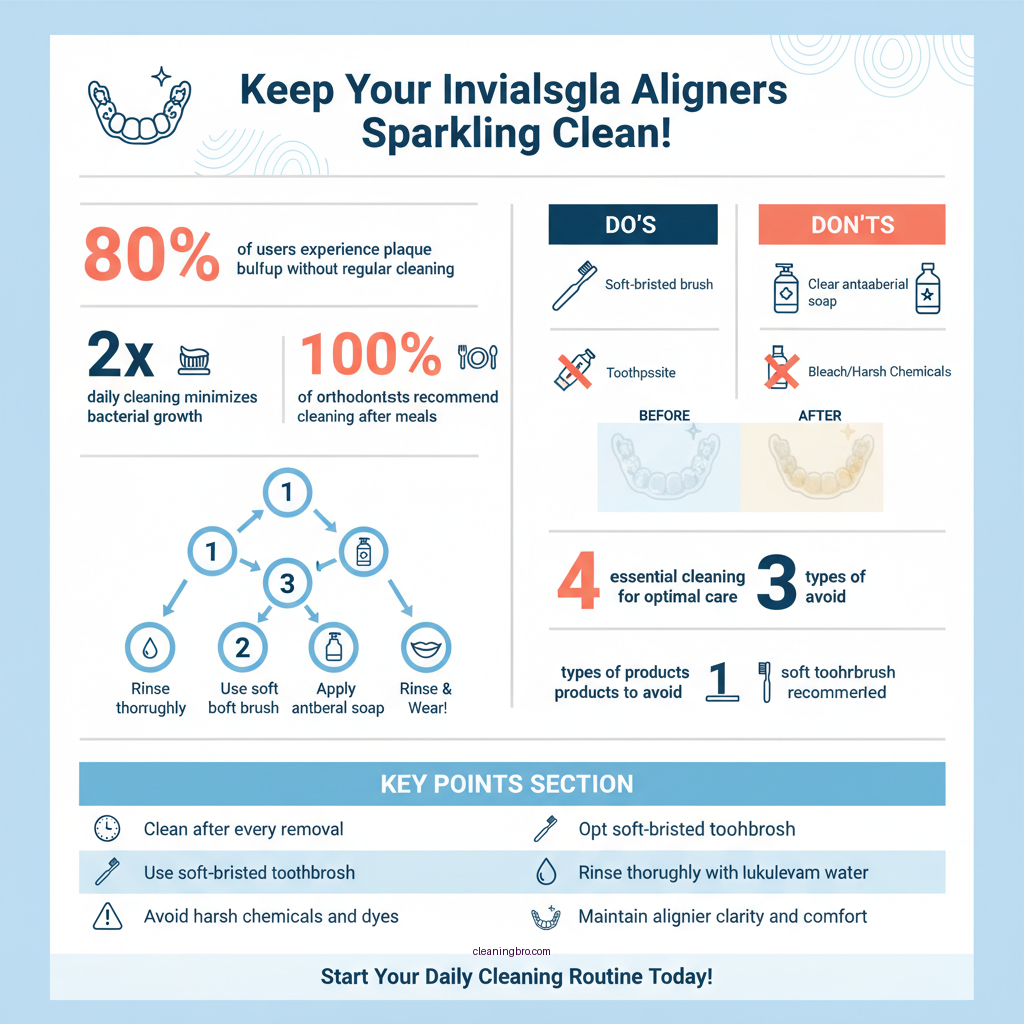
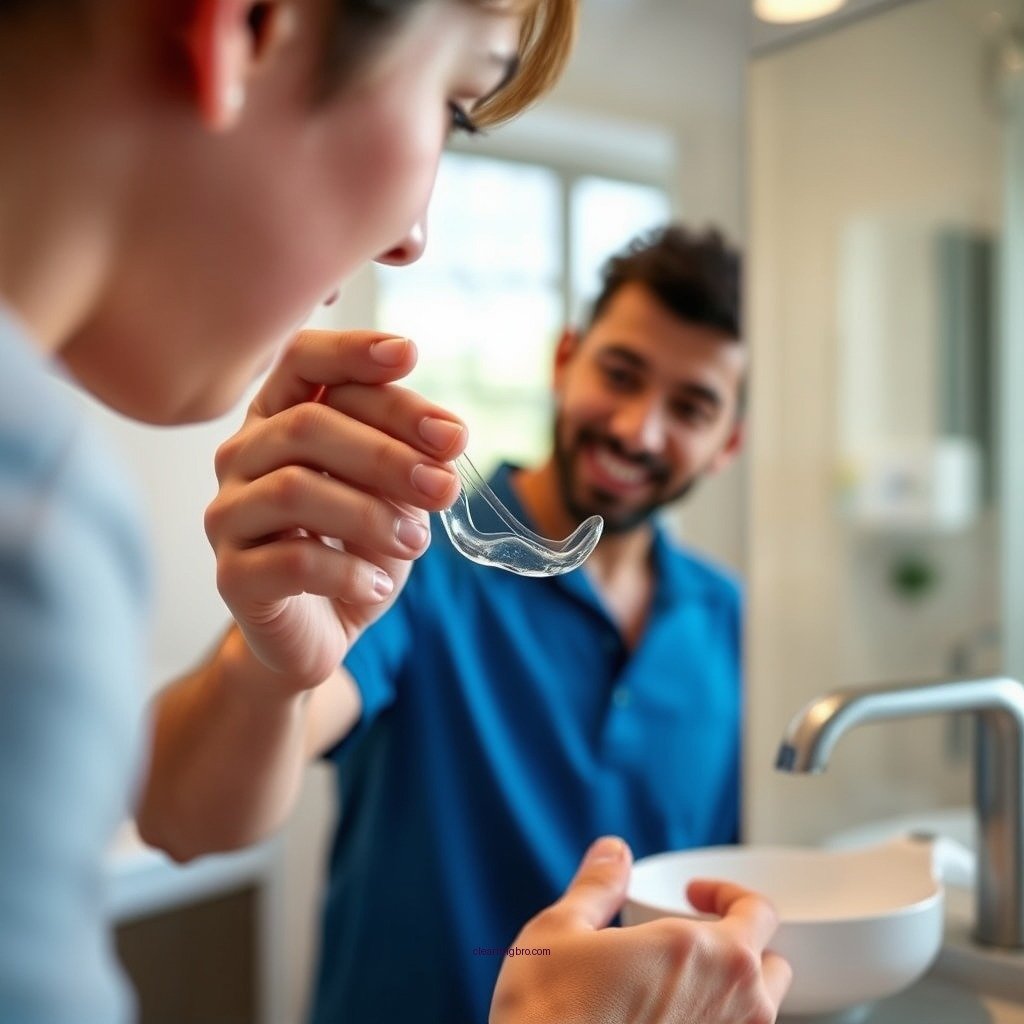
To ensure that your aligners are cleaned effectively, follow these steps:
1. Use a Soft Toothbrush: A soft-bristled toothbrush is ideal for cleaning your aligners. It is gentle enough to avoid scratching the surface while effectively removing plaque and debris.
2. Choose Clear, Antibacterial Soap: When cleaning your aligners, opt for a clear, antibacterial soap to ensure that you are not introducing any dyes or flavors that could stain or damage the aligners. Avoid using toothpaste, as it may contain abrasive materials that can scratch the aligners.
3. Rinse Thoroughly: After brushing, rinse your aligners thoroughly with lukewarm water. This step is crucial to remove any soap residue, which can cause an unpleasant taste or irritation in your mouth.
4. Avoid Harsh Chemicals: Stay away from bleach or other harsh chemicals that can damage the material of the aligners. Stick to gentle cleaning solutions designed specifically for orthodontic appliances.
Recommended Cleaning Frequency
For optimal results, clean your aligners every time you remove them. This is particularly important after meals when food particles and sugars can stick to the aligners, creating a breeding ground for bacteria.
At a minimum, incorporate aligner cleaning into your twice-daily oral hygiene routine. This should coincide with your regular brushing and flossing schedule. If you find that your aligners are still not as fresh as they should be, consider using additional cleaning solutions or devices designed for deeper cleaning.
Best Products for Cleaning Invisalign
Several products can enhance the cleaning process for your Invisalign aligners:
1. Cleaning Crystals: These are specifically formulated for Invisalign and other clear aligners. They help to remove stains and kill bacteria without damaging the aligner material.
2. Ultrasonic Cleaners: These devices use high-frequency sound waves to create bubbles in a cleaning solution, which then help to dislodge debris from the aligners. This method provides a thorough clean and is highly effective for maintaining hygiene.
3. Non-abrasive, Non-alcoholic Solutions: Look for cleaning options that are specifically labeled as safe for use with clear aligners. Avoid any products that contain alcohol, as it can dry out the aligners and cause them to become brittle over time.
Common Mistakes to Avoid
When cleaning your Invisalign aligners, be mindful of these common pitfalls:
1. Using Hot Water: Hot water can warp the aligners, compromising their fit and effectiveness. Always use lukewarm water when rinsing.
2. Colored Soaps or Mouthwashes: These products can stain the aligners, affecting their transparency and appearance. Stick to clear products to avoid discoloration.
3. Skipping Cleaning Sessions: Regular cleaning is essential. Skipping sessions can lead to plaque buildup, bad odors, and potential oral health issues.
Additional Tips for Maintaining Your Aligners
To keep your Invisalign aligners in excellent condition, consider the following tips:
– Store Aligners Properly: Always store your aligners in their designated case when not in use. This helps prevent contamination and damage.
– Regular Inspections: Periodically check your aligners for signs of wear or damage. Any irregularities should be reported to your orthodontist for assessment.
– Pair Cleaning with Dental Visits: Incorporate aligner cleaning discussions during your routine dental check-ups. Your dentist can provide personalized advice and tips tailored to your specific needs.
Maintaining a consistent cleaning schedule for your Invisalign aligners is essential for your oral health and the success of your treatment. By following these guidelines and establishing a daily habit, you can ensure that your aligners remain clean, clear, and effective throughout your journey to a beautiful smile.
Top Products for Cleaning Invisalign Aligners (2024)
| # | Product | Type | Effectiveness |
|---|---|---|---|
| 1 | Invisalign Cleaning Crystals | Crystals | High |
| 2 | Retainer Brite | Tablet | Medium |
| 3 | Ultrasonic Cleaner | Device | Very High |
| 4 | Mouthwash | Liquid | Low |
| 5 | Dish Soap | Liquid | Medium |
| 6 | Vinegar Solution | Liquid | Low |
| 7 | Baking Soda | Powder | Medium |
Effectiveness of Cleaning Methods for Invisalign Aligners (%)
Best Cleaning Methods for Invisalign Aligners
| Feature | ⭐ Invisalign Cleaning Crystals | Ultrasonic Cleaner | Retainer Brite |
|---|---|---|---|
| Ease of Use | ✅ | ✅ | ✅ |
| Effectiveness | High | Very High | Medium |
| Price | $15/box | $100 | $20/box |
| Portability | ✅ | ❌ | ✅ |
| Time Required | 5 mins | 10 mins | 10 mins |
| Availability | Widely Available | Specialty Stores | Widely Available |
| Customer Reviews | 4.8/5 | 4.5/5 | 4.3/5 |
| Safety | ✅ | ✅ | ✅ |
| Sustainability | ✅ | ✅ | ✅ |
| 🏆 Best For | Daily Use & Convenience | Deep Cleaning | Travel Use |
Staying consistent with cleaning your Invisalign aligners is crucial for both your oral health and the effectiveness of your treatment. By following these guidelines, you can ensure that your aligners remain clean and clear throughout your orthodontic journey. Make cleaning a daily habit, and you’ll be well on your way to a beautiful smile.
Frequently Asked Questions
How often should you clean your Invisalign aligners?
You should clean your Invisalign aligners at least twice a day—once in the morning and once before bed. This helps prevent the buildup of bacteria and plaque, ensuring your aligners remain clear and odor-free. It’s also advisable to rinse them whenever you remove them to maintain freshness throughout the day.
What is the best way to clean Invisalign aligners?
The best way to clean your Invisalign aligners is to use a gentle, non-abrasive soap or a specialized aligner cleaning solution. Avoid using toothpaste, as it can scratch the aligners. Additionally, you can soak them in a mixture of lukewarm water and vinegar for a deeper clean, but make sure to rinse thoroughly afterward.
Why is it important to clean your Invisalign aligners regularly?
Regular cleaning of your Invisalign aligners is crucial for maintaining oral hygiene and the effectiveness of your treatment. If not cleaned properly, aligners can harbor bacteria and food particles, leading to bad breath, tooth decay, or gum disease. Keeping them clean also ensures they remain transparent and comfortable to wear.
How should I clean my Invisalign aligners when I’m on the go?
When you’re on the go, it’s best to carry a travel-sized toothbrush and a case with you to clean your Invisalign aligners. If you don’t have access to a sink, simply rinse the aligners with water and use a cleaning solution or wipes specifically designed for aligners. This helps keep them fresh until you can give them a more thorough cleaning.
Which products should I avoid when cleaning my Invisalign aligners?
Avoid cleaning your Invisalign aligners with products that contain alcohol, bleach, or strong detergents, as they can damage the material. Additionally, steer clear of abrasive cleaners or toothpaste, as they can scratch the aligners and affect their clarity. Always opt for gentle, non-abrasive options to keep your aligners in optimal condition.
References
- https://www.mayoclinic.org/healthy-lifestyle/adult-health/in-depth/teeth-straightening/art-20046023
https://www.mayoclinic.org/healthy-lifestyle/adult-health/in-depth/teeth-straightening/art-20046023 - https://www.ncbi.nlm.nih.gov/pmc/articles/PMC6362109/
https://www.ncbi.nlm.nih.gov/pmc/articles/PMC6362109/ - https://www.ncbi.nlm.nih.gov/pmc/articles/PMC5828823/
https://www.ncbi.nlm.nih.gov/pmc/articles/PMC5828823/ - Oral health
https://www.who.int/news-room/questions-and-answers/item/oral-health - https://www.cdc.gov/oralhealth/conditions/cleaning-teeth.html
https://www.cdc.gov/oralhealth/conditions/cleaning-teeth.html - https://www.nature.com/articles/s41598-022-19156-1
https://www.nature.com/articles/s41598-022-19156-1 - Orthodontics | Definition & Practice | Britannica
https://www.britannica.com/science/orthodontics - https://www.reuters.com/article/us-health-orthodontics-idUSKBN2A22D9
https://www.reuters.com/article/us-health-orthodontics-idUSKBN2A22D9 - Google Scholar Google Scholar
https://scholar.google.com/scholar?q=how+often+should+you+clean+invisalign - Google Scholar Google Scholar
https://scholar.google.com/scholar?q=Invisalign+care+cleaning+frequency