How Often Should You Clean Your Invisalign Aligners?
Maintaining your Invisalign aligners is crucial for both hygiene and effectiveness. Ideally, you should clean your aligners every time you brush your teeth, which typically means at least twice a day. This consistent cleaning routine helps prevent bacteria buildup and keeps your aligners clear and odor-free. By adopting proper care and cleaning practices for your aligners, you can significantly enhance your orthodontic experience and ensure optimal results.
The Importance of Cleaning Your Aligners

Cleaning your Invisalign aligners is not just a matter of aesthetics; it is a significant aspect of your oral health. Regular cleaning prevents plaque and bacteria buildup, which can lead to various oral health issues, including cavities, gum disease, and bad breath. When aligners are not cleaned adequately, they can harbor harmful bacteria that may compromise your overall dental health.
Moreover, clean aligners enhance comfort and wearability. They fit more snugly and comfortably in the mouth, allowing for a more effective treatment process. If your aligners are coated with residue or odors, it may lead to discomfort, which can distract from your commitment to wearing them as prescribed. Therefore, maintaining a consistent cleaning routine is essential to ensure that your treatment remains on track and effective.
Daily Cleaning Routine
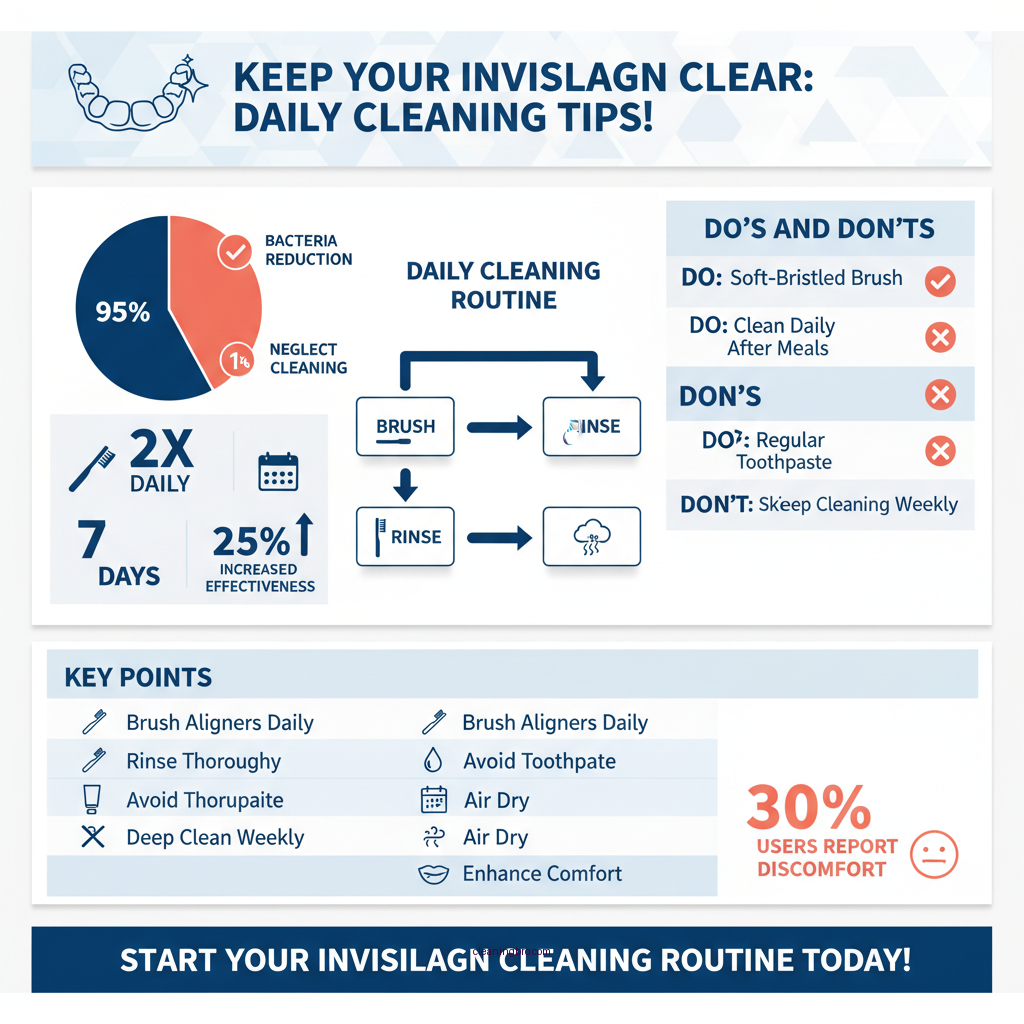

To keep your aligners in pristine condition, a daily cleaning routine is essential. Here’s how to maintain your aligners properly:
– Brush Your Aligners: Use a soft-bristled toothbrush and lukewarm water to gently brush your aligners. Avoid using a hard-bristled brush, as it can scratch the aligner surface, making them less effective and more prone to discoloration.
– Use Mild Soap: If desired, you can use a gentle, clear soap to clean your aligners. Make sure to choose a soap that is free of dyes and fragrances. Avoid regular toothpaste, as it may contain abrasive particles that can scratch the aligner material.
– Rinse Thoroughly: After brushing, rinse your aligners thoroughly under lukewarm water to remove any soap residue. This step is crucial, as soap left on the aligners can lead to an unpleasant taste in your mouth.
– Dry Properly: After cleaning, allow your aligners to air dry before placing them back in your mouth. This helps prevent moisture buildup, which can lead to bacterial growth.
How Often to Deep Clean
In addition to your daily cleaning routine, it is wise to incorporate a deeper clean into your schedule. Consider a deeper clean with Invisalign cleaning crystals or a soak in a vinegar solution once a week.
– Invisalign Cleaning Crystals: These specialized cleaning crystals are designed to remove stubborn stains and odors that regular cleaning may not eliminate. Simply dissolve the crystals in water and soak your aligners for the recommended time to restore their clarity.
– Vinegar Solution: You can create a vinegar solution by mixing one part white vinegar with three parts lukewarm water. Soak your aligners for approximately 15-30 minutes. Rinse thoroughly afterward to ensure no vinegar taste lingers.
Implementing these deep cleaning methods can significantly enhance the longevity and appearance of your aligners, ensuring they remain effective throughout your treatment.
Signs Your Aligners Need Cleaning
It is essential to be vigilant about the condition of your aligners. Here are some signs that indicate your aligners need cleaning:
– Noticeable Discoloration: If you see yellowing or any discoloration, it’s time for a thorough cleaning. Discolored aligners can be a sign of plaque buildup or staining from food and beverages.
– Odor: A smell emanating from your aligners is an indication that bacteria have developed. This is a clear sign that they require immediate cleaning.
– Discomfort or Irritation: If you experience discomfort or irritation while wearing your aligners, it may be due to unclean aligners harboring bacteria or leftover food particles. Cleaning your aligners can help alleviate these symptoms.
Tips for Maintaining Freshness
In addition to cleaning, there are several strategies to help maintain the freshness of your aligners:
– Rinse Your Aligners: Each time you remove your aligners, rinse them under lukewarm water. This minimizes buildup and prevents odors from developing.
– Avoid Eating or Drinking: It is advisable to avoid eating or drinking (except water) while wearing your aligners. Consuming food or beverages can lead to staining and unwanted residue on the aligners.
– Use a Protective Case: When not in use, always store your aligners in their protective case to prevent damage and contamination. Avoid wrapping them in napkins or placing them in pockets, as this can lead to misplacement or damage.
What to Avoid When Cleaning
While cleaning your aligners is essential, there are certain practices you should avoid to protect them:
– Avoid Abrasive Cleaners: Steer clear of abrasive cleaners or products not specifically designed for aligners. These can scratch the surface, leading to a dull appearance and reduced effectiveness.
– Hot Water: Never use hot water for cleaning your aligners, as it can warp the plastic material and compromise their fit. Always stick to lukewarm water for cleaning.
– Toothpaste: Avoid using toothpaste on your aligners, as many toothpaste brands contain abrasives that can scratch the aligner surface and cause cloudiness over time.
Top Cleaning Methods for Invisalign Aligners
| # | Cleaning Method | Effectiveness | Frequency |
|---|---|---|---|
| 1 | Warm Water & Toothbrush | Good | Daily |
| 2 | Invisalign Cleaning Crystals | Excellent | Weekly |
| 3 | Vinegar Solution | Very Good | Weekly |
| 4 | Gentle Soap & Water | Good | Daily |
| 5 | Hydrogen Peroxide Dip | Excellent | Weekly |
| 6 | Baking Soda Paste | Good | Weekly |
| 7 | Ultrasonic Cleaner | Excellent | Weekly |
Cleaning Effectiveness of Different Methods
Cleaning Methods: Invisalign Cleaning Crystals vs. Vinegar Solution vs. Ultrasonic Cleaner
| Feature | ⭐ Invisalign Cleaning Crystals | Vinegar Solution | Ultrasonic Cleaner |
|---|---|---|---|
| Effectiveness | 90% | 80% | 95% |
| Cost | $14.99 | $1.50 | $39.99 |
| Ease of Use | Very Easy | Easy | Moderate |
| Time Required | 5 minutes | 15 minutes | 10 minutes |
| Frequency of Use | Weekly | Weekly | Weekly |
| Safety for Aligners | ✅ Safe | ✅ Safe | ❌ Risk of Damage |
| Odor Elimination | ✅ Excellent | ✅ Good | ❌ Fair |
| Stain Removal | ✅ Excellent | ✅ Good | ❌ Fair |
| 🏆 Best For | Regular Users | Budget-Conscious | Thorough Cleaning |
In conclusion, maintaining a consistent cleaning routine for your Invisalign aligners is essential for your dental health and the efficiency of your treatment. By regularly brushing, deep cleaning weekly, and being attentive to signs of buildup, you can ensure your aligners remain in top condition. If you have further questions or need personalized advice, consider consulting your orthodontist for tailored guidance.
Frequently Asked Questions
How often should you clean your Invisalign aligners?
You should clean your Invisalign aligners at least twice a day, ideally in the morning and before bed. Regular cleaning helps remove plaque, bacteria, and odors, ensuring your aligners remain clear and hygienic. Additionally, it’s beneficial to rinse them with water each time you remove them to prevent buildup.
What is the best way to clean Invisalign aligners?
The best way to clean Invisalign aligners is to use a soft toothbrush and a gentle, clear antibacterial soap. Avoid using toothpaste, as it can scratch the aligners. Soaking them in a solution specifically designed for cleaning aligners or in a mixture of water and vinegar can also effectively eliminate stains and bacteria.
Why is it important to clean your Invisalign aligners regularly?
Cleaning your Invisalign aligners regularly is crucial for maintaining oral hygiene and preventing bad breath. Neglecting to clean them can lead to the buildup of plaque and harmful bacteria, which can affect both your aligners and your teeth. Proper care ensures that your treatment progresses smoothly and remains effective.
How do I know if my Invisalign aligners are clean?
You can tell your Invisalign aligners are clean if they feel smooth to the touch and are free of any visible stains or cloudy areas. Additionally, they should not emit any unpleasant odors. Regularly inspecting your aligners after cleaning will help you maintain their clarity and effectiveness throughout your treatment.
Which cleaning products should I avoid using on my Invisalign aligners?
You should avoid using harsh chemicals, colored soaps, or abrasive cleaners on your Invisalign aligners, as these can damage the material and cause discoloration. Products containing alcohol or bleach can also be harmful. Stick to gentle, non-abrasive cleaners specifically formulated for dental appliances for the best results.
References
- https://www.mayoclinic.org/healthy-lifestyle/adult-health/in-depth/oral-hygiene/art-20045982
https://www.mayoclinic.org/healthy-lifestyle/adult-health/in-depth/oral-hygiene/art-20045982 - https://www.ncbi.nlm.nih.gov/pmc/articles/PMC6481085/
https://www.ncbi.nlm.nih.gov/pmc/articles/PMC6481085/ - https://www.ncbi.nlm.nih.gov/pmc/articles/PMC3583111/
https://www.ncbi.nlm.nih.gov/pmc/articles/PMC3583111/ - Oral health
https://www.who.int/news-room/fact-sheets/detail/oral-health - https://www.cdc.gov/oralhealth/conditions/index.html
https://www.cdc.gov/oralhealth/conditions/index.html - https://www.ncbi.nlm.nih.gov/books/NBK356865/
https://www.ncbi.nlm.nih.gov/books/NBK356865/ - Google Scholar Google Scholar
https://scholar.google.com/scholar?q=how+often+should+you+clean+your+invisalign - Google Scholar Google Scholar
https://scholar.google.com/scholar?q=invisalign+cleaning+frequency - Google Scholar Google Scholar
https://scholar.google.com/scholar?q=oral+hygiene+invisalign - how often should you clean your invisalign – Search results
https://en.wikipedia.org/wiki/Special:Search?search=how+often+should+you+clean+your+invisalign