How to Apply Clear Coat to Wood: A Step-by-Step Guide
Applying a clear coat to wood is essential for protecting and enhancing its natural beauty. This simple process not only seals the wood but also provides a durable finish that resists wear and tear. In this article, you’ll learn the steps involved in applying clear coat effectively, ensuring that your wood surfaces look great and last longer.
Preparing the Wood Surface

Before applying a clear coat, it’s crucial to prepare the wood surface properly. Start by cleaning the wood thoroughly to remove any dust, dirt, or grease. This can be accomplished using a damp cloth or a mild wood cleaner. Ensure that the surface is completely dry before moving on to the next step.
Next, sand the surface lightly with fine-grit sandpaper (around 220 grit) to promote adhesion of the clear coat. Sanding not only smooths out imperfections but also opens up the wood’s pores, allowing the clear coat to bond more effectively. After sanding, wipe the surface again with a clean, dry cloth to remove any sanding dust. This preparation will significantly enhance the final appearance of the clear coat.
Choosing the Right Clear Coat
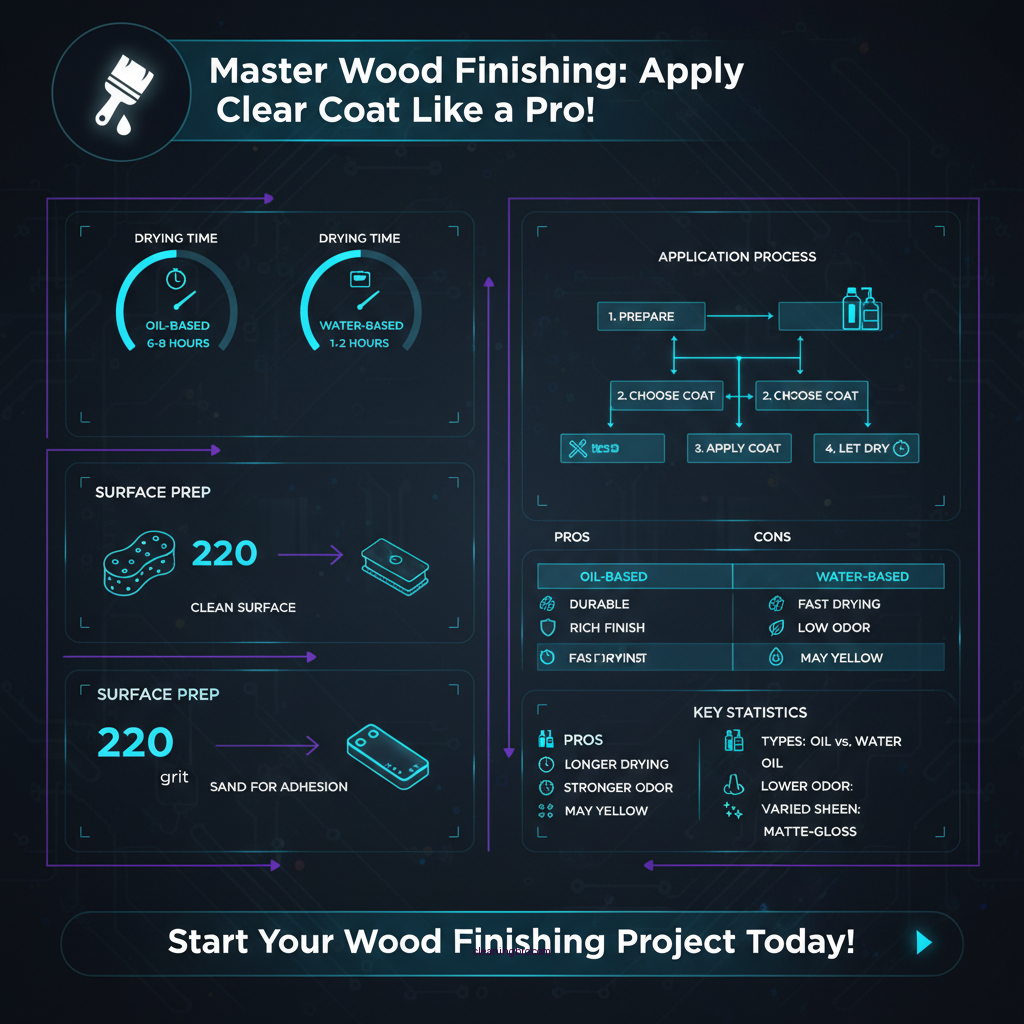

Selecting the appropriate clear coat is vital to achieving the desired finish and durability. There are primarily two types of clear coats: oil-based and water-based.
Oil-Based Clear Coats tend to provide a richer, warmer finish and offer excellent durability, making them ideal for high-traffic areas or outdoor applications. However, they take longer to dry (typically 6-8 hours) and have a stronger odor during application.
On the other hand, Water-Based Clear Coats dry quickly (usually within 1-2 hours) and have a lower odor, making them more user-friendly for indoor projects. They are often clearer and less yellowing over time, which is a significant advantage for lighter woods or those with intricate finishes. When choosing a clear coat, consider factors such as drying time, durability, and the desired sheen, which can range from matte to high gloss.
Tools and Materials Needed
To successfully apply a clear coat to wood, gather the following essential tools and materials:
– Tools:
– High-quality brushes (preferably natural bristle for oil-based and synthetic for water-based)
– Foam rollers for larger surfaces
– Spray gun (optional, for a smoother finish)
– Paint tray and liners
– Materials:
– Clear coat (oil-based or water-based)
– Fine-grit sandpaper (220 grit)
– Painter’s tape to protect adjacent surfaces
– Clean rags for dust removal
– Drop cloths to protect the surrounding area
Having these tools and materials ready will streamline the application process and help you achieve the best results.
Applying the Clear Coat
When you are ready to apply the clear coat, begin by stirring the product gently to ensure an even consistency. If using a brush or roller, dip it into the clear coat, removing excess by tapping it against the side of the container.
Start with a thin, even coat, applying in the direction of the wood grain to minimize visible brush strokes. For larger surfaces, a foam roller may work more efficiently, while intricate areas may require a brush for precision.
Allow the clear coat to dry completely between coats, which typically takes 2-4 hours for water-based products and longer for oil-based options. Be sure to follow the manufacturer’s recommendations for drying times. Multiple thin coats are preferable to a single thick application, as they allow for better adhesion and a more durable finish.
Sanding Between Coats
To achieve a smooth and professional-looking finish, lightly sand the surface after each coat has dried. Use fine-grit sandpaper (around 320 grit) to sand the surface gently, which will help to eliminate any imperfections, bubbles, or dust nibs that may have settled.
After sanding, clean the surface thoroughly to remove all dust before applying the next layer of clear coat. This step is crucial, as any dust particles left behind can mar the appearance of the final finish. Repeat the application and sanding process, typically 2-3 times, depending on the desired level of gloss and durability.
Final Touches and Curing
Once you have achieved the desired appearance with your clear coat, apply a final coat and allow it to cure for at least 24 hours. Curing is different from drying; it is the process where the clear coat hardens and bonds with the wood.
During the curing process, it is essential to avoid heavy use of the surface to prevent marring or damaging the finish. Keep the area well-ventilated to promote curing and avoid exposure to moisture or heat, which can affect the integrity of the finish.
Top 3 Clear Coat Options for Wood Finishing (2024)
| # | Brand | Type | Drying Time | Durability |
|---|---|---|---|---|
| 1 | Minwax Polycrylic | Water-Based | 1-2 hours | High |
| 2 | Rust-Oleum Varathane | Oil-Based | 6-8 hours | Very High |
| 3 | Minwax Fast-Drying Polyurethane | Oil-Based | 2-4 hours | High |
Clear Coat Durability Ratings
Comparing Clear Coats for Wood Finishing
| Feature | ⭐ Minwax Polycrylic | Rust-Oleum Varathane | Minwax Fast-Drying Polyurethane |
|---|---|---|---|
| Type | Water-Based | Oil-Based | Oil-Based |
| Drying Time | 1-2 hours | 6-8 hours | 2-4 hours |
| Durability | ✅ High | ✅ Very High | ✅ High |
| Yellowing Resistance | ✅ Good | ❌ Moderate | ✅ Good |
| Application Method | Brush/Roller | Brush/Roller/Spray | Brush/Roller |
| Odor Level | Low | High | Medium |
| Best for | Indoor Use | Outdoor/Heavy Use | Quick Projects |
| Cost | $15-20 | $20-25 | $14-18 |
| Cleanup | Water | Solvent | Water |
| 🏆 Best For | DIY Enthusiasts | Professional Finish | Quick Projects |
Summarizing the process of applying clear coat, this guide provides you with all the necessary steps for a successful finish on your wood projects. Now that you have the knowledge, gather your materials and get started on enhancing your wood surfaces today!
Frequently Asked Questions
What is the best type of clear coat to use on wood furniture?
The best type of clear coat for wood furniture largely depends on the desired finish and usage. Polyurethane is a popular choice due to its durability and water-resistance. For a natural look, water-based polyurethane is ideal as it dries clear and doesn’t yellow over time, making it perfect for light-colored woods.
How do I prepare wood surfaces before applying clear coat?
Preparing wood surfaces for clear coat application is crucial for achieving a smooth finish. Start by sanding the wood with progressively finer grits, finishing with at least 220-grit sandpaper. Make sure to clean off any dust with a damp cloth and allow it to dry completely before applying the clear coat.
Why is it important to apply multiple coats of clear coat on wood?
Applying multiple coats of clear coat on wood enhances the durability and protection of the surface. Each layer adds strength, minimizes the risk of scratches, and provides a more polished appearance. Generally, 2-3 coats are recommended, with light sanding in between to ensure proper adhesion and a smooth final finish.
What tools do I need to apply clear coat to wood effectively?
To apply clear coat to wood effectively, you’ll need a few essential tools: high-quality brushes or foam applicators for even application, a paint roller for larger surfaces, and sandpaper for surface preparation and between coats. Additionally, having a clean cloth and mineral spirits for cleanup will help maintain your tools and workspace.
Which application method is best for clear coat on wood: brush or spray?
The best application method for clear coat on wood depends on the project size and required finish. Brushes allow for detailed work and control, especially on intricate surfaces, while spray application provides a smooth, even finish on larger areas without brush strokes. If using spray, ensure you work in a well-ventilated area and apply thin coats for the best results.
References
- Automotive paint
https://en.wikipedia.org/wiki/Clear_coat - https://www.extension.purdue.edu/extmedia/FS/FS-48-W.pdf
https://www.extension.purdue.edu/extmedia/FS/FS-48-W.pdf - https://www.extension.umn.edu/garden/yard-garden/landscaping/finishing-wood-using-varnish-and-lacquer/
https://www.extension.umn.edu/garden/yard-garden/landscaping/finishing-wood-using-varnish-and-lacquer/ - https://www.woodmagazine.com/materials-guide/finishes/finish-101-how-to-apply-varnish
https://www.woodmagazine.com/materials-guide/finishes/finish-101-how-to-apply-varnish - https://www.lsu.edu/departments/entomology/resources/wood_coatings.pdf
https://www.lsu.edu/departments/entomology/resources/wood_coatings.pdf - https://www.sciencedirect.com/topics/engineering/clear-coat
https://www.sciencedirect.com/topics/engineering/clear-coat - Crucial Role of NLRP3 Inflammasome in the Development of Peritoneal Dialysis-related Peritoneal F…
https://www.nature.com/articles/s41598-019-46504-1 - Google Scholar Google Scholar
https://scholar.google.com/scholar?q=how+to+apply+clear+coat+to+wood - Google Scholar Google Scholar
https://scholar.google.com/scholar?q=wood+finishing+techniques - Google Scholar Google Scholar
https://scholar.google.com/scholar?q=clear+coat+application+process