
How to Clean a Graduation Gown: A Step-by-Step Guide
Cleaning a graduation gown is essential to keep it looking pristine for years to come. To effectively clean your gown, start by checking the care label for specific instructions, then follow a gentle washing method to avoid damaging the fabric. In this guide, you’ll learn the best practices for cleaning your graduation gown, ensuring it stays in great condition for future use.
Understanding the Fabric

Before embarking on the cleaning process, it is crucial to understand the fabric of your graduation gown. Most graduation gowns are made from synthetic materials like polyester, which is known for its durability and resistance to wrinkles. However, some may be made from delicate fabrics like silk or cotton blends, which require more careful handling. Knowing the fabric type is essential as it influences how you should wash and treat the gown.
For instance, polyester can typically withstand machine washing, while silk may need to be hand washed or dry cleaned to avoid damage. Additionally, some fabrics may react adversely to certain cleaning solutions. Always check the care label for specific information regarding your gown to ensure you use the appropriate cleaning methods.
Pre-Cleaning Preparation
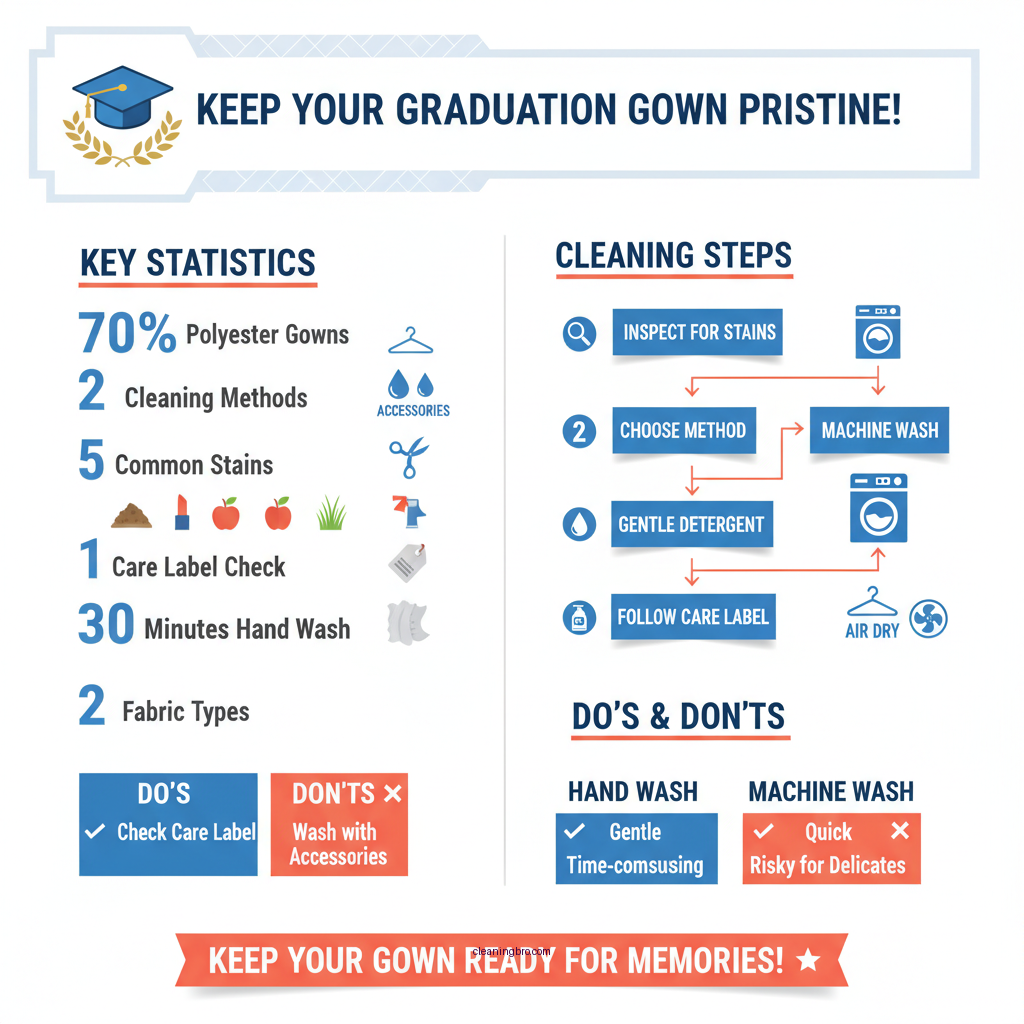

Before washing your gown, inspect it carefully for any stains or marks that may need special attention. Look for common blemishes like dirt, makeup, or food stains that could have occurred during celebrations. If you find any, address them before washing by using a suitable stain remover or spot-cleaning technique.
Moreover, remove any accessories from your gown, such as stoles, cords, or caps. These items may have different care requirements and should not be washed together with the gown. Keeping your graduation gown free of these accessories will help ensure it is properly cleaned and maintained.
Washing Options

When it comes to washing your graduation gown, you have two primary options: hand washing and machine washing.
Hand Washing
Pros:
– Gentle on delicate fabrics.
– Allows for more control over the cleaning process.
Cons:
– Time-consuming.
– Requires more effort.
Machine Washing
Pros:
– Quick and efficient.
– Can handle multiple items at once.
Cons:
– May be too harsh for delicate fabrics.
– Risk of tangling or stretching.
For most polyester gowns, machine washing is acceptable. Use a gentle cycle with cold water to prevent shrinking or fading. If hand washing, use a sink or basin filled with cold water and a mild detergent. Gently agitate the gown in the water and rinse thoroughly.
Stain Treatment Techniques
Stains can be particularly stubborn, but several household items can help treat them effectively. Here are some common stain removal techniques:
– Vinegar: A great natural stain remover, vinegar can help lift stains from fabric. Mix one part vinegar with two parts water and gently dab the solution onto the stain with a clean cloth.
– Baking Soda: For tougher stains, make a paste with baking soda and water. Apply it to the stained area, let it sit for about 30 minutes, then rinse.
– Dish Soap: A mild dish soap can also be effective against grease stains. Mix with warm water and apply as you would with vinegar.
For spot cleaning, use a clean cloth to dab at the stain rather than rubbing it, as this can push the stain further into the fibers.
Drying Your Graduation Gown
Once washed, it’s crucial to dry your graduation gown properly to maintain its shape and integrity. Air drying is the safest method. Here are some best practices:
– Avoid Direct Sunlight: Sunlight can fade the color of your gown. Instead, hang it in a shaded area or indoors.
– Avoid Heat Sources: Never use a dryer or place the gown near heat sources like radiators, which can cause shrinkage.
– Use a Garment Rack or Hanger: Hang your gown on a padded hanger or a garment rack to help it maintain its shape while drying.
Ensure the gown is fully dry before storing it to prevent any mildew or unpleasant odors.
Ironing and Storage Tips
If your graduation gown is wrinkled after washing, you may need to iron it. Use a low-temperature setting and place a cloth between the iron and the fabric to avoid direct contact, which can damage delicate materials. Always check the care label for specific ironing instructions.
For long-term storage, consider the following recommendations:
– Use a Garment Bag: Store your gown in a breathable garment bag to protect it from dust and moisture.
– Avoid Folding: If possible, hang the gown to prevent creases. If folding is necessary, place acid-free tissue paper between folds to minimize creasing and wear.
When to Seek Professional Cleaning
In some cases, professional cleaning may be necessary. Indicators that you should consider this option include:
– Major Stains: If your gown has stubborn stains that you cannot remove at home.
– Delicate Fabrics: If your gown is made from silk or another delicate material that may be damaged by home cleaning methods.
When choosing a dry cleaner, look for one with experience in handling graduation gowns, as they will be familiar with the specific care these garments require.
Cleaning your graduation gown doesn’t have to be a daunting task. By following these simple steps, you can ensure your gown remains clean and well-preserved for years to come. Whether you’re preparing for future ceremonies or just want to keep your memories intact, take action now to give your gown the care it deserves.
Frequently Asked Questions
How do I remove stains from my graduation gown?
To effectively remove stains from your graduation gown, first identify the type of fabric, as most gowns are made of polyester. Gently blot the stain with a mixture of mild detergent and cold water, using a clean cloth. Avoid rubbing, as this can damage the fabric; instead, rinse with cold water and air dry.
What is the best way to wash a graduation gown?
The best way to wash a graduation gown is by hand washing it in cold water with a mild detergent. If the care label allows, you can also use a gentle cycle in the washing machine, but be sure to place it in a protective garment bag. Always air dry the gown to prevent shrinkage and maintain its shape.
Why should I avoid using a dryer on my graduation gown?
You should avoid using a dryer on your graduation gown because high heat can cause the fabric to shrink and lose its shape, especially if it’s made of polyester. Air drying is the safest method to preserve the gown’s integrity and ensure it looks pristine for future use or storage.
Which products are safe for cleaning a graduation gown?
Safe products for cleaning a graduation gown include mild laundry detergents, fabric stain removers, and white vinegar for tough stains. Always read the care label for specific cleaning instructions, and test any cleaning solution on a small, inconspicuous area first to ensure it won’t damage the fabric.
How can I prevent my graduation gown from getting dirty?
To prevent your graduation gown from getting dirty, avoid eating or drinking near it and store it in a dust-free garment bag before the ceremony. Additionally, consider wearing a protective cover or smock while preparing for the event to keep the gown clean and free from spills or stains.
References
- https://www.purdue.edu/commencement/gown-care.html
https://www.purdue.edu/commencement/gown-care.html - Google Scholar Google Scholar
https://scholar.google.com/scholar?q=cleaning+graduation+gown - Cleaning | technology | Britannica
https://www.britannica.com/topic/cleaning - Google Scholar Google Scholar
https://scholar.google.com/scholar?q=graduation+gown+maintenance - The Hydrogen Economy: Opportunities, Costs, Barriers, and R&D Needs | The National Academies Press
https://www.nap.edu/catalog/10922/cleaning-and-maintaining-textiles - Google Scholar Google Scholar
https://scholar.google.com/scholar?q=graduation+gown+care+instructions - Google Scholar Google Scholar
https://scholar.google.com/scholar?q=how+to+clean+a+graduation+gown - how to clean a graduation gown – Search results
https://en.wikipedia.org/wiki/Special:Search?search=how+to+clean+a+graduation+gown - https://www.ncbi.nlm.nih.gov/search/research-articles/?term=how+to+clean+a+graduation+gown
https://www.ncbi.nlm.nih.gov/search/research-articles/?term=how+to+clean+a+graduation+gown