How to Clean a Lanai Screen: Step-by-Step Guide
Cleaning your lanai screen is a straightforward process that can enhance your outdoor space’s appearance and functionality. By using the right tools and techniques, you can effectively remove dirt, debris, and stubborn stains, ensuring a clear view and a pleasant atmosphere. This guide will walk you through the essential steps to clean your lanai screen efficiently.
Understanding Your Lanai Screen Material

Before you begin cleaning, it’s crucial to identify the type of screen material your lanai is made from. Common materials include fiberglass and aluminum, each requiring specific cleaning methods to prevent damage. For instance, fiberglass screens are typically more delicate and can be scratched easily, while aluminum screens are more resilient but can still be dented or corroded if harsh chemicals are used.
Fiberglass screens should be cleaned with mild soap and water, using non-abrasive tools to prevent scratching. On the other hand, aluminum screens can tolerate slightly stronger cleaners, but it’s advisable to test any new solution on a small area first. Understanding your screen material not only informs your cleaning approach but also helps you maintain its integrity and prolong its lifespan.
Essential Tools and Supplies
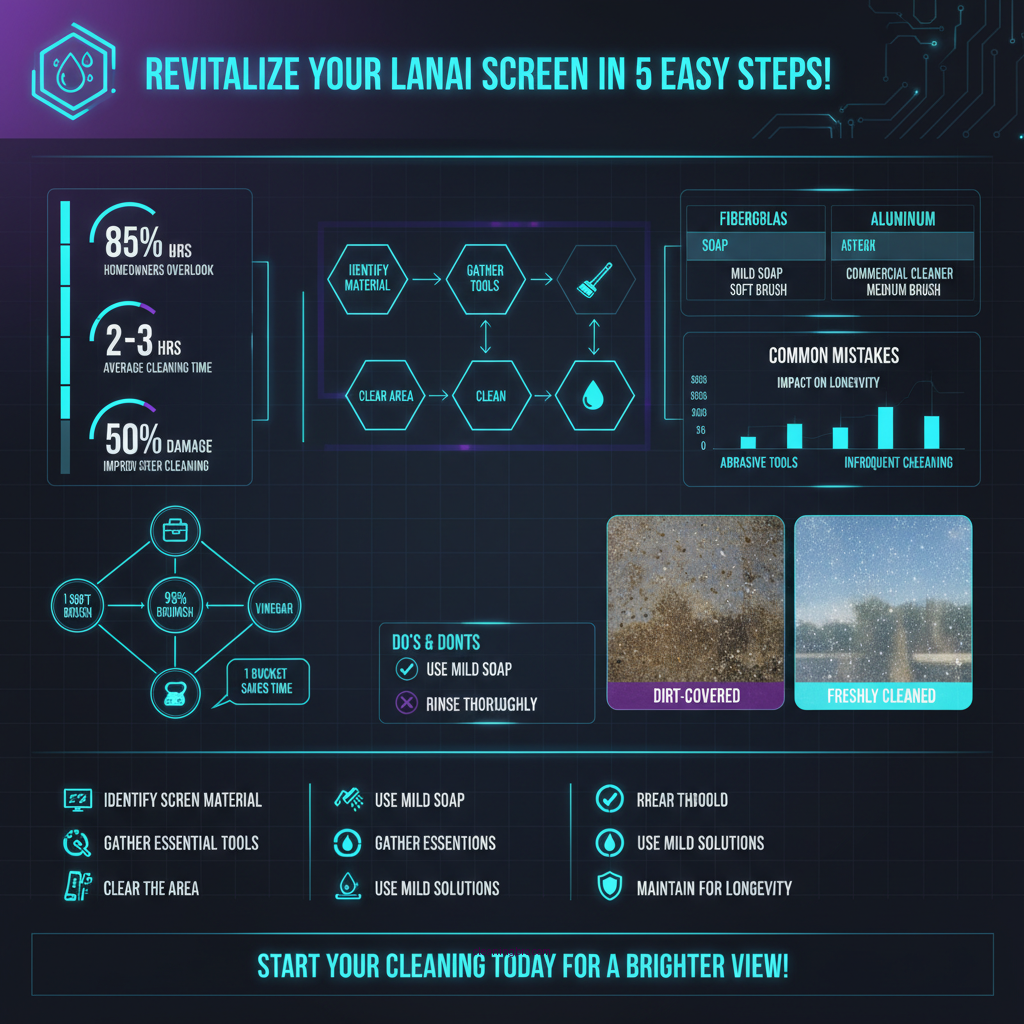

To effectively clean your lanai screen, gathering the right tools and supplies is essential. Here’s a list of recommended items:
– Soft Brush or Broom: To gently sweep away loose debris and dust.
– Sponge or Soft Cloth: Ideal for applying cleaning solutions without scratching the screen.
– Vacuum Cleaner with Brush Attachment: For removing dirt and debris from hard-to-reach areas.
– Mild Soap or Specialized Screen Cleaners: Use a gentle detergent mixed with water or a commercial screen cleaner that is safe for your screen’s material.
– Bucket: For mixing your cleaning solution.
– Garden Hose or Spray Bottle: To rinse the screens thoroughly after cleaning.
– Squeegee: For removing excess water and preventing streaks.
Having these tools at hand will streamline the cleaning process and ensure that you achieve the best possible results.
Preparing the Area for Cleaning

Proper preparation of the cleaning area is key to an efficient cleaning process. Begin by clearing your lanai of any furniture, plants, or decorative items that might obstruct your cleaning efforts. This not only creates a safe workspace but also prevents any potential damage to your belongings during the cleaning process.
Next, ensure you have access to water and electricity if needed for your cleaning equipment. If you’re using a vacuum cleaner or any electric tools, having nearby outlets can save you time and effort. Consider working during a time of day when the sun isn’t directly shining on the screens; this will help prevent the cleaning solution from drying too quickly and leaving streaks.
Cleaning Techniques for Lanai Screens
Start the cleaning process by removing loose dirt and debris. Use a vacuum cleaner with a brush attachment or a soft broom to sweep away any dust, leaves, or cobwebs from the screen and surrounding frames. This step is crucial as it prevents dirt from turning into mud when wet, making it harder to clean.
Once the loose debris has been removed, prepare your cleaning solution. Mix mild soap with water in a bucket according to the manufacturer’s instructions. Dip your sponge or soft cloth into the solution and gently scrub the screens, paying particular attention to corners and edges where dirt tends to accumulate. For more stubborn stains or mildew, you may need to let the solution sit for a few minutes before scrubbing.
After scrubbing, it’s essential to rinse the screens thoroughly. Use a garden hose or spray bottle filled with clean water to wash away all soap residue, as leftover detergent can attract more dirt.
Rinsing and Drying the Screens
Rinsing is a critical step in the cleaning process. Any soap residue left on the screens can lead to discoloration or attract dirt, negating your hard work. Make sure to use a gentle spray to avoid damaging the screens, especially if they are made of fiberglass.
Once rinsed, allow the screens to air dry completely. This is important to prevent water spots and streaks, which can affect the overall clarity of the screens. If possible, use a squeegee to remove excess water, particularly on flat surfaces. This not only speeds up the drying process but also provides a clearer finish.
Maintenance Tips for Longevity
To ensure your lanai screens remain in top condition, regular maintenance is key. Aim to inspect your screens at least once a month for any signs of dirt buildup, damage, or wear. Frequent cleaning can prevent the accumulation of grime and make your next cleaning session much easier.
Additionally, consider applying a protective coating designed for your screen material. This can help repel dirt and moisture, making future cleanings less labor-intensive. It’s also beneficial to keep the surrounding area clean and free of debris to minimize the chances of dirt and grime settling on your screens.
Troubleshooting Common Issues
Despite regular maintenance, you may encounter some common problems such as mold or mildew growth, especially in humid climates. For these issues, specialized treatments are available that can effectively eliminate these fungi without damaging your screens. Look for non-toxic, biodegradable options that are safe for your specific screen material.
Another common issue is minor screen damages or tears, which can occur over time. If you notice any damage, it’s important to address it promptly to maintain the functionality of the screen. Small tears can often be repaired with screen repair kits available at hardware stores. For larger damages, consider consulting a professional to ensure proper repair.
Maintaining a clean lanai screen not only improves your outdoor experience but also extends the lifespan of the screens. Following these steps will help ensure your lanai remains a welcoming and enjoyable space. For best results, incorporate regular cleaning into your routine and always use the right materials for your specific screen type.
Top 7 Lanai Screen Materials and Their Pros and Cons
| # | Material | Durability | Ease of Cleaning | Cost |
|---|---|---|---|---|
| 1 | Fiberglass | Moderate | Easy | $$ |
| 2 | Aluminum | High | Moderate | $$$ |
| 3 | Vinyl | Low | Easy | $ |
| 4 | Screen Mesh | Moderate | Easy | $$ |
| 5 | Pet Resistant | High | Moderate | $$$ |
| 6 | Solar Screens | Moderate | Moderate | $$$ |
| 7 | Retractable Screens | High | Moderate | $$$$ |
Lanai Screen Cleaning Frequency Recommendations
Cleaning Solutions: Dawn Dish Soap vs. Vinegar vs. Commercial Cleaner
| Feature | ⭐ Dawn Dish Soap | Vinegar | Commercial Cleaner |
|---|---|---|---|
| Effectiveness | ✅ Good | ✅ Moderate | ✅ Excellent |
| Safety | ✅ Non-toxic | ✅ Non-toxic | ✅ Caution needed |
| Cost | $ | $ | $$$ |
| Residue | ✅ Minimal | ✅ Low | ✅ High |
| Ease of Use | ✅ Simple | ✅ Moderate | ✅ Complex |
| Availability | ✅ Widely available | ✅ Widely available | ✅ Specialized stores |
| Environmental Impact | ✅ Low | ✅ Low | ✅ High |
| Recommended Usage | ✅ General cleaning | ✅ Spot cleaning | ✅ Heavy-duty cleaning |
| 🏆 Best For | General Home Use | Eco-Friendly Cleaning | Deep Cleaning Needs |
In conclusion, cleaning your lanai screen is a manageable task that can significantly improve both the aesthetics and functionality of your outdoor area. By understanding the material of your screens, using the right tools and techniques, and maintaining a regular cleaning schedule, you can ensure that your lanai remains a beautiful and enjoyable space for years to come.
Frequently Asked Questions
What are the best materials to use for cleaning a lanai screen?
The best materials for cleaning a lanai screen include a soft brush, mild soap, and a hose or bucket of water. You can also use a mixture of vinegar and water for a natural cleaning solution. Avoid harsh chemicals that can damage the screen material.
How do I effectively remove mildew from my lanai screen?
To remove mildew from your lanai screen, mix equal parts of water and vinegar in a spray bottle and apply it directly to the affected areas. Let it sit for 10-15 minutes before scrubbing with a soft brush, then rinse thoroughly with water. Regular maintenance can help prevent mildew buildup in the future.
Why is it important to clean my lanai screen regularly?
Regularly cleaning your lanai screen is important to maintain its appearance and functionality. Dirt, debris, and mildew can accumulate over time, leading to decreased visibility and potential damage to the screen material. Keeping it clean ensures a pleasant outdoor experience and prolongs the lifespan of the screen.
Which cleaning method is best for aluminum lanai screens?
The best cleaning method for aluminum lanai screens involves using a gentle soap solution and a soft brush to avoid scratching the surface. After scrubbing, rinse thoroughly with water to remove any soap residue. For tough stains, a mixture of baking soda and water can also be effective.
How can I prevent dirt and debris from accumulating on my lanai screen?
To prevent dirt and debris from accumulating on your lanai screen, consider installing a protective barrier, such as a screen door or mesh cover, when not in use. Additionally, regular cleaning and maintenance, including brushing off loose dirt and debris, will help keep your screen looking clean and clear.
References
- https://en.wikipedia.org/wiki/Screen_(architecture
https://en.wikipedia.org/wiki/Screen_(architecture - https://www.nature.com/articles/s41598-021-85958-7
https://www.nature.com/articles/s41598-021-85958-7 - Google Scholar Google Scholar
https://scholar.google.com/scholar?q=cleaning+lanai+screen - https://www.sciencedirect.com/topics/agricultural-and-biological-sciences/screen-cleaning
https://www.sciencedirect.com/topics/agricultural-and-biological-sciences/screen-cleaning - https://www.britannica.com/technology/screen
https://www.britannica.com/technology/screen - Google Scholar Google Scholar
https://scholar.google.com/scholar?q=how+to+clean+screen+enclosures - https://www.ncbi.nlm.nih.gov/pmc/articles/PMC7112045/
https://www.ncbi.nlm.nih.gov/pmc/articles/PMC7112045/ - https://www.cdc.gov/healthywater/drinking/cleaning.html
https://www.cdc.gov/healthywater/drinking/cleaning.html - https://www.reuters.com/article/us-cleaning-innovation-idUSKBN2A10A0
https://www.reuters.com/article/us-cleaning-innovation-idUSKBN2A10A0 - https://www.bbc.com/future/article/20200929-how-to-clean-your-home-safely-during-coronavirus
https://www.bbc.com/future/article/20200929-how-to-clean-your-home-safely-during-coronavirus