How to Clean a Motorcycle Petrol Tank: Step-by-Step Guide
Cleaning a motorcycle petrol tank is crucial for maintaining optimal engine performance and preventing rust. A clean petrol tank ensures that fuel flows smoothly to the engine, reducing the risk of contamination and engine failure. In this article, we will guide you through the step-by-step process of safely cleaning your motorcycle’s petrol tank, along with tips for maintaining its cleanliness for longevity and performance.
Drain the Petrol Tank
The first step in cleaning a motorcycle petrol tank is to safely remove any remaining fuel. This is a critical step to avoid accidents and ensure proper cleaning. Begin by finding a safe location away from open flames or sparks.
1. Prepare Your Tools: You will need a siphon pump or a fuel transfer pump, a fuel container, and safety gloves.
2. Siphoning the Fuel: Insert the siphon tube into the petrol tank and start the siphoning process. Make sure to direct the fuel into a suitable container, ensuring you leave no spillage.
3. Complete Drainage: Once the bulk of the fuel is removed, tilt the motorcycle slightly to ensure all residual fuel drains out. This step is vital to prepare the tank for effective cleaning.
Inspect the Tank for Damage
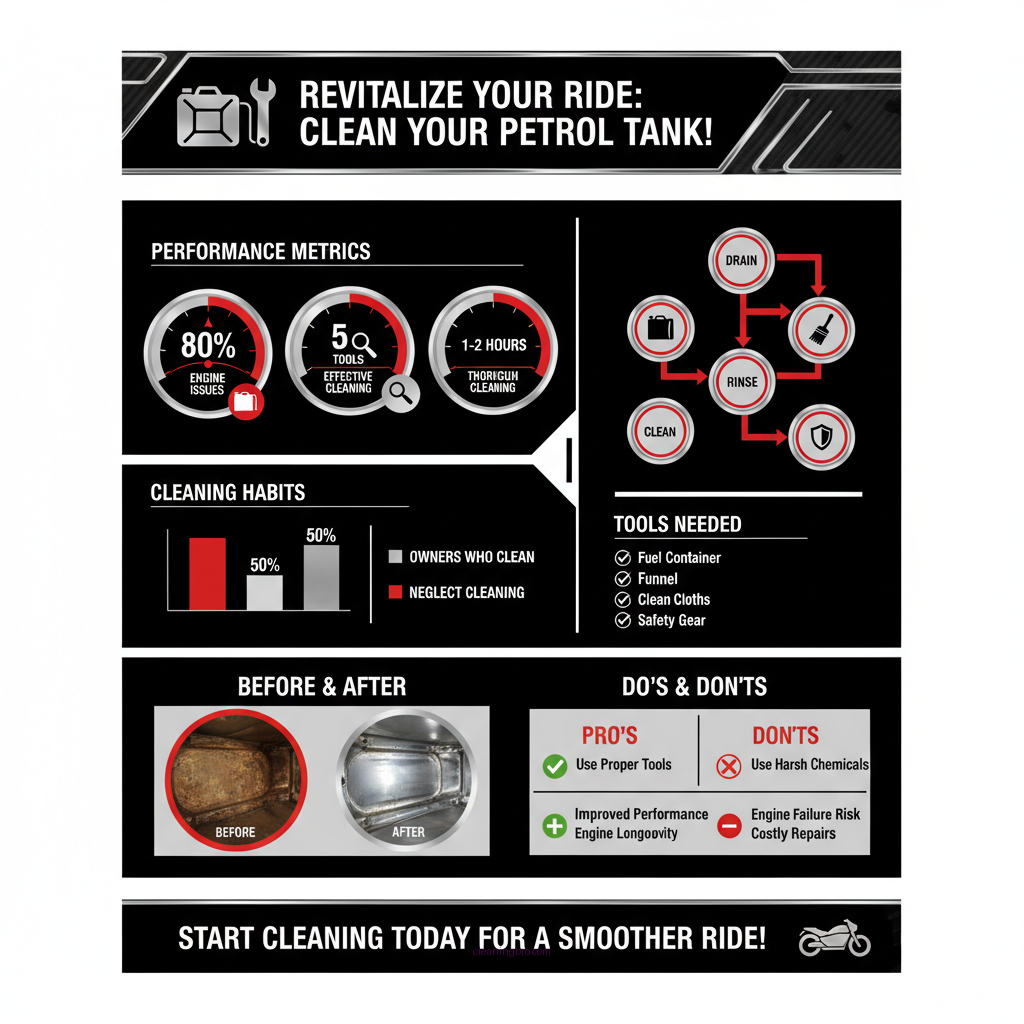
After draining the tank, the next step is to inspect it for any damage. This assessment is essential for ensuring the tank’s integrity.
1. Check for Rust: Look inside the tank using a flashlight. Rust can appear as reddish-brown patches on the interior surfaces.
2. Dents and Leaks: Examine the exterior of the tank for any visible dents or leaks. Dents can compromise the tank’s structure and lead to leaks, which can be hazardous.
3. Corrosion Signs: Pay attention to any signs of corrosion, especially around the fittings and seams. Addressing these issues early can save you from more significant repairs in the future.
Clean the Interior
Once the inspection is complete, it’s time to clean the interior of the petrol tank to remove any built-up residues and contaminants.
1. Cleaning Solution: Mix a cleaning solution using water and a mild detergent or a specialized fuel tank cleaner. Avoid using harsh chemicals that could damage the tank.
2. Scrubbing: Use a long brush or cleaning tool to scrub the interior walls of the tank. Ensure that you reach all corners and surfaces to remove stubborn deposits.
3. Consider a Cleaning Kit: For more stubborn residues, consider using a fuel tank cleaning kit, which often includes specialized brushes and cleaning agents designed for this purpose.
Rinse Thoroughly
After scrubbing the interior, it is crucial to rinse the tank thoroughly to ensure all cleaning agents are removed.
1. Use Clean Water: Rinse the tank multiple times with clean water. This will help remove any remaining soap or cleaning product.
2. Check for Residue: After rinsing, visually inspect the tank to ensure there is no residue left. Any residual cleaning agent can contaminate future fuel and lead to engine issues.
Dry the Tank Completely
Drying the tank is a crucial step that is often overlooked. Moisture left inside the tank can lead to rust and fuel contamination.
1. Wipe with a Clean Cloth: Use a clean, dry cloth to wipe down the interior surfaces of the tank. Pay special attention to any areas that may have retained moisture.
2. Air Drying: Further, allow the tank to air dry completely. If possible, place it in a warm, dry area or use an air compressor to speed up the drying process.
Reassemble and Refill
Once the tank is clean and dry, you can reassemble any components that were removed during the cleaning process.
1. Reattach Parts: Ensure that all components, including fuel caps and seals, are securely reattached. Check for any signs of wear on the seals and replace them if necessary.
2. Refill with Fresh Fuel: Fill the tank with fresh petrol, ensuring that it is the appropriate type for your motorcycle. Be cautious of overfilling, as this can cause spills.
3. Check for Leaks: After refilling, check for any leaks around the fittings and seals. If you notice any leaks, address them immediately to prevent fuel loss and safety hazards.
Maintain Your Petrol Tank
Regular maintenance of your motorcycle’s petrol tank is essential for preventing future issues.
1. Regular Inspections: Periodically check the tank for rust, dents, and leaks, especially before long rides or winter storage.
2. Routine Cleaning: Consider cleaning the tank every year or every few thousand miles, depending on how often you ride.
3. Use Fuel Additives: To help keep the tank clean over time, consider using fuel additives designed to prevent rust and maintain fuel quality.
In summary, keeping your motorcycle petrol tank clean is vital for its longevity and performance. By following these steps, you can ensure your tank remains free of contaminants and in good condition. Don’t hesitate to take action and start cleaning your motorcycle’s petrol tank today for better riding experiences!
Common Issues Found in Motorcycle Petrol Tanks
| # | Issue | Frequency (%) | Severity |
|---|---|---|---|
| 1 | Rust Formation | 35% | High |
| 2 | Dirt and Contaminants | 50% | Moderate |
| 3 | Leaking Seals | 20% | High |
| 4 | Blockages in Fuel Lines | 15% | Moderate |
| 5 | Poor Fuel Quality | 40% | High |
| 6 | Condensation Buildup | 30% | Moderate |
| 7 | Incorrect Fuel Type | 10% | High |
Common Contaminants Found in Motorcycle Petrol Tanks (%)
Best Fuel Additives for Cleaning Motorcycle Petrol Tanks
| Feature | ⭐ Additive A | Additive B | Additive C |
|---|---|---|---|
| Price | $15 | $12 | $10 |
| Effectiveness | ✅ Excellent | ✅ Good | ✅ Average |
| Corrosion Prevention | ✅ Yes | ✅ Limited | ❌ No |
| Water Displacement | ✅ Yes | ✅ Yes | ❌ No |
| Compatibility | ✅ All Fuels | ✅ Petrol Only | ✅ All Fuels |
| User Reviews | ★★★★☆ | ★★★☆☆ | ★★☆☆☆ |
| Availability | ✅ Widely Available | ✅ Limited | ✅ Widely Available |
| Environmental Impact | ✅ Eco-friendly | ❌ Moderate | ✅ Eco-friendly |
| Best For | All-around performance | Budget-conscious riders | Eco-conscious users |
In conclusion, maintaining a clean motorcycle petrol tank is essential for the overall health of your bike. By following these detailed steps for cleaning and maintenance, you can enhance your motorcycle’s performance, prevent rust, and prolong its lifespan. Always be proactive in your maintenance routine, and your motorcycle will reward you with a smoother and safer ride.
Frequently Asked Questions
What are the best methods to clean a motorcycle petrol tank?
The best methods to clean a motorcycle petrol tank include using a combination of chemical cleaners and manual scrubbing. Start by draining the tank completely, then use a specialized fuel tank cleaner or a mixture of vinegar and baking soda to dissolve any rust or debris. After soaking, scrub the interior with a long brush designed for fuel tanks, rinse thoroughly, and ensure it’s completely dry before refilling.
How can I safely remove rust from my motorcycle petrol tank?
To safely remove rust from your motorcycle petrol tank, you can use a rust remover specifically designed for fuel tanks, such as phosphoric acid. After draining the tank, apply the rust remover according to the manufacturer’s instructions, allowing it to sit for the recommended time. Rinse the tank thoroughly with water and follow up with a rust-inhibiting coating to protect against future corrosion.
Why is it important to clean my motorcycle petrol tank regularly?
Cleaning your motorcycle petrol tank regularly is crucial to prevent the buildup of rust, debris, and sediment, which can clog fuel lines and damage the engine. A clean tank ensures that fuel flows freely and maintains optimal engine performance. Regular maintenance can also extend the lifespan of your motorcycle by preventing costly repairs related to fuel system issues.
Which tools do I need to clean a motorcycle petrol tank effectively?
To clean a motorcycle petrol tank effectively, you will need a few essential tools: a fuel tank cleaning brush, rubber gloves, a funnel, and a siphon pump for draining fuel. Additionally, having access to a rust remover, a cleaning solvent, and a flashlight will help you inspect the tank thoroughly and ensure that all residues and contaminants are removed.
What precautions should I take when cleaning a motorcycle petrol tank?
When cleaning a motorcycle petrol tank, it’s essential to take safety precautions, such as working in a well-ventilated area away from open flames and sparks due to the flammable nature of petrol vapors. Always wear protective gear, including gloves and goggles, and ensure that the tank is completely empty before starting the cleaning process. Additionally, dispose of any cleaning solvents and waste materials according to local regulations to protect the environment.
References
- https://en.wikipedia.org/wiki/Motorcycle_maintenance
https://en.wikipedia.org/wiki/Motorcycle_maintenance - https://www.bikebandit.com/blog/how-to-clean-your-motorcycle-fuel-tank
https://www.bikebandit.com/blog/how-to-clean-your-motorcycle-fuel-tank - Google Scholar Google Scholar
https://scholar.google.com/scholar?q=how+to+clean+a+motorcycle+petrol+tank - RevZilla
https://www.revzilla.com/common-tread/how-to-clean-your-motorcycle-fuel-tank - Google Scholar Google Scholar
https://scholar.google.com/scholar?q=motorcycle+fuel+tank+cleaning - Motorcycle | History, Components, & Emissions Standards | Britannica
https://www.britannica.com/technology/motorcycle - Google Scholar Google Scholar
https://scholar.google.com/scholar?q=cleaning+motorcycle+gas+tank+maintenance - how to clean a motorcycle petrol tank – Search results
https://en.wikipedia.org/wiki/Special:Search?search=how+to+clean+a+motorcycle+petrol+tank - https://www.ncbi.nlm.nih.gov/search/research-articles/?term=how+to+clean+a+motorcycle+petrol+tank
https://www.ncbi.nlm.nih.gov/search/research-articles/?term=how+to+clean+a+motorcycle+petrol+tank