How to Clean a Motorcycle Petrol Tank: Step-by-Step Guide
Cleaning your motorcycle’s petrol tank is crucial for ensuring optimal performance and prolonging the life of your bike. A clean tank not only enhances fuel efficiency but also minimizes the risk of engine problems caused by sediment and rust buildup. This comprehensive guide will take you through the essential steps to effectively clean your motorcycle’s petrol tank, including removing the tank, flushing it out, and ensuring all contaminants are eliminated.
Preparation and Safety Measures

Before diving into the cleaning process, proper preparation and safety measures are paramount to avoid accidents and ensure an effective cleaning experience.
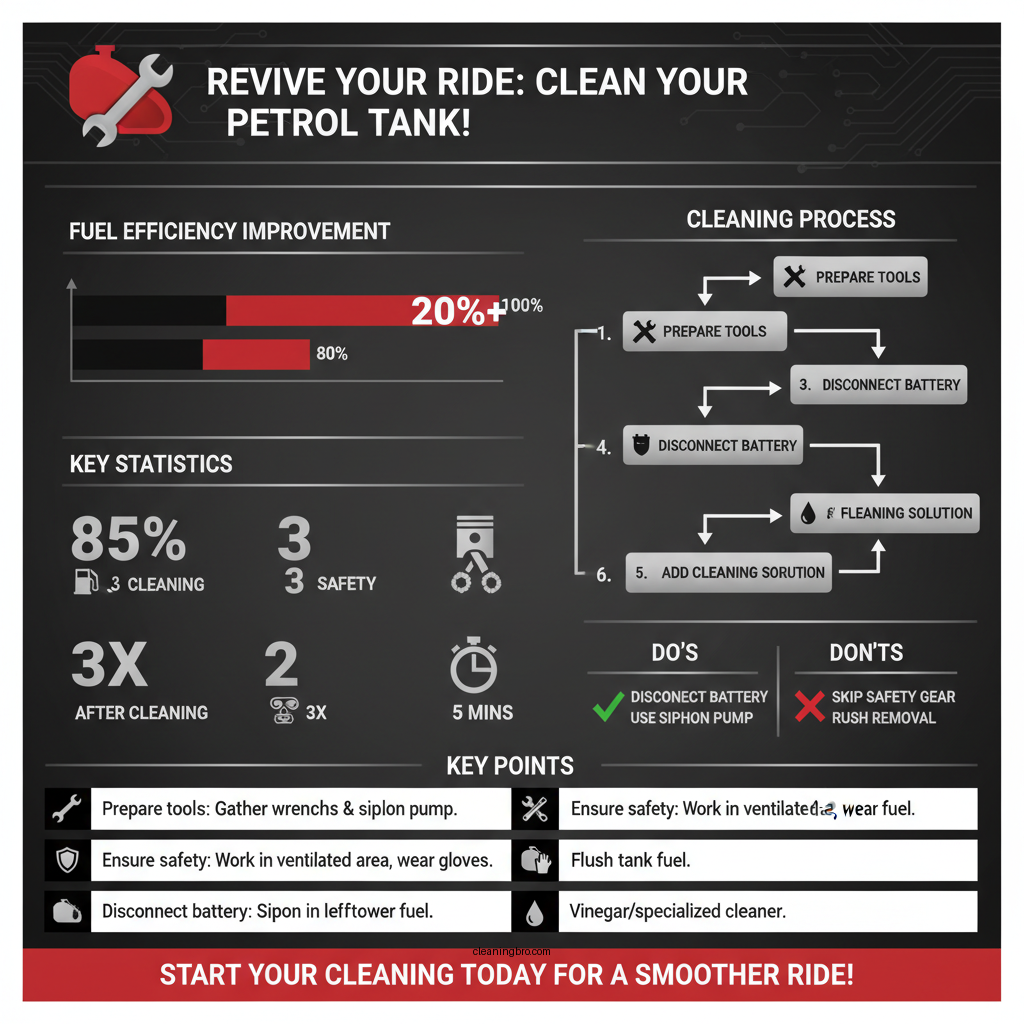
– Gather Necessary Tools: You will need a set of wrenches, a siphon pump, a suitable cleaning solution (such as vinegar or a specialized petrol tank cleaner), and clean rags. Having the right tools on hand will streamline the process and make it more efficient.
– Ensure Safety: Always work in a well-ventilated area to prevent inhalation of toxic fumes. Wearing gloves and goggles is highly recommended to protect your skin and eyes from the cleaning solution and fuel.
– Disconnect the Battery: Before starting the cleaning process, disconnect your motorcycle’s battery. This precaution prevents any electrical issues or accidental startups while you’re handling the fuel tank.
Removing the Petrol Tank
Removing the petrol tank from your motorcycle is the first critical step in the cleaning process.
– Locate and Remove the Screws or Bolts: Begin by locating the screws or bolts that secure the tank to the motorcycle frame. Depending on your motorcycle model, these may be found on the sides or underneath the tank. Use the appropriate wrench to loosen and remove them carefully.
– Detach Fuel Lines and Electrical Connections: After the tank is unscrewed, carefully detach the fuel lines and any electrical connections. Take care not to damage any components during this process. Using a small container to catch any residual fuel can help manage spills.
– Lift the Tank Off: Once all connections are detached, gently lift the tank off the motorcycle and place it on a stable, clean surface where you can work on it without obstruction.
Flushing the Tank

Flushing out the petrol tank is crucial to remove any remaining fuel and contaminants.
– Remove Remaining Fuel: Utilize a siphon pump to extract any leftover fuel from the tank. This step is essential to ensure you start with a clean slate.
– Add Cleaning Solution: Pour a cleaning solution into the tank. Options like vinegar are effective due to their acidic properties that can dissolve rust and sediment. If you have a dedicated petrol tank cleaner, follow the manufacturer’s instructions for the best results.
– Seal and Shake: After adding the cleaning solution, seal the openings of the tank with tape or a stopper. Shake the tank vigorously to allow the solution to contact all surfaces inside the tank. This action will help dislodge stubborn dirt and contaminants.
Common Contaminants Found in Motorcycle Petrol Tanks
| # | Contaminant | Source | Effect |
|---|---|---|---|
| 1 | Rust | Oxidation of metal | Clogs fuel lines, reduces efficiency |
| 2 | Sediment | Contaminated fuel | Reduces fuel flow |
| 3 | Water | Condensation | Causes engine misfires |
| 4 | Algae | Stagnant fuel | Clogs filters, reduces performance |
| 5 | Gunk | Old fuel | Impedes fuel flow |
| 6 | Varnish | Decomposing fuel | Can block injectors |
| 7 | Dirt | Environmental factors | Causes clogs and poor combustion |
Rinsing and Drying
After flushing the tank, it is important to rinse and dry it thoroughly to remove any remnants of the cleaning solution.
– Rinse the Tank: Pour clean water into the tank and swish it around. This step will help remove any leftover cleaning solution. Make sure to empty the tank completely after rinsing.
– Inspect for Rust or Debris: Check the tank for any signs of rust or debris. If necessary, use a soft brush to scrub any stubborn spots. Be gentle to avoid scratching the tank’s interior.
– Allow to Air Dry: Place the tank in a well-ventilated area to air dry completely. This step is critical to prevent moisture from causing rust to form once again.
Inspecting for Damage
Once the tank is dry, it’s time to inspect it for any signs of damage.
– Check for Corrosion or Leaks: Look for any signs of corrosion or small leaks. These can compromise the integrity of the tank and lead to more significant issues down the line.
– Utilize a Flashlight: Use a flashlight to inspect those hard-to-see areas within the tank to ensure it is entirely clean and free from contaminants.
– Consider Repairs or Replacement: If you find significant damage, it may be wise to consult a professional or consider replacing the tank altogether to ensure safe operation.
Reassembling and Testing
With your tank clean and inspected, it’s time to reassemble and test your motorcycle.
– Reattach Fuel Lines and Connections: Carefully reattach the fuel lines and any electrical connections, ensuring they are secure. This step is vital to prevent any fuel leaks or electrical issues.
– Position the Tank Back: Gently place the tank back onto the motorcycle frame and fasten it with the screws or bolts you initially removed. Ensure everything is tightened appropriately.
– Reconnect the Battery and Test: Reconnect the battery and start the motorcycle. Monitor for any irregularities in fuel flow and listen for any unusual sounds that may indicate a problem.
Maintenance Tips
Maintaining a clean petrol tank is an ongoing process that can prevent many issues.
– Regular Checks: Make it a habit to regularly check and clean your petrol tank to prevent the buildup of sediment and rust.
– Use Fuel Additives: Consider using specialized fuel additives that help clean the tank and fuel system. These can be beneficial in maintaining fuel quality.
– Schedule Periodic Inspections: Schedule routine inspections with a professional mechanic to catch any potential issues early on, ensuring your motorcycle remains in optimal condition.
Cleaning your motorcycle’s petrol tank is not just a one-time task; it’s an essential part of regular maintenance that can significantly enhance performance and extend the lifespan of your motorcycle. By following the outlined steps, you will ensure your fuel system remains clean and efficient. Remember to incorporate regular maintenance into your routine to keep your motorcycle running smoothly and reliably!
Frequently Asked Questions
How do I safely clean the petrol tank of my motorcycle?
To safely clean the petrol tank of your motorcycle, start by draining all fuel from the tank. Remove the tank from the motorcycle and use a specialized motorcycle fuel tank cleaner or a mixture of vinegar and water to scrub the interior. Rinse thoroughly with clean water and allow it to dry completely before reassembling.
What tools do I need to clean a motorcycle petrol tank effectively?
To clean a motorcycle petrol tank effectively, you will need basic tools such as a socket set for removing the tank, a soft-bristle brush, and potentially a fuel tank cleaning kit that includes a degreaser. Additionally, safety gear such as gloves and goggles is essential to protect yourself from harmful chemicals.
Why is it important to clean my motorcycle’s petrol tank?
Cleaning your motorcycle’s petrol tank is crucial to prevent fuel contamination and ensure optimal engine performance. Over time, sediment and rust can build up, leading to clogging of the fuel lines and potential engine damage. Regular cleaning helps maintain the longevity and reliability of your motorcycle.
What is the best method for removing rust from a motorcycle petrol tank?
The best method for removing rust from a motorcycle petrol tank involves using a rust remover or a mixture of vinegar and baking soda. After draining the tank, apply the solution and let it sit for a few hours, then scrub with a brush. Rinse thoroughly and ensure the tank is dry before refueling to prevent future rust issues.
Which products are recommended for cleaning a motorcycle petrol tank?
Recommended products for cleaning a motorcycle petrol tank include specialized fuel tank cleaners like POR-15 or KBS Coatings, which effectively remove rust and deposits. Alternatively, you can use household items like vinegar and baking soda for a more natural approach. Always ensure the products are safe for use with your tank’s material to avoid damage.
References
- https://en.wikipedia.org/wiki/Motorcycle
https://en.wikipedia.org/wiki/Motorcycle - Motorcycle | History, Components, & Emissions Standards | Britannica
https://www.britannica.com/technology/motorcycle - https://www.cdc.gov/niosh/topics/motorcycle/index.html
https://www.cdc.gov/niosh/topics/motorcycle/index.html - https://pubmed.ncbi.nlm.nih.gov/30558233/
https://pubmed.ncbi.nlm.nih.gov/30558233/ - Google Scholar Google Scholar
https://scholar.google.com/scholar?q=how+to+clean+petrol+tank+motorcycle - https://www.sciencedirect.com/topics/engineering/motorcycle-fuel-tank
https://www.sciencedirect.com/topics/engineering/motorcycle-fuel-tank - https://www.nytimes.com/topic/subject/motorcycles
https://www.nytimes.com/topic/subject/motorcycles - https://www.reuters.com/article/us-motorcycles-safety-idUSKBN2A10H4
https://www.reuters.com/article/us-motorcycles-safety-idUSKBN2A10H4 - Google Scholar Google Scholar
https://scholar.google.com/scholar?q=motorcycle+maintenance+fuel+tank - https://www.ncbi.nlm.nih.gov/pmc/articles/PMC5049162/
https://www.ncbi.nlm.nih.gov/pmc/articles/PMC5049162/