How to Clean a Rv Awning
To clean your RV awning, start by gathering a soft-bristle brush, mild soap, water, and a hose. Extend the awning fully, then mix soap and water in a bucket. Gently scrub the surface with the brush in circular motions and rinse thoroughly to remove residue. Treat stubborn stains with specialized cleaners as needed. Inspect for wear afterward and let it dry completely before retracting. Continue on to discover detailed maintenance tips for prolonging your awning’s life.
Preparation For Cleaning
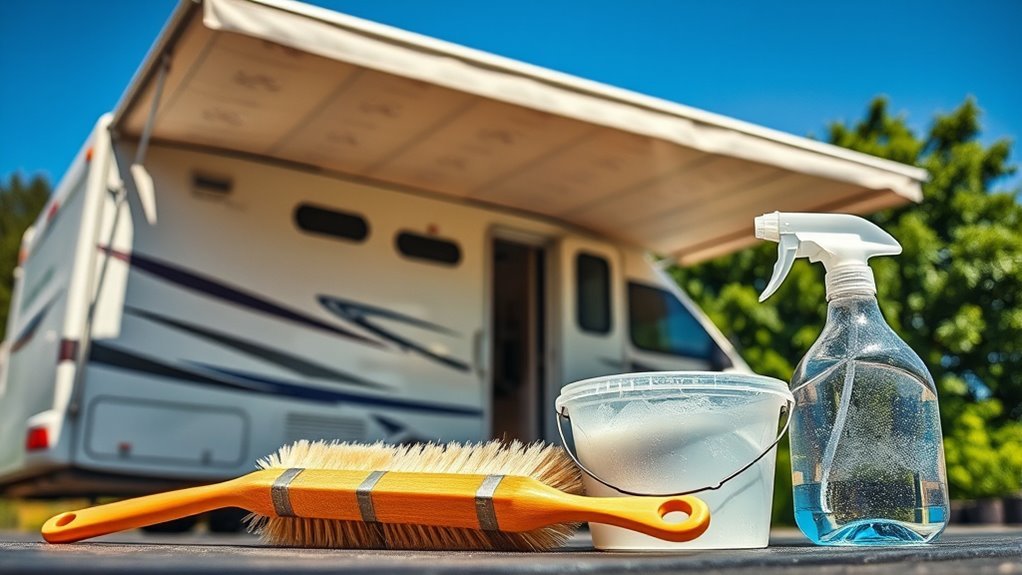
Before you plunge into cleaning your RV awning, it’s essential to gather the right supplies and prepare the area. Start by choosing a shaded spot to prevent cleaning solutions from drying too quickly. Clear any debris, like leaves or dirt, as they can scratch the fabric during cleaning. For ideal awning maintenance tips, it’s recommended to clean your awning at least twice a year. If you frequently camp in dusty or rainy conditions, increase the cleaning frequency. Have a soft-bristle brush, mild soap, and water ready. A gentle rinsing method will protect the awning fabric while effectively removing grime. Remember, proper preparation sets the stage for a successful cleaning process, ensuring your awning remains in top condition for your next adventure.
Tools and Chemical Required
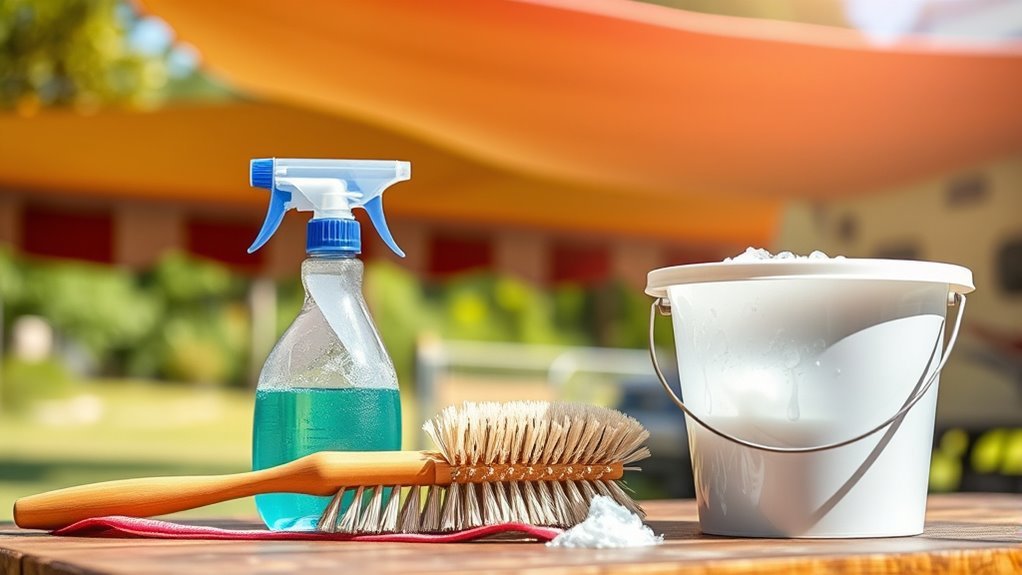
To effectively clean your RV awning, you’ll need a few essential tools and chemicals. Start by gathering a soft brush, a bucket, and a hose. You’ll also require specialized cleaning solutions designed for awnings, as they safely remove dirt and mildew without damaging the fabric. Don’t forget your protective gear, including gloves and goggles, to keep yourself safe from harsh chemicals and debris.
| Tools | Chemicals |
|---|---|
| Soft brush | Awning cleaning solution |
| Bucket | Mildew remover |
| Hose | Fabric protectant |
With these items at your disposal, you’re well on your way to rejuvenating your RV awning, ensuring it remains a cherished part of your adventurous lifestyle.
How to Clean:
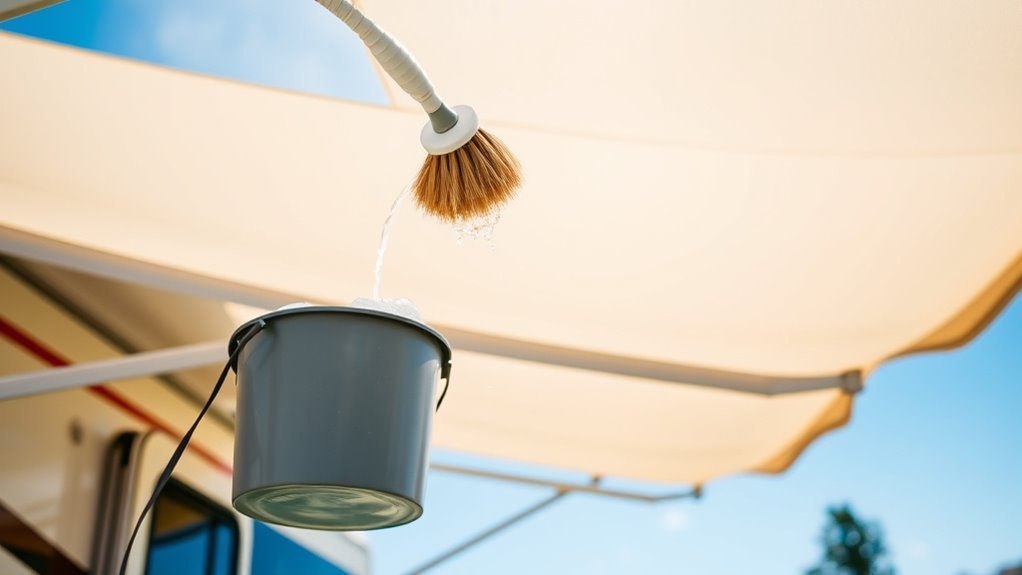
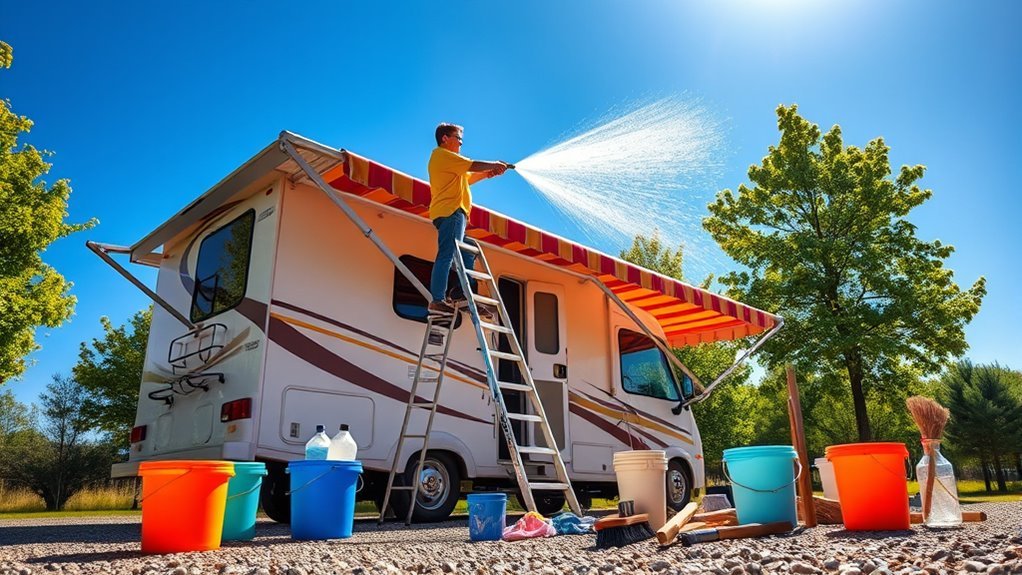
Step 1: Extend Your RV Awning
- Fully extend your RV awning to access its entire surface area.
- Ensure that the awning is fully open and secured to prevent any movement during the cleaning process.
Step 2: Prepare Cleaning Solution
- Mix a mild soap solution using a soft detergent and water.
- Use a bucket to combine the soap and water thoroughly, ensuring the solution is well-blended but not overly bubbly.
Step 3: Scrub the Awning
- Take a soft-bristle brush and dip it into the soapy water.
- Gently scrub the fabric of the awning, focusing on stained or dirty areas.
- Use circular motions to lift dirt and grime without damaging the fabric.
Step 4: Rinse Thoroughly
- After scrubbing, rinse the awning with clean water using a hose or a bucket.
- Ensure that all soap residue is completely washed away to avoid any build-up.
Step 5: Treat Stubborn Stains
- For any remaining stubborn stains, use specialized cleaning solutions designed for RV awnings.
- Follow the manufacturer’s instructions carefully for the best results.
- Apply the cleaner to the stained areas and scrub gently as needed.
Step 6: Inspect for Wear and Damage
- After cleaning, carefully inspect the awning for any signs of wear, such as fraying, tears, or fading.
- Look for any potential issues that may require repair to maintain the awning’s integrity.
Step 7: Allow to Dry
- Let the awning dry completely before retracting it.
- This is crucial to prevent mildew and mold growth that can occur in damp conditions.
Step 8: Regular Maintenance
- Incorporate regular cleaning into your maintenance routine for the awning.
- This will enhance its appearance and extend its lifespan, ensuring enjoyable outdoor adventures.
Safety Consideration
While cleaning your RV awning can enhance its appearance, it’s important to prioritize safety throughout the process. Before you start, verify you have the right safety gear and follow proper ladder safety protocols. Here are three key considerations:
- Wear Protective Gear: Use gloves, goggles, and a mask to protect yourself from chemical exposure and debris.
- Check Your Ladder: Confirm your ladder is stable and rated for your weight. Always position it on a flat surface and have someone hold it if possible.
- Be Aware of Your Surroundings: Look out for overhead branches, power lines, or uneven ground that could pose hazards while you’re working.
Additionally, opt for eco-friendly cleaning products when treating your awning to avoid harmful chemical exposure while maintaining safety.
Frequently Asked Questions
How Often Should I Clean My RV Awning?
You should clean your RV awning at least twice a year, though more frequent cleanings might be necessary if you often camp in dusty or wet areas. For instance, if you’re frequently parked near the ocean, salt and sand can accumulate quickly. Use a soft brush and a mild cleaner for effective results. Regular maintenance keeps your awning in good shape and guarantees you enjoy your adventures without worrying about wear and tear.
Can I Use Bleach to Clean My Awning?
You shouldn’t use bleach to clean your awning, as it can damage various awning materials like vinyl or fabric. Instead, consider bleach alternatives such as vinegar or specialized awning cleaners that are safe and effective. These options can help remove mildew and stains without compromising the integrity of your awning. Always test any cleaner on a small, inconspicuous area first to guarantee it won’t cause fading or deterioration.
What if My Awning Has Mold or Mildew?
If your awning’s got mold or mildew, don’t panic! Start with a mold removal solution, mixing water and a gentle cleaner specifically designed for fabrics. Apply it carefully, scrubbing with a soft brush to avoid damage. Rinse thoroughly and let it dry completely. For mildew prevention, consider applying a protective treatment to keep your awning fresh and free from future growth. You’ll enjoy your outdoor space without worry, embracing freedom on your adventures!
Is It Safe to Clean My Awning While Extended?
Yes, it’s generally safe to clean your awning while it’s extended, but take precautions. Different awning materials require specific cleaning methods. For fabric awnings, use a gentle soap and water solution, avoiding harsh chemicals that might degrade the fabric. If it’s a vinyl awning, a mild bleach solution can be effective for stubborn stains. Always make sure you’re on stable ground and that the awning’s mechanism is in good condition to prevent any accidents.
Should I Waterproof My Awning After Cleaning?
Absolutely, you should waterproof your awning after cleaning. Why wouldn’t you want to protect your investment? Waterproofing provides essential benefits, like preventing mold and mildew growth, and prolonging the fabric’s life. After a thorough clean, applying a waterproofing treatment guarantees your awning stays resilient against the elements. Regular awning care not only enhances its appearance but also maintains its functionality, giving you the freedom to enjoy your adventures without worry.