How to Clean Algae From Pool Screen Enclosure
To clean algae from your pool screen enclosure, first gather a soft-bristle brush, pressure washer, and algae cleaning solution. Wear gloves and goggles for safety. Apply the cleaner to affected areas, scrub gently, and rinse thoroughly with a pressure washer. Afterwards, apply a protective sealant to prevent future growth. Regular maintenance is essential for keeping your enclosure clean. Want to know more about tools or maintenance schedules? Keep going for additional insights!
Preparation For Cleaning
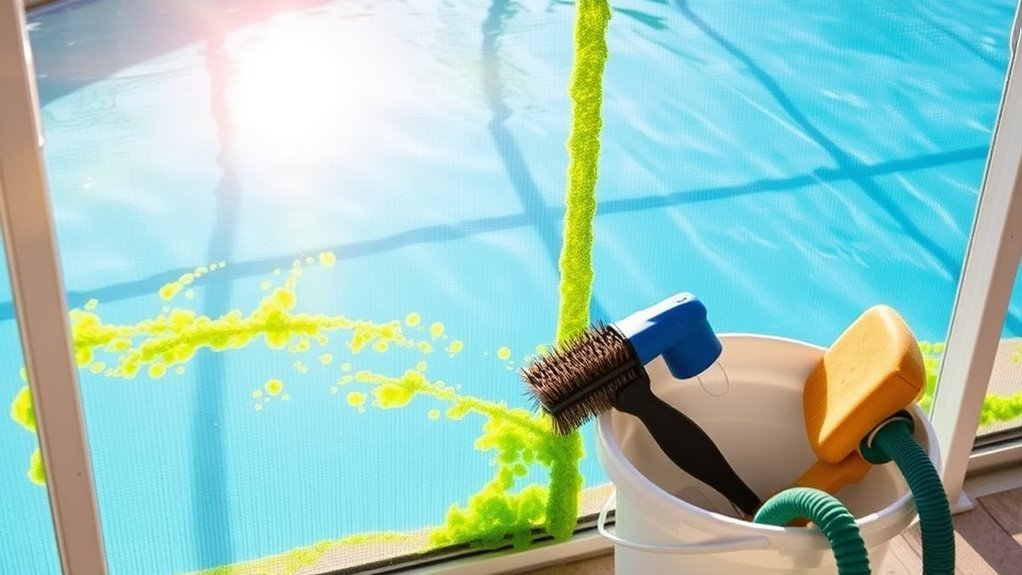
Before you plunge into cleaning your pool screen enclosure, it’s essential to gather the right tools and materials to guarantee an efficient process. Start by creating a cleaning checklist that includes items like a soft-bristle brush, a pressure washer, and a suitable cleaning solution. This guarantees you won’t waste time searching for tools mid-task. Consider incorporating algae prevention methods, such as using a biocide or preventive treatments, which can reduce future growth. Don’t forget to include protective gear like gloves and goggles to promote safety while working. Proper preparation not only makes the cleaning process smoother but also supports maintaining a clean and inviting environment for your pool area, allowing you to enjoy your outdoor space to the fullest.
Tools and Chemical Required
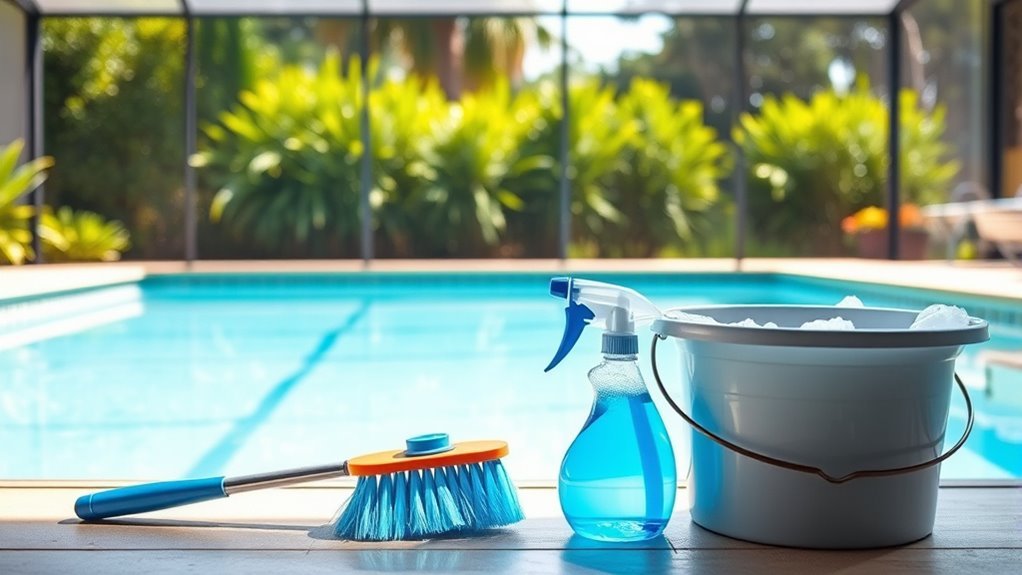
To effectively clean algae from your pool screen enclosure, you’ll need a variety of specialized tools and chemicals that can tackle the problem efficiently. The right cleaning solutions and scrubbing tools make all the difference in ensuring a thorough clean.
| Tools | Chemicals |
|---|---|
| Soft-bristle brush | Algae cleaning solution |
| Pressure washer | Bleach solution |
| Scrubbing sponge | Vinegar |
| Bucket | Baking soda |
Using these items, you can remove algae build-up effectively. Make sure to choose eco-friendly cleaning solutions to protect your surroundings while being effective. Having the right scrubbing tools will also help you reach tricky spots, ensuring an extensive clean of your enclosure.
How to Clean:
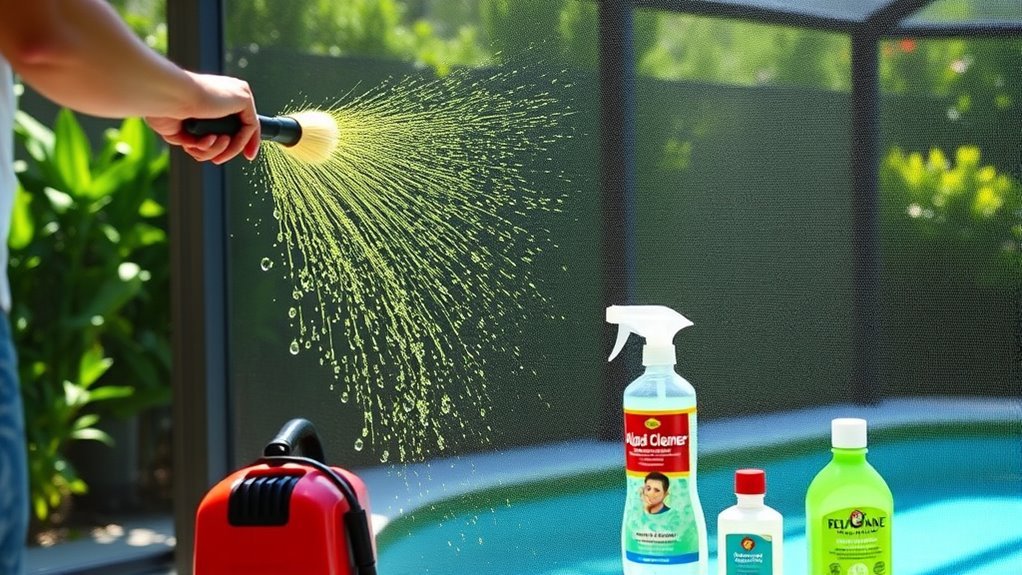
Step 1: Gather Your Tools and Chemicals
- Collect all necessary cleaning supplies before starting the cleaning process.
- Essential tools include:
- Algae cleaner (ensure it is suitable for screen enclosures)
- Soft-bristle brush (to prevent damage to the screen material)
- Pressure washer or garden hose (for rinsing)
- Protective sealant (for future algae prevention)
Step 2: Apply Algae Cleaner
- Identify the areas of your screen enclosure that are affected by algae.
- Follow the manufacturer’s instructions to apply the algae cleaner evenly to the affected areas.
- Allow the cleaner to sit for the recommended time to ensure effectiveness.
Step 3: Scrub the Affected Areas
- Using the soft-bristle brush, gently scrub the areas where the algae cleaner has been applied.
- Focus on stubborn patches of algae, using effective scrubbing techniques that won’t damage the screen material.
- Be thorough, ensuring that you reach all corners and crevices.
Step 4: Rinse Thoroughly
- Once scrubbing is complete, use a pressure washer or garden hose to rinse the area thoroughly.
- Ensure that all residues of the algae cleaner are completely washed away to prevent any potential damage or lingering chemicals.
- Pay extra attention to the areas that were heavily scrubbed.
Step 5: Apply a Protective Sealant
- After the enclosure is clean and dry, consider applying a protective sealant.
- This sealant will help deter future algae growth and make future cleaning easier.
- Follow the application instructions provided by the sealant manufacturer.
Step 6: Conduct Regular Maintenance
- Set a schedule for periodic inspections of your screen enclosure.
- Quickly address any sightings of algae to prevent larger infestations.
- Regular maintenance will ensure that your enclosure remains clean and enjoyable.
Safety Consideration
While cleaning your pool screen enclosure, it’s essential to prioritize safety to prevent accidents and guarantee effective cleaning. Here are some safety considerations to keep in mind:
- Wear safety gear: Always use gloves, goggles, and a mask to protect yourself from chemicals and debris.
- Read labels: Understand the chemical precautions associated with the cleaning products you’re using to avoid harmful reactions.
- Ventilation: Make certain the area is well-ventilated to disperse any fumes that may arise from cleaning agents.
- Secure ladders and tools: Make sure your ladders are stable and your tools are properly stored to prevent tripping hazards.
Frequently Asked Questions
How Often Should I Clean My Pool Screen Enclosure?
You should clean your pool screen enclosure at least once a month to maintain ideal pool maintenance and prevent buildup. However, if you live in a particularly dusty or humid area, you might need to increase the cleaning frequency. Regular maintenance helps guarantee your enclosure remains in good condition, allowing you to enjoy your pool without obstruction. Don’t forget to inspect for any damage during your cleanings to ensure longevity and performance.
Can Algae Damage My Pool Screen Enclosure?
Yes, algae can definitely damage your pool screen enclosure. Imagine vibrant green patches creeping across the mesh, weakening its structure. Algae growth can clog the tiny openings, leading to reduced airflow and moisture retention, which may eventually cause deterioration. Over time, this can compromise the enclosure’s integrity, resulting in costly repairs. To maintain your freedom to enjoy the outdoors, regular cleaning and maintenance are essential to prevent algae from taking hold.
Is It Safe for Pets During Cleaning?
Yes, it’s generally safe for pets during cleaning, but you should take certain precautions. Keep pets away from the area while you’re using cleaning chemicals, as fumes can be harmful. Guarantee the space is well-ventilated, and consider using pet-safe cleaning solutions. After cleaning, allow the area to dry thoroughly before letting your pets back in. Always prioritize pet safety by monitoring their behavior and guaranteeing they don’t ingest any residues.
What if the Algae Returns Quickly?
If algae returns quickly, it’s like a persistent weed in your garden. To combat this, consider implementing preventive measures, such as regular cleaning and maintaining water chemistry. Use an effective algae treatment that targets specific types of algae, and guarantee your filtration system runs efficiently. You might also want to minimize shade and debris around your enclosure, allowing sunlight to inhibit future growth. Staying proactive will help you enjoy your space without constant algae issues.
Can I Use Vinegar Instead of Chemicals?
Yes, you can use vinegar instead of chemicals for cleaning. Vinegar has several benefits, such as being a natural cleaner that effectively cuts through grime and algae. Its acidic properties help break down buildup without harsh chemicals that can harm your environment. However, while it’s a great alternative for light cleaning, you might need something stronger for tougher algae. Always test a small area first to guarantee it won’t damage your surfaces.