How to Clean an Oil Painting: A Step-by-Step Guide
Cleaning an oil painting requires careful techniques to avoid damaging the artwork. The key steps involve dusting, spot cleaning, and using appropriate cleaning solutions, ensuring the painting remains vibrant and intact. In this article, you will learn the essential methods for safely cleaning your oil paintings, along with the tools necessary for the task and when to seek professional assistance.
Understanding the Importance of Cleaning Oil Paintings

Regular cleaning can preserve the painting’s colors and texture, which can fade or become obscured by dust and grime over time. Oil paintings, known for their rich colors and depth, benefit significantly from periodic maintenance that keeps them looking their best. A clean painting not only enhances its aesthetic appeal but can also increase its value, especially for collectors and galleries. Additionally, neglecting the cleaning process may lead to irreversible damage, such as discoloration, mold growth, or surface degradation, making it essential to integrate cleaning into your art care routine.
Tools and Materials Needed
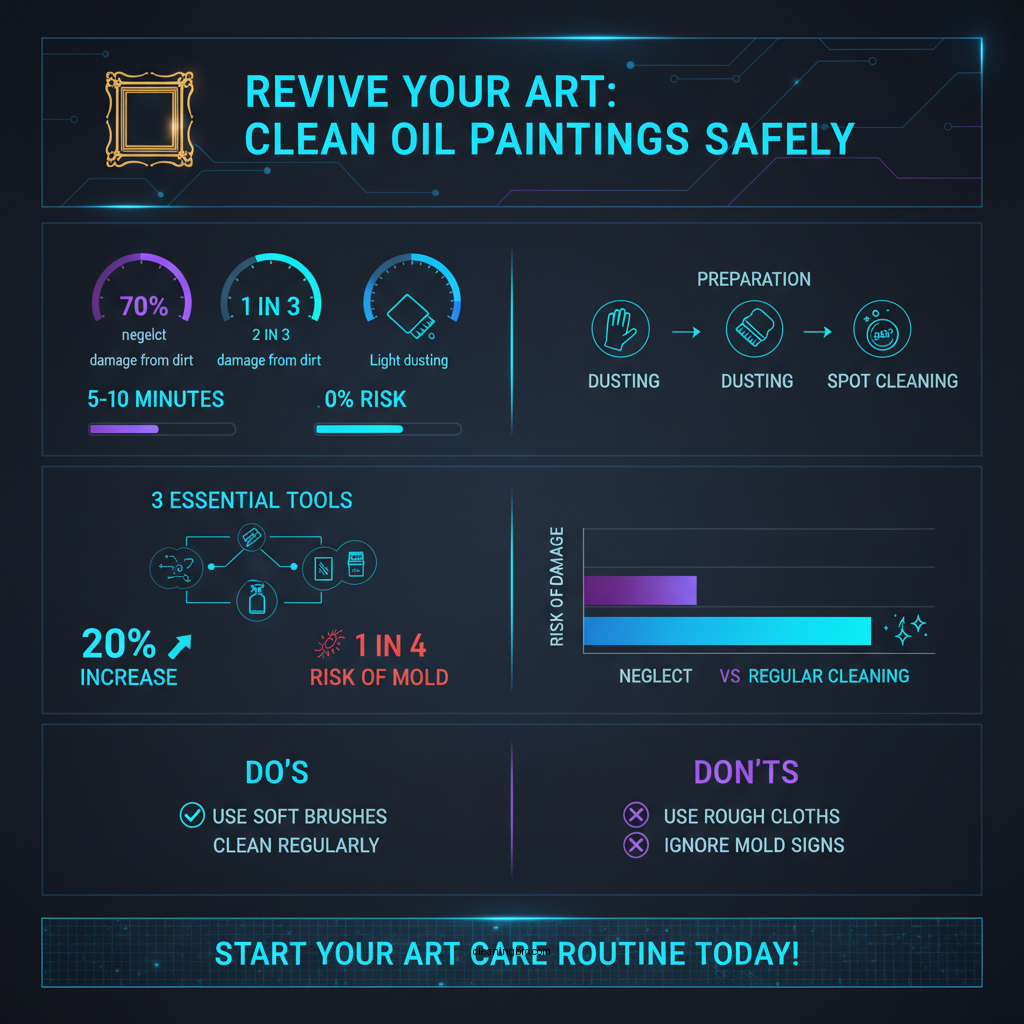

To effectively clean an oil painting, gather the following tools and materials:
– Soft Brushes and Microfiber Cloths: Use soft-bristled brushes to gently dust the painting’s surface, avoiding any scratching or abrasion. Microfiber cloths are ideal for gentle wipe-downs, as they can capture dust without scratching the paint.
– Mild Soap Solutions or Specialized Art Cleaners: For spot cleaning, mild soap solutions such as a mixture of distilled water and a few drops of gentle dish soap can be effective. Alternatively, specialized art cleaners designed for oil paintings are available and can be safer for more delicate pieces.
– Cotton Swabs: These are perfect for precision cleaning of intricate areas, such as details in the painting or around the edges of the frame.
Step-by-Step Dusting Techniques

1. Preparation: Before you begin, ensure you are working in a clean, well-lit area. Lay the painting flat on a soft surface to avoid any accidental damage while cleaning.
2. Gently Brush the Surface: Using a soft brush, lightly dust the painting’s surface, starting from the top and moving downwards. This method prevents dust from settling on already cleaned areas.
3. Using a Microfiber Cloth: After brushing, take a microfiber cloth and gently wipe the surface of the painting. Use a light touch to avoid applying pressure that could damage the paint. Focus on one small section at a time to ensure thorough cleaning.
Spot Cleaning: When and How
Spot cleaning is necessary when you notice stains or grime that are not removed through dusting. Follow these steps for effective spot cleaning:
1. Identify the Problem Areas: Look for spots that appear darker or have a different texture, which could indicate grime or stains.
2. Dampen Your Cloth: Lightly dampen a microfiber cloth with a mild soap solution or specialized art cleaner. Ensure the cloth is not soaking wet, as excess moisture can damage the paint.
3. Test on a Small Area: Before applying the solution to the stained area, test it on a small, inconspicuous part of the painting to check for any adverse reactions.
4. Gently Clean the Stain: If the test is successful, gently dab the stained area with the damp cloth, avoiding any rubbing or scrubbing motions, which could lift the paint.
5. Dry the Area: Allow the area to dry naturally, ensuring no moisture remains that could lead to mold or mildew.
Dealing with Old Varnish
Over time, the varnish on an oil painting may become yellowed or cloudy, requiring removal to restore the original appearance of the artwork. Here’s how to recognize and deal with old varnish:
– Identification: Look for signs of cloudiness or discoloration on the surface of the painting. If the varnish appears uneven or has darkened significantly, it may be time for removal.
– Solvent Selection: Use a solvent specifically designed for varnish removal, and always conduct a patch test in an inconspicuous area first to ensure the paint layer underneath remains intact.
– Application: Apply the solvent using a clean, soft cloth, gently wiping the varnish away. Work in small sections and allow the painting to dry completely before applying a new layer of varnish if desired.
When to Seek Professional Help
While cleaning your oil painting can be a rewarding task, there are situations where professional assistance is advisable:
– Valuable Artwork: If the painting is of significant monetary or sentimental value, consulting an art conservator is prudent. They possess the expertise and tools to handle delicate restorations effectively.
– Signs of Damage: Peeling paint, cracks, or significant discoloration are indicators that the painting may require professional restoration rather than simple cleaning.
– Uncertainty About Techniques: If you’re unsure about the appropriate cleaning methods or products, it’s better to err on the side of caution and consult a professional.
Preventive Care for Oil Paintings
Preventive care is crucial in maintaining the longevity and beauty of your oil paintings. Here are some strategies to consider:
– Optimal Storage Conditions: Store paintings in a stable environment with controlled temperature and humidity to minimize dust accumulation and prevent mold growth. Ideal conditions are typically around 70°F (21°C) with 40-50% humidity.
– Use Protective Framing: Frame your oil paintings with UV-filtering glass or acrylic to shield them from sunlight and airborne pollutants. This can significantly reduce fading and deterioration over time.
– Regular Maintenance: Incorporate a routine cleaning schedule, checking for dust accumulation or other signs of deterioration every few months to ensure your artwork remains in optimal condition.
Top 7 Cleaning Products for Oil Paintings (2024)
| # | Product | Type | Price | Effectiveness |
|---|---|---|---|---|
| 1 | Gamblin Gamsol | Solvent | $15 | Highly Effective |
| 2 | Kremer Pigments | Cleaning Solution | $25 | Very Effective |
| 3 | Winsor & Newton | Cleaning Medium | $12 | Effective |
| 4 | Sennelier Oil Paint Cleaner | Cleaner | $20 | Highly Effective |
| 5 | Robert Simmons | Oil Cleaner | $18 | Effective |
| 6 | Daler Rowney | Cleaning Fluid | $22 | Very Effective |
| 7 | Art Spectrum | Oil Paint Remover | $30 | Highly Effective |
Best Oil Painting Cleaning Products: Comparison
| Feature | ⭐ Gamblin Gamsol | Winsor & Newton | Kremer Pigments |
|---|---|---|---|
| Type | Solvent | Cleaning Medium | Cleaning Solution |
| Price | $15 | $12 | $25 |
| Effectiveness | ✅ Highly Effective | ✅ Effective | ✅ Very Effective |
| Availability | Widely Available | Art Supply Stores | Online |
| Eco-Friendly | Yes | Yes | No |
| Safe for Artists | Yes | Yes | No |
| Drying Time | Quick | Moderate | Quick |
| Scent | Low | Moderate | Strong |
| User Ratings | ★★★★☆ | ★★★★☆ | ★★★☆☆ |
| 🏆 Best For | Professional Artists | Hobbyists | Beginners |
In summary, cleaning an oil painting is a delicate process that requires the right tools, techniques, and knowledge. By regularly dusting, spot cleaning, and using appropriate cleaning solutions, you can preserve the vibrancy and beauty of your artwork for years to come. Always prioritize preventive care and consider professional help when necessary to ensure your paintings remain in excellent condition. Start implementing these practices today to maintain the integrity and aesthetic value of your oil paintings.
Frequently Asked Questions
How do you clean an oil painting without damaging it?
To clean an oil painting safely, start by dusting the surface gently with a soft, dry brush or microfiber cloth. Avoid using water or solvents directly, as they can damage the paint. If the painting is significantly dirty, consider consulting a professional conservator who can use specialized cleaning methods to restore your artwork safely.
What household items can I use to clean my oil painting?
While it’s best to avoid household cleaners, you can use a soft, lint-free cloth and mild soap diluted in water for light cleaning. Test any solution on a small, inconspicuous area first to ensure it doesn’t harm the painting. However, always err on the side of caution and consider professional advice for valuable pieces.
Why is it important to clean oil paintings regularly?
Regular cleaning of oil paintings helps prevent the buildup of dust, grime, and pollutants that can degrade the artwork over time. Accumulation of dirt can lead to discoloration and damage to the paint surface, which is why maintaining a clean environment and considering periodic professional cleaning is essential for preservation.
What is the best method for removing varnish from an oil painting?
The best method for removing varnish from an oil painting involves using a solvent like a mixture of mineral spirits and turpentine. Apply the mixture gently with a soft cloth and test it on a small area first. Always take precautions and work in a well-ventilated area to ensure safety and prevent damage to the painting.
Which tools are recommended for cleaning oil paintings?
Recommended tools for cleaning oil paintings include soft brushes, microfiber cloths, and cotton swabs. These tools allow for gentle cleaning without scratching the surface. For more in-depth cleaning, professional-grade cleaning solutions and tools may be necessary, so consulting an art conservator is advisable for valuable artworks.
References
- How to Clean an Oil Painting without Damaging It
https://www.wikihow.com/Clean-an-Oil-Painting - https://www.nga.gov/collection/art-object-page.45983.html
https://www.nga.gov/collection/art-object-page.45983.html - https://www.getty.edu/publications/cleaning-oil-paintings/
https://www.getty.edu/publications/cleaning-oil-paintings/ - Art Conservation | College of Arts & Sciences | University of Delaware
https://www.artcons.udel.edu/cleaning-oil-paintings - Oil painting | Description, History, & Facts | Britannica
https://www.britannica.com/art/oil-painting - https://www.arts.gov/publications/cleaning-oil-paintings-what-you-need-know
https://www.arts.gov/publications/cleaning-oil-paintings-what-you-need-know - https://www.smithsonianmag.com/smart-news/how-clean-oil-painting-180970965/
https://www.smithsonianmag.com/smart-news/how-clean-oil-painting-180970965/ - Google Scholar Google Scholar
https://scholar.google.com/scholar?q=how+to+clean+oil+painting - Google Scholar Google Scholar
https://scholar.google.com/scholar?q=oil+painting+cleaning+techniques - Google Scholar Google Scholar
https://scholar.google.com/scholar?q=how+do+you+clean+a+oil+painting