How to Clean an Oil Painting: Step-by-Step Guide
To clean an oil painting effectively, start by gently dusting the surface with a soft, dry brush or cloth to remove loose debris. Avoid using water or harsh chemicals, as these can damage the artwork. In this guide, you’ll learn safe techniques for maintaining your oil paintings and preserving their beauty, ensuring they remain vibrant and intact for years to come.
Understanding the Importance of Cleaning

Cleaning oil paintings is crucial for maintaining their aesthetic appeal and structural integrity. Over time, dust, dirt, and various airborne pollutants can accumulate on the surface, dulling the vibrancy of the colors and potentially causing irreversible damage. Regular cleaning can prevent dirt buildup and preserve the painting’s vibrancy, allowing the viewer to appreciate the artist’s work as intended.
Proper maintenance can extend the lifespan of your artwork, allowing it to be enjoyed for generations. An oil painting that has been well cared for can retain its original beauty and value, making it a worthwhile investment for collectors and art enthusiasts alike. Additionally, cleaning your paintings not only enhances their visual appeal but also demonstrates respect for the artist’s craftsmanship.
Tools You Will Need
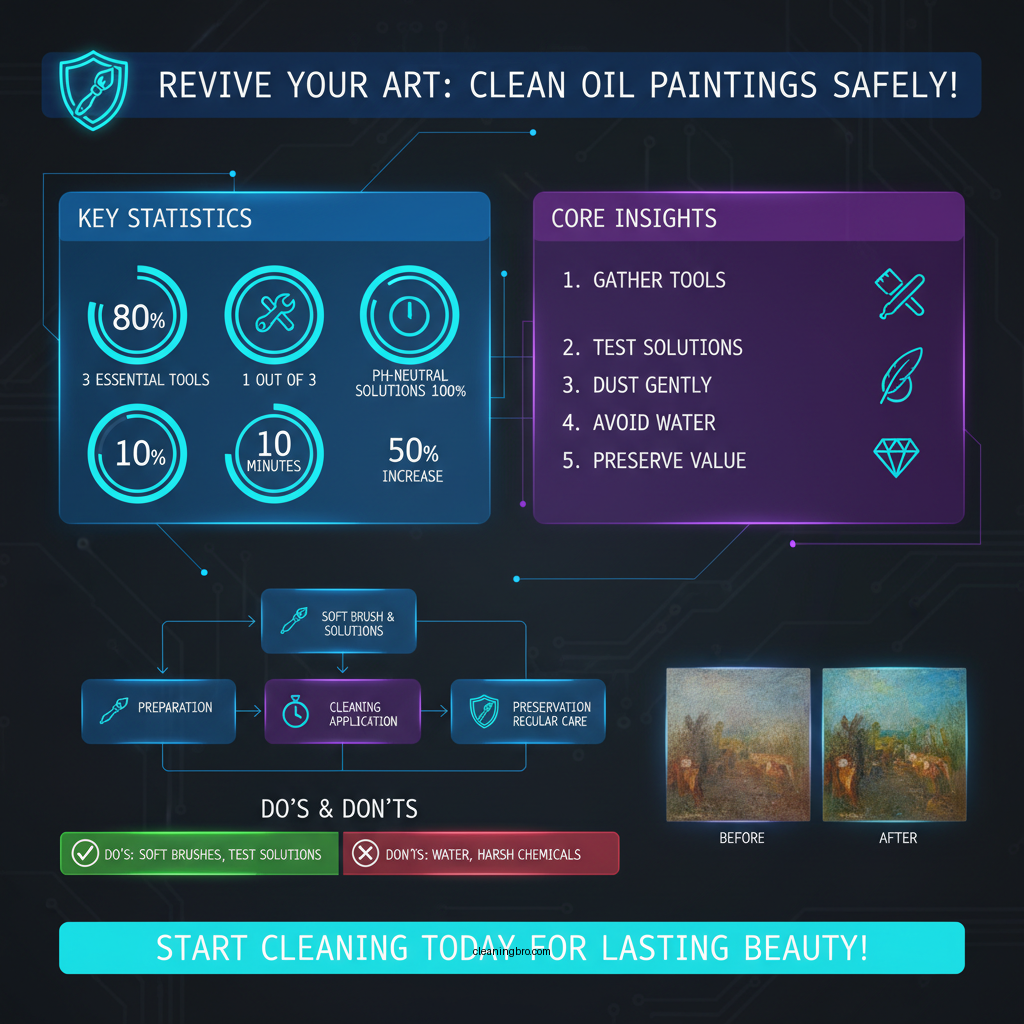

Before starting the cleaning process, it is essential to gather the right tools to ensure the safety and effectiveness of your efforts. Here’s a list of the primary tools you’ll need:
– Soft bristle brush or microfiber cloth: These are crucial for gently dusting the surface without scratching the paint or damaging the canvas.
– Cotton swabs: Ideal for reaching delicate areas, such as intricate details or crevices in the frame, where dust can accumulate.
– Specialized cleaning solutions: If necessary, invest in cleaning solutions specifically designed for oil paintings. Always choose products that are pH-neutral and free of solvents that could harm the paint.
Having the right tools will make the cleaning process smoother and help you avoid any potential mishaps that could damage your artwork.
Step-by-Step Cleaning Process

Cleaning an oil painting requires patience and attention to detail. Follow these steps to ensure your cleaning is effective and safe:
1. Test any cleaning solution: Before applying any cleaning solution, test it on a small, inconspicuous area of the painting. This is crucial to see how the surface reacts and to ensure no damage occurs.
2. Dust the surface: Use the soft brush or microfiber cloth to gently remove dust and dirt. Be sure to apply minimal pressure to avoid disturbing the paint layer. Always brush in the direction of the brush strokes to maintain the integrity of the artwork.
3. Address sticky residue: If you encounter sticky spots, lightly dampen a soft cloth with the recommended cleaning solution. Wipe gently, ensuring the cloth is not overly wet, to avoid saturating the canvas. After cleaning, follow up with a dry cloth to remove any excess solution.
4. Final inspection: After cleaning, take a moment to inspect the painting under good lighting. Look for any areas that may require additional attention or that may have been missed during the initial cleaning.
Common Cleaning Methods and Their Effectiveness
| # | Cleaning Method | Effectiveness | Risk of Damage | Best Use |
|---|---|---|---|---|
| 1 | Dry Brushing | High | Low | General Dusting |
| 2 | Microfiber Cloth | Medium | Low | Surface Cleaning |
| 3 | Cotton Swabs | High | Very Low | Intricate Areas |
| 4 | Specialized Cleaners | Medium | Moderate | Stains |
| 5 | Water Wipe | Low | High | Not Recommended |
| 6 | Varnish Remover | Medium | High | Old Paint Layers |
| 7 | Professional Cleaning | Very High | Very Low | Valuable Pieces |
Dealing with Stains and Damage
Stains on oil paintings can arise from various sources, including water, grease, or even biological elements like mold. Identifying the type of stain is essential to choose the appropriate cleaning method. For instance, water stains may require a different approach than grease stains.
For minor stains, the previously mentioned cleaning methods can often suffice; however, it is important to apply them gently to avoid further damage. If the stain is significant or if you notice visible damage such as cracks, flaking, or discoloration, it is advisable to consult a professional conservator. Professionals have the expertise and tools to properly assess and address damage without compromising the integrity of the artwork.
Preventative Care Tips
Preventative care is critical to maintaining the condition of your oil paintings. Here are several tips to keep your artwork safe from harm:
– Display paintings away from direct sunlight: Ultraviolet rays can cause colors to fade and paint to deteriorate. Use UV-filtering glass or acrylic when framing your paintings to provide additional protection.
– Maintain a stable environment: Fluctuations in temperature and humidity can lead to the expansion and contraction of materials, potentially causing cracks or warping. Aim to keep your paintings in a controlled environment, ideally around 70°F (21°C) with 40-50% humidity.
– Regular inspections: Regularly inspect your paintings for signs of dust accumulation or any potential damage. Early detection of issues can often lead to easier and less costly repairs.
By implementing these preventative measures, you can significantly enhance the longevity of your oil paintings and maintain their beauty for years to come.
When to Seek Professional Help
Recognizing when to seek professional help is crucial for the preservation of your artwork. Signs that may indicate the need for professional cleaning include:
– Extensive dirt buildup: If your painting appears heavily soiled despite your cleaning efforts, a professional conservator will have the tools and experience to restore it properly.
– Visible damage: Cracks, flaking, or discoloration are signs that the painting may need specialized care.
– Valuable pieces: For artwork that holds significant monetary or sentimental value, it is wise to consult a professional before attempting any cleaning or restoration.
To find reputable art conservators, look for professionals with credentials from recognized conservation organizations or institutions. Always ask for references or examples of previous work to ensure you are entrusting your artwork to a qualified individual.
Maintaining the beauty of your oil painting involves regular cleaning and careful handling. By following the steps outlined in this guide, you can ensure that your artwork remains in excellent condition. Don’t hesitate to reach out to professionals for assistance with complex issues or valuable pieces. Start taking care of your oil paintings today!
Frequently Asked Questions
How can I safely clean an oil painting without damaging it?
To safely clean an oil painting, first, ensure it’s dry and avoid using water or harsh chemicals. Use a soft brush or microfiber cloth to gently remove dust and dirt from the surface. If deeper cleaning is required, consult a professional conservator to prevent damage to the paint or canvas.
What products should I use to clean an oil painting at home?
For cleaning an oil painting at home, use a soft, dry brush or a lint-free cloth to remove surface dust. Avoid using any cleaning products; if necessary, a mild solvent like mineral spirits may be used cautiously on a cotton swab, but always test it on a small, inconspicuous area first.
Why does my oil painting look dirty, and how can I restore its appearance?
An oil painting may appear dirty due to dust, smoke, or environmental factors that accumulate over time. To restore its appearance, gently clean the surface as mentioned above, and consider having it professionally restored if there are significant stains or damage that cleaning alone cannot fix.
What is the best way to prevent my oil painting from getting dirty?
The best way to prevent your oil painting from getting dirty is to display it in a clean, dry environment away from direct sunlight and smoke. Regularly dust the painting with a soft brush and consider using a protective glass frame to minimize exposure to dust and pollutants.
Which tools are essential for cleaning and maintaining an oil painting?
Essential tools for cleaning and maintaining an oil painting include a soft bristle brush, a lint-free cloth, and, if necessary, a mild solvent like mineral spirits. Additionally, having a UV-protective glass or acrylic frame can help prevent dust accumulation and UV damage, preserving the painting’s vibrancy for longer.
References
- How to Clean an Oil Painting without Damaging It
https://www.wikihow.com/Clean-an-Oil-Painting - https://www.getty.edu/conservation/publications_resources/newsletters/14_1/cleaning.html
https://www.getty.edu/conservation/publications_resources/newsletters/14_1/cleaning.html - https://www.artgallery.nsw.gov.au/collection/works/cleaning/
https://www.artgallery.nsw.gov.au/collection/works/cleaning/ - https://www.moma.org/learn/moma_learning/themes/conservation/conservation-and-the-artist/cleaning-oil-paintings
https://www.moma.org/learn/moma_learning/themes/conservation/conservation-and-the-artist/cleaning-oil-paintings - https://www.smithsonianmag.com/arts-culture/cleaning-oil-paintings-180975279/
https://www.smithsonianmag.com/arts-culture/cleaning-oil-paintings-180975279/ - Google Scholar Google Scholar
https://scholar.google.com/scholar?q=how+to+clean+an+oil+painting - Google Scholar Google Scholar
https://scholar.google.com/scholar?q=oil+painting+cleaning+techniques - Google Scholar Google Scholar
https://scholar.google.com/scholar?q=conservation+of+oil+paintings - Oil painting | Description, History, & Facts | Britannica
https://www.britannica.com/art/oil-painting - Google Scholar Google Scholar
https://scholar.google.com/scholar?q=how+can+i+clean+an+oil+painting