How to Clean and Deodorize Your Attic
To clean and deodorize your attic, start by clearing out stored items and wearing protective gear like gloves and a mask. Remove debris carefully and vacuum dust using a HEPA filter to avoid spreading particles. Inspect for mold or pests, then deep clean all surfaces with a damp cloth. Choose natural deodorizers like baking soda or eco-friendly options to keep the air fresh. If you want a thorough guide to make the process easier and more effective, keep exploring the steps involved.
Preparing Your Attic for Cleaning

Before you jump into cleaning, make certain you’ve cleared the attic of any stored items and checked for safety hazards like exposed nails or weak flooring. Attic safety is your top priority, so wear sturdy shoes, gloves, and a dust mask to protect yourself. Confirm the space is well-ventilated by opening windows or using fans, giving you fresh air as you work. Gather your cleaning supplies ahead of time—think heavy-duty trash bags, a broom, a dustpan, and a vacuum with a HEPA filter to handle dust and allergens effectively. Having everything ready lets you move freely and confidently through the space without interruptions. Taking these steps helps you maintain control and enjoy the freedom of a safe, clean attic environment.
Removing Debris and Dust
Once you’ve prepared your attic, you can start removing debris and dust to create a cleaner space. Begin by gathering any loose trash or larger debris, clearing the way for thorough cleaning. To control dust effectively, wear a mask and open ventilation points if possible. Use specific vacuum techniques—like a vacuum with a HEPA filter—to capture fine dust without stirring it up. Work methodically from one corner to the other, focusing on beams, corners, and floor surfaces where dust settles. Avoid sweeping, as it spreads dust into the air. By mastering these vacuum techniques and dust control strategies, you’ll transform your attic into a fresher, more breathable space that feels as free and open as you want it to be.
Inspecting for Mold and Pests
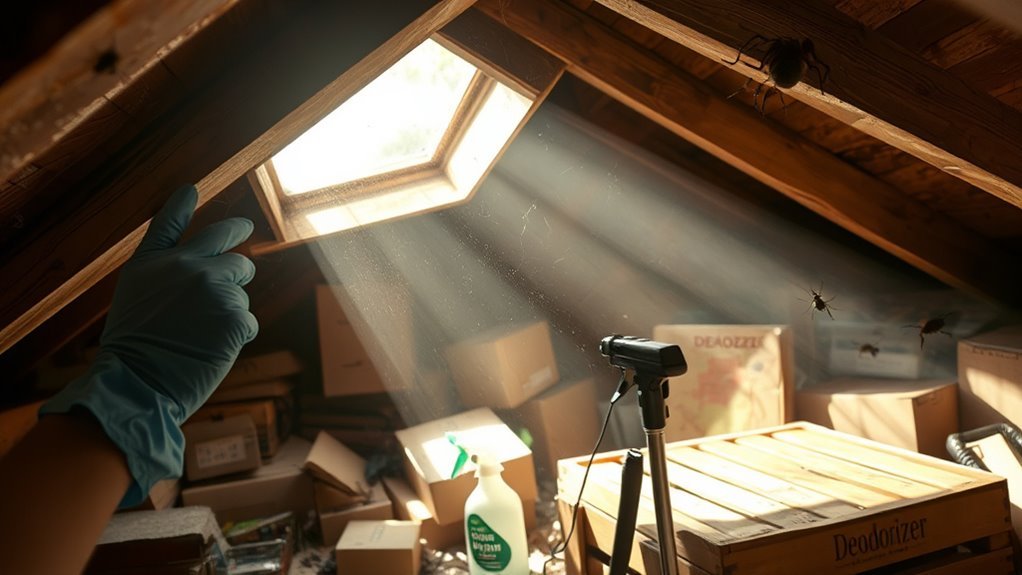
Before you finish cleaning, check your attic carefully for signs of mold and pests. Look for discolored patches or musty smells that could indicate mold, and keep an eye out for common pests like rodents or insects. Knowing how to spot these issues early helps you prevent bigger problems and choose the right treatment methods.
Mold Identification Tips
How can you tell if your attic has mold or pests lurking in hidden corners? Start by recognizing common mold symptoms like musty odors, discoloration, or water stains on wood and insulation. Different mold types present differently—black mold looks dark and slimy, while white or green mold appears fuzzy or powdery. You might spot patches growing near moisture sources, like leaks or poor ventilation areas. Mold can trigger allergic reactions or respiratory issues, so identifying it early is key to freedom from health risks. Use a flashlight and protective gear as you inspect, focusing on dark, damp spots. Trust your senses: if something smells off or looks unusual, it’s worth a closer look. Early detection helps you act swiftly to clean and reclaim your attic space.
Common Attic Pests
Although mold can be a major concern, you shouldn’t overlook the common pests that might be hiding in your attic. Rodents like mice and rats, insects such as termites and carpenter ants, and even bats can invade your space, causing damage and odors. For effective pest identification, look for droppings, chewed wires, nests, or unusual sounds. Recognizing these signs early lets you take control before they multiply. Keep in mind, understanding what you’re dealing with is the first step toward freedom from infestations. While this guide focuses on spotting these unwelcome guests, remember that pest prevention is key to maintaining a clean, fresh attic. Stay vigilant, and your attic will remain a safe, odor-free zone.
Prevention and Treatment Methods
Since mold and pests can quickly take hold in your attic, regular inspection is essential to prevent serious damage and odors. Start by checking for moisture, leaks, or any signs of infestation like droppings or nests. Prevention strategies include sealing cracks, improving ventilation, and controlling humidity levels to keep mold and pests at bay. If you spot mold or pests, act promptly with appropriate treatment options. For mold, use specialized cleaners or consider professional removal if it’s extensive. For pests, traps or natural repellents work well, but severe infestations might require expert help. Staying vigilant and applying these prevention strategies and treatment options will help keep your attic fresh, safe, and free—letting you enjoy your home without worry.
Deep Cleaning Surfaces and Storage
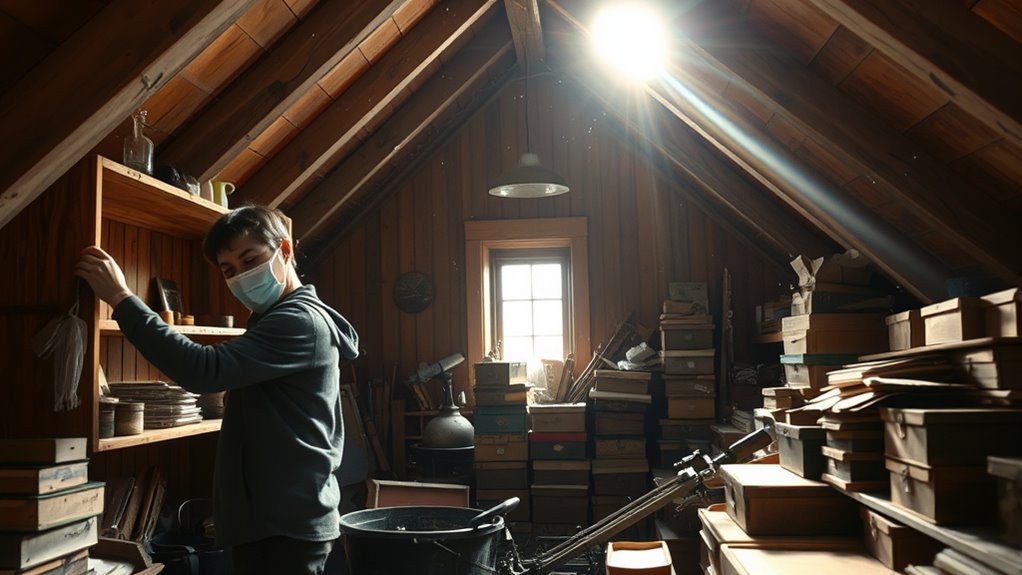
Now that you’ve checked for mold and pests, it’s time to tackle the dust and debris on all surfaces. You’ll want to clear out clutter and organize stored items to make your attic cleaner and more functional. Let’s go over how to deep clean and arrange everything efficiently.
Dust and Debris Removal
Start by clearing away all dust and debris from your attic surfaces and storage areas. Proper attic ventilation is key to keeping dust at bay and ensuring a fresh environment. Grab your cleaning supplies—like a sturdy broom, vacuum with a HEPA filter, dust masks, and microfiber cloths—to make the job easier and safer. Here’s how to tackle dust and debris removal efficiently:
- Open vents and windows to improve attic ventilation before you begin.
- Sweep loose dust and debris into piles, then vacuum thoroughly.
- Wipe down beams, rafters, and storage surfaces with a damp microfiber cloth.
- Dispose of debris in sealed bags to prevent dust from resettling.
Organizing Stored Items
After clearing away dust and debris, it’s time to organize the items you’ve stored in your attic. Effective item categorization is key to reclaiming freedom from clutter. Group similar items—seasonal gear, keepsakes, tools—so you can find what you need without hassle. Invest in smart storage solutions like clear bins and sturdy shelves to keep everything visible and accessible. Here’s a simple layout to guide your organization:
| Category | Storage Solution | Location |
|---|---|---|
| Seasonal Gear | Clear plastic bins | Top shelves |
| Keepsakes | Labeled boxes | Corner shelves |
| Tools | Pegboard & hooks | Wall-mounted area |
Choosing the Right Deodorizers
Selecting the right deodorizer for your attic can make a significant difference in eliminating odors effectively. You want to feel free in your space, not trapped by musty smells. Choosing between natural deodorizers and commercial options depends on your preferences and attic conditions.
Here are four key points to evaluate:
- Natural deodorizers like baking soda or activated charcoal offer chemical-free freshness.
- Commercial options provide stronger, longer-lasting scents but may contain harsh chemicals.
- Assess your attic’s ventilation and moisture levels to pick the most suitable product.
- Always check for allergy-friendly or eco-friendly labels to protect your health and the environment.
Maintaining a Fresh and Clean Attic
While keeping your attic clean can feel like a big task, maintaining it regularly will help you avoid musty odors and clutter buildup. You’ll want to guarantee proper attic ventilation to promote continuous air circulation, which prevents moisture and stale air from lingering. Check vents for blockages and consider adding fans if natural airflow is limited. Regularly declutter and inspect your attic for signs of mold or pests, addressing issues quickly to keep the space fresh. Using breathable storage containers can also help reduce trapped humidity. By staying proactive with these steps, you’ll create an attic environment that feels open and free, making it easier to store belongings and enjoy peace of mind without worrying about unpleasant smells or dampness creeping in.
Frequently Asked Questions
How Often Should I Schedule Professional Attic Inspections?
You should schedule professional attic inspections at least once a year to keep your attic maintenance on point. Regular inspection frequency helps spot issues early, like leaks or pests, saving you hassle and costs down the road. If you live in an area with harsh weather or have an older home, consider twice a year. Staying consistent lets you enjoy peace of mind and the freedom to relax without unexpected attic problems.
Can Attic Cleaning Improve Home Energy Efficiency?
When you clean your attic, you can spot issues like damaged or compressed attic insulation that reduce energy savings. Fixing or replacing it helps your home retain heat in winter and stay cool in summer, freeing you from high energy bills. Plus, a clean attic lets your insulation work efficiently, so you enjoy more comfort and freedom from wasted energy. Regular upkeep pays off in savings and peace of mind.
What Are the Safety Precautions for Attic Electrical Wiring?
Did you know that faulty electrical wiring causes nearly 50,000 home fires annually? When it comes to attic electrical safety, you’ve got to prioritize electrical safety first. Always perform a thorough wiring inspection before starting any work. Make sure wires aren’t frayed or exposed, and never overload circuits. Wearing insulated gloves and using a voltage tester can keep you safe. Taking these steps lets you maintain your attic freely without risking hazards.
How Do I Prevent Future Pest Infestations in My Attic?
To prevent future pest infestations, you’ll want to focus on pest control and insulation maintenance. Seal any cracks or gaps where pests might sneak in, and keep your insulation in good shape to avoid providing cozy nesting spots. Regularly inspect your attic, and don’t hesitate to call in professionals if you spot signs of unwanted guests. Staying proactive means you’ll enjoy a pest-free space and the freedom to relax without worry.
Are There Eco-Friendly Deodorizing Options for Attics?
You might be surprised how simple it is to freshen up your attic naturally. Forget harsh chemicals—baking soda is your secret weapon, absorbing odors silently and effectively. Add a few drops of essential oils like lavender or eucalyptus to enhance the freshness and create a calming atmosphere. This eco-friendly combo frees you from toxic sprays and lets you enjoy a clean, breathable space, all while respecting your love for a greener, healthier home.