How to Clean and Deodorize Your Carpet
To clean and deodorize your carpet, start by vacuuming thoroughly to remove dirt and debris. Treat any stains with gentle homemade solutions. Deep clean using a suitable carpet shampoo, then rinse and extract excess moisture to protect fibers. Sprinkle baking soda mixed with a few drops of your favorite essential oil to naturally absorb odors and leave a fresh scent. Regular vacuuming and quick stain management help maintain freshness. For a complete guide, you’ll find helpful tips and tricks ahead.
Gather Essential Cleaning Supplies

Before you begin cleaning your carpet, make sure you’ve gathered all the essential supplies. Having the right cleaning tools and cleaning solutions on hand gives you the freedom to tackle any stain or odor confidently. Grab a sturdy vacuum, a scrub brush with firm bristles, and microfiber cloths for spot cleaning. Choose cleaning solutions that suit your carpet type—look for eco-friendly or homemade options if you want to avoid harsh chemicals. A spray bottle helps apply solutions evenly without soaking the carpet. Don’t forget gloves to protect your skin and a bucket for mixing or rinsing. When your supplies are ready, you’ll feel empowered to refresh your carpet on your terms, without relying on professional help or expensive products.
Prepare Your Carpet for Cleaning
With your cleaning supplies ready, the next step is to prepare your carpet for the best results. Proper preparation helps protect your carpet fibers and maximizes the impact of your cleaning efforts. Here’s what you need to do:
- Clear the area by moving furniture and removing any objects to access the entire carpet surface freely.
- Check the carpet’s care instructions to adjust your cleaning frequency, ensuring you don’t over-clean or damage the fibers.
- Spot-treat any stains or high-traffic areas lightly before starting the full clean to loosen dirt and odors.
Vacuum Thoroughly to Remove Loose Dirt

Start by vacuuming your carpet thoroughly to lift and remove loose dirt, dust, and debris. This step frees your space from trapped particles, giving you a clean slate. To maximize dirt removal, use effective vacuuming techniques: move slowly, overlapping each pass to catch every bit of grime. Don’t rush—patience here means less effort later. Focus on high-traffic areas where dirt accumulates most, and adjust your vacuum’s height for different carpet fibers to avoid damage. Remember to empty the vacuum bag or canister regularly; a full container reduces suction power and limits dirt removal. By mastering these vacuuming techniques, you reclaim your freedom from dirt and prolong your carpet’s life, making deeper cleaning easier and more effective.
Treat Stains With Homemade Solutions
Two common household ingredients can quickly tackle most carpet stains without harsh chemicals. When dealing with different stain types, you want effective cleaning agents that won’t confine you to expensive products. Here’s a simple approach:
- Mix equal parts white vinegar and water in a spray bottle. This combo breaks down stains like coffee, wine, or pet accidents.
- Sprinkle baking soda on the stain first to absorb moisture and odors.
- Spray the vinegar solution over the baking soda and let it fizz for 5 minutes, then blot with a clean cloth.
This homemade solution frees you from harsh chemicals and costly cleaners while handling a wide range of stains. It’s a smart, natural way to keep your carpet fresh without sacrificing your freedom to choose what goes into your home.
Deep Clean Using a Carpet Shampoo or Cleaner
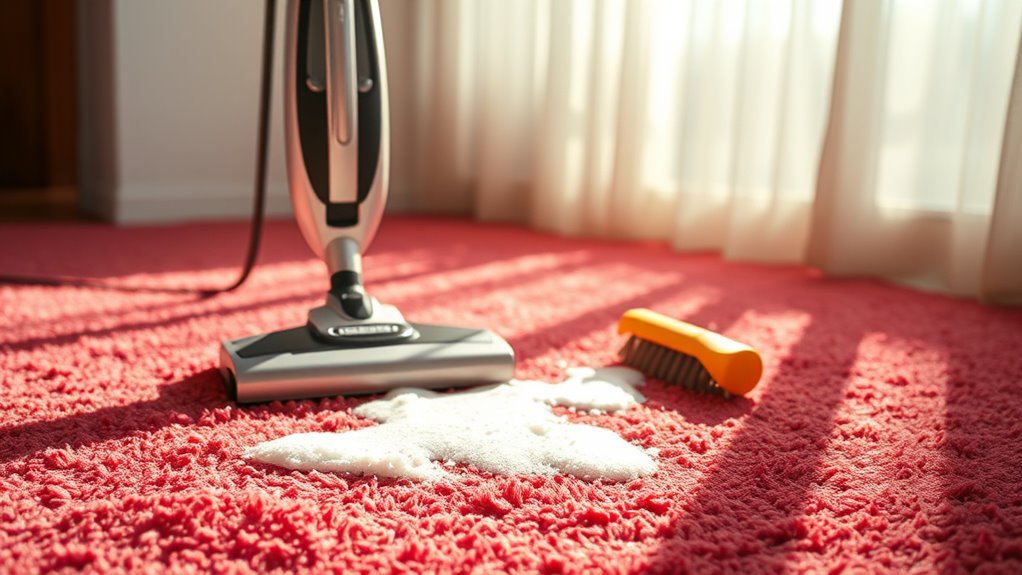
After treating stains with homemade solutions, giving your entire carpet a thorough clean can help maintain its overall appearance and freshness. You’ll want to explore various carpet shampoo types—from foaming to liquid formulas—to find one that suits your carpet’s material and your preferred cleaning method. Using effective carpet cleaning techniques, such as applying the shampoo evenly and working it gently into the fibers with a soft brush or machine, guarantees deep dirt removal without damage. Remember, choosing the right product and technique lets you refresh your carpet while preserving its texture and color. This step liberates your space from hidden grime and odors, keeping your carpet vibrant and inviting for the freedom you deserve.
Rinse and Extract Excess Moisture
After shampooing, rinse your carpet with warm water to remove any leftover cleaner. Use a carpet extractor to pull out excess moisture effectively. Repeat this process until the carpet feels nearly dry to the touch.
Use Warm Water
One key step in revitalizing your carpet is using warm water to rinse and extract excess moisture. The warm water benefits include loosening dirt and residues more effectively than cold water, allowing for a deeper clean. Maintaining the right warm water temperature is essential—it should be comfortably warm, not hot, to avoid damaging carpet fibers.
Here’s how you can take advantage of warm water benefits:
- Use warm water to gently rinse the cleaned area, breaking down soap residues.
- Blot or press with a clean cloth to lift moisture without saturating the carpet.
- Open windows or use fans to speed up drying, preserving the carpet’s freshness.
Employ Carpet Extractor
Harness the power of a carpet extractor to efficiently rinse and remove excess moisture from your carpet. Choosing the right carpet extractor type—whether portable, truck-mounted, or upright—can make this step easier and faster. After rinsing, the extractor’s suction pulls out water, preventing mold and speeding drying. To keep your freedom intact, perform regular extractor maintenance: clean filters, check hoses, and empty tanks to guarantee peak performance.
| Carpet Extractor Types | Benefits | Maintenance Tips |
|---|---|---|
| Portable | Lightweight, versatile | Clean filters after use |
| Truck-mounted | Powerful, deep cleaning | Inspect hoses regularly |
| Upright | Easy maneuverability | Empty tanks promptly |
Repeat Until Dry
Although it may take some time, you’ll need to rinse and extract moisture repeatedly until your carpet feels dry to the touch. This step is essential for effective moisture control and prevents mold or mildew from taking hold. Here’s how you can master drying techniques to regain your carpet’s freshness:
- Use your carpet extractor to rinse the area with clean water, loosening any remaining dirt and detergent.
- Extract the excess water thoroughly, focusing on soaking wet spots to speed up drying.
- Repeat this rinse-and-extract cycle until the carpet surface feels barely damp.
Dry Your Carpet Properly
After cleaning your carpet, you’ll want to dry it thoroughly to prevent mold and mildew growth. To do this effectively, focus on carpet drying techniques like using fans or a dehumidifier to speed up the process. Position fans so they create strong air circulation methods that push moisture away from the fibers. If possible, open windows to let fresh air in and enhance airflow, giving your carpet the best chance to dry quickly. Avoid walking on the carpet until it’s completely dry to maintain its cleanliness and freshness. By mastering these simple drying strategies, you’ll keep your space healthy and free, allowing you to enjoy your home without worry. Remember, proper drying is key to preserving your carpet’s look and feel for the long haul.
Deodorize With Natural Ingredients
You can easily deodorize your carpet using natural ingredients like baking soda, which absorbs odors effectively. Adding a few drops of your favorite essential oils to the baking soda not only freshens the scent but also provides a pleasant aroma. This simple method keeps your carpet smelling clean without harsh chemicals.
Baking Soda Benefits
Frequently overlooked, baking soda is one of the most effective natural ingredients you can use to deodorize your carpet. It’s affordable, safe, and easy to apply, giving you the freedom to maintain carpet freshness without harsh chemicals. Here’s why baking soda stands out:
- Absorbs odors: It traps and neutralizes unwanted smells instead of just masking them.
- Lifts moisture: Baking soda helps draw out dampness, reducing the chance for mold and mildew.
- Gentle on fibers: It refreshes your carpet without damaging delicate materials or colors.
Essential Oils Use
While baking soda tackles odors and moisture, essential oils bring a fresh, natural scent that can enhance your carpet’s freshness. You can easily mix a few drops of your favorite essential oils—like lavender, eucalyptus, or lemon—with baking soda before sprinkling it on your carpet. This combo not only deodorizes but also leaves a subtle, uplifting aroma that lasts. After letting it sit for at least 15 minutes, vacuum thoroughly to remove the powder and release that natural fragrance. Using essential oils gives you control over the scent, freeing you from harsh chemical sprays and synthetic fragrances. Embracing these natural ingredients lets you maintain a clean home with a personal touch, keeping your carpet freshness genuine and inviting without compromising your desire for a toxin-free space.
Maintain Freshness Between Deep Cleanings
Although deep cleanings are essential, keeping your carpet fresh between sessions is just as important to prevent odors and dirt buildup. To maintain that freedom of a clean, inviting space, follow these simple carpet maintenance tips:
- Stick to regular vacuuming—aim for at least twice a week to remove surface dirt and crumbs before they settle deep.
- Use baking soda as a natural deodorizer; sprinkle it lightly, let it sit for 15 minutes, then vacuum it up to neutralize smells.
- Address spills immediately by blotting with a clean cloth and a mild cleaning solution to prevent stains and lingering odors.
These steps keep your carpet feeling fresh and vibrant, giving you more time to enjoy your space without worry.
Frequently Asked Questions
Can Professional Carpet Cleaning Damage My Carpet Fibers?
You might worry that professional cleaning could damage your carpet fibers, but if you stick to recommended carpet maintenance and cleaning frequency, you’re usually safe. Professionals use methods designed to protect your carpet’s integrity while removing dirt and allergens. Overdoing it, though, can wear fibers down, so don’t clean too often. By balancing regular upkeep with freedom to enjoy your space, you keep your carpet fresh without risking harm.
How Often Should I Replace My Carpet Entirely?
You might think your carpet’s lifespan is endless, but it’s not. While some last 5 to 15 years, freedom from worn-out fibers comes when replacement indicators—like persistent stains, fraying edges, or unpleasant odors—take over. Don’t wait for discomfort to chain you down; trust your instincts and reclaim your space by upgrading your carpet when these signs show up. It’s about living freely, not trapped beneath tired flooring.
Are There Carpet Cleaning Methods Safe for Pets?
You’ll want to choose pet friendly solutions when cleaning your carpet to keep your furry friends safe. Natural cleaners like vinegar, baking soda, and mild dish soap work wonders without harsh chemicals. These options let you maintain a fresh, clean carpet while giving your pets the freedom to roam without worry. Avoid strong chemical detergents, and always test a small area first to confirm it’s safe for your pets and your carpet.
What Carpet Types Require Special Cleaning Techniques?
When tackling tricky textures, you’ll find wool carpets and Berber carpets demand delicate, distinct care. Wool carpets, with their natural fibers, need gentle cleaning to preserve their plushness and prevent shrinking. Berber carpets, known for their looped construction, require careful vacuuming to avoid snags and specialized stain treatment. By choosing the right methods, you’ll maintain your carpet’s charm while enjoying the freedom of a fresh, flawless floor.
Can Carpet Cleaning Help Reduce Allergens in the Home?
Absolutely, cleaning your carpet can greatly reduce allergen sources like dust mites, pet dander, and pollen trapped in fibers. Increasing your vacuum frequency helps keep these irritants at bay, improving indoor air quality. By maintaining a regular cleaning routine, you’ll create a fresher, healthier space where you can breathe freely and enjoy your home without constant allergy worries. It’s all about giving yourself the freedom to live comfortably.