How to Clean and Deodorize Your Wood
To clean and deodorize your wood, start by gently dusting with a soft cloth and vacuuming crevices. Use a mild soap diluted in water to wipe down surfaces—avoid soaking the wood. For deodorizing, natural solutions like vinegar, baking soda, or tea tree oil work wonders without harming the finish. Always dry wood carefully in a well-ventilated area to prevent damage. Keep these steps in mind, and you’ll also discover ways to protect against mold and maintain wood’s natural beauty.
Understanding Different Types of Wood Finishes
When you’re cleaning or deodorizing wood, knowing the type of finish it has is essential. Different finishes like oil finishes soak into the wood, offering a natural look but require gentle care. Polyurethane finishes form a tough, protective layer, so you can use stronger cleaners without worry. Varnish types vary but generally provide a durable coat that resists moisture. Lacquer finishes dry quickly and create a glossy surface, demanding careful cleaning to avoid damage. Shellac applications bring warmth and shine but aren’t water-resistant, so avoid harsh solvents. Stain options alter color without sealing, meaning you’ll need to protect the wood afterward. Wax coatings add a soft sheen and should be refreshed regularly. Understanding natural finishes helps you choose the right cleaning method and enjoy your wood’s freedom to shine.
Essential Tools and Supplies for Cleaning Wood
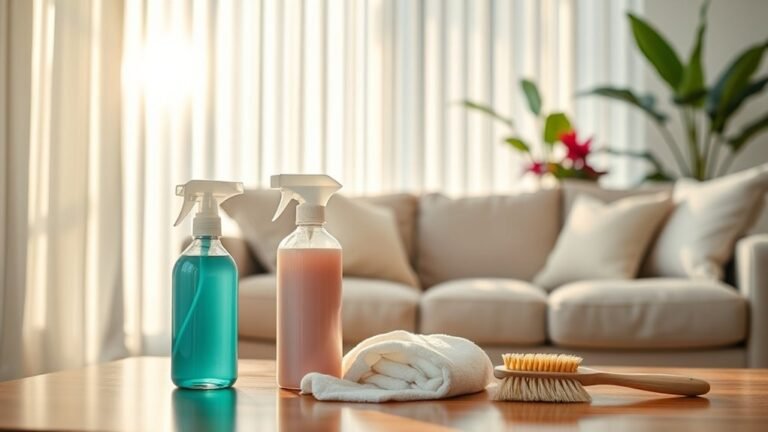
To clean wood effectively, you’ll need some basic materials like soft cloths, mild soap, and a gentle brush. Natural deodorizing agents such as lemon juice or baking soda can help freshen up the wood without harsh chemicals. Having these supplies on hand makes the cleaning process simple and safe for your wood surfaces.
Basic Cleaning Materials
Cleaning wood effectively starts with having the right materials on hand. You’ll want a soft cloth or microfiber towel to avoid scratches, a gentle brush for crevices, and a bucket for mixing solutions. Choosing eco friendly cleaners is key—not only do they protect your wood’s natural beauty, but they also respect the environment, giving you the freedom to care for your home responsibly. Avoid harsh chemicals that can strip finishes or damage wood fibers. A mild soap diluted in water often works best for basic wood care, ensuring your surfaces stay clean without losing their charm. With these essentials ready, you’re all set to maintain your wood’s health and beauty while keeping your cleaning routine simple and green.
Natural Deodorizing Agents
Although wood can hold onto odors, you don’t have to rely on harsh chemicals to freshen it up. Natural deodorizing agents like citrus peels and coffee grounds are powerful and eco-friendly choices. You can simply place fresh citrus peels on or inside wooden items to infuse a bright, clean scent. Coffee grounds work by absorbing unwanted smells—just sprinkle some in a bowl and set it near the wood surface. Both options are safe, easy, and free you from synthetic fragrances. Using these natural agents means you maintain your freedom to keep your space fresh without compromising your health or the environment. Next time your wooden furniture or cutting boards need a boost, reach for these simple, natural tools that pack a punch.
Preparing Your Wood Surface for Cleaning
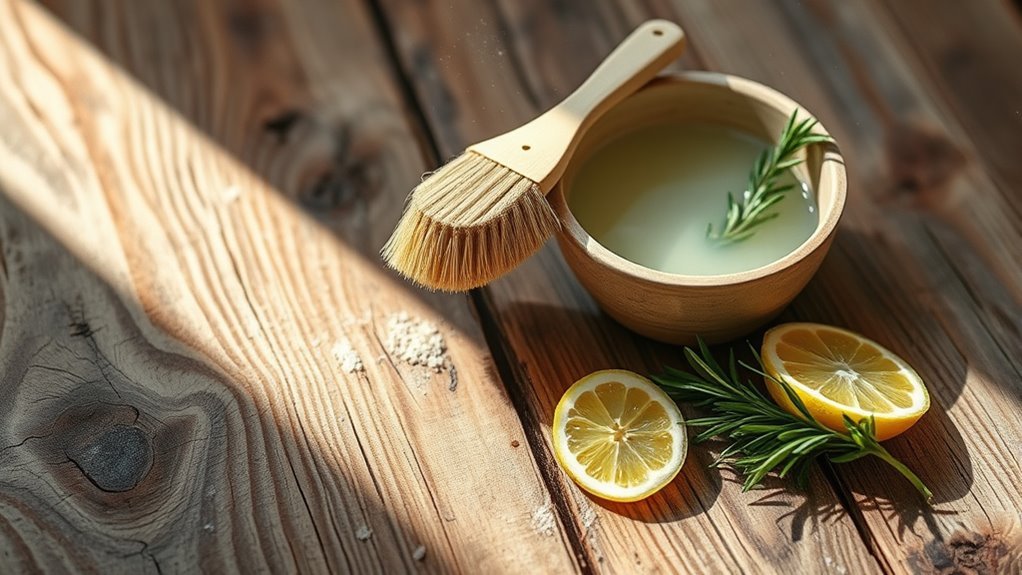
Before you start cleaning, make sure your wood surface is free of dust and loose debris. This wood surface preparation is essential to avoid scratching or damaging the finish during cleaning. You want to protect your wood’s natural beauty while enjoying the freedom to refresh it yourself. Begin by:
- Gently sweeping or dusting with a soft, dry cloth
- Using a vacuum with a brush attachment for corners and grooves
- Removing any sticky residues with a slightly damp, lint-free cloth
Taking these steps helps with surface damage prevention, ensuring your wood stays smooth and intact. Proper preparation sets the stage for effective cleaning, letting you confidently maintain and deodorize your wood without fear of harm.
Using Mild Soap and Water Safely on Wood
When you want to freshen up your wood without risking damage, using mild soap and water is a safe approach if done correctly. Start by mixing a few drops of mild soap into a bucket of warm water. Avoid harsh detergents that can strip the wood’s natural oils. Dampen a soft cloth or sponge in the soapy water, wring it out well to guarantee it’s just slightly moist, and gently wipe the wood surface. Water safety is key here—too much moisture can cause warping or staining, so never soak the wood. After cleaning, use a dry cloth to remove any excess water. This method lets you clean your wood freely, maintaining its natural beauty without fear of damage.
Natural Ingredients for Deodorizing Wood
You can freshen up your wood surfaces using natural ingredients like essential oils, which add a pleasant scent while fighting odors. Vinegar is another great option that cleans and neutralizes smells without harsh chemicals. Plus, a sprinkle of baking soda can absorb lingering odors effectively.
Essential Oils Benefits
A few drops of essential oils can work wonders in deodorizing wood naturally. When you add these oils, you’re not just masking odors—you’re embracing the aromatherapy benefits that promote a sense of calm and freedom in your space. Essential oils bring fresh, clean scents that linger gently without overpowering.
Try these essential oils for your wood:
- Lavender: Calming and soothing, it leaves a relaxing aroma.
- Lemon: Bright and uplifting, it cuts through musty smells.
- Tea Tree: Antimicrobial and fresh, it helps eliminate bacteria causing odors.
Using essential oils lets you reclaim your environment with natural, fragrant freedom—no harsh chemicals required. Just a few drops in your cleaning mix or on a cloth and your wood will smell revitalized and inviting.
Vinegar Cleaning Uses
Although vinegar might seem like a simple household item, it’s incredibly effective for cleaning and deodorizing wood naturally. You’ll love the vinegar benefits—it removes odors, disinfects, and brightens wood without harsh chemicals. To use it safely, mix vinegar with water in the right vinegar proportions. Here’s a quick guide to help you get started:
| Vinegar Proportions | Purpose | Application Tips |
|---|---|---|
| 1:1 (vinegar:water) | Deodorizing | Wipe gently with a cloth |
| 1:3 (vinegar:water) | Light cleaning | Use on sealed wood |
| 1:2 (vinegar:water) | Stain removal | Test first on a hidden spot |
| 100% vinegar | Tough odors | Dilute if wood is sensitive |
With vinegar, you maintain freedom from toxins while keeping your wood fresh and clean.
Baking Soda Application
Two tablespoons of baking soda can work wonders when it comes to deodorizing wood naturally. As a powerful odor neutralizer, baking soda absorbs unpleasant smells without harsh chemicals. You’ll love how easy it is to use and how fresh your wood surfaces feel afterward.
Here’s how to apply it:
- Sprinkle baking soda evenly over the wood surface.
- Let it sit for at least 15 minutes to absorb odors.
- Wipe away with a damp cloth, leaving your wood refreshed.
This simple, natural method gives you the freedom to maintain your wood’s beauty while keeping your space odor-free. With baking soda, you’re choosing an eco-friendly, effective way to care for your wood without sacrificing your values or lifestyle.
Removing Stains and Sticky Residue From Wood
When you notice stains or sticky residue on your wood surfaces, tackling them promptly can prevent permanent damage. Start with simple stain removal techniques like gently rubbing a mixture of equal parts vinegar and water on the affected area using a soft cloth. For tougher stains, a paste made from baking soda and water can work wonders—just apply, let it sit briefly, then wipe clean. Sticky residue solutions often involve a bit of patience; try rubbing with a cloth dampened in warm, soapy water first. If that doesn’t do the trick, a small amount of mineral oil or rubbing alcohol can help break down stubborn stickiness without harming the wood. Always test any solution on a hidden spot to keep your wood looking free and flawless.
Techniques for Drying Wood Without Damage
Since wood is sensitive to moisture, drying it carefully is essential to prevent warping, cracking, or discoloration. You want to retain the wood’s natural beauty without rushing the process. Two popular methods include air drying and heat drying, both effective when done right.
Dry wood gently to avoid warping or cracking, preserving its natural beauty through careful air or heat drying.
Here’s how you can do it:
- Air drying: Place wood in a well-ventilated, shaded area. Let nature do its work slowly, avoiding direct sunlight or damp environments.
- Heat drying: Use controlled heat, like a drying kiln or a low-temp room, to speed drying without overheating.
- Proper positioning: Stack wood with spacers to allow airflow on all sides, ensuring even drying.
Preventing Mold and Mildew on Wood Surfaces
To keep your wood surfaces mold- and mildew-free, you need to spot early signs like discoloration or a musty smell. Using effective cleaning solutions can help remove any growth before it spreads. Plus, maintaining proper ventilation is key to preventing moisture buildup that encourages mold growth.
Identifying Early Mold Signs
A faint musty smell or tiny black spots on wood are often the first signs of mold growth. Catching these early signs lets you act fast, maintaining your wood’s natural beauty and freedom from damage. Keep an eye out for:
- Discolored patches that look fuzzy or slimy
- A persistent damp odor even after airing out
- Small clusters of spots, especially in hidden corners
These signs usually mean moisture control has slipped, creating the perfect environment for mold growth. By recognizing these early, you’re empowering yourself to tackle the problem before it spreads. Stay vigilant, and your wood surfaces will stay fresh and mold-free, preserving the freedom to enjoy your space without worry.
Effective Cleaning Solutions
Noticing early mold signs means it’s time to act with effective cleaning solutions that stop mold and mildew from taking hold. You can protect your wood surfaces using eco friendly solutions that keep your space fresh without harsh chemicals. Homemade cleaners like a vinegar-water mix or baking soda paste not only fight mold but also preserve your freedom from toxic products.
| Cleaner Type | Ingredients | Benefits |
|---|---|---|
| Vinegar Solution | White vinegar + water | Kills mold, safe for wood |
| Baking Soda Paste | Baking soda + water | Absorbs odors, gentle |
| Tea Tree Oil Spray | Tea tree oil + water | Antifungal, natural scent |
| Hydrogen Peroxide | 3% peroxide solution | Removes stains, disinfects |
| Lemon Juice Wash | Lemon juice + water | Deodorizes, mild bleach |
Choose what fits your lifestyle and keep wood mold-free with freedom and care.
Maintaining Proper Ventilation
While cleaning is essential, maintaining proper ventilation plays an equally important role in preventing mold and mildew on wood surfaces. To truly protect your wood and enjoy a fresh environment, focus on effective airflow management and humidity control. You don’t have to feel trapped by damp, musty air when simple steps can free your space.
Here’s how you can keep your wood surfaces mold-free:
- Open windows regularly to let fresh air circulate and reduce stagnant moisture.
- Use fans or dehumidifiers to maintain ideal humidity levels, typically between 30-50%.
- Confirm vents and air ducts are clean and unobstructed to promote continuous airflow.
Maintaining Wood’s Natural Shine and Texture
Keeping wood looking its best means preserving its natural shine and texture without overdoing it. You want to avoid harsh chemicals that strip wood of its character. Instead, focus on gentle wood polishing techniques—like using a soft cloth with a natural wood enhancer such as beeswax or a plant-based oil. These products nourish the wood, highlighting its grain and adding subtle luster while protecting it from drying out. When applying, use light, circular motions and avoid buildup that can dull the surface. Remember, maintaining wood’s beauty is about balance: enhancing its natural appeal without masking it. By choosing the right products and techniques, you keep your wood free to breathe and age gracefully, reflecting its unique story with every touch.
Tips for Regular Wood Care and Odor Prevention
Even if your wood surfaces look clean, regular care is essential to prevent odors from settling in and causing damage over time. Establishing simple wood care routines keeps your space fresh and your wood strong. Focus on odor control techniques that fit your lifestyle and give you freedom from constant worry.
Consistent wood care prevents odors and damage, keeping your space fresh and your wood durable.
Here are some tips to maintain your wood and prevent odors:
- Wipe surfaces with a damp cloth weekly to remove dust and spills before they soak in.
- Use natural deodorizers like baking soda or vinegar solutions to neutralize smells without harsh chemicals.
- Keep air flowing around wood items by opening windows or using fans, reducing moisture buildup that traps odors.
Stick to these habits, and your wood will stay vibrant and odor-free, letting you enjoy your space fully.
Frequently Asked Questions
Can I Use Vinegar to Clean Antique Wood Furniture?
You can use vinegar solutions for antique care, but you’ve got to be cautious. Vinegar is acidic, so it might damage delicate finishes or wood surfaces on your antique furniture. If you want to try it, dilute the vinegar with water and test on a small, hidden area first. That way, you’re keeping your freedom to clean without risking harm. When in doubt, consider a gentler cleaner designed specifically for antiques.
How Do I Remove Pet Urine Odor From Wooden Floors?
You want to remove pet urine odor, you want effective urine stain removal, you want floor cleaning techniques that truly work. Start by blotting the area to soak up moisture, then apply a mixture of baking soda and vinegar to break down odors. Let it sit, scrub gently, and rinse with water. Finish by drying thoroughly. This way, you reclaim your wooden floors’ freshness and freedom from lingering smells.
Is It Safe to Use Commercial Wood Cleaners on Outdoor Wood?
You’ll want to be cautious with commercial wood cleaners on outdoor wood since some contain harsh chemicals that can damage the surface or harm the environment. Instead, consider eco friendly alternatives designed for outdoor wood maintenance—they’re gentler and safer for both your wood and nature. These options let you maintain your freedom to care for your space responsibly, keeping your wood looking great without compromising your values or the planet’s health.
Can Wood Cleaning Products Damage Wooden Musical Instruments?
You wouldn’t want to treat your cherished wood instrument like an old deck, right? Wood instrument care demands gentle cleaning recommendations since harsh products can damage delicate finishes and affect sound quality. While some wood cleaners work wonders on furniture, they might strip or dull your musical instrument’s surface. So, it’s best to use products specifically designed for instruments or natural solutions, letting you keep your freedom to play beautifully without worry.
How Often Should I Deep Clean Wood Furniture Annually?
You should deep clean your wood furniture about twice a year as part of seasonal maintenance. This keeps your pieces looking fresh and helps prevent grime buildup. Using proper cleaning techniques, like gentle dusting followed by a mild cleaner, preserves the wood’s natural beauty. Think of it as giving your furniture a mini-refresh, so it stays vibrant and lasts longer, letting you enjoy your space without worry or hassle.