How to Clean and Store Kids’ Sports Equipment
To keep your kids’ sports gear fresh and safe, clean items like cleats and helmets regularly using mild soap and soft cloths, and air dry everything well to prevent mold and odors. Sort gear by type and material for easier cleaning and storage, and use labeled, ventilated containers to protect items. Don’t forget seasonal checks for wear and tear to extend gear life. Follow these simple steps, and you’ll find it easier to maintain and organize all their equipment neatly.
Importance of Regular Cleaning for Sports Gear
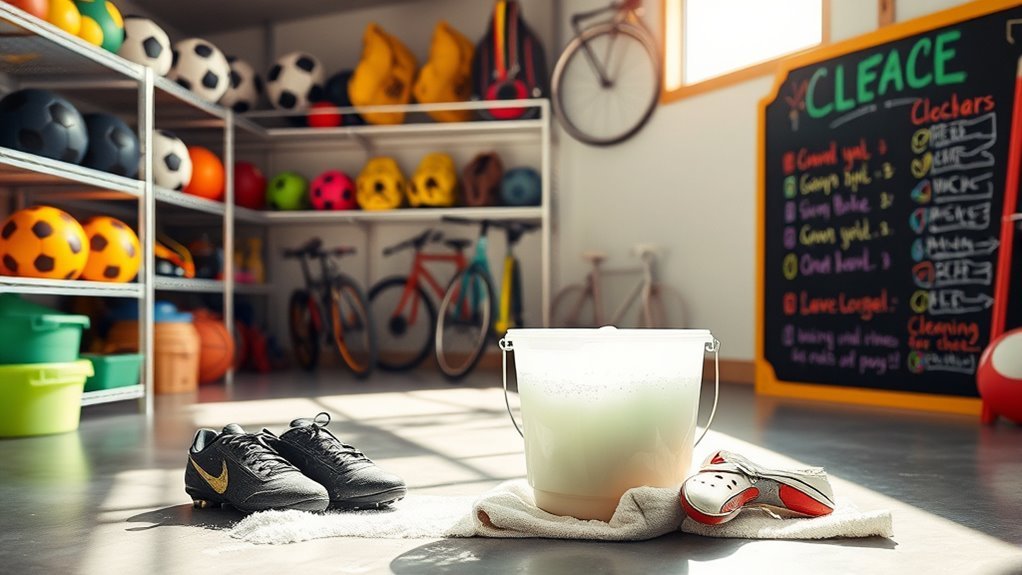
Although it might seem like a hassle, regularly cleaning your kids’ sports gear is essential to keep it in good condition and prevent odors, bacteria, and mold buildup. When you embrace consistent hygiene practices, you’re not just protecting the equipment—you’re safeguarding your child’s health. Dirty gear can harbor germs that lead to skin infections or respiratory issues, so the health benefits of regular cleaning are clear. By making cleaning a routine, you give your kids the freedom to play confidently without worrying about hidden dangers in their gear. Plus, well-maintained equipment lasts longer, saving you time and money. Taking a few minutes after each game or practice to clean and dry their gear is a small step that offers big rewards for both hygiene and peace of mind.
Identifying Different Types of Sports Equipment
Recognizing the different types of sports equipment your kids use is key to cleaning and storing them properly. Whether it’s gear from team sports like soccer and baseball or individual activities like tennis and swimming, each type of equipment demands its own care. You’ll find helmets, pads, bats, and gloves in contact sports, while racquets and swim caps belong to other sports categories. Knowing these distinctions helps you avoid damage and keeps everything ready for action. Take a moment to sort gear by sport and material—hard plastics need different handling than fabric or leather. This approach not only frees up space but also extends the life of each item. Understanding the specific needs of each type of equipment lets you maintain freedom from mess and stress.
Cleaning Cleats and Athletic Shoes
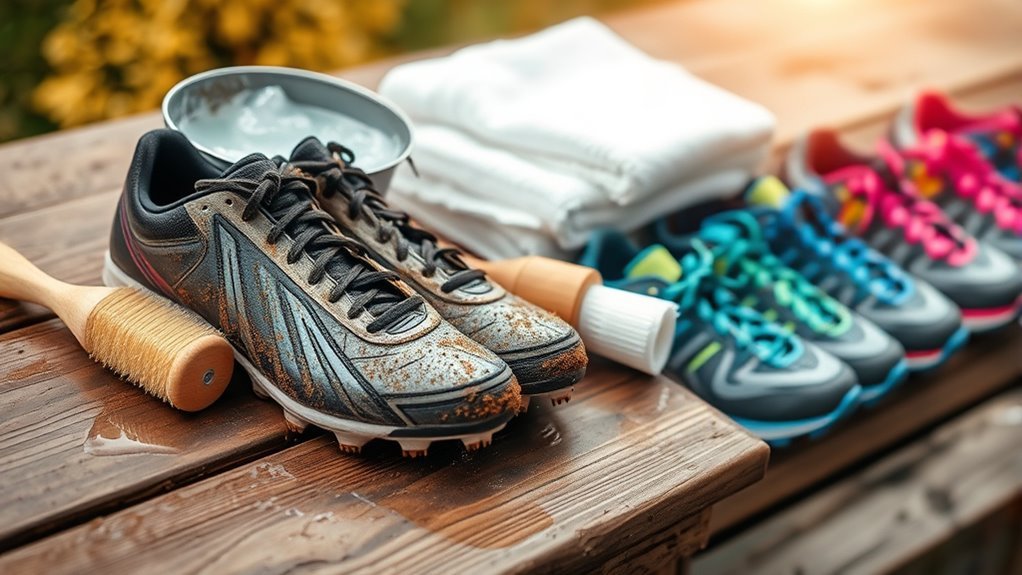
When your kid’s cleats and athletic shoes get covered in dirt and mud, it’s important to remove the debris quickly to prevent damage. Use a soft brush or cloth to clean them gently, making sure to get into the grooves. After cleaning, let the shoes dry naturally in a well-ventilated area to keep them in good shape.
Removing Dirt and Mud
Cleaning cleats and athletic shoes starts with removing dirt and mud that can damage the materials if left unattended. To keep your kid’s gear in top shape, use simple mud removal techniques like gently scraping off caked mud with a soft brush or an old toothbrush. For stubborn spots, dampen a cloth with water and mild soap, then wipe away dirt without soaking the shoes. Avoid harsh scrubbing to preserve the shoe’s surface. For dirt prevention tips, encourage your child to shake off excess dirt right after practice and store shoes in a breathable bag to reduce buildup. By tackling mud and dirt promptly, you’ll extend the life of their cleats and give them the freedom to play without worrying about ruined equipment.
Proper Drying Techniques
Although removing dirt is essential, proper drying is just as important to keep your kid’s cleats and athletic shoes in good shape. After cleaning, avoid tossing them in direct sunlight or using a heater, as extreme heat can damage delicate surface materials. Instead, focus on airflow management—place the shoes in a well-ventilated area where air circulates freely. You can stuff them with newspaper or use a shoe dryer designed for sports gear to speed up drying without causing harm. Keeping the shoes dry prevents odor, mold, and material breakdown, giving your kid the freedom to play without restrictions. Managing moisture properly helps the shoes maintain their fit and durability, so they’re ready for the next game or practice.
Washing and Sanitizing Helmets and Pads
Properly washing and sanitizing helmets and pads is essential to keep your child’s gear safe and odor-free. Start by checking the helmet materials—foam liners and hard plastic shells need gentle cleaning. Use mild soap and a soft cloth to wipe the exterior, avoiding harsh chemicals that could damage the helmet. For pad types, whether foam or gel, remove them if possible and hand wash with warm water and mild detergent. Rinse thoroughly to prevent residue buildup. After cleaning, air dry everything completely to avoid mold. Sanitizing sprays made for sports gear can be applied to both helmets and pads to kill bacteria without harming the materials. This routine keeps your child’s equipment fresh and ready, letting them enjoy the game without limits.
Caring for Gloves and Handwear
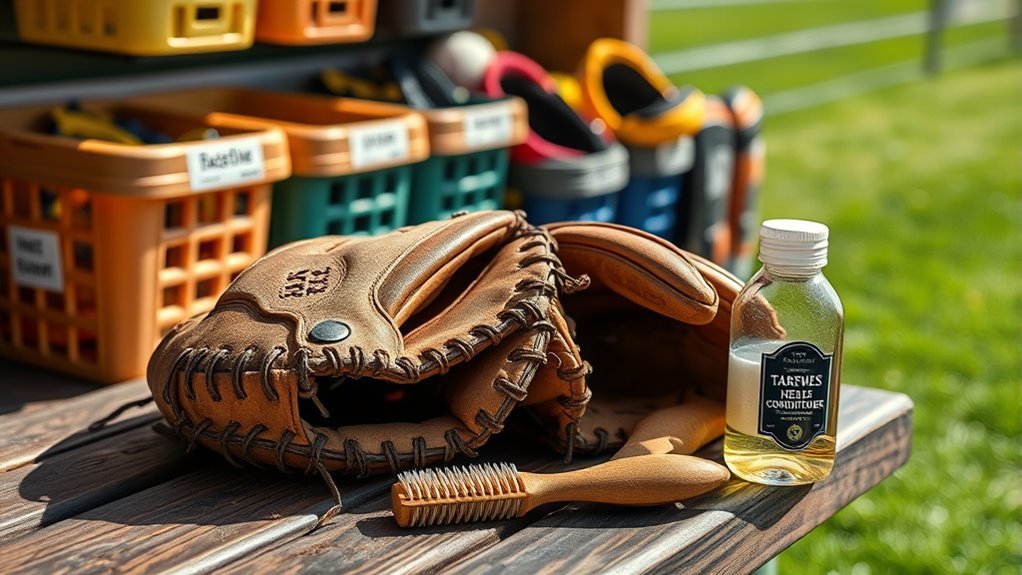
You’ll want to clean gloves carefully to keep them in good shape without causing damage. After washing, drying them thoroughly and using deodorizing methods will help prevent odors and bacteria buildup. Finally, storing gloves properly guarantees they stay dry and ready for the next game.
Cleaning Techniques for Gloves
Start by gently brushing off any dirt or debris from the gloves using a soft cloth or brush. The cleaning method depends on the glove materials and maintenance frequency. For leather gloves, use a damp cloth with mild soap, but avoid soaking them. Synthetic gloves handle water better and can be rinsed more thoroughly. Always check care labels for specific instructions.
| Glove Materials | Recommended Cleaning Method |
|---|---|
| Leather | Wipe with damp cloth, mild soap |
| Synthetic | Rinse with water, mild detergent |
| Mesh/Fabric | Spot clean, avoid full soaking |
Stick to your maintenance frequency to keep gloves fresh and flexible. Regular cleaning prevents buildup and extends glove life, giving your kid the freedom to play without limits.
Drying and Deodorizing Tips
Although drying gloves might seem straightforward, doing it incorrectly can damage the materials or cause unpleasant odors. To keep your kid’s gloves in top shape, never toss them in a dryer or expose them to direct heat. Instead, let them air dry naturally in a well-ventilated space. If you want to speed up drying, stuff the gloves with newspaper to absorb moisture without risking damage. For deodorizing, you can rely on deodorizing sprays designed specifically for sports gear or try natural remedies like sprinkling baking soda inside the gloves overnight. Both methods help eliminate odors without harsh chemicals. Remember, keeping gloves dry and fresh lets your kid enjoy their game freely, without the distraction of bad smells or stiff, damaged gear.
Proper Storage Methods
Once your kid’s gloves are completely dry and odor-free, storing them properly will help maintain their shape and extend their lifespan. Start by setting up a dedicated spot with smart shelf organization to keep everything accessible and neat. Use hooks or small bins on shelves to separate gloves and handwear, preventing them from being crushed or misshapen. Space optimization is key: avoid piling equipment, which can cause damage and take up more room than necessary. If you have limited space, consider stackable containers or adjustable shelving to maximize vertical storage. Keeping gloves in a well-ventilated, cool area also preserves their condition. With these straightforward steps, you’ll free up clutter and help your kid’s gear stay ready for action whenever they want to play.
Cleaning Water Bottles and Hydration Gear
Keeping your kids’ water bottles and hydration gear clean is essential for their health and performance. Set up a dedicated hydration station at home to make regular cleaning easy and routine. After each use, rinse bottles with warm, soapy water, paying close attention to lids and straws where bacteria love to hide. For thorough bottle sanitization, use a mixture of water and vinegar or a specialized cleaning tablet to kill germs without harsh chemicals. Don’t forget to clean hydration packs by flushing them with soapy water and using a brush for the tubing. Regular cleaning not only keeps your kids safe but also extends the life of their gear, giving them the freedom to hydrate confidently during every game or practice.
Drying Techniques to Prevent Mold and Odors
Proper drying techniques are essential to stop mold and odors from developing on your kids’ sports equipment. After cleaning, air-dry items completely in a well-ventilated space to guarantee moisture control. Avoid stuffing gear in bags or closets while damp, which traps moisture and leads to unpleasant smells. Using fans or dehumidifiers can speed drying and boost preventing odors.
| Gear Type | Drying Method | Why It Matters |
|---|---|---|
| Cleats | Remove insoles, air dry | Stops sweaty smell build-up |
| Helmets | Wipe and open vents | Prevents mold inside shell |
| Pads | Hang in open space | Dries padding thoroughly |
| Water Bottles | Air dry with lid off | Avoids stagnant moisture |
Mastering drying frees you from mold worries and keeps gear fresh for every game.
Organizing Equipment Storage Spaces
A well-organized storage space can make managing your kids’ sports gear much easier and help you find what you need quickly. Start by creating an equipment inventory to know exactly what you have, which prevents clutter and duplicates. With a clear list, you can choose shelving solutions that fit your space and gear size, keeping everything visible and accessible. Open shelves work great for balls, helmets, and gloves, while adjustable shelves can adapt as your kids’ needs change. Labeling each section or shelf adds an extra layer of freedom by making cleanup a breeze for everyone. By designing your storage with function in mind, you’ll save time and reduce stress, giving your family more freedom to enjoy the game instead of hunting for gear.
Using Proper Storage Containers and Bags
You’ll want to pick durable containers that protect your kids’ gear from damage and moisture. Labeling each container makes finding equipment quick and hassle-free. Using ventilated bags also helps keep items dry and odor-free between uses.
Choosing Durable Containers
Although it might seem simple, choosing durable containers for kids’ sports gear can make a big difference in keeping everything organized and protected. You’ll want containers made from durable materials like heavy-duty plastic or reinforced fabric to withstand rough handling and prevent damage. Think about container sizes too—select ones that fit the specific gear without wasting space or causing clutter. Smaller containers work great for items like gloves and mouthguards, while larger bins are perfect for bulky equipment like helmets and pads. By picking the right sizes and sturdy materials, you’ll create a system that’s easy to manage and lasts season after season. This way, you free yourself from constant replacements and messy piles, offering your kids the freedom to focus on the fun, not the clutter.
Labeling for Easy Access
Picking the right containers is just the start; labeling them properly makes finding gear a breeze. When you use clear labeling systems, you eliminate the hassle of digging through piles of equipment. Color coding is a fantastic way to add instant recognition—assign each child a color or each sport a hue. This simple trick saves time and keeps your storage spot organized.
Here are three tips for effective labeling:
- Use waterproof labels or tags for durability.
- Match colors with the container or bag for quick visual cues.
- Include both the child’s name and type of equipment on the label.
Ventilated Bags Benefits
Anyone who’s dealt with sweaty sports gear knows how important proper storage is. Ventilated bags are your best friend when it comes to keeping kids’ equipment fresh and ready to go. Using bags made from ventilated materials allows air to circulate, preventing the buildup of odors and bacteria. This natural airflow helps with moisture control, so dampness doesn’t get trapped inside, which can lead to mold or mildew. By choosing ventilated bags, you’re giving your child’s gear the freedom to breathe, extending its life and making cleanup easier. Plus, these bags make it simple to grab what you need without digging through piles of soggy, stinky equipment. Ventilated bags are a smart, practical way to keep sports gear clean, dry, and ready for action.
Seasonal Maintenance and Inspection Tips
Since kids’ sports gear often gets heavy use, regular seasonal maintenance helps keep everything in good shape and ready for the next game. Creating a seasonal checklist guarantees you don’t miss crucial steps, and setting an inspection frequency—like once every season—makes upkeep manageable. When you inspect, focus on these key areas:
- Check for worn-out straps, loose stitching, or damaged padding that might compromise safety.
- Clean and dry equipment thoroughly to prevent mold and odors.
- Lubricate or tighten moving parts on helmets or protective gear as needed.
Following this routine gives you freedom from last-minute gear failures and keeps your kids’ equipment performing well, so they can enjoy their sports with confidence and ease.
Frequently Asked Questions
Can I Use Disinfectant Sprays on Sports Equipment Safely?
You can use disinfectant sprays on sports equipment safely, but you’ve got to choose the right disinfectant types. Look for ones that are non-toxic and made for fabrics or plastics, depending on your gear. Always follow the instructions for spray safety—avoid over-saturating and let the equipment dry completely. This way, you keep things clean without damaging your gear or risking harmful chemicals around your kids.
How Often Should Sports Gear Be Replaced Entirely?
Think of your sports gear as a trusty steed—loyal but not immortal. The replacement frequency depends on the gear lifespan, which varies by type and usage. Helmets might last 3-5 years, while gloves or shoes wear out faster. You’ll want to swap out equipment once wear compromises safety or performance. Trust your instincts; don’t let worn gear clip your wings. Staying free means staying safe and ready for the next adventure!
Are There Eco-Friendly Cleaning Products Suitable for Kids’ Gear?
You’ll find plenty of eco-friendly options when it comes to cleaning kids’ gear. Biodegradable cleaners are great because they break down naturally without harming the environment. Natural disinfectants like vinegar or tea tree oil work wonders, killing germs while keeping things safe and fresh. Using these products lets you maintain cleanliness freely, without worrying about harsh chemicals, so your young athlete’s gear stays fresh and eco-conscious.
What Are the Best Ways to Prevent Gear Theft or Loss?
To prevent gear theft or loss, you’ll want to focus on gear tracking and theft prevention strategies. Label each item with your child’s name or use GPS trackers for valuable equipment. Encourage your kids to keep gear in designated spots, like locked lockers or secure bins. Teaching responsibility and regularly checking the gear helps too. These steps give you peace of mind while letting your kids enjoy their freedom without worry.
How to Handle Equipment Cleaning if My Child Has Allergies?
Did you know that 1 in 13 kids in the U.S. has food allergies? When handling your child’s gear, choose allergy safe materials like hypoallergenic fabrics and avoid harsh chemicals. Stick to a regular cleaning frequency—after every use or at least weekly—to keep allergens at bay. This way, you’re giving your child freedom to play safely without worrying about flare-ups or irritation from their equipment.