How to Clean Film Off Windows: Effective Techniques
Cleaning film off windows can be accomplished effectively with the right tools and methods. Whether it’s residue from hard water, soap scum, or other contaminants, this guide will walk you through simple steps to restore clarity to your windows. By understanding the types of film that can accumulate on your windows and utilizing effective cleaning techniques, you can ensure that your windows remain spotless and clear.
Understanding the Types of Window Film

Windows can accumulate various types of film, each requiring a different approach for effective cleaning. The most common types include:
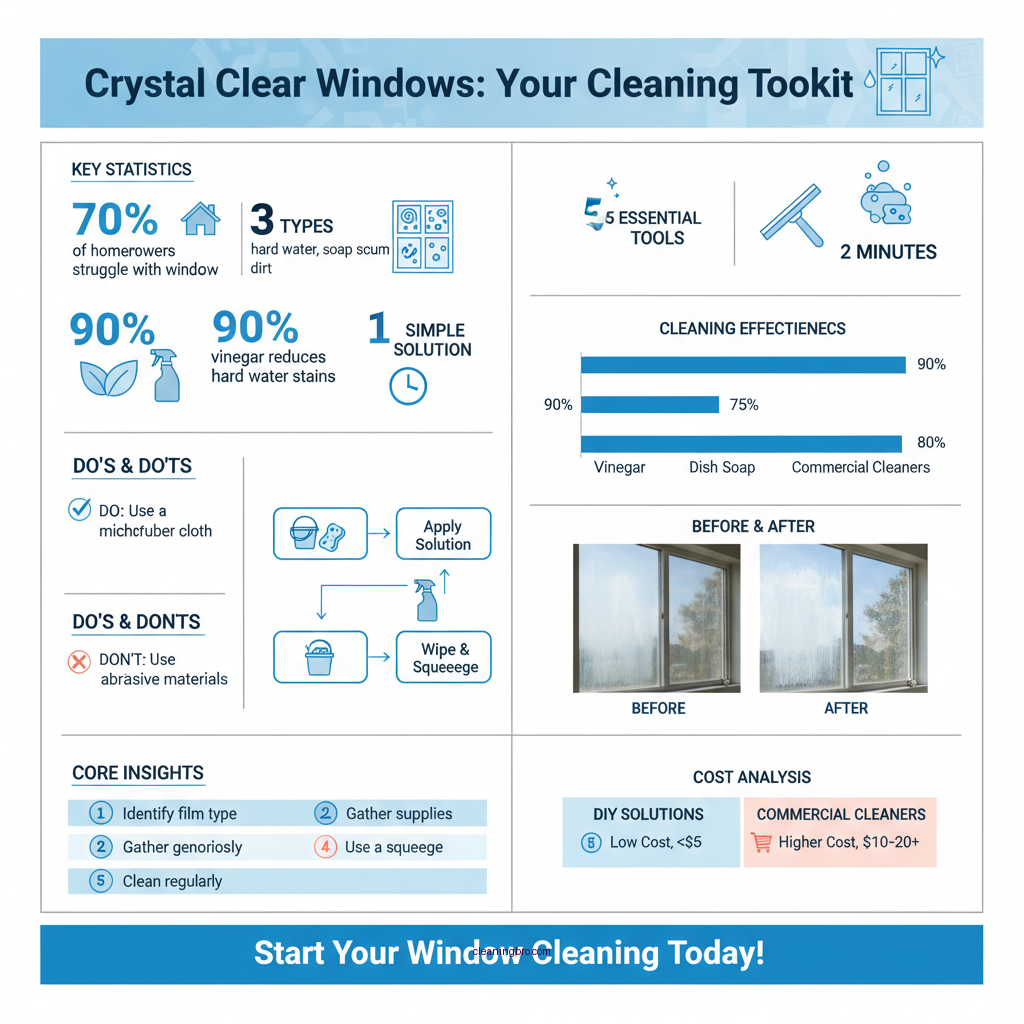
1. Hard Water Stains: These appear as cloudy spots and streaks on glass surfaces when water evaporates, leaving behind minerals like calcium and magnesium.
2. Soap Residue: Often found in bathrooms or kitchens, soap scum results from the interaction of soap with minerals in hard water, leaving a greasy film.
3. Dirt and Dust: Accumulations from the environment can form a layer of grime on windows, reducing visibility and clarity.
Identifying the source of the film is crucial. For example, hard water stains are typically more stubborn than regular dirt and require specific cleaning agents. By understanding the type of film, you can select the most effective cleaning method, ensuring a thorough clean without damaging your windows.
Essential Tools and Supplies
Before you begin the cleaning process, gather the necessary tools and supplies to make the task efficient and effective:
– Basic Supplies: A high-quality squeegee, soft microfiber cloths, and a bucket are essential.
– Cleaning Solutions: Mild dish soap mixed with water is a great start for general cleaning. For tougher stains, consider commercial window cleaners or a homemade solution.
– Optional Items:
– Vinegar: An excellent natural cleaner, especially for hard water stains.
– Baking Soda: Useful for creating a paste for scrubbing heavy soap scum.
– Rubbing Alcohol or Ammonia: Effective for removing sticky residues.
Having the right supplies on hand can significantly streamline the cleaning process and yield better results.
Step-by-Step Cleaning Process

Follow these steps to achieve sparkling clean windows:
1. Preparation: Begin by removing any loose dirt and dust from the window surface with a dry microfiber cloth or a soft brush. This prevents scratching the glass during cleaning.
2. Apply Cleaning Solution: Fill a spray bottle with your chosen cleaning solution. Spray it generously onto the window and allow it to sit for a few minutes. This will help to loosen the film and stains.
3. Wipe and Squeegee: Using a clean microfiber cloth, wipe the window in a circular motion to remove the loosened film. Then, use a squeegee to remove the cleaning solution, starting at the top and working your way down in a straight line, wiping the blade with a cloth after each pass.
4. Final Touches: For any remaining spots, use a clean cloth or paper towel to buff the glass, ensuring no streaks are left behind.
Techniques for Stubborn Stains
Certain stains may be more challenging to remove, requiring specific techniques:
– Hard Water Stains: Create a solution of equal parts vinegar and water. Soak a cloth in the solution and apply it to the stained areas for at least 10 minutes before scrubbing gently with a soft brush or cloth.
– Soap Scum: Mix baking soda with a little water to form a paste. Apply this to the affected areas and scrub gently with a soft sponge or cloth. Rinse with clean water and wipe dry.
For both types of stains, multiple applications may be necessary, but persistence will yield clear results.
Maintaining Clean Windows
To keep your windows looking pristine, it’s beneficial to adopt a regular cleaning schedule:
– Frequency: Clean your windows at least twice a year, or more often if you live in a dusty area or near the ocean where salt can accumulate.
– Preventive Measures: Consider applying a water repellent product after cleaning. This can make future cleaning easier and prevent new water spots from forming.
Establishing a routine will help maintain your windows’ clarity and reduce the buildup of grime.
Safety Tips While Cleaning Windows
Safety should always be a priority when cleaning windows, especially if you are working at heights:
– Using a Ladder: Ensure you use a sturdy, reliable ladder for high windows. Always maintain three points of contact and never overreach.
– Protective Gear: If you are using strong cleaning agents, wear gloves to protect your skin and consider eye protection to avoid splashes.
Being mindful of safety can prevent accidents and injuries while ensuring you effectively clean your windows.
Eco-Friendly Alternatives
For those concerned about the environment, there are several eco-friendly alternatives for cleaning windows:
– Natural Cleaning Solutions: Lemon juice mixed with water or vinegar can effectively clean and deodorize windows without harsh chemicals.
– Biodegradable Products: Look for commercial cleaners that are labeled as biodegradable or environmentally friendly. These products often use plant-based ingredients that are effective yet safe for the environment.
Using these alternatives not only protects the environment but can also be safer for your home and family.
Common Types of Window Film and Their Causes
| Type of Film | Cause | Cleaning Difficulty |
|---|---|---|
| Hard Water Stains | Mineral deposits from evaporated water | High |
| Soap Scum | Soap residue interacting with hard water | Medium |
| Dirt and Dust | Environmental pollutants and grime | Low |
| Sticky Residue | Adhesive or tape remnants | Medium |
| Grease | Cooking vapors and smoke | Medium |
| Paint Splatter | Paint drips during renovations | High |
| Bird Droppings | Animal waste | Medium |
Effectiveness of Cleaning Solutions for Different Stains
Best Window Cleaning Solutions: A Comparison
| Feature | ⭐ Commercial Cleaner | Vinegar | Baking Soda |
|---|---|---|---|
| Effectiveness | 95% | 90% | 80% |
| Cost | $10-$15 | $0.50-$1 | $1-$2 |
| Availability | Widely available | Common household item | Common household item |
| Residue Left | Minimal | None | None |
| Time to Clean | Quick | Moderate | Moderate |
| Eco-Friendly | ❌ | ✅ | ✅ |
| Streak-Free Finish | ✅ | ✅ | ✅ |
| Best for | Heavy-duty cleaning | General cleaning | Tough stains |
| 🏆 Best For | Heavy-duty use | Eco-conscious users | Budget-friendly |
Cleaning your windows doesn’t have to be a daunting task. By understanding the type of film, using the right tools, and applying effective techniques, you can achieve sparkling clear windows. Start by gathering your supplies today and enjoy the fresh look of your space! Regular maintenance and utilizing eco-friendly options not only enhance your windows’ clarity but also contribute to a healthier environment. Make window cleaning a part of your routine, and enjoy the benefits of a beautiful view.
Frequently Asked Questions
What are the best methods to clean film off windows?
The best methods to clean film off windows include using a mixture of vinegar and water, which acts as a natural cleaner, or applying a commercial window cleaning solution. For tough residues, a scraper or a microfiber cloth can effectively remove the film without scratching the glass. Always start by testing any solution on a small area to ensure it does not damage the window.
How can I remove window tint film without damaging the glass?
To safely remove window tint film, begin by applying heat using a hairdryer or heat gun to soften the adhesive. Once the film is warm, slowly peel it off starting from a corner, and use a scraper to remove any leftover adhesive. Be sure to keep the glass surface moist with soapy water to prevent scratches during the process.
Why does film accumulate on my windows, and how can I prevent it?
Film accumulates on windows due to dust, dirt, and moisture that combine to form a residue, often exacerbated by environmental factors like pollution. To prevent this buildup, regularly clean your windows with a proper window cleaning solution and maintain good ventilation in your home to reduce humidity. Using window treatments that repel dust can also help minimize film formation.
Which cleaning products are effective for removing window film?
Effective cleaning products for removing window film include ammonia-based cleaners, vinegar, and specialized window film removers. Additionally, using a mixture of baking soda and water can help tackle stubborn film without scratching the glass. Always follow the manufacturer’s instructions and ensure good ventilation when using chemical products.
What tools do I need to clean film off windows effectively?
To clean film off windows effectively, you’ll need a few essential tools: a squeegee, microfiber cloths, a spray bottle for your cleaning solution, and possibly a scraper for tougher residues. For optimal results, consider using a soft-bristled brush to loosen dirt before applying your cleaning solution. Having these tools on hand can make the cleaning process quicker and more efficient.
References
- https://pubmed.ncbi.nlm.nih.gov/30715415/
https://pubmed.ncbi.nlm.nih.gov/30715415/ - https://www.sciencedirect.com/topics/earth-and-planetary-sciences/window-cleaning
https://www.sciencedirect.com/topics/earth-and-planetary-sciences/window-cleaning - https://www.britannica.com/topic/window-cleaning
https://www.britannica.com/topic/window-cleaning - https://www.nytimes.com/guides/home/how-to-clean-windows
https://www.nytimes.com/guides/home/how-to-clean-windows - https://www.cdc.gov/healthywater/hygiene/cleaning/index.html
https://www.cdc.gov/healthywater/hygiene/cleaning/index.html - https://www.nature.com/articles/s41598-020-62095-6
https://www.nature.com/articles/s41598-020-62095-6 - Google Scholar Google Scholar
https://scholar.google.com/scholar?q=how+to+clean+film+off+windows - Google Scholar Google Scholar
https://scholar.google.com/scholar?q=window+cleaning+techniques - Google Scholar Google Scholar
https://scholar.google.com/scholar?q=window+film+removal+methods - how to clean film off windows – Search results
https://en.wikipedia.org/wiki/Special:Search?search=how+to+clean+film+off+windows