How to Clean Hearing Aid Molds: A Step-by-Step Guide
Cleaning hearing aid molds is essential for maintaining optimal hearing and hygiene. Regular cleaning not only ensures that your hearing aids function effectively, but also prevents the buildup of bacteria and earwax, which can lead to discomfort and potential health issues. In this guide, you will learn the best practices for keeping your hearing aid molds clean and functioning properly, ensuring a comfortable listening experience.
Gather Necessary Supplies

Before you begin cleaning your hearing aid molds, it is crucial to gather the necessary supplies. Having the right tools on hand will make the process smoother and more effective. Here’s what you’ll need:
– Mild soap or hearing aid cleaner: Choose a gentle soap or a specialized cleaner designed for hearing devices that won’t damage the molds.
– Soft cloth or tissue: These will be used for drying the molds and ensuring that no scratches are made during the cleaning process.
– Small brush (like a toothbrush): A soft-bristled brush is ideal for gently scrubbing away debris, wax, and other buildup without damaging the molds.
Collecting these items will prepare you for the following steps in the cleaning process.
Prepare the Hearing Aids
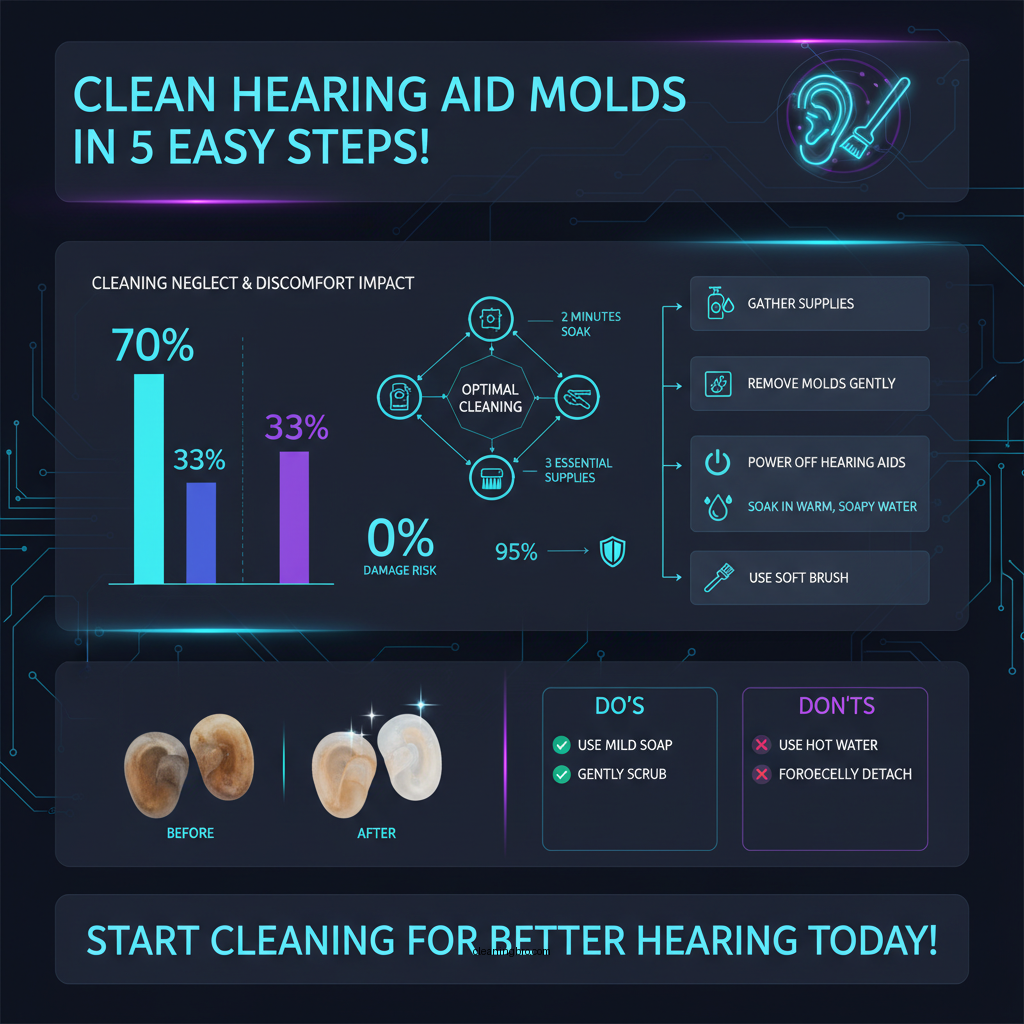

Before diving into the cleaning process, you must prepare your hearing aids properly to avoid any potential damage. Follow these steps:
– Remove the molds from the hearing aids carefully: Your hearing aid molds are typically designed to fit snugly, so take your time to detach them without applying excessive force.
– Turn off the hearing aids: Ensure that your hearing aids are powered off to prevent accidental damage or unnecessary battery drain during the cleaning process.
By taking these precautions, you protect your hearing aids from mishaps that could hinder their functionality.
Clean the Molds

Once you have prepared your hearing aids, it’s time to clean the molds. Cleaning them effectively will help maintain their clarity and performance. Follow these steps:
– Soak the molds in warm water with mild soap for a few minutes: This helps to loosen any accumulated wax or debris. Make sure that the water is not too hot, as excessive heat can deform the molds.
– Use the small brush to gently scrub away any debris or earwax: Pay particular attention to crevices and grooves where wax tends to accumulate. Be gentle to avoid scratching the surface of the molds.
After this step, your molds should be free from most debris, significantly improving their functionality.
Common Issues with Hearing Aid Molds and Solutions
| # | Issue | Cause | Solution |
|---|---|---|---|
| 1 | Poor Sound Quality | Clogged wax filter | Replace wax filter regularly |
| 2 | Discomfort | Improper fit | Consult audiologist for adjustments |
| 3 | Bacteria Growth | Moisture accumulation | Ensure molds are dry before storage |
| 4 | Discoloration | Exposure to sunlight | Store in a dark place |
| 5 | Unpleasant Odor | Earwax buildup | Clean regularly |
| 6 | Inconsistent Performance | Debris in the microphone | Check and clean regularly |
| 7 | Cracking Sounds | Loose parts | Consult professional repair |
Rinse and Dry
After cleaning, it is essential to rinse and dry the molds properly to maintain their integrity and prevent any moisture-related issues. Here’s how:
– Rinse the molds thoroughly under running water to remove soap residue: Ensure that no soap remains, as it can cause irritation when the molds are reinserted into your ears.
– Pat them dry with a soft cloth: Avoid using paper towels or rough materials that may scratch the surface of the molds.
– Let them air dry completely before reattaching: Ensuring that the molds are fully dry will help prevent microbial growth and maintain optimal hygiene.
By following these drying steps, you’ll prolong the life of your hearing aid molds and enhance your overall hearing experience.
Inspect for Damage
After cleaning, it is vital to inspect the molds for any signs of wear and tear. This step ensures that your hearing aids continue to function effectively. Follow these guidelines:
– Check for cracks or tears in the molds after cleaning: Damaged molds can cause discomfort and may not fit properly.
– Replace any damaged molds: It’s essential to address any damage promptly to ensure proper fit and function, as well as to maintain sound quality.
Regular inspections can save you from costly repairs or replacements in the future.
Regular Maintenance Tips
Maintaining your hearing aid molds is a crucial part of ensuring their longevity and effectiveness. Here are some regular maintenance tips:
– Clean your hearing aid molds at least once a week: This frequency helps prevent buildup and keeps the molds functioning optimally.
– Store them in a dry, cool place when not in use: Avoid areas with high humidity that could lead to moisture accumulation and subsequent issues.
Following these maintenance tips will enhance your hearing experience and prolong the life of your devices.
By adhering to these cleaning and maintenance practices, you’ll not only ensure that your hearing aids are functioning at their best, but you’ll also contribute to your overall ear health. Remember, if you encounter any persistent issues or if you’re unsure about any cleaning techniques, don’t hesitate to consult your audiologist for personalized advice.
Regular cleaning of your hearing aid molds will enhance your hearing experience and prolong the life of your devices. Follow these steps weekly and consult your audiologist if you have any concerns about the integrity of your hearing aids.
Frequently Asked Questions
How often should I clean my hearing aid molds?
You should clean your hearing aid molds at least once a week to prevent the buildup of earwax and moisture, which can affect performance. Daily checks are also recommended to ensure they remain clear and functioning properly. Regular cleaning helps maintain the sound quality and longevity of your hearing aids.
What is the best way to clean hearing aid molds?
The best way to clean hearing aid molds is to use a soft, dry cloth or a soft-bristled toothbrush to gently wipe away any debris. For deeper cleaning, you can use a mild soap solution and warm water, making sure to thoroughly dry them before reattaching. Avoid using alcohol or harsh chemicals that could damage the materials.
Why is it important to clean hearing aid molds regularly?
Regular cleaning of hearing aid molds is important because it helps prevent ear infections and maintains the clarity of sound. Accumulated earwax and moisture can cause blockages and lead to malfunctioning devices. By keeping them clean, you enhance their effectiveness and ensure a better listening experience.
Which tools do I need to effectively clean my hearing aid molds?
To effectively clean your hearing aid molds, you will need a soft cloth, a mild soap solution, a soft-bristled toothbrush, and possibly a drying tool or blower to ensure they are completely dry. Some users also find it helpful to have a specialized hearing aid cleaning kit that includes wax removal tools. Having the right tools can make the cleaning process easier and more effective.
How can I prevent my hearing aid molds from getting dirty?
To prevent your hearing aid molds from getting dirty, you should always store them in a clean, dry case when not in use and avoid wearing them while sleeping or during activities that may cause sweating. Additionally, regular ear hygiene can help minimize earwax buildup, and using a hearing aid dehumidifier can also reduce moisture accumulation.
References
- https://www.mayoclinic.org/healthy-lifestyle/adult-health/in-depth/hearing-aids/art-20045799
https://www.mayoclinic.org/healthy-lifestyle/adult-health/in-depth/hearing-aids/art-20045799 - https://www.ncbi.nlm.nih.gov/pmc/articles/PMC8026494/
https://www.ncbi.nlm.nih.gov/pmc/articles/PMC8026494/ - Hearing Aids
https://www.asha.org/public/hearing/hearing-aids/ - Deafness and hearing loss
https://www.who.int/news-room/fact-sheets/detail/deafness-and-hearing-loss - https://www.cdc.gov/nceh/hearing_loss/what_to_do.html
https://www.cdc.gov/nceh/hearing_loss/what_to_do.html - Hearing Aids — Styles/Types & How They Work | NIDCD
https://www.nidcd.nih.gov/health/hearing-aids - https://www.sciencedirect.com/topics/neuroscience/hearing-aid
https://www.sciencedirect.com/topics/neuroscience/hearing-aid - Google Scholar Google Scholar
https://scholar.google.com/scholar?q=how+to+clean+hearing+aid+molds - Google Scholar Google Scholar
https://scholar.google.com/scholar?q=hearing+aid+maintenance+cleaning - how to clean hearing aid molds – Search results
https://en.wikipedia.org/wiki/Special:Search?search=how+to+clean+hearing+aid+molds