How to Clean Pet Turf: Essential Steps for a Fresh Surface
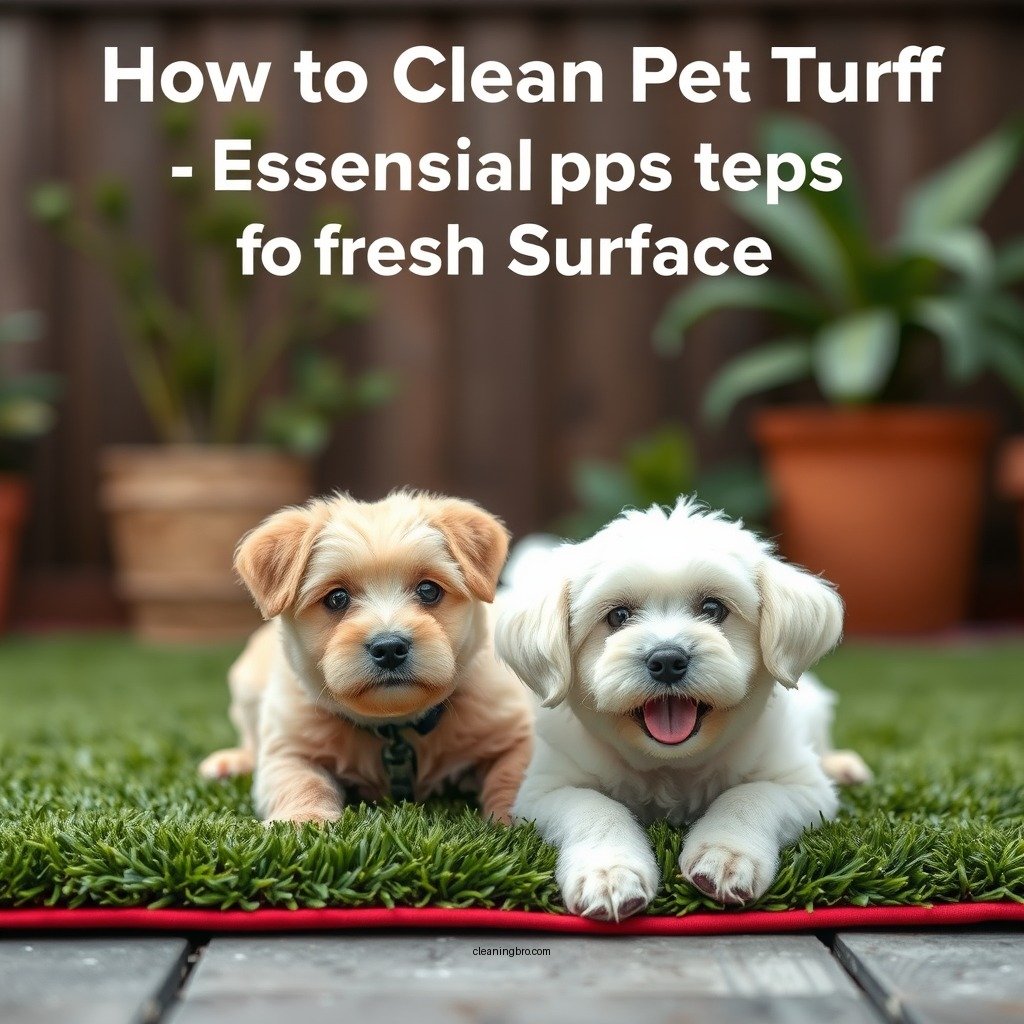
Cleaning pet turf is straightforward and essential for maintaining a hygienic space for your pets. To effectively clean pet turf, you should regularly remove debris, rinse with water, and use pet-safe cleaning solutions to eliminate odors and bacteria. This guide will walk you through the essential steps to keep your pet turf clean and fresh.
Remove Debris Regularly
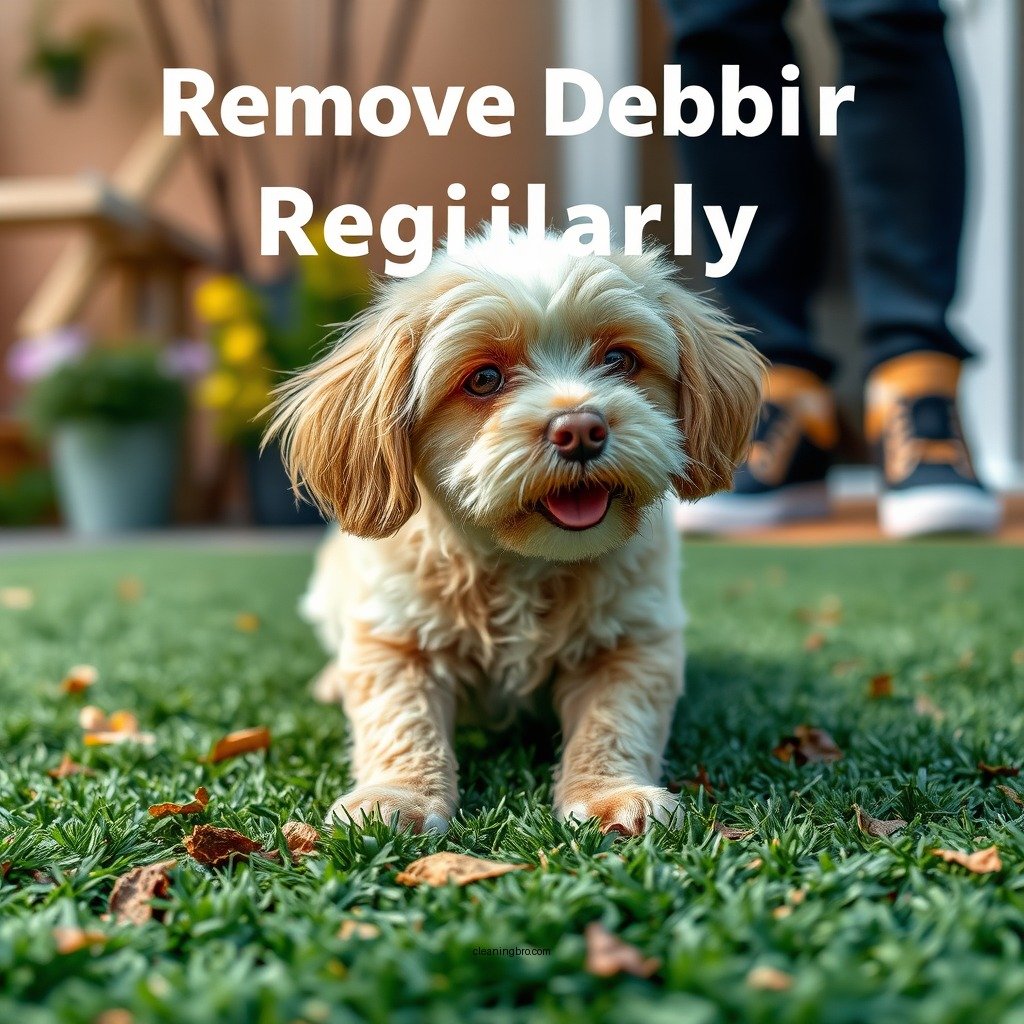
Regular maintenance of pet turf begins with the removal of debris. Pets often bring in leaves, twigs, and dirt, which can accumulate and contribute to an untidy appearance. Using a rake or broom, you can easily collect this debris. Aim to do this at least once a week, or more frequently during seasonal changes when foliage is more prevalent.
In addition to organic debris, it’s crucial to check for any pet waste. Promptly disposing of waste not only prevents unpleasant odors but also reduces the risk of bacteria and parasites that can affect both pets and humans. Always use biodegradable bags for waste disposal to minimize environmental impact.
Rinse with Water
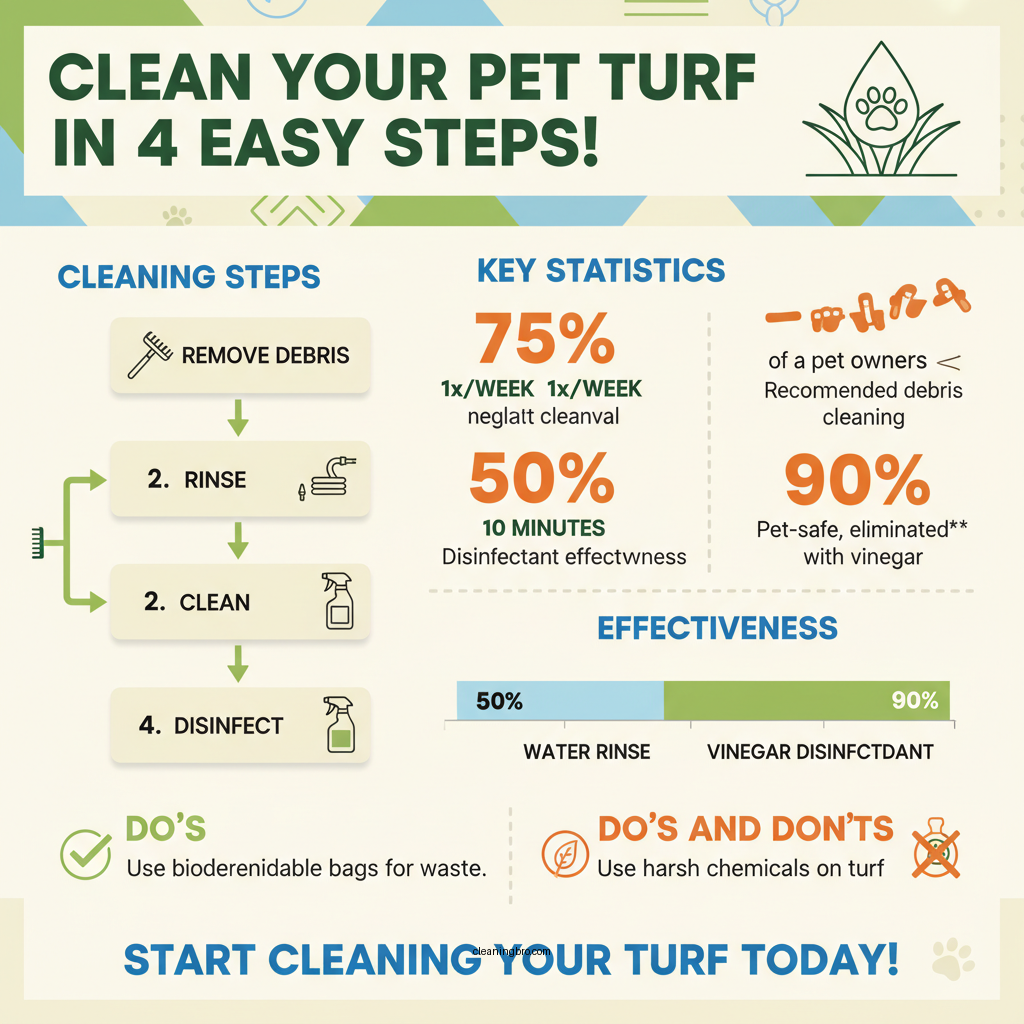
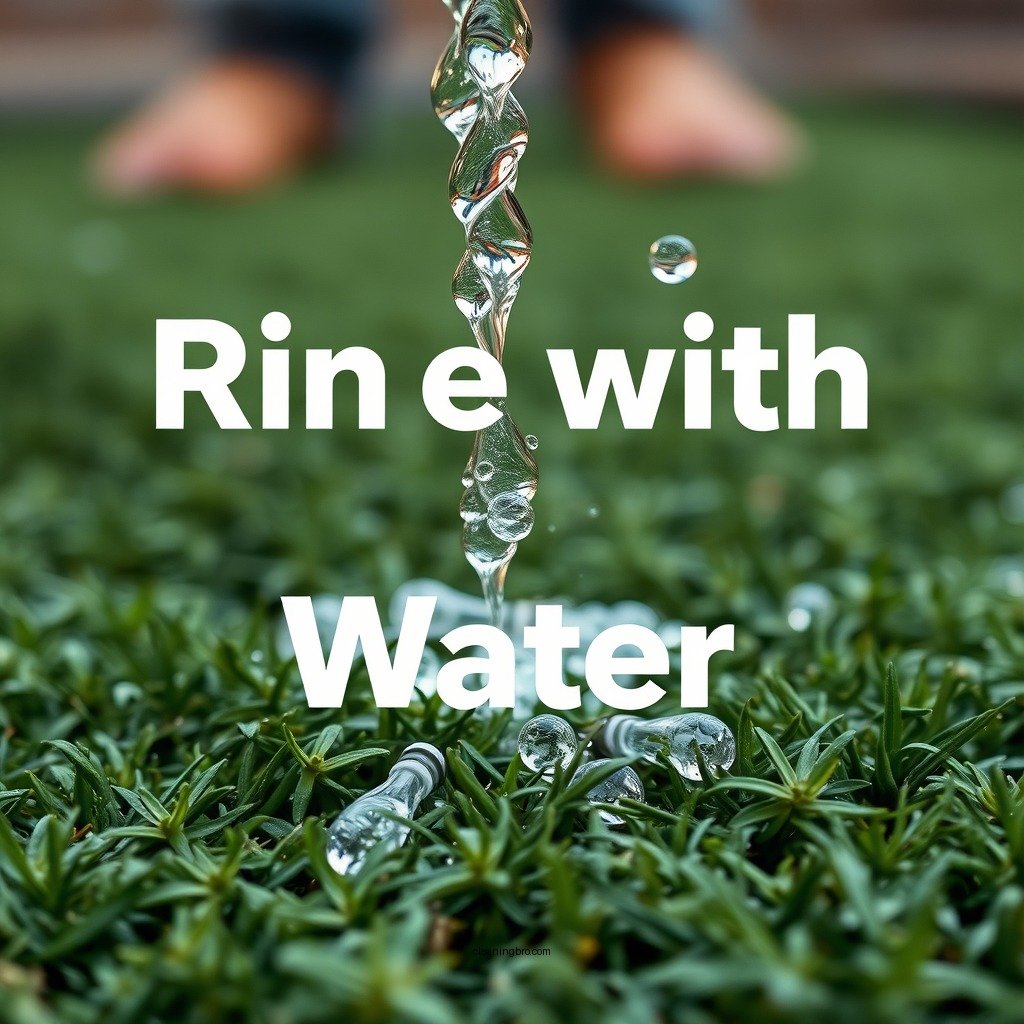
After removing debris, rinsing the turf with water is the next step. This process helps wash away dirt, dust, and any remaining particles that may have been overlooked. Use a garden hose with a nozzle that allows you to control the water pressure; this prevents damage to the turf fibers.
Make sure the water drains properly from the turf to avoid waterlogging, which can lead to odors and mold growth. If your turf has drainage issues, consider consulting a professional to evaluate and enhance the drainage system.
Choose Pet-Safe Cleansers
When selecting cleaning solutions for pet turf, it’s imperative to choose products that are eco-friendly and non-toxic. Conventional cleaners often contain harsh chemicals that can be harmful to pets. Instead, look for enzymatic cleaners specifically designed to target pet urine and odors. These formulations break down waste on a molecular level, effectively neutralizing unpleasant smells without posing a risk to your pets.
Additionally, many pet-safe products are biodegradable, making them a sustainable choice for responsible pet owners. Always check the label for certifications and ensure the product is suitable for artificial grass.
Disinfect the Surface
Disinfecting the turf is essential to control bacteria and odors. A simple yet effective solution involves mixing equal parts water and white vinegar. This natural disinfectant has antibacterial properties and is safe for pets.
Spray the mixture evenly across the turf, ensuring thorough coverage. Allow it to sit for at least 10 minutes before rinsing with water. For a stronger disinfectant, consider using a commercially available pet-safe disinfectant specifically formulated for synthetic surfaces.
Brush the Turf Fibers
Regular brushing of the turf fibers is often overlooked but is a crucial step in maintaining its appearance and longevity. Using a stiff-bristle broom, brush the fibers in an upright position. This not only helps to revitalize the turf’s look but also prevents matting, which can occur due to foot traffic or accumulated debris.
Brushing should ideally be done after rinsing and disinfecting to ensure that any loosened debris is removed. This practice also helps to distribute any cleaning solutions evenly across the surface.
Check for Damage
Routine inspections of the turf are essential to identify any signs of wear and tear. Look for loose seams, torn sections, or areas where the turf has become uneven. Minor damages can often be repaired with adhesive or turf patches, while significant issues may require professional intervention.By maintaining a proactive approach to inspections, you can prevent minor problems from escalating into costly repairs. It also ensures a safe play area for your pets, free from sharp edges or tripping hazards.
Schedule Regular Maintenance
Establishing a regular cleaning schedule is vital for keeping your pet turf in optimal condition. Depending on the number of pets and their activity level, a weekly or bi-weekly cleaning routine is recommended.
For deeper cleanings, particularly after heavy use or extreme weather, consider hiring professional cleaning services that specialize in pet turf maintenance. These services can provide thorough cleaning, sanitization, and repairs that may not be feasible for pet owners to manage alone.
Top 7 Pet Turf Cleaning Products (2024)
| # | Product | Type | Size | Price |
|---|---|---|---|---|
| 1 | Nature’s Miracle | Enzymatic Cleaner | 32 oz | $12.99 |
| 2 | Simple Green | All-Purpose Cleaner | 128 oz | $19.99 |
| 3 | PetSafe Turf Cleaner | Disinfectant | 32 oz | $14.99 |
| 4 | Rocco & Roxie | Enzymatic Cleaner | 32 oz | $19.99 |
| 5 | BioTurf | Pet-Safe Cleaner | 1 gal | $29.99 |
| 6 | Good Natured | Natural Cleaner | 32 oz | $11.99 |
| 7 | PawSafe | Urine Neutralizer | 1 gal | $34.99 |
Best Pet Turf Cleaning Solutions: Comparison Overview
| Feature | ⭐ Nature’s Miracle | Rocco & Roxie | BioTurf |
|---|---|---|---|
| Price | $12.99 | $19.99 | $29.99 |
| Type | Enzymatic Cleaner | Enzymatic Cleaner | Pet-Safe Cleaner |
| Size | 32 oz | 32 oz | 1 gal |
| Eco-Friendly | ✅ | ✅ | ✅ |
| Odor Neutralization | ✅ | ✅ | ✅ |
| Stain Removal | ✅ | ✅ | ❌ |
| Safe for Pets | ✅ | ✅ | ✅ |
| Easy to Use | ✅ | ✅ | ❌ |
| Best for | General Cleaning | Stain Removal | Pet Owners |
Cleaning your pet turf doesn’t have to be a daunting task. By following these essential steps, you can ensure a fresh and healthy environment for your pets. Remember to keep up with regular maintenance to prevent buildup and damage, and enjoy a clean outdoor space for your furry friends!
Frequently Asked Questions
How often should I clean my pet turf?
It’s recommended to clean your pet turf at least once a week to maintain its appearance and hygiene. Regular cleaning helps to remove pet waste, dirt, and debris, preventing odors and potential bacteria buildup. Additionally, seasonal deep cleaning, particularly in the spring and fall, can keep your turf in top condition.
What is the best way to remove pet waste from artificial grass?
The best way to remove pet waste from artificial grass is to pick up solid waste using a scoop or plastic bag, followed by rinsing the area with water. For liquid waste, simply hosing down the area helps to dilute and wash away any residue. It’s important to ensure that the drainage systems are clear to prevent buildup and odors.
Why does my pet turf smell, and how can I eliminate odors?
Pet turf can develop unpleasant odors due to the accumulation of pet waste, bacteria, and moisture. To eliminate odors, regularly clean the turf with a mixture of water and vinegar or a specialized turf cleaner. Ensuring proper drainage and using deodorizing products designed for artificial grass can also help keep smells at bay.
Which cleaning products are safe to use on pet turf?
When cleaning pet turf, it’s best to use non-toxic and environmentally friendly products specifically designed for artificial grass. Look for enzymatic cleaners that break down organic matter without harming the turf fibers. Avoid harsh chemicals, bleach, or ammonia-based cleaners, as they can damage the turf and pose health risks to pets.
How can I maintain pet turf to ensure its longevity?
To maintain pet turf and ensure its longevity, regularly remove debris, rinse off pet waste, and brush the fibers to keep them standing upright. Additionally, applying infill materials and keeping the turf well-drained will support its durability. Regular inspections for wear and tear can help address any issues before they become major problems.
References
- 3 Ways to Clean Artificial Grass – wikiHow
https://www.wikihow.com/Clean-Artificial-Grass - https://www.extension.purdue.edu/extmedia/ho/ho-266-w.pdf
https://www.extension.purdue.edu/extmedia/ho/ho-266-w.pdf - https://www.turfgrasssod.org/faq/cleaning-artificial-turf
https://www.turfgrasssod.org/faq/cleaning-artificial-turf - https://www.sciencedirect.com/science/article/pii/S2210670719300110
https://www.sciencedirect.com/science/article/pii/S2210670719300110 - https://www.hgtv.com/how-to/how-to-clean-artificial-grass
https://www.hgtv.com/how-to/how-to-clean-artificial-grass - https://www.washingtonpost.com/lifestyle/home/how-to-clean-artificial-grass-in-your-yard/2021/06/01/f0c2c3e2-bb4b-11eb-8d3a-5baba4b746b2_story.html
https://www.washingtonpost.com/lifestyle/home/how-to-clean-artificial-grass-in-your-yard/2021/06/01/f0c2c3e2-bb4b-11eb-8d3a-5baba4b746b2_story.html - https://www.sfgate.com/homegarden/article/how-to-clean-artificial-grass-15396616.php
https://www.sfgate.com/homegarden/article/how-to-clean-artificial-grass-15396616.php - https://pubmed.ncbi.nlm.nih.gov/31852369/
https://pubmed.ncbi.nlm.nih.gov/31852369/ - Google Scholar Google Scholar
https://scholar.google.com/scholar?q=how+to+clean+pet+turf - Google Scholar Google Scholar
https://scholar.google.com/scholar?q=cleaning+artificial+grass+pet+care