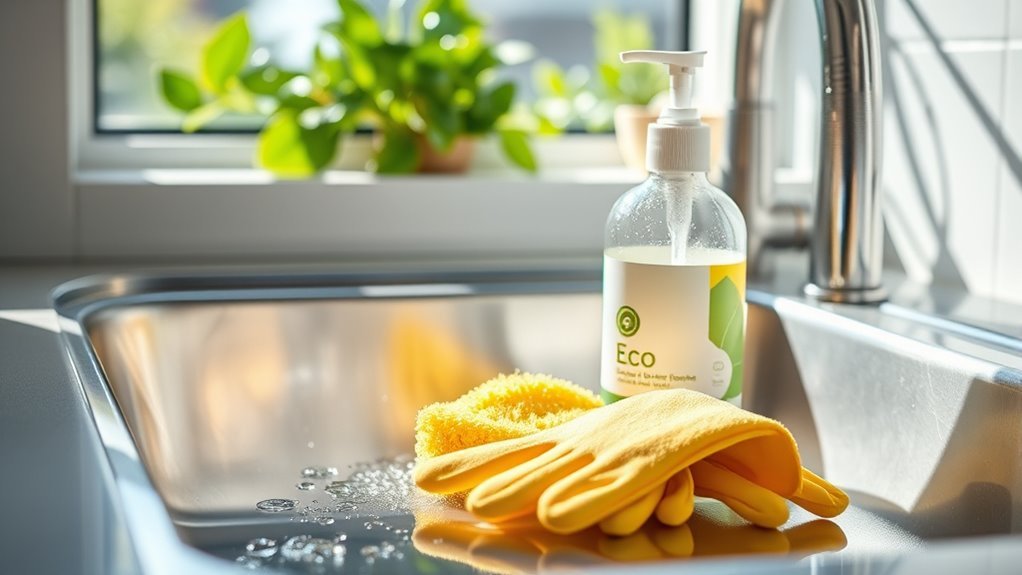
How to Clean Sink
To clean your sink effectively, first identify its material to choose the right cleaners—you’ll want mild soap and non-abrasive tools for surfaces like stainless steel or porcelain. Clear out food debris by rinsing with cold water and use baking soda or vinegar to tackle stains and odors. Don’t forget to wipe down the faucet and drain to prevent grime buildup. Keeping these habits daily makes cleaning quick and easy. There’s more to discover about maintaining a spotless, fresh sink every day.
Identifying Your Sink Material

How can you clean your sink properly without knowing what it’s made of? Identifying your sink material is the first step to freedom from ineffective cleaning. Sink types vary—stainless steel, porcelain, granite, or composite—all needing different cleaning techniques. Stainless steel tolerates gentle scrubbing and mild detergents, while porcelain demands non-abrasive cleaners to avoid scratches. Granite and composite sinks require pH-neutral products to maintain their finish. Knowing your sink type lets you choose the right method, saving time and effort. Don’t guess—check manufacturer labels or research online to confirm your sink’s material. Once you understand what you’re dealing with, you can clean confidently and effectively, freeing yourself from wasted effort and preserving your sink’s beauty longer.
Gathering Cleaning Supplies
Once you’ve figured out your sink’s material, the next step is to gather the right cleaning supplies. Choosing the right cleaning tools makes the job easier and protects your sink’s surface. Grab a soft sponge or microfiber cloth for gentle scrubbing, and a non-abrasive brush for tougher spots. If you want to stay true to your values, consider eco friendly options like natural vinegar, baking soda, or plant-based cleaners. These not only clean effectively but also reduce your environmental impact. Avoid harsh chemicals that might damage your sink or harm the planet. Having everything ready upfront frees you to clean efficiently and confidently. With the proper tools and eco friendly products in hand, you’re set to tackle your sink without limits.
Removing Food Debris and Residue

Before you plunge into scrubbing, start by clearing out any leftover food particles and residue from your sink. Begin by removing large scraps and debris by hand or using a paper towel—this prevents clogging and keeps your food disposal running smoothly. Next, run cold water and turn on your food disposal, allowing it to grind up smaller bits efficiently. This step is essential for residue removal, ensuring no stubborn food remnants linger. If you notice any stuck-on particles, use a soft brush or sponge to gently dislodge them. Taking these simple steps not only frees your sink from buildup but also keeps your kitchen smelling fresh and functioning freely. With a clean slate, you’re ready to tackle deeper cleaning without obstacles.
Tackling Stains and Mineral Deposits
You’ll want to start by spotting common stains like rust or soap scum that often settle in your sink. Next, focus on removing mineral deposits with the right cleaners to restore your sink’s shine. Finally, learning how to prevent future buildup will keep your sink looking clean longer.
Identifying Common Sink Stains
Although sink stains can vary widely, most fall into a few common categories like soap scum, hard water spots, and rust. Recognizing these common sink stains helps you target your stain removal efforts effectively. Soap scum appears as a filmy residue from soap and body oils, often dulling your sink’s surface. Hard water spots show up as white or cloudy mineral deposits, while rust stains bring a reddish-brown tint caused by iron buildup. Knowing which stain you’re dealing with frees you to choose the best cleaning method without wasting time or energy. By identifying the exact nature of the stain, you take control of your cleaning routine, making stain removal straightforward and efficient, so your sink looks fresh and inviting.
Effective Mineral Deposit Removal
When mineral deposits build up in your sink, they can create stubborn stains that are tough to remove with regular cleaning. To break free from these persistent marks, reach for effective mineral solutions designed to dissolve calcium and lime. Acidic cleaners, like vinegar or lemon juice, work wonders by gently eating away at mineral buildup without harsh abrasion. Apply your chosen acidic cleaner directly to the stained area, let it sit for 10-15 minutes, then scrub with a non-abrasive brush or sponge. Rinse thoroughly to reveal a refreshed surface. Using these targeted methods lets you reclaim your sink’s shine and freedom from stubborn deposits, without relying on harsh chemicals or excessive elbow grease. Embrace this simple routine to keep your sink spotless and stress-free.
Preventing Future Stain Buildup
Preventing future stain buildup starts with simple daily habits that keep mineral deposits and grime from settling in. You don’t need complicated routines—just quick actions like wiping down your sink after each use and avoiding letting water sit. These small steps make a huge difference in stain prevention. Regular maintenance is your best ally; schedule brief weekly cleanings with gentle, non-abrasive cleaners to stop stains before they form. Also, consider using a water softener if you have hard water, reducing mineral deposits considerably. By staying consistent with these practical habits, you free yourself from tough scrubbing sessions and keep your sink looking fresh effortlessly. Embracing regular maintenance is the key to enjoying a spotless sink without sacrificing your time or freedom.
Disinfecting and Deodorizing the Sink
You’ll want to disinfect your sink to kill germs and keep it sanitary. Using effective methods like bleach or vinegar can do the trick without harsh chemicals. To keep odors at bay, natural deodorizing solutions like baking soda work wonders.
Effective Disinfecting Methods
How often do you think about disinfecting your sink beyond just cleaning it? It’s easy to overlook, but using disinfecting sprays can quickly eliminate harmful bacteria lurking in your sink. Simply spray the surface, let it sit for a few minutes, then rinse or wipe off. For a more hands-on approach, antibacterial wipes are perfect—they’re convenient and effective for wiping down faucets, handles, and the basin. Both options give you the freedom to keep your sink hygienic without much hassle. Regularly disinfecting not only keeps germs at bay but also helps maintain a fresh environment. Make it a routine, and you’ll enjoy a cleaner, safer sink that supports your lifestyle without limiting your time or energy.
Natural Deodorizing Solutions
Keeping your sink disinfected is a great start, but tackling odors naturally can make your kitchen even more inviting. To do this, sprinkle baking soda generously around the sink and drain. Baking soda neutralizes odors without harsh chemicals, giving you a fresh, clean base. Next, pour a vinegar solution—equal parts white vinegar and water—over the baking soda. You’ll see a fizzy reaction that breaks down grime and lifts stubborn smells. Let it sit for 10-15 minutes, then rinse thoroughly with warm water. This simple combo not only deodorizes but also keeps your sink free of buildup. By using these natural ingredients, you maintain a chemical-free space while enjoying a fresh, odor-free sink that welcomes you every day.
Cleaning the Faucet and Drain Area
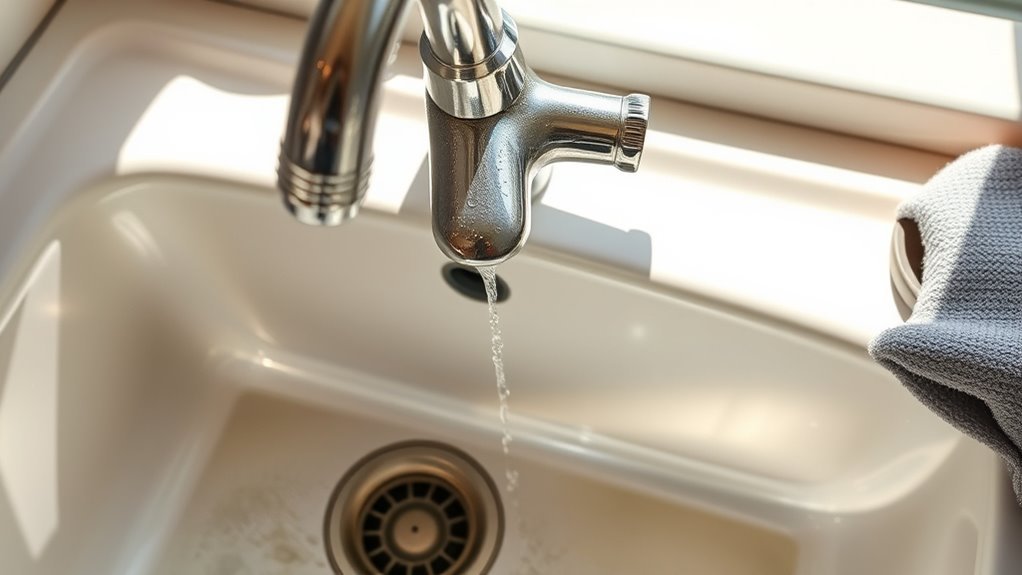
A clean faucet and drain make a big difference in your sink’s overall appearance and hygiene. To keep your faucet shining and working smoothly, start with simple faucet maintenance tips like wiping it daily with a soft cloth and mild cleaner to prevent buildup. Don’t forget to check aerators and remove mineral deposits by soaking them in vinegar. For the drain, regular drain cleaning techniques help avoid clogs and bad odors. Pouring a mix of baking soda and vinegar down the drain, followed by hot water, can naturally clear residue. Using a drain snake occasionally keeps the pipe clear of debris. These straightforward steps give you the freedom to enjoy a fresh, functional sink without relying on harsh chemicals or expensive services.
Maintaining a Spotless Sink Regularly
Even if you clean your sink thoroughly once in a while, maintaining its spotless condition requires regular attention. To keep your sink gleaming without hassle, stick to a daily cleaning routine. Rinse the sink after each use to prevent buildup, and wipe it down with a soft cloth or sponge. Incorporate simple sink maintenance tips like using mild soap and avoiding harsh chemicals that can damage surfaces. Don’t forget to clean the faucet and drain area as part of your routine to prevent grime. Staying consistent lets you enjoy a fresh, inviting sink without spending much time. By making these small habits part of your freedom-focused lifestyle, you’ll effortlessly keep your sink spotless all the time.
Frequently Asked Questions
Can I Use Bleach to Clean My Sink Safely?
You can use bleach to clean your sink, but you should always prioritize bleach safety. Make sure to dilute it properly and ventilate the area well to avoid breathing in fumes. Using bleach is effective for sink disinfecting, killing germs and bacteria quickly. Just don’t mix it with other cleaners, especially ammonia, to keep it safe. With these precautions, you can confidently disinfect your sink without worry.
How Often Should I Deep Clean My Sink?
Think of your sink like a trusty steed from medieval times—it needs regular care to keep running smoothly. For sink maintenance frequency, aim to deep clean at least once a week if you use it daily. This keeps grime and bacteria at bay, ensuring freedom from pesky odors or clogs. Deep cleaning tips include scrubbing with baking soda and vinegar, then rinsing well. Staying consistent lets you enjoy a fresh, hassle-free kitchen.
Are Natural Cleaning Products Effective for Sink Maintenance?
You’ll find natural cleaning products pretty effective for sink maintenance. Vinegar benefits include cutting through grime and killing bacteria without harsh chemicals, making your cleaning routine safer and more eco-friendly. Baking soda acts as a gentle abrasive, lifting stains while being kind to surfaces. Together, they give you the freedom to keep your sink fresh and clean naturally, avoiding toxic residues and embracing a healthier lifestyle.
What Should I Do if My Sink Has a Foul Odor?
If your sink has a foul odor, don’t worry—you’ve got options. Start by pouring a mix of baking soda and vinegar down the drain; it helps break down buildup causing the smell. Follow with hot water to flush it out. Regular sink maintenance like this keeps odors at bay and gives you freedom from harsh chemicals. Also, avoid letting food scraps sit too long; they’re often the culprits behind foul odors.
Can Dishwasher Tablets Be Used to Clean Sinks?
Did you know that dishwasher tablets can break down grease and grime up to 30% more effectively than some traditional cleaners? You can definitely use dishwasher tablets for cleaning your sink because their enzymes target stubborn residues and buildup. Their cleaning effectiveness makes them a convenient, no-fuss option if you want to save time and avoid harsh chemicals. Just dissolve a tablet in warm water, scrub, and rinse for a fresh, clean sink.