How to Clean Stainless Steel Cutlery Effectively
Cleaning stainless steel cutlery is straightforward and can be accomplished with just a few household items. The key lies in avoiding abrasive materials and harsh chemicals that might damage the surface. In this guide, you’ll discover the best methods and tips for maintaining the shine and integrity of your stainless steel cutlery, ensuring it remains an elegant and functional part of your dining experience.
Understanding Stainless Steel Cutlery

Stainless steel is a popular choice for cutlery due to its resistance to rust and corrosion. However, it is important to note that while stainless steel is durable, it can still stain or tarnish if not properly cared for. Understanding the type of stainless steel used in your cutlery can influence the cleaning method you choose. For example, cutlery made from 18/10 stainless steel, which contains 18% chromium and 10% nickel, is particularly resistant to rust and corrosion. In contrast, lower grades of stainless steel may require more frequent maintenance to keep them looking pristine.
The composition of stainless steel not only affects its durability but also its appearance. Over time, even high-quality stainless steel can develop a dull finish or surface stains from food residues. A proactive cleaning regimen will help maintain the luster and functionality of your cutlery, making it a worthy investment in your kitchenware.
Basic Cleaning Techniques
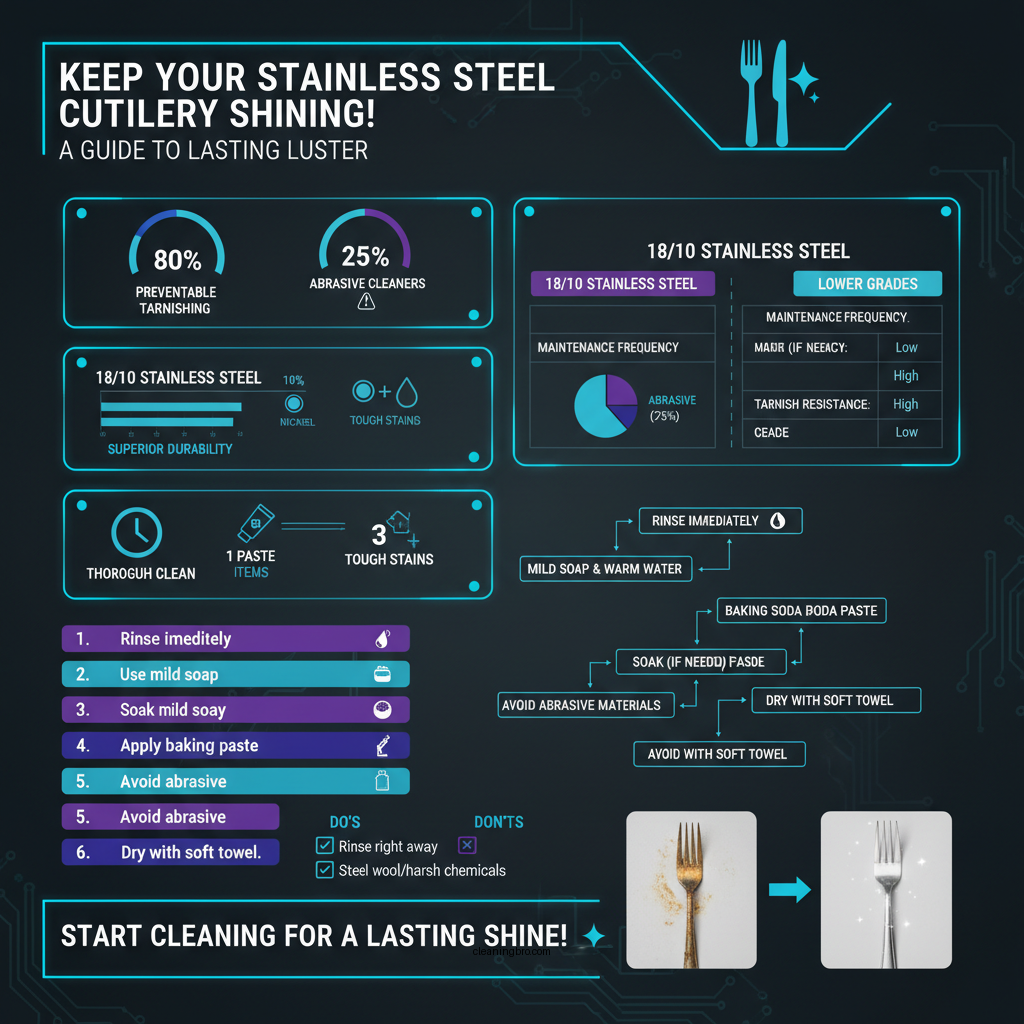

For everyday cleaning, a simple mixture of warm water and mild dish soap is highly effective. Begin by rinsing your cutlery immediately after use to remove food particles, which can lead to staining if left unattended. A soft sponge or cloth is recommended for this process, as it prevents scratching the surface of the stainless steel.
To clean, fill a sink or basin with warm, soapy water. Submerge the cutlery for a few minutes to loosen any stubborn residues. Using a non-abrasive sponge or cloth, gently scrub each piece, ensuring you reach all nooks and crannies. After cleaning, rinse thoroughly under warm water to remove any soap residues, and then dry the cutlery with a soft towel to prevent water spots.
Dealing with Stubborn Stains

Despite regular cleaning, some stains may persist due to the nature of the materials involved in meal preparation. To tackle stubborn stains, a homemade paste made from baking soda and water can be particularly effective. Mix equal parts baking soda and water to form a paste, then apply it to the stained area using a soft cloth. Gently rub the paste into the stain in a circular motion and rinse thoroughly afterward.
Vinegar is another powerful cleaning agent that can come to the rescue. Its acidic properties help dissolve tough stains and tarnish. To use vinegar, apply it directly to the stained area or soak the cutlery in a mixture of equal parts vinegar and water for about 15 minutes before rinsing and drying.
Top 7 Stainless Steel Cutlery Brands and Ratings (2024)
| # | Brand | Material Quality | Durability Rating | Price Range |
|---|---|---|---|---|
| 1 | Wüsthof | High | ★★★★☆ | $100-$300 |
| 2 | Henckels | Medium | ★★★★☆ | $50-$150 |
| 3 | Cuisinart | Medium | ★★★☆☆ | $30-$90 |
| 4 | All-Clad | High | ★★★★★ | $150-$400 |
| 5 | Mikasa | Medium | ★★★★☆ | $40-$100 |
| 6 | Oneida | Medium | ★★★☆☆ | $30-$80 |
| 7 | Victorinox | Medium | ★★★★☆ | $25-$70 |
Polishing for Shine
To maintain the shine of stainless steel cutlery, polishing is an essential part of the cleaning process. After cleaning your cutlery, using a small amount of mineral oil or baby oil on a soft cloth can effectively restore its luster. Simply apply a few drops of oil to the cloth and buff the cutlery in the direction of the grain. This technique not only enhances the shine but also creates a protective layer that helps repel dirt and stains.
Polishing should be done periodically, especially for cutlery used frequently. Regular maintenance will ensure that your stainless steel remains looking new and prevents the need for more intense cleaning methods in the future.
Preventative Care Tips
Preventative care is crucial for maintaining stainless steel cutlery. Here are some effective strategies:
1. Rinse Immediately After Use: Always rinse cutlery immediately after use to avoid food residues that can lead to staining.
2. Avoid Soaking: Do not leave stainless steel cutlery soaking in water for extended periods. Prolonged exposure to moisture can lead to corrosion and tarnishing.
3. Store Carefully: Store your cutlery in a dry place to avoid moisture buildup. Using a cutlery tray or drawer that allows for air circulation can help maintain its integrity.
4. Use the Right Tools: When cleaning, opt for soft sponges or cloths instead of abrasive materials, which can scratch the surface.
By implementing these preventative measures, you will prolong the life of your stainless steel cutlery and keep it looking its best.
Common Mistakes to Avoid
When cleaning stainless steel cutlery, certain common mistakes can lead to damage or reduced effectiveness. Here are several pitfalls to avoid:
1. Using Steel Wool: Steel wool or harsh abrasives can scratch the surface of stainless steel, leading to dullness and increased susceptibility to stains.
2. Harsh Chemicals: Avoid using bleach or other harsh chemicals that can corrode the stainless steel surface and compromise its integrity.
3. Neglecting to Dry: Failing to dry cutlery promptly can lead to water spots and tarnishing. Always dry your cutlery with a soft towel immediately after washing.
4. Ignoring Manufacturer Instructions: Different brands may have specific care instructions. Always refer to the manufacturer’s guidelines for the best cleaning practices.
By being aware of these common mistakes, you can effectively maintain the quality and appearance of your stainless steel cutlery.
When to Seek Professional Help
In some cases, your stainless steel cutlery may require professional attention. Consider seeking professional help if you notice significant tarnishing, deep stains, or scratches that do not respond to home cleaning methods.
Professional polishing services can restore the original finish of your cutlery, particularly for high-end or antique pieces that may require specialized care. Additionally, if you have inherited or purchased valuable antique cutlery, consulting with a professional may ensure that you maintain its value and beauty.
Maintaining your stainless steel cutlery is straightforward with the right techniques. By following these tips, you can ensure your cutlery remains clean, shiny, and in excellent condition for years to come. For more detailed cleaning routines or solutions for specific stains, check out our other articles or subscribe for updates!
Frequently Asked Questions
What is the best way to clean stainless steel cutlery without scratching it?
The best way to clean stainless steel cutlery is to use a soft sponge or cloth along with warm soapy water. Avoid abrasive cleaners or scrubbers, as they can scratch the surface. Rinse thoroughly and dry immediately with a soft towel to prevent water spots and maintain shine.
How can I remove stubborn stains from my stainless steel cutlery?
To remove stubborn stains from stainless steel cutlery, create a paste using baking soda and water. Apply the paste to the stained area and gently rub with a soft cloth or sponge. Rinse well and dry to restore the cutlery’s original shine.
Why does my stainless steel cutlery have a cloudy appearance after washing?
A cloudy appearance on stainless steel cutlery is often caused by mineral deposits from hard water or improper drying. To fix this, wipe the cutlery with a mixture of vinegar and water, then rinse and dry immediately to prevent further cloudiness.
Which household items can I use to polish stainless steel cutlery?
Common household items that effectively polish stainless steel cutlery include white vinegar, olive oil, and baking soda. Apply a small amount of vinegar or olive oil to a soft cloth and buff the cutlery to restore its shine. Baking soda can also be used to create a gentle abrasive paste for deeper cleaning.
How often should I clean my stainless steel cutlery to keep it in good condition?
It is recommended to clean stainless steel cutlery after each use to prevent the buildup of food residues and stains. Regular cleaning helps maintain its appearance and prevents corrosion, ensuring your cutlery remains in good condition for years to come.
References
- Stainless steel | Definition, Composition, Types, & Facts | Britannica
https://www.britannica.com/technology/stainless-steel - How to Clean Stainless Steel Cutlery & Remove Tarnish Stains
https://www.wikihow.com/Clean-Stainless-Steel-Cutlery - https://www.mayoclinic.org/healthy-lifestyle/nutrition-and-healthy-eating/expert-answers/dishwashing-tips/faq-20058024
https://www.mayoclinic.org/healthy-lifestyle/nutrition-and-healthy-eating/expert-answers/dishwashing-tips/faq-20058024 - https://www.nytimes.com/2021/03/10/style/how-to-clean-stainless-steel.html
https://www.nytimes.com/2021/03/10/style/how-to-clean-stainless-steel.html - https://www.sciencedirect.com/topics/materials-science/stainless-steel
https://www.sciencedirect.com/topics/materials-science/stainless-steel - Google Scholar Google Scholar
https://scholar.google.com/scholar?q=cleaning+stainless+steel+cutlery - Google Scholar Google Scholar
https://scholar.google.com/scholar?q=how+to+clean+stainless+steel - Google Scholar Google Scholar
https://scholar.google.com/scholar?q=stainless+steel+maintenance - Google Scholar Google Scholar
https://scholar.google.com/scholar?q=how+do+i+clean+stainless+steel+cutlery - how do i clean stainless steel cutlery – Search results
https://en.wikipedia.org/wiki/Special:Search?search=how+do+i+clean+stainless+steel+cutlery