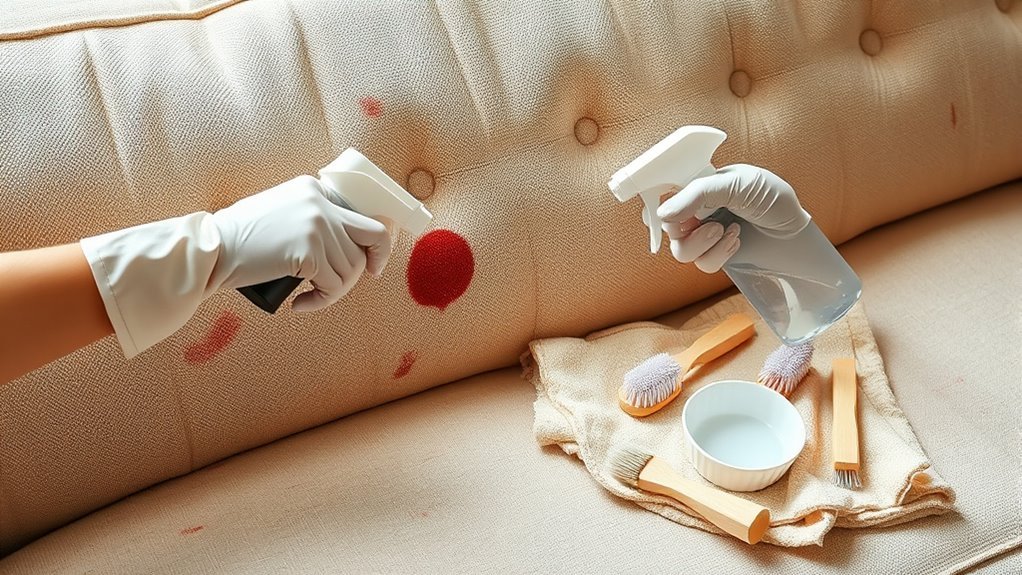
How to Clean Stains Upholstery
To clean upholstery stains, first identify your fabric type and check care labels. Gently blot fresh stains without rubbing, then test any cleaner on a hidden spot to avoid damage. Use mild detergents, vinegar, or enzyme-based cleaners depending on the stain type, and avoid harsh chemicals. Confirm thorough drying to prevent mold with fans or open windows. With proper preparation and care, you can keep your furniture fresh and stain-free—discover tips to protect and maintain it for the long haul.
Identifying Different Types of Upholstery Fabrics

Before you can effectively clean upholstery stains, you need to know what type of fabric you’re dealing with. Recognizing whether your furniture is made of cotton blends or synthetic fibers is key to choosing the right cleaning method. Cotton blends, for example, are natural yet durable, often requiring gentler products to avoid damage. Synthetic fibers, like polyester or nylon, are usually more resistant to stains and can handle stronger cleaners. You can usually find fabric tags or care labels on your furniture to help identify the material. If you don’t see a label, test a hidden spot with a mild cleaner to check how the fabric reacts. Knowing your upholstery’s fiber type frees you to clean confidently without risking harm.
Understanding Stain Types and Their Effects
Since different stains react uniquely to cleaning methods, understanding their types and effects is essential for effective upholstery care. When you know the stain composition—whether it’s oil-based, protein-based, or tannin—you can predict how it will interact with your fabric. For example, oil stains often repel water, requiring solvents, while protein stains like blood respond better to cold water. Your fabric reaction also plays a vital role; delicate materials may discolor or weaken if treated incorrectly. Recognizing both the stain’s nature and how your upholstery fabric reacts helps you choose the right cleaning approach, avoiding damage and ensuring freedom from stubborn marks. Mastering this balance lets you clean confidently, keeping your upholstery fresh without sacrificing its integrity.
Preparing Your Upholstery for Cleaning
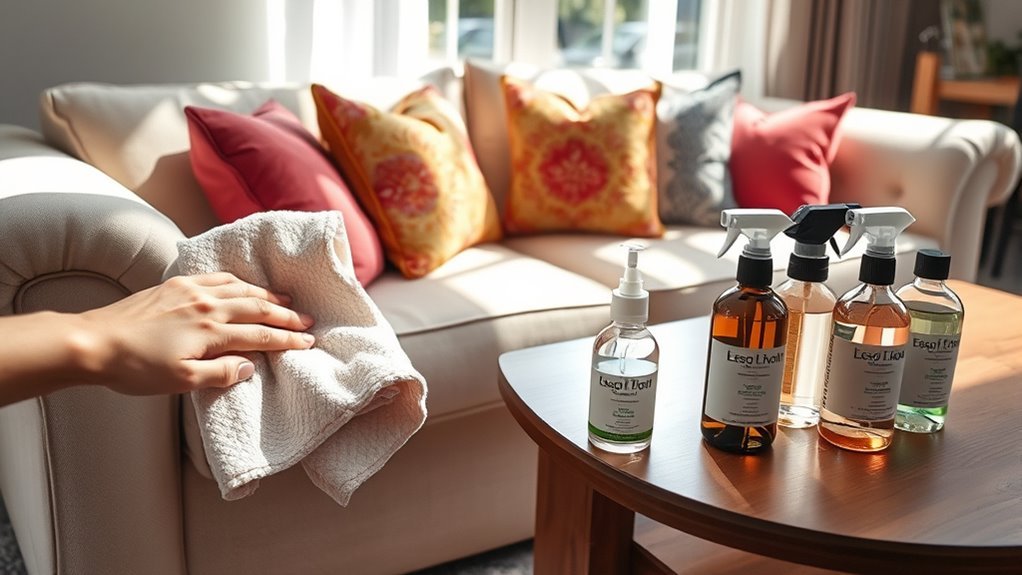
Knowing what type of stain you’re dealing with is only part of the process—getting your upholstery ready for cleaning makes a big difference in the results. Start with a thorough upholstery inspection to spot hidden stains or damage. This helps you tailor your cleaning approach and avoid worsening any issues. Next, remove loose dirt and debris gently to keep the fabric intact. Don’t forget fabric protection: test any cleaner on a small, inconspicuous area first to prevent discoloration or damage.
| Step | Purpose |
|---|---|
| Upholstery Inspection | Identify stains and damage |
| Remove Loose Dirt | Prevent embedding dirt deeper |
| Test Fabric Cleaner | Guarantee fabric protection |
Prepping your upholstery lets you clean confidently and keep your freedom to enjoy a fresh, stain-free space.
Essential Cleaning Supplies You’ll Need
When tackling upholstery stains, having the right cleaning supplies on hand can make all the difference. You’ll want to gather essential tools like a soft-bristle brush, microfiber cloths, and a spray bottle for even application. These tools help you work efficiently without damaging your fabric. Equally important are the cleaning products you choose. Opt for gentle, versatile options like a mild detergent, white vinegar, or a specialized upholstery cleaner. Avoid harsh chemicals that could restrict your freedom to reuse or refresh your furniture. With these essential tools and cleaning products ready, you’ll be fully equipped to handle stains confidently and maintain your upholstery’s look and feel. Freedom to clean smartly starts with the right supplies at your fingertips.
Testing Cleaning Solutions on Hidden Areas
Before you apply any cleaning solution to your upholstery, it’s crucial to test it on a hidden area first. This stain testing prevents unwanted damage and preserves your fabric’s freedom to look great. Solution patching lets you observe any adverse reactions like discoloration or texture changes before tackling visible stains.
| Step | Purpose |
|---|---|
| Choose hidden spot | Keep testing discreet |
| Apply small amount | Minimize potential damage |
| Wait 5-10 minutes | Allow reaction to appear |
| Inspect fabric | Check for fading or damage |
| Proceed or adjust | Decide on safe cleaning method |
Testing solutions carefully means you can confidently clean without risking your upholstery’s beauty or integrity.
Removing Fresh Stains Quickly and Effectively
When you spot a fresh stain, act fast by blotting it gently to soak up as much as possible without rubbing. Use safe cleaning solutions that won’t damage your upholstery fabric. Quick and careful action is key to preventing the stain from setting in.
Immediate Stain Blotting
Since fresh stains can set quickly, acting fast is key to preventing permanent damage to your upholstery. When a spill happens, grab a clean, dry cloth or paper towel and press it gently onto the stain. This immediate action helps with stain absorption, drawing out liquids before they seep deeper into the fabric. Avoid rubbing, which can spread the stain or embed it further. Instead, blot repeatedly, switching to a clean area of the cloth as it absorbs moisture. By focusing on quick, precise blotting, you give yourself the freedom to tackle stains without panic or delay. Taking these simple steps right away lets you keep your upholstery looking fresh and vibrant, so stains don’t lock in and ruin your space.
Safe Cleaning Solutions
Although immediate blotting is essential, choosing the right cleaning solution is just as important to remove fresh stains effectively without damaging your upholstery. You want to keep your space fresh without trapping yourself in harsh chemicals. Opt for eco friendly cleaners made from natural ingredients—they’re gentle on fabrics and safe for your health. These solutions break down stains quickly while preserving your freedom from toxic residues. You can easily make your own cleaner using simple items like white vinegar, baking soda, and mild castile soap. Just test any solution on a hidden spot first to verify it won’t alter your fabric’s color or texture. By selecting safe, natural options, you maintain a clean home and your peace of mind without compromising your values or freedom.
Treating Old and Set-In Stains
When dealing with old and set-in stains, the first step is to identify the type of stain you’re facing. You’ll want to apply the right pre-treatment to loosen the stubborn residue before moving on to deep cleaning methods. Knowing these steps will help you restore your upholstery more effectively.
Identifying Stain Types
Before you plunge into cleaning old or set-in stains, you’ll need to identify the type of stain you’re dealing with. Proper stain identification is key to choosing the right approach and avoiding damage. Stains generally fall into categories like protein-based (think blood or sweat), oil-based (like grease or makeup), dye-based (such as wine or ink), and tannin stains (coffee or tea). Knowing which category your stain belongs to frees you from guesswork and helps you act confidently. Take a moment to assess the stain’s origin, color, and texture. This clarity empowers you to tackle the stain effectively and get your upholstery looking fresh again. Remember, mastering stain identification is your first step toward stain freedom.
Pre-Treatment Techniques
Knowing exactly what type of stain you’re dealing with sets the stage for effective pre-treatment. When tackling old and set-in stains, choosing the right pre treatment products and methods is key to freeing your upholstery from stubborn marks. Start by gently testing a small hidden area to avoid damage. Here are some proven pre treatment methods to take into account:
- Apply enzyme-based cleaners for protein stains like food or blood
- Use solvent-based pre treatment products on oil or grease stains
- Gently blot with a mixture of vinegar and water for mild discolorations
- Employ baking soda paste to lift odors and loosen embedded dirt
- Let pre treatment products sit for 10-15 minutes to penetrate deeply
With these techniques, you reclaim your furniture’s freshness without harsh scrubbing or professional help.
Deep Cleaning Methods
Although old and set-in stains can be stubborn, deep cleaning methods can restore your upholstery’s appearance effectively. You’ll want to start by vacuuming thoroughly to remove loose dirt. Next, apply a specialized upholstery cleaner or a mixture of mild detergent and water. Use a soft brush or cloth to gently scrub the stained areas, allowing the solution to penetrate deeply. For tougher stains, consider renting a steam cleaner or hiring a professional service—these options offer intensive deep cleaning that reaches beneath the fabric surface. Regular upholstery maintenance, including prompt spot cleaning and periodic deep cleaning, guarantees your furniture stays fresh and extends its life. Embrace these methods to regain control over your space and enjoy upholstery that looks and feels revitalized.
Using Homemade Cleaning Solutions Safely
How can you make sure your homemade cleaning solutions are safe for your upholstery? When you prefer freedom in cleaning, choosing safe ingredients matters. Homemade solutions should be gentle yet effective, preserving your fabric’s integrity without harsh chemicals.
To use homemade cleaning solutions safely:
- Test a small, hidden area first to check for colorfastness
- Use mild, natural ingredients like vinegar, baking soda, or castile soap
- Avoid mixing bleach or ammonia with other substances
- Dilute concentrates properly to prevent damage
- Use soft cloths or sponges to apply solutions gently
Following these steps lets you harness the power of homemade solutions while protecting your upholstery. You’ll enjoy clean, fresh furniture without sacrificing safety or freedom.
Drying and Maintaining Clean Upholstery
Once you’ve treated a stain, letting your upholstery dry thoroughly is crucial to prevent mold and odors. You can speed up drying by using drying techniques like opening windows for fresh air, using fans, or a hairdryer on a cool setting. Avoid direct heat, which can damage fabrics. For upholstery maintenance, vacuum regularly to remove dust and dirt that wear down fibers over time. Rotate cushions to guarantee even wear and keep your furniture looking fresh. Spot clean spills immediately to avoid stubborn stains. By combining smart drying techniques with consistent upkeep, you free yourself from constant worry about stains and fabric damage, keeping your upholstery looking clean and inviting for longer. This way, your furniture stays a source of comfort and freedom in your space.
Preventative Tips to Avoid Future Stains
To keep your upholstery looking its best, it’s important to adopt simple habits that prevent stains from happening in the first place. Embracing stain resistant fabrics is a smart way to enjoy your furniture without constant worry. Along with this, using protective sprays can add an extra layer of defense against spills and dirt. Here are five practical tips to help you maintain pristine upholstery and enjoy freedom from stains:
Adopt simple habits and use stain-resistant fabrics plus protective sprays to keep your upholstery looking pristine.
- Choose furniture made with stain resistant fabrics for everyday durability.
- Apply protective sprays regularly to create a barrier against liquids.
- Establish no-food zones on delicate upholstery to minimize risk.
- Clean spills immediately with a gentle blotting technique.
- Rotate cushions frequently to prevent uneven wear and dirt buildup.
Frequently Asked Questions
Can Professional Cleaning Damage Delicate Upholstery Fabrics?
Think of your delicate upholstery as a fragile butterfly—beautiful, yet easily harmed. When you trust professionals, it’s essential they use the right cleaning techniques tailored to fabric types. If they don’t, your cherished piece might suffer damage. You want freedom to relax, not worry about ruining your furniture. So, always choose experts who understand your upholstery’s unique needs, ensuring your freedom to enjoy its beauty without fear.
How Often Should Upholstery Be Professionally Cleaned?
You should follow upholstery maintenance tips and get your furniture professionally cleaned every 12 to 18 months. This cleaning frequency recommendation helps keep your pieces fresh and extends their life, freeing you from constant worry about dirt buildup. If you have kids, pets, or allergies, you might want to clean more often. Staying on top of it lets you enjoy your space without feeling tied down by stubborn stains or odors.
Are Steam Cleaners Safe for All Upholstery Types?
Like a double-edged sword, steam cleaners offer powerful cleaning but aren’t safe for all upholstery fabric types. You’ll find steam cleaner effectiveness shines on durable fabrics like cotton or polyester blends, but delicate materials like silk or velvet might get damaged. To keep your freedom to freshen up your space without worries, always check your upholstery’s care label and test a small hidden spot before diving in with steam cleaning.
What Are the Environmental Impacts of Common Upholstery Cleaners?
When you choose common upholstery cleaners, you might not realize their environmental impact—many contain harsh chemicals that can harm ecosystems and pollute water. But you don’t have to compromise. By opting for eco friendly alternatives and biodegradable cleaners, you’re freeing yourself from toxic residues and reducing waste. These options work gently on your fabrics while protecting the planet, letting you enjoy a cleaner home without sacrificing your values or freedom.
Can Pets Cause Permanent Damage to Upholstery Fibers?
Funny enough, just as you’re enjoying your freedom with your furry friend, pet stains can sneak in and cause permanent damage to upholstery fibers. If you don’t act fast, those stains might weaken fabric and leave lasting marks. But don’t worry—you can embrace your pet-loving lifestyle by investing in upholstery protection. That way, you keep your freedom to relax while preserving your furniture’s look and feel for years to come.