How to Clean the Barrel of a Rifle: A Step-by-Step Guide
Cleaning the barrel of a rifle is crucial for maximizing accuracy and extending the longevity of the firearm. A clean barrel prevents rust, corrosion, and fouling, which can significantly impair performance. This guide will walk you through a systematic approach to cleaning your rifle barrel effectively, ensuring it remains in optimal condition for years to come.
Understanding the Importance of Barrel Cleaning

Tools and Materials Needed
To effectively clean the barrel of your rifle, gather the following essential tools and materials:
– Cleaning Rod: A sturdy rod compatible with the caliber of your rifle.
– Bore Brushes: These come in various materials, such as bronze or nylon, and should match the caliber of your rifle.
– Cleaning Patches: Cotton or synthetic patches for wiping the barrel.
– Solvent: A quality solvent designed for firearm cleaning to help break down fouling.
– Rags or Towels: For wiping excess solvent and oil.
– Gun Oil: A protective lubricant to apply after cleaning.
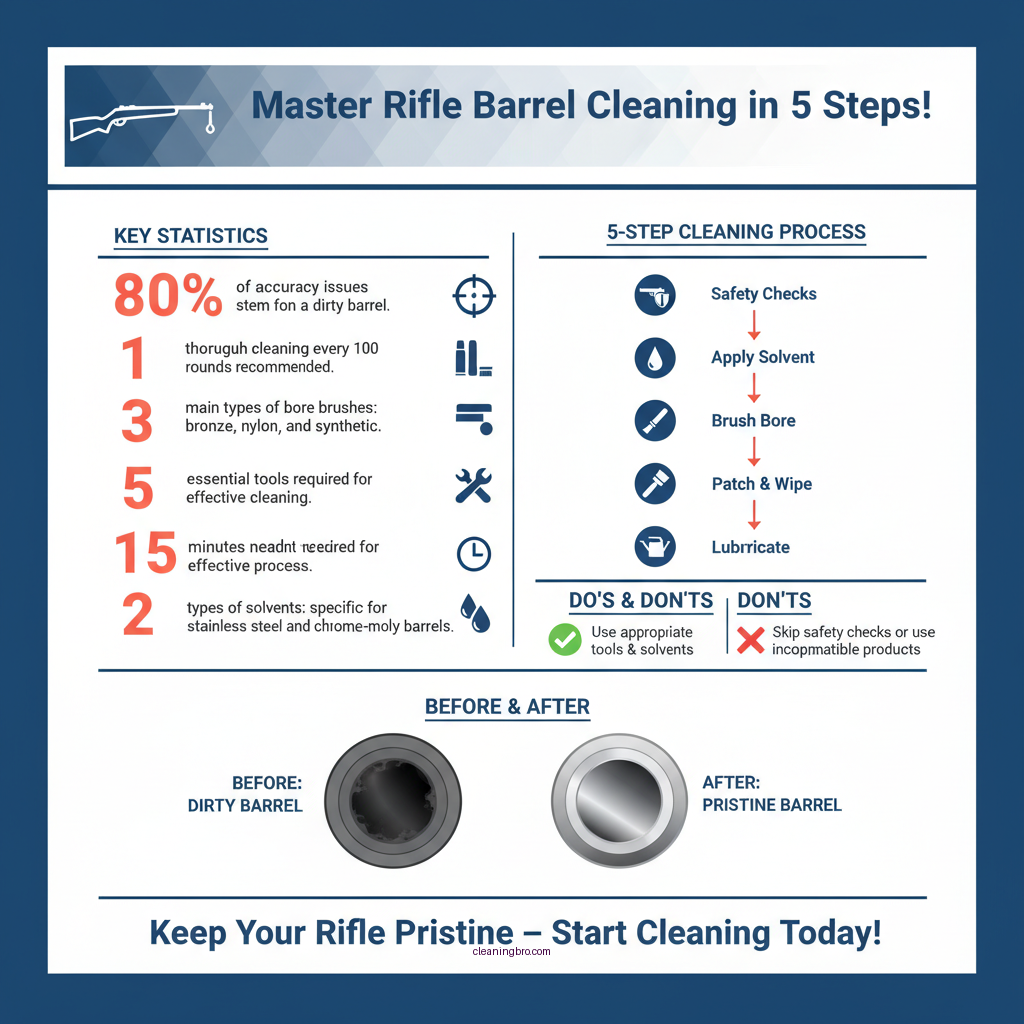
When choosing cleaning products, consider the material of your barrel. For instance, stainless steel barrels may require different solvents compared to chrome-moly barrels. Always read product labels to ensure compatibility and effectiveness.
Step-by-Step Cleaning Process

**Step 1:** Safety First
Before you begin cleaning, ensure the rifle is completely unloaded. Remove the bolt from the action and visually inspect the chamber to confirm it is empty. This step is crucial for your safety and the safety of others around you.
**Step 2:** Apply Solvent and Scrub
Attach the appropriate bore brush to your cleaning rod and moisten it with solvent. Insert the brush into the barrel from the breech end, pushing it all the way through to the muzzle, then pull it back out. This action should be repeated several times to effectively scrub the barrel’s interior surfaces. The solvent will help dissolve any carbon or copper fouling.
**Step 3:** Wipe the Barrel
After scrubbing, switch to a cleaning patch soaked in solvent. Insert it into the barrel and push it through with the cleaning rod. Repeat this process until the patches come out clean, indicating that most of the fouling has been removed.
Techniques for Effective Cleaning
A few techniques can enhance the efficacy of your cleaning routine:
– Correct Brushing Technique: Always push and pull the brush in one direction, from the chamber to the muzzle. This prevents damage to the rifling inside the barrel.
– Rinsing the Barrel: After scrubbing, run a patch soaked in solvent through the barrel to remove any remaining residue. Follow this with a dry patch to soak up excess solvent.
Dealing with Stubborn Fouling
Stubborn fouling, particularly copper and carbon deposits, can pose a significant challenge. Copper fouling is often recognizable by a greenish tint, while carbon buildup appears as a dark residue.
For copper fouling, consider using specialized copper removers that are designed to break down these deposits effectively. Products like ammonia-based solvents are particularly effective but should be used with caution. For carbon fouling, a carbon remover may be necessary.
Additionally, using a bronze brush can help dislodge stubborn residues without damaging the barrel. Remember to follow up with a thorough cleaning after using stronger solvents to avoid any potential damage to the barrel.
Final Steps After Cleaning
After you have completed the cleaning process, it is essential to ensure the barrel is properly protected:
1. Run Clean, Dry Patches: Continue running clean, dry patches through the barrel until they come out completely clean.
2. Apply Gun Oil: Use a clean patch to apply a light coat of gun oil to the interior of the barrel. This protective layer will help prevent moisture from causing rust or corrosion.
Visual Data Overview
Top 7 Cleaning Products for Rifle Barrels (2023)
| # | Product | Type | Effectiveness |
|---|---|---|---|
| 1 | Hoppe’s No. 9 | Solvent | ★ ★ ★ ★ ★ |
| 2 | Brownells Copper Remover | Copper Solvent | ★ ★ ★ ★ |
| 3 | M-Pro 7 Gun Cleaner | Cleaner | ★ ★ ★ ★ |
| 4 | Hoppes Elite | Cleaner | ★ ★ ★ ★ |
| 5 | Ballistol Multi-Purpose Oil | Oil | ★ ★ ★ ★ ★ |
| 6 | Break-Free CLP | Cleaner/Lubricant | ★ ★ ★ ★ |
| 7 | Sweets 7.62 Solvent | Copper Solvent | ★ ★ ★ ★ |
Feature Comparison of Cleaning Tools
Bore Snake vs. Cleaning Rod vs. Ultrasonic Cleaner: Full Comparison
| Feature | ⭐ Bore Snake | Cleaning Rod | Ultrasonic Cleaner |
|---|---|---|---|
| Ease of Use | ✅ Very Easy | ✅ Moderate | ✅ Easy |
| Portability | ✅ Compact | ✅ Bulky | ✅ Moderate |
| Cleaning Depth | ✅ Good | ✅ Excellent | ✅ Superior |
| Time Required | ✅ Quick | ✅ Moderate | ✅ Lengthy |
| Cost | $15-$30 | $10-$50 | $100-$300 |
| Versatility | ✅ Limited | ✅ Good | ✅ Excellent |
| Effectiveness on Stubborn Fouling | ✅ Good | ✅ Excellent | ✅ Superior |
| Safety | ✅ Safe | ✅ Safe | ✅ Moderate |
| Best for | Quick Maintenance | Heavy Cleaning | Deep Cleaning |
| 🏆 Best For | Casual shooters | Serious enthusiasts | Professional use |
Maintaining a clean barrel is crucial for any rifle owner. Following these steps not only helps in preserving the rifle’s accuracy but also extends its life. Make cleaning your rifle barrel a regular part of your maintenance routine to ensure optimal performance. If you found this guide helpful, consider sharing it with fellow firearm enthusiasts or checking out more detailed resources on rifle care.
Frequently Asked Questions
What are the best tools for cleaning the barrel of a rifle?
The best tools for cleaning the barrel of a rifle include a cleaning rod, bore brush, patches, and a cleaning solvent. A one-piece cleaning rod minimizes the risk of damaging the barrel, while a bore brush helps remove fouling. Patches are essential for applying solvent and removing debris, and a quality cleaning solvent is crucial for breaking down carbon and copper buildup.
How often should I clean the barrel of my rifle?
You should clean the barrel of your rifle after every shooting session to maintain optimal performance and accuracy. If the rifle is used infrequently, a thorough cleaning every few months is recommended to prevent rust and corrosion. Regular maintenance will help ensure the longevity and reliability of your firearm.
Why is it important to clean the barrel of a rifle?
Cleaning the barrel of a rifle is important to remove fouling from gunpowder, copper, and lead, which can negatively affect accuracy and lead to malfunctions. Additionally, regular cleaning prevents rust and corrosion, which can damage the barrel and other components over time. Proper maintenance ensures your rifle remains in peak condition for better shooting performance.
Which cleaning solvents are recommended for rifle barrels?
Recommended cleaning solvents for rifle barrels include Hoppes No. 9, Break-Free CLP, and Bore Tech Eliminator. Hoppes No. 9 is known for its deep cleaning capabilities and pleasant scent, while Break-Free CLP provides lubrication and protection against rust. Bore Tech Eliminator is a non-toxic option that effectively removes copper fouling without harmful chemicals.
How do I clean the barrel of a rifle step by step?
To clean the barrel of a rifle, first ensure the firearm is unloaded and safe. Next, use a cleaning rod with a bore brush soaked in solvent to scrub the inside of the barrel, followed by patches to remove debris. Afterward, run dry patches until they come out clean, and finish with a light coat of oil to protect the metal surfaces. Regularly check the barrel for any signs of wear or damage during the cleaning process.
References
- https://en.wikipedia.org/wiki/Rifle_cleaning
https://en.wikipedia.org/wiki/Rifle_cleaning - NRA-ILA | Home
https://www.nraila.org/articles/20140630/rifle-cleaning-tips - https://www.fs.fed.us/t-d/pubs/htmlpubs/htm05812309/
https://www.fs.fed.us/t-d/pubs/htmlpubs/htm05812309/ - https://www.pubs.usda.gov/USDA-ARS-47402-1/
https://www.pubs.usda.gov/USDA-ARS-47402-1/ - Google Scholar Google Scholar
https://scholar.google.com/scholar?q=cleaning+the+barrel+of+a+rifle - Google Scholar Google Scholar
https://scholar.google.com/scholar?q=rifle+barrel+maintenance - Google Scholar Google Scholar
https://scholar.google.com/scholar?q=how+to+clean+firearms - Google Scholar Google Scholar
https://scholar.google.com/scholar?q=how+to+clean+the+barrel+of+a+rifle - how to clean the barrel of a rifle – Search results
https://en.wikipedia.org/wiki/Special:Search?search=how+to+clean+the+barrel+of+a+rifle - https://www.ncbi.nlm.nih.gov/search/research-articles/?term=how+to+clean+the+barrel+of+a+rifle
https://www.ncbi.nlm.nih.gov/search/research-articles/?term=how+to+clean+the+barrel+of+a+rifle