How to Clean Tile Floors
To clean tile floors, start by choosing eco-friendly supplies like a soft broom and pH-neutral cleaner made for tiles. Sweep or vacuum to remove dirt, then mop with a damp microfiber mop—avoid soaking the floor. For stubborn stains, try a baking soda paste or vinegar solution, gently scrubbing grout as needed. Maintain shine by dusting regularly and using mats to prevent damage. Keep going to discover easy tips for keeping your tiles spotless and durable over time.
Choosing the Right Cleaning Supplies
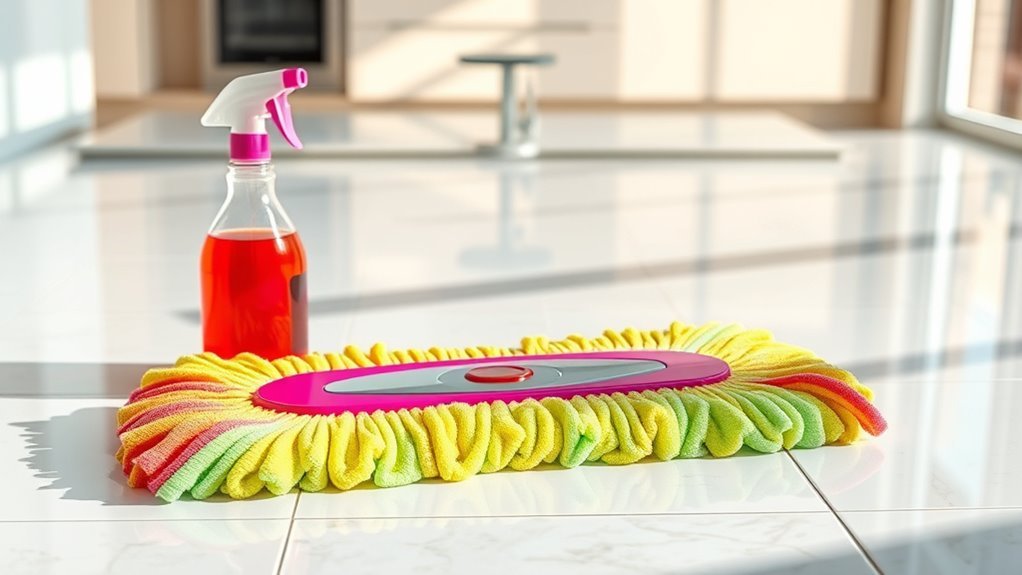
Before you start scrubbing, you’ll want to make sure you have the right cleaning supplies for your tile floors. Choosing eco friendly options not only helps protect your home environment but also preserves the freedom to live sustainably without harsh chemicals. Essential tools include a soft-bristle broom or vacuum for loose dirt, a mop with a microfiber head for gentle cleaning, and a bucket for mixing your cleaning solution. You’ll want a pH-neutral cleaner designed specifically for tile surfaces to avoid damage and maintain shine. Avoid abrasive scrubbers that can scratch tiles or strip grout. With the right supplies, you’re set to clean effectively while staying true to your values of freedom and responsibility toward the planet.
Preparing Your Tile Floor for Cleaning
To prepare your tile floor for cleaning, start by removing any loose dirt and debris using your soft-bristle broom or vacuum. Next, conduct a surface inspection to spot cracks, stains, or damaged grout. This step guarantees your cleaning won’t cause further harm. Use a pre cleaning checklist to stay organized and efficient.
| Step | Action |
|---|---|
| Loose Dirt Removal | Sweep or vacuum thoroughly |
| Surface Inspection | Check for damage or stains |
| Pre Cleaning Checklist | Confirm supplies and steps |
Following these steps gives you freedom to clean effectively without surprises. A well-prepared tile floor responds better to cleaning and keeps your space fresh and inviting.
Effective Mopping Techniques
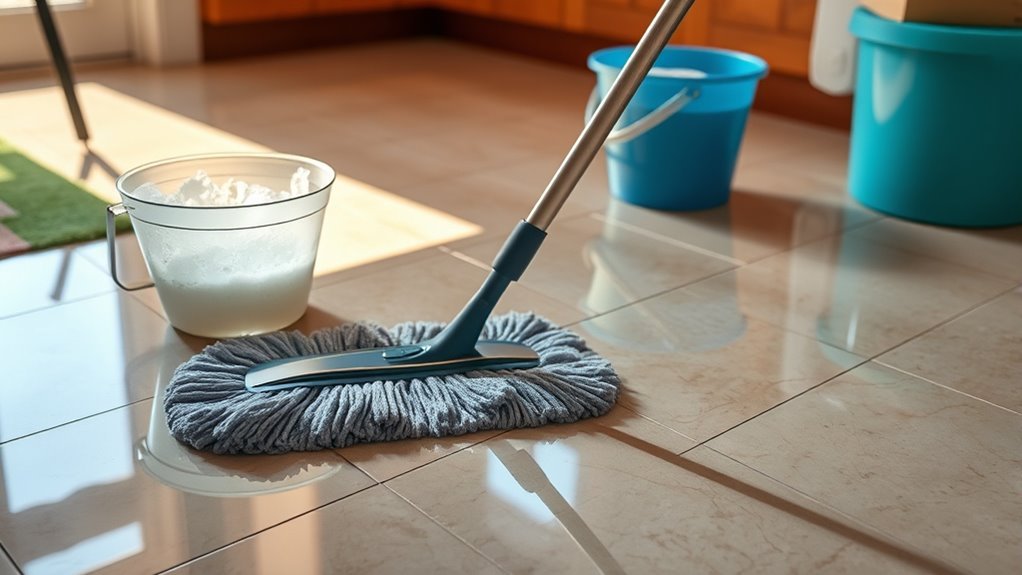
Although mopping might seem straightforward, using the right techniques guarantees your tile floors get thoroughly clean without damage. First, choose the right mop type—microfiber mops are great for trapping dirt, while sponge mops work well with liquid cleaning solutions. Avoid overly wet mops; excess water can seep into grout and cause issues. Dip your mop into a bucket with an appropriate cleaning solution, then wring it out well to avoid puddles. Mop in a figure-eight motion or straight lines to cover every inch efficiently. Change your cleaning solution regularly to prevent spreading dirt around. After mopping, allow your floors to air dry or use a dry mop to speed up the process. This method keeps your tiles fresh and your cleaning routine hassle-free.
Tackling Stubborn Stains and Grime
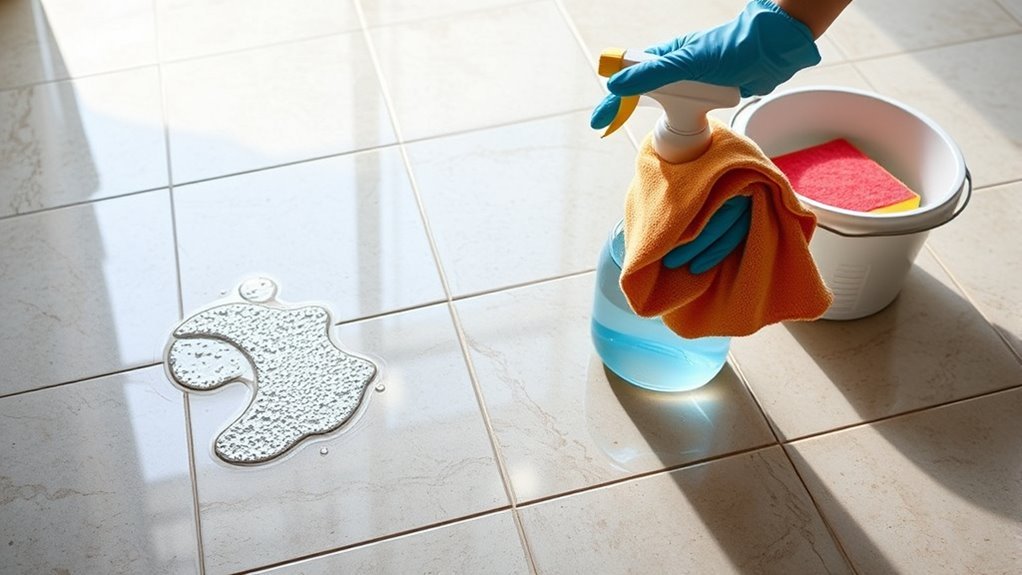
When stains and grime refuse to budge after mopping, you’ll need targeted strategies to restore your tile floors. Tackling stubborn marks means focusing on both the tile surface and the grout lines. For effective stain removal and grout cleaning, try these approaches:
- Use a baking soda paste on grout, scrubbing gently with a toothbrush to lift embedded dirt without harsh chemicals.
- Apply a vinegar and water solution on tough tile stains, letting it sit for a few minutes before wiping clean.
- For oil-based grime, a small amount of dish soap mixed with warm water can break down residue, making it easier to wash away.
With these methods, you’ll regain control over your floor’s appearance and enjoy the freedom of a fresh, clean space.
Maintaining Shine and Preventing Damage
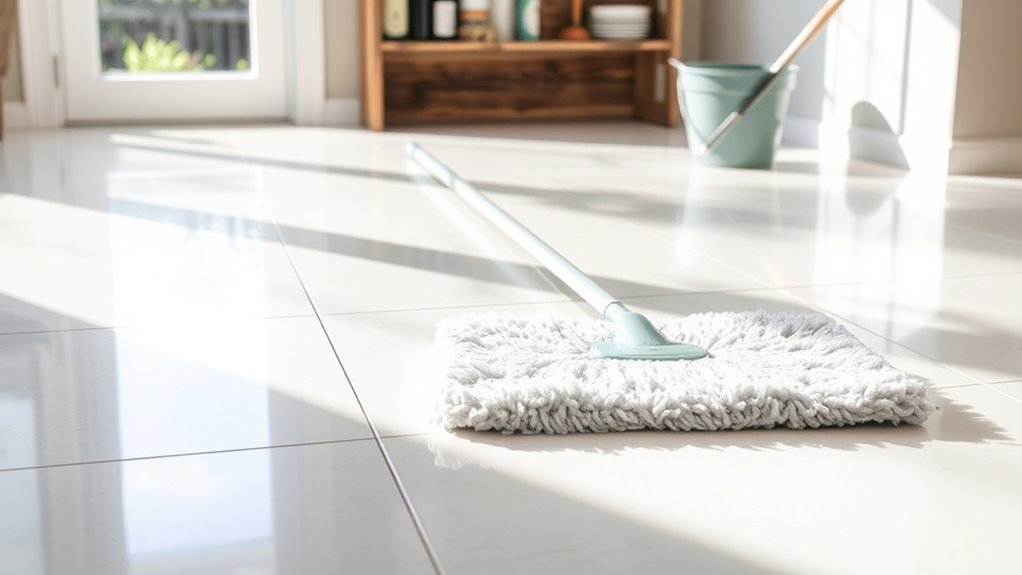
Since tile floors can lose their shine over time, maintaining their luster requires regular care and mindful habits. To keep your floors gleaming, focus on shine maintenance by regularly dusting and using gentle cleaners designed for tile surfaces. Avoid harsh chemicals that can dull the finish or cause damage. For damage prevention, use soft broom bristles or microfiber mops to prevent scratches, and place mats at entryways to trap dirt and grit. Don’t drag heavy furniture across tiles; instead, lift or use protective pads under legs. By adopting these simple habits, you preserve your floor’s beauty without restricting your lifestyle, letting you enjoy a polished, vibrant space freely and worry-free. Consistent care is your best defense against dullness and damage.
Frequently Asked Questions
Can I Use Vinegar on All Types of Tile Floors?
You can enjoy vinegar benefits on many tile floor types, but it’s not a one-size-fits-all solution. Vinegar works great on ceramic and porcelain tiles because it cuts through grime naturally. However, avoid using it on natural stone like marble or travertine since vinegar’s acidity can damage them. So, if you want to keep your floors looking fresh without restrictions, just know your tile type first, then decide if vinegar’s the way to go.
How Often Should I Deep Clean Grout Lines?
Imagine your grout lines looking fresh and bright, free from dirt and stains that dull their charm. For grout cleaning, you should deep clean them every three to six months to maintain their crisp appearance. Regular grout maintenance prevents stubborn buildup, letting you enjoy the freedom of a sparkling floor without constant worry. If you live in a busy household, consider deep cleaning more often to keep those lines looking their best.
Are Steam Cleaners Safe for Tile Floors?
Yes, steam cleaners are safe for tile floors and offer great benefits, like killing bacteria without harsh chemicals. They make tile floor maintenance easier and more eco-friendly, giving you freedom from scrubbing grout endlessly. Just be sure to avoid excessive steam on delicate grout or unsealed tiles, and you’ll enjoy a fresh, clean floor with less effort. Steam cleaners are a powerful tool for keeping your space spotless and stress-free.
What Is the Best Way to Dry Tile Floors Quickly?
If you want to dry tile floors quickly, grab a microfiber mop—it soaks up water fast without leaving streaks. After mopping, place a fan nearby to boost airflow and speed up drying. Position the fan so it covers the wet areas evenly, and you’ll have dry floors in no time. This combo lets you move freely around your space without slipping or waiting forever for the floor to dry.
Can Pets Damage Tile Floors During Cleaning?
You might worry about pet paw prints or tile floor scratches during cleaning, but with the right approach, your tile floors can stay pristine. Pets can leave paw prints if they walk on wet surfaces, so it’s best to keep them away while floors dry. Also, their claws can cause minor tile floor scratches, especially on softer grout areas, so trimming their nails regularly helps you maintain freedom without damaging your floors.