How to Clean Toys
To clean your child’s toys, wash soft ones gently by hand or machine on a delicate cycle, then air dry to keep them fluffy. Plastic toys scrub well with mild soap and warm water, while electronic toys need a damp cloth and battery removal before wiping. Wooden toys require a quick wipe and drying to avoid damage. Bath toys benefit from vinegar soaks to prevent mold. Stick to mild, non-toxic cleaners to keep everything safe and lasting longer. Learn how to care for every type of toy properly.
Cleaning Soft and Plush Toys
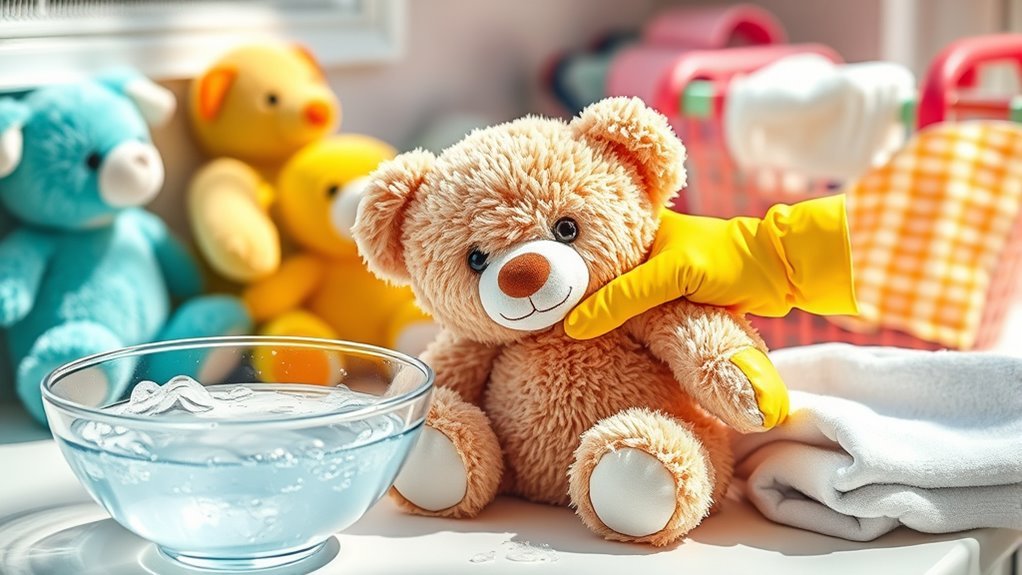
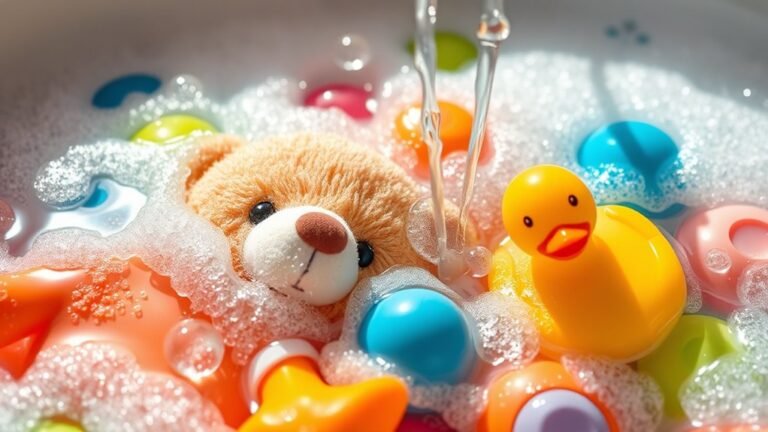
Although soft and plush toys can be delicate, you can clean them effectively without causing damage. If your toy’s label says it’s machine washable, you can toss it in a gentle cycle with cold water. Use a mild detergent, and consider placing the toy inside a mesh laundry bag to protect it. For toys that aren’t machine washable or have glued parts, hand washing is your best bet. Fill a basin with lukewarm water and a bit of gentle soap, then softly scrub the toy with your hands or a cloth. Rinse thoroughly, squeezing out excess water carefully. Air drying is essential to keep the toy’s shape and softness intact. This way, you maintain freedom from germs while preserving your toy’s charm.
Washing Plastic Toys
When washing plastic toys, you’ll want to start with soap and water to remove dirt and grime. After that, using a safe sanitizing solution helps kill germs effectively. Make sure to dry them thoroughly before storing to keep them clean and ready for play.
Soap and Water
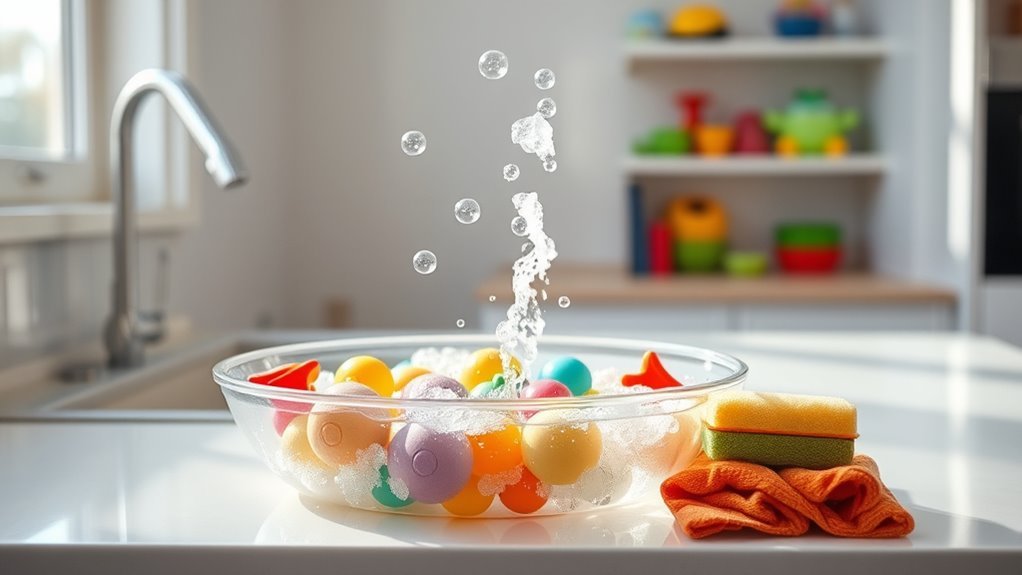
A simple mixture of soap and water is one of the most effective ways to clean plastic toys. When choosing soap types, opt for mild, fragrance-free options to avoid irritants. The water temperature matters too—warm water works best to loosen dirt without damaging the toy’s surface. Here’s how you can keep your toys fresh and free:
- Use a soft cloth or sponge for gentle scrubbing
- Avoid harsh detergents that strip colors or textures
- Rinse thoroughly to remove soap residue
- Dry toys completely to prevent mold or mildew
- Clean regularly to maintain hygiene and keep playtime carefree
Sanitizing Solutions
Since keeping toys clean is essential for your child’s health, using sanitizing solutions can provide an extra layer of protection beyond soap and water. You don’t have to rely on harsh chemicals—natural alternatives and homemade solutions work great. Here’s a quick guide to some effective options:
| Solution Type | How to Use |
|---|---|
| White Vinegar | Mix 1 part vinegar with 1 part water, spray, and wipe |
| Hydrogen Peroxide | Spray directly, let sit for 10 minutes, then rinse |
| Baking Soda Paste | Mix with water, scrub, rinse thoroughly |
| Tea Tree Oil Solution | Add a few drops to water, spray, and air dry |
| Lemon Juice | Apply directly, let sit, then rinse |
These solutions let you keep toys sanitized safely, giving your child freedom to play worry-free.
Drying and Storage
After sanitizing your plastic toys, making sure they dry completely is just as important to prevent mold and bacteria growth. Letting them air dry naturally frees you from extra chores and keeps toys safe. Once dry, organizing your toys helps maintain a clutter-free space where they’re easy to find and ready to use.
Here’s how to master drying and toy organization:
- Place toys on a clean towel or drying rack to air dry thoroughly
- Avoid stacking toys while damp to prevent trapped moisture
- Use clear bins or labeled containers for easy access and neat storage
- Store toys in a cool, dry place away from direct sunlight
- Regularly declutter to keep your toy collection manageable and enjoyable
With these steps, you’ll keep toys fresh and your space free.
Disinfecting Electronic Toys
When you disinfect electronic toys, you need to be extra careful to avoid damaging their sensitive components. Start by removing batteries to guarantee battery safety and prevent any electrical mishaps. Use a soft cloth lightly dampened with a mild disinfectant solution—never spray liquids directly onto the toy. Wipe all surfaces gently, focusing on buttons and handles where germs gather. Avoid harsh chemicals that could degrade the materials or circuitry. After wiping, let the toy air dry completely before reinserting batteries to maintain electronic maintenance and prevent corrosion. Regularly checking battery compartments for leaks or damage helps extend the toy’s lifespan and keeps it safe for play. By handling electronic toys with care, you maintain their freedom to entertain without compromising their function or your child’s health.
Cleaning Wooden Toys
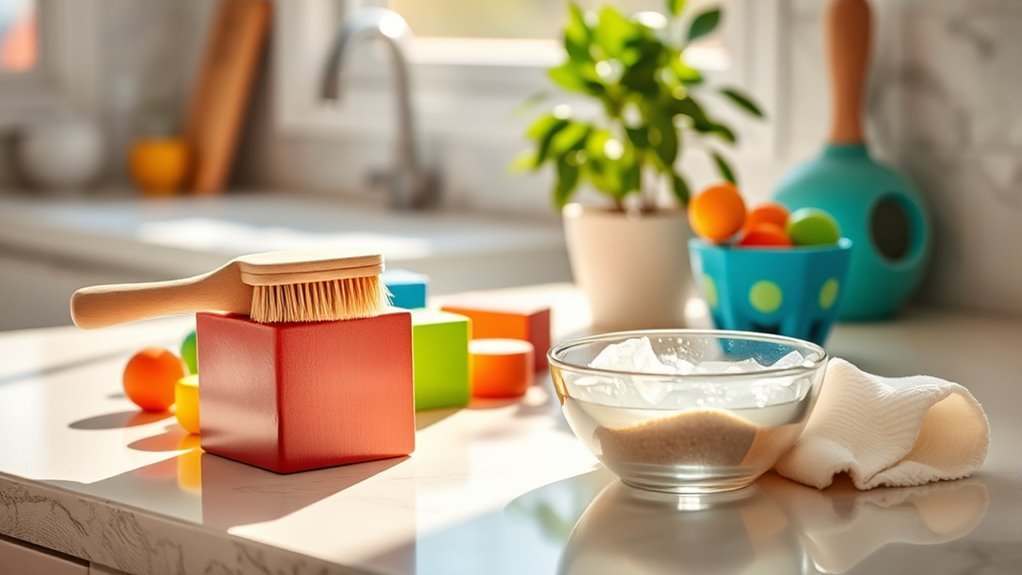
Electronic toys require careful cleaning to protect their components, but wooden toys call for a different approach. When it comes to wood care and toy maintenance, you’ll want to preserve the natural texture and durability without harsh chemicals. Start by wiping toys with a damp cloth and mild soap, then dry immediately to avoid warping. Avoid soaking or using abrasive cleaners that strip the wood’s finish. To keep toys in top shape:
- Use natural oils like mineral or beeswax for conditioning
- Store toys in a dry, well-ventilated area
- Sand rough spots gently to prevent splinters
- Inspect joints regularly for stability
- Rotate toys to reduce wear
This simple routine lets you maintain your wooden toys while giving you the freedom to enjoy their timeless charm.
Sanitizing Bath Toys
When sanitizing bath toys, you’ll want to choose safe cleaning solutions that won’t harm your child. Preventing mold is key, so make sure to rinse and dry the toys thoroughly after each use. Proper drying and storage will keep the toys clean and ready for the next bath time.
Safe Cleaning Solutions
Two simple ingredients you probably already have at home can keep your bath toys clean and safe. Using natural alternatives like white vinegar and baking soda offers an eco friendly solution that’s gentle yet effective. You don’t have to rely on harsh chemicals—embrace these safe cleaning solutions to maintain freedom from toxins.
Here’s how to protect your family and the planet while sanitizing bath toys:
- Mix equal parts white vinegar and water for a natural disinfectant
- Use baking soda for scrubbing away grime without damage
- Soak toys in the solution for 10-15 minutes
- Rinse thoroughly to remove any residue
- Air dry completely before storage to keep toys fresh
These simple steps keep bath time carefree and your toys safe for endless fun.
Mold Prevention Tips
Because bath toys are often exposed to moisture and warmth, they can quickly develop mold if not properly cared for. To keep your toys safe and mold-free, start by choosing bath toys made from mold resistant materials. These are designed to minimize mold growth, giving you peace of mind. Next, focus on moisture control—after each use, squeeze out water from inside toys with holes and avoid leaving them sitting in water. Regularly rinse and sanitize toys to prevent mold buildup. Remember, preventing mold is all about limiting damp environments where mold thrives. By selecting the right materials and managing moisture, you’ll enjoy cleaner, safer bath toys and more freedom from constant worry about mold contamination.
Drying and Storage
Keeping bath toys dry after cleaning is just as important as preventing mold in the first place. You want to choose effective drying methods that allow air to circulate freely, stopping moisture from hiding in crevices. Proper storage solutions also play a key role in keeping toys fresh and ready for fun. Here’s how you can maintain that freedom from mold and grime:
- Hang toys individually on hooks or a mesh bag to air dry quickly
- Use a towel to pat toys dry immediately after rinsing
- Store toys in a well-ventilated container, not airtight
- Avoid leaving toys in standing water or damp environments
- Regularly inspect storage areas for moisture buildup or mold
Removing Stains From Fabric Toys
Although fabric toys can brighten a child’s day, they often attract stains that are tough to remove. When tackling stain removal, start by gently blotting the spot with a damp cloth to lift excess dirt. Avoid rubbing, which can push stains deeper into fibers. For stubborn marks, use a mild detergent diluted with water, applying it sparingly to preserve fabric care. Let it sit briefly before rinsing with a clean, damp cloth. Always test any cleaning solution on a hidden area first to prevent damage. If the toy allows, hand wash or use a gentle machine cycle. By treating stains promptly and carefully, you maintain the toy’s appearance and extend its life, letting your child enjoy their favorite fabric friends without restrictions.
Drying and Storing Clean Toys
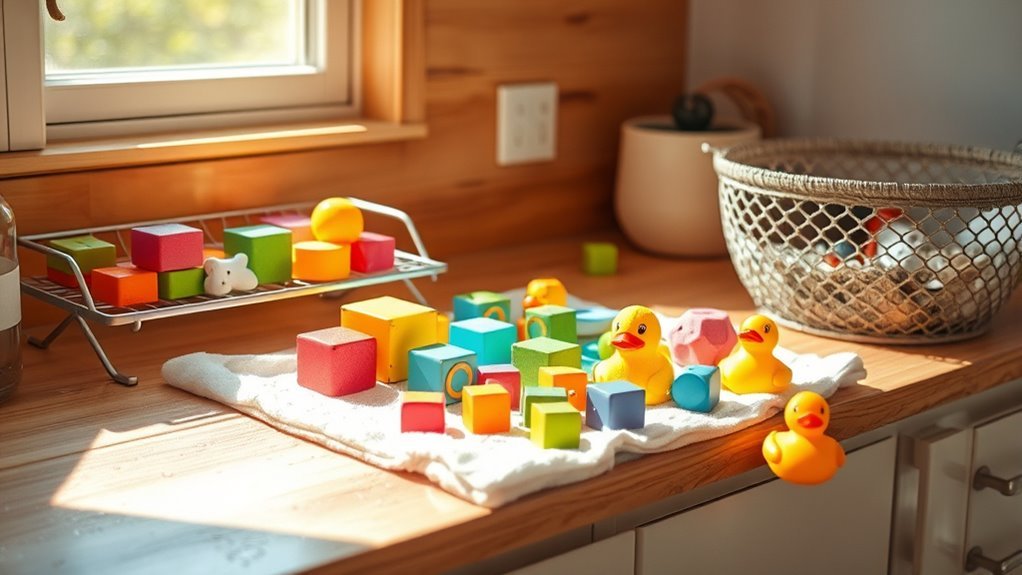
Once you’ve cleaned the toys thoroughly, drying them properly is crucial to prevent mold and odors. Using effective drying techniques guarantees toys stay fresh and safe for play. You want your toys ready to go, not stuck in a damp mess.
Consider these tips for drying and storing your toys:
- Air dry toys in a well-ventilated area to speed up moisture evaporation.
- Use a clean towel to blot excess water before air drying.
- Avoid direct sunlight on delicate toys to prevent fading or damage.
- Store toys in breathable containers to keep them dry and mold-free.
- Rotate toys regularly to keep storage spaces fresh and clutter-free.
With smart drying techniques and storage solutions, your toys will stay clean and ready for fun whenever freedom calls.
Safe Cleaning Products for Toys
Choosing the right cleaning products for toys is essential to guarantee they’re safe for children and effective at removing germs. You want to avoid harsh chemicals that could irritate sensitive skin or damage the toys. Instead, opt for eco friendly cleaners that are gentle but powerful enough to kill bacteria. These products support toy safety by minimizing exposure to toxins and harmful residues. Simple solutions like diluted vinegar or mild soap often do the trick without compromising your child’s health. Always check labels to verify the cleaner is non-toxic and suitable for the toy’s material. By choosing wisely, you maintain a healthy play environment and give your little ones the freedom to explore safely, without the worry of dangerous chemicals lurking on their favorite toys.
Frequently Asked Questions
How Often Should I Clean My Child’s Toys?
You should follow frequency recommendations to keep your child’s playthings safe and fun. Setting up cleaning schedules can make this effortless, so you’re not overwhelmed. For toys used daily, a weekly clean is ideal, while less-used items can be cleaned monthly. If your kid’s sick, increase the frequency. With a flexible routine, you’ll keep things fresh without feeling restricted, giving you the freedom to enjoy playtime worry-free.
Can Cleaning Toys Cause Allergies in Children?
Imagine toy materials as tiny landscapes where allergy triggers might hide like sneaky shadows. If you’re not careful, cleaning products or residues left behind can stir up allergies in children. You’ll want to choose gentle, fragrance-free cleaners and rinse toys thoroughly to keep those triggers at bay. By doing so, you’ll help your child enjoy playtime freely, without the chains of sneezing or itching holding them back.
What Is the Best Way to Clean Outdoor Toys?
When tackling outdoor sanitization, you’ll want to focus on ease and effectiveness. Start by rinsing toys with a hose to remove dirt and debris. Then, use a mild soap solution to scrub them down, ensuring thorough toy maintenance without harsh chemicals. Let them air dry in the sun—nature’s own sanitizer. This way, your kids get clean, safe toys and you maintain your freedom from complicated routines or toxic cleaners.
How Do I Clean Toys With Battery Compartments Safely?
You want to protect your batteries, avoid water, and maintain battery safety. Start by removing batteries before cleaning, then use a damp cloth with mild soap to wipe the toy’s surface—never let water seep into compartments. For stubborn spots, use a cotton swab dipped in rubbing alcohol carefully. Dry thoroughly before reinserting batteries. These cleaning methods keep your toys safe and functioning, letting you enjoy worry-free playtime without restrictions.
Are There Eco-Friendly Alternatives for Toy Cleaning Products?
You can definitely choose eco-friendly ways to clean, giving you freedom from harsh chemicals. Biodegradable cleaners are a great option—they break down naturally and won’t harm the environment. You might also try natural disinfectants like vinegar, lemon juice, or tea tree oil; they’re effective and safe. By opting for these, you keep your toys clean while staying true to your values and protecting the planet for future playtimes.