How to Clean Up Spilled Gasoline on Concrete
Cleaning up spilled gasoline on concrete requires immediate action to prevent damage and ensure safety. The first step is to contain the spill to avoid spreading it, followed by using absorbent materials to soak up the gasoline. In this article, you’ll learn the steps to effectively clean up and neutralize gasoline spills on concrete surfaces, ensuring a safe and clean environment.
Assess the Situation
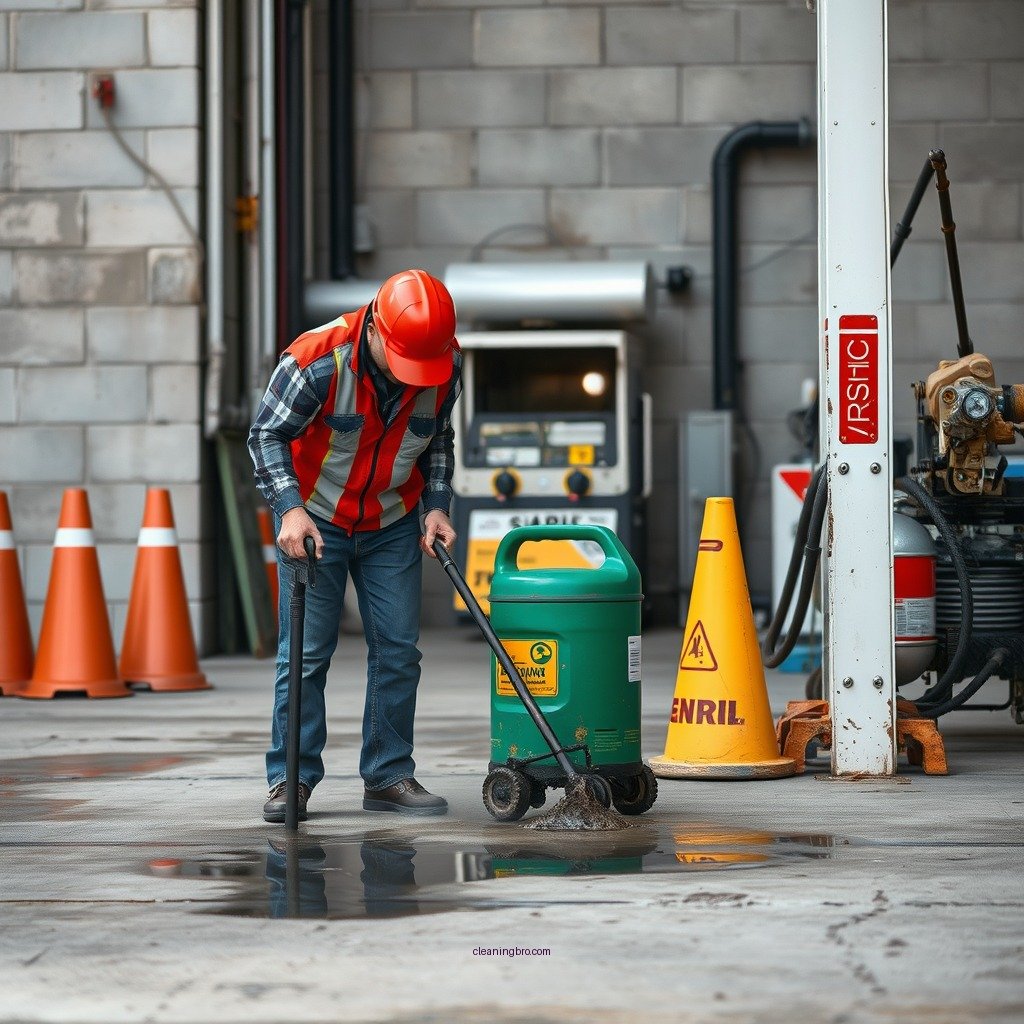
The first step in handling a gasoline spill is assessing the situation. Start by determining the size of the spill. This will help you choose the appropriate cleanup materials. A small leak might only require a few absorbent materials, while a larger spill will demand a more extensive approach, potentially needing additional resources.
Additionally, check if the gasoline is fresh or has soaked into the concrete. Fresh spills are easier to manage as they have not yet penetrated deeply into the surface. If the gasoline has soaked in, you may need a more aggressive cleaning method to eliminate any residual contamination.
Safety Precautions

Safety is paramount when dealing with gasoline spills. Begin by wearing protective gear, including but not limited to rubber gloves, safety goggles, and a mask. This will protect you from harmful fumes and skin contact with the gasoline.
Ensure the area is well-ventilated by opening windows or doors to facilitate airflow. Ventilation reduces the concentration of hazardous fumes and minimizes the risk of fire or explosion. It is crucial to keep the area free of open flames, sparks, or any potential ignition sources, as gasoline is highly flammable.
Containing the Spill
Once the situation has been assessed, it’s vital to contain the spill. Use absorbent materials such as kitty litter, sand, or sawdust to surround the spill. This creates a barrier that prevents the gasoline from spreading further.
Place absorbent material around the perimeter of the spill and then pour additional absorbent over the top of the spill. This step is essential as it stops gasoline from seeping into cracks or pores in the concrete, which can be challenging to clean later.
Absorbing the Gasoline
After containing the spill, it’s time to absorb the gasoline. Pour a generous amount of your chosen absorbent material over the spill, ensuring it covers the area completely. Allow the material to sit for at least 15-30 minutes; this gives it time to soak up the gasoline effectively.
Once the time has elapsed, sweep up the absorbed material using a broom and dustpan. Be sure to dispose of this material properly according to local regulations, as it is considered hazardous waste. Many municipalities have specific guidelines for the disposal of gasoline-soaked materials, so check with your local waste management authorities for instructions.
Cleaning the Concrete
With the bulk of the gasoline removed, it’s time to clean the concrete. Mix a solution of water and a degreaser to eliminate any remaining residue. The degreaser will help break down any lingering gasoline compounds that the absorbent material may not have captured.
Use a stiff bristle brush to scrub the affected area thoroughly. Scrubbing helps to lift any remaining contaminants from the surface of the concrete. After scrubbing, rinse the area thoroughly with clean water to remove any traces of the degreaser and gasoline.
Neutralizing Odor
Gasoline spills often leave a lingering odor that can be unpleasant and hazardous. To neutralize this odor, create a solution of vinegar and water (mix equal parts) or use specialized odor neutralizers available in stores. Apply this solution to the affected area and let it sit for a while to eliminate the gasoline smell effectively.
After applying the neutralizing solution, allow the area to air dry completely. This step is essential to ensure that both the cleaning agents and any residual gasoline evaporate thoroughly.
Final Disposal
The final step in the cleanup process is the safe disposal of all contaminated materials. Ensure that you follow local hazardous waste guidelines for disposing of gasoline-soaked materials. This may involve taking them to a designated hazardous waste facility or following specific disposal instructions from your municipality.
Before considering the area safe for use again, ensure that it is thoroughly cleaned and odor-free. Double-check for any signs of gasoline residue or lingering smells.
In summary, cleaning up a gasoline spill on concrete involves quick action, proper containment, and thorough cleaning. By following these steps, you can restore your concrete surface and maintain a safe environment. If you encounter a significant spill that you feel unprepared to handle, consider contacting professionals for assistance.
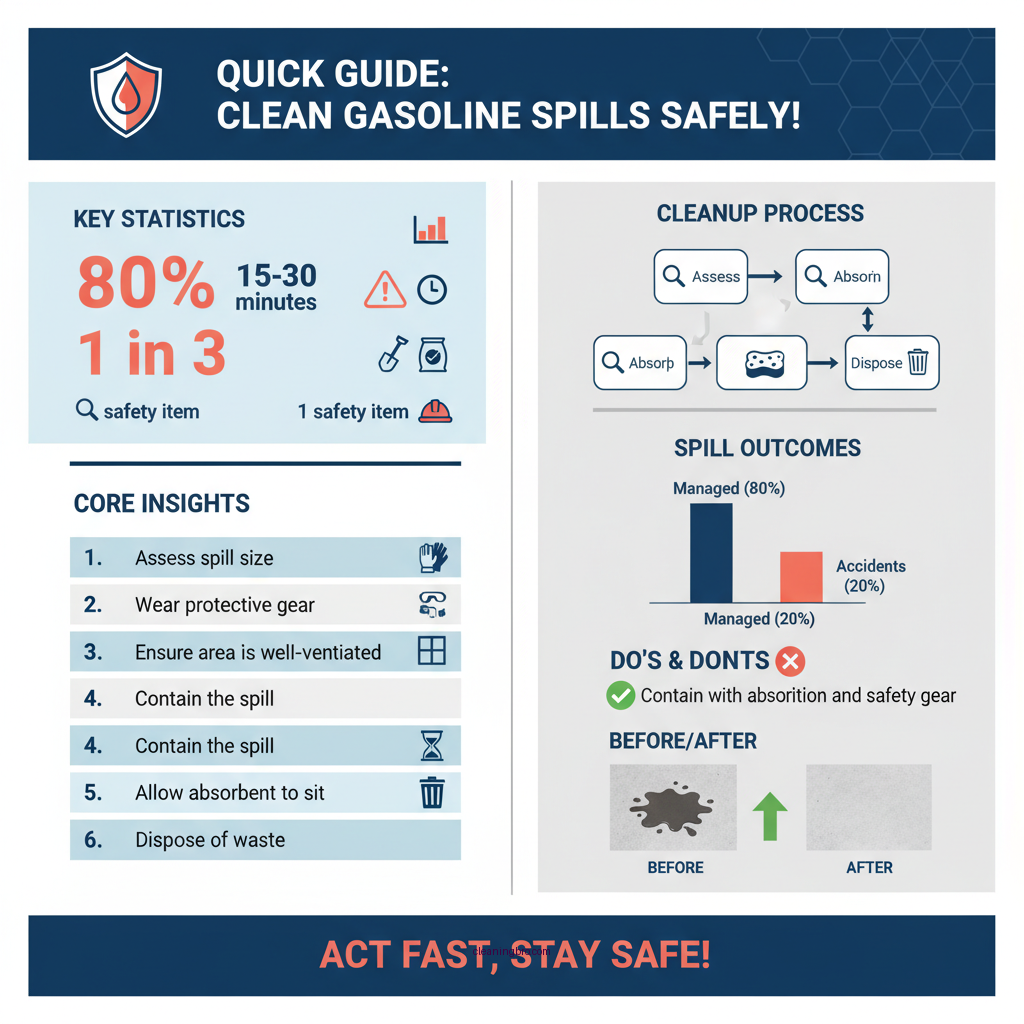
Here’s a visual representation of the key steps involved in the cleanup process:
Common Absorbent Materials for Gasoline Spills
| # | Material | Effectiveness | Cost |
|---|---|---|---|
| 1 | Kitty Litter | High | Low |
| 2 | Sawdust | Medium | Very Low |
| 3 | Sand | Medium | Low |
| 4 | Baking Soda | Medium | Medium |
| 5 | Commercial Absorbents | Very High | High |
| 6 | Paper Towels | Low | Medium |
| 7 | Rags | Low | Medium |
Effectiveness of Absorbent Materials for Gasoline Spills
Best Absorbent Materials for Gasoline Cleanup
| Feature | ⭐ Kitty Litter | Commercial Absorbents | Sawdust |
|---|---|---|---|
| Effectiveness | High | Very High | Medium |
| Cost | Low | High | Very Low |
| Availability | Widely available | Specialty stores | Common |
| Ease of Use | Simple | Requires training | Simple |
| Environmental Impact | Low | Medium | Low |
| Cleanup Time | Quick | Moderate | Quick |
| Disposal Regulations | Standard | Strict | Standard |
| Multi-Use | No | Yes | No |
| Best For | Home Use | Professional Cleanup | DIY Projects |
In conclusion, handling a gasoline spill on concrete is a task that demands urgency and careful attention. By following the outlined steps—from assessing the situation to proper disposal—you can effectively manage the cleanup process. Always prioritize safety by using protective gear and ensuring proper ventilation. If faced with a significant spill, don’t hesitate to seek professional help, and remember that prevention is key in avoiding future incidents.
Frequently Asked Questions
What is the best method to clean up spilled gasoline on concrete?
The best method to clean up spilled gasoline on concrete involves absorbing the liquid first. Sprinkle an absorbent material like cat litter, baking soda, or sawdust over the spill, let it sit for a few hours, then sweep it up. Afterward, use a mixture of dish soap and warm water to scrub the area, and rinse thoroughly to remove any residue.
How do you neutralize the smell of gasoline after cleaning it up?
To neutralize the smell of gasoline after cleaning, you can spray a mixture of vinegar and water directly on the affected area. Vinegar is effective at absorbing odors. Additionally, placing bowls of baking soda or activated charcoal nearby can help absorb any lingering smells.
Why is it important to clean gasoline spills on concrete immediately?
Cleaning gasoline spills on concrete immediately is crucial to prevent environmental contamination and reduce fire hazards. Gasoline can seep into the porous surface of concrete, leading to permanent stains and potential health risks from fumes. Addressing the spill promptly ensures a safer environment and easier cleanup.
Which products are effective for removing gasoline stains from concrete?
Effective products for removing gasoline stains from concrete include commercial degreasers, enzyme-based cleaners, or a mixture of dish soap and baking soda. These products break down oil and fuel residues, making it easier to scrub the stains away. Always follow the manufacturer’s instructions for the best results.
What safety precautions should you take when cleaning up spilled gasoline on concrete?
When cleaning up spilled gasoline on concrete, it’s important to wear gloves and protective eyewear to prevent skin and eye irritation. Ensure the area is well-ventilated and keep any ignition sources away, as gasoline vapors are highly flammable. Additionally, consider using a respirator if the fumes are strong.
References
- https://www.epa.gov/sites/default/files/2015-08/documents/gasoline.pdf
https://www.epa.gov/sites/default/files/2015-08/documents/gasoline.pdf - https://www.cdc.gov/niosh/docs/2008-131/pdfs/2008-131.pdf
https://www.cdc.gov/niosh/docs/2008-131/pdfs/2008-131.pdf - https://www.nsf.gov/news/special_reports/gasoline/cleanup.jsp
https://www.nsf.gov/news/special_reports/gasoline/cleanup.jsp - https://www.washington.edu/safety/environmental-health/hazards/gasoline-cleanup/
https://www.washington.edu/safety/environmental-health/hazards/gasoline-cleanup/ - Detail
https://www.who.int/news-room/fact-sheets/detail/air-pollution - https://www.britannica.com/science/gasoline
https://www.britannica.com/science/gasoline - https://www.ncbi.nlm.nih.gov/pmc/articles/PMC4742564/
https://www.ncbi.nlm.nih.gov/pmc/articles/PMC4742564/ - https://www.sciencedirect.com/science/article/pii/S0045653518313034
https://www.sciencedirect.com/science/article/pii/S0045653518313034 - Google Scholar Google Scholar
https://scholar.google.com/scholar?q=how+to+clean+gasoline+spill+on+concrete - Google Scholar Google Scholar
https://scholar.google.com/scholar?q=gasoline+spill+cleanup+methods