How to Clean Wood in Office Spaces
To clean wood in your office space, start by dusting with a microfiber cloth or soft brush to avoid scratches. Use wood-safe cleansers suited to your finish type, like mild soap solutions for polyurethane or oil finishes. Treat stains gently with baking soda or rubbing alcohol, and avoid excess moisture to prevent damage. Regularly polish to protect and maintain shine. Stick to a consistent schedule, adjusting for traffic and usage. There’s plenty more to help you keep your wood surfaces looking their best.
Understanding Different Types of Wood Finishes
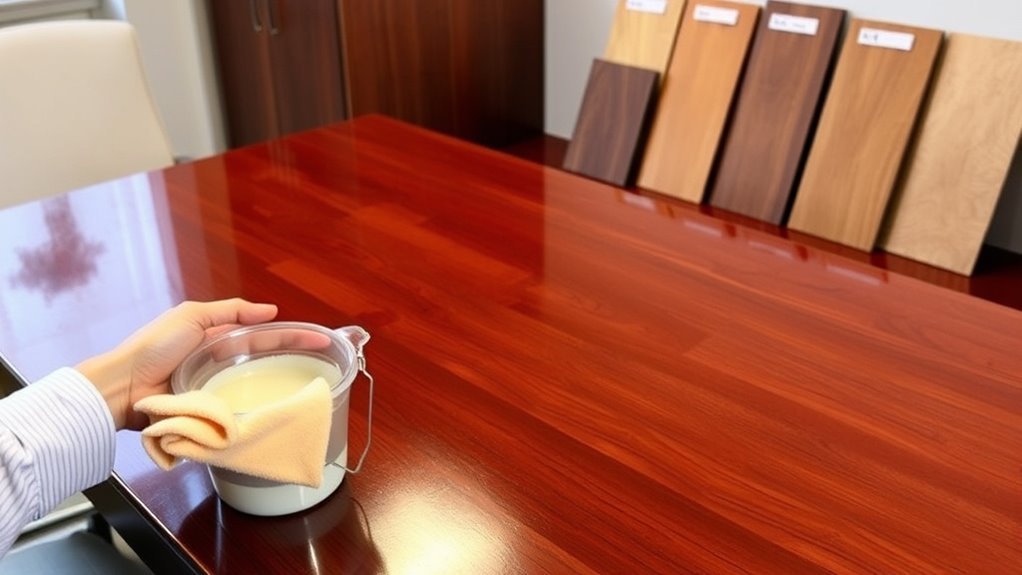
When cleaning wood in your office, it’s important to know the type of finish it has since different finishes require different care. Wood types vary widely, and their finish durability influences how you maintain them. For example, lacquer finishes offer a glossy look but can be sensitive to harsh cleaners, while polyurethane finishes provide more robust protection, making them easier to clean. Oil finishes soak into the wood, highlighting its natural grain but needing gentle treatment to avoid damage. Shellac finishes, though beautiful, are less durable and require delicate handling. By identifying your wood’s finish and understanding its durability, you gain the freedom to clean confidently without causing harm. This knowledge guarantees your office wood stays pristine, reflecting your space’s character and your independent spirit.
Gathering Essential Cleaning Supplies
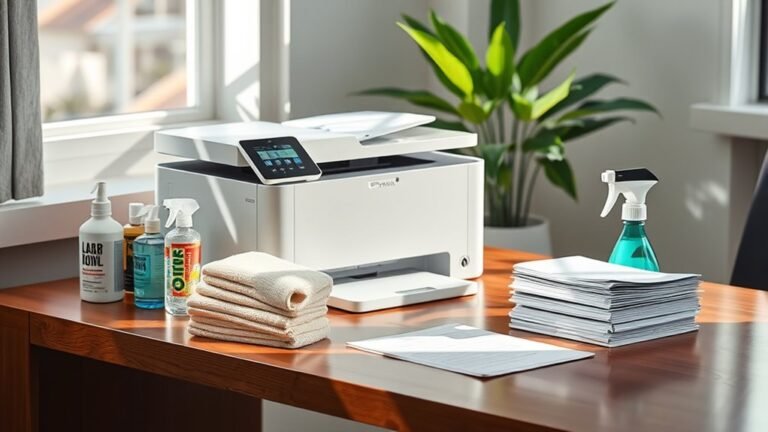
Before you begin cleaning wood in your office, you’ll need to gather the right supplies to guarantee effective and safe maintenance. Start by choosing gentle cleaning tools like microfiber cloths and soft-bristled brushes that won’t scratch or damage delicate wood surfaces. Avoid harsh or abrasive materials that can strip finishes. Next, select wood care products designed specifically for the finish type you’re dealing with—these can include mild wood cleaners, natural oils, or specially formulated polishes. Having a spray bottle with diluted solution can help control moisture application, preventing wood warping. Don’t forget gloves to protect your hands and a drop cloth to catch drips. By preparing the right cleaning tools and wood care items, you make certain your office wood stays beautiful while maintaining your freedom from worry about damaging it.
Removing Dust and Loose Dirt
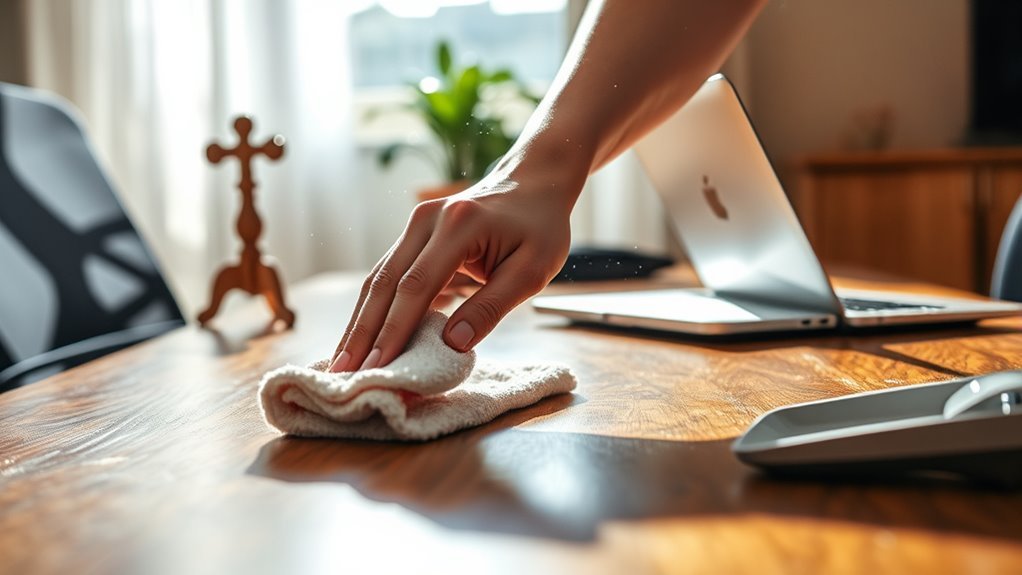
You’ll want to choose the right dusting tools to make the job easier and protect your wood surfaces. Using microfiber cloths or soft brushes helps remove dust without scratching the finish. Let’s explore how to effectively get rid of loose dirt for a cleaner office space.
Dusting Tools Selection
Choosing the right dusting tools is essential for effectively removing dust and loose dirt from wood surfaces in your office. You want tools that offer freedom to move easily and reach every corner without hassle. Consider these options:
- Microfiber cloths: gentle on wood, trap dust efficiently
- Dusting extensions: reach high shelves and tight spots effortlessly
- Soft-bristled brushes: perfect for intricate wood carvings
- Electrostatic dusters: attract dust without spreading it around
- Reusable dusting mitts: let you clean quickly with a simple swipe
Effective Dust Removal
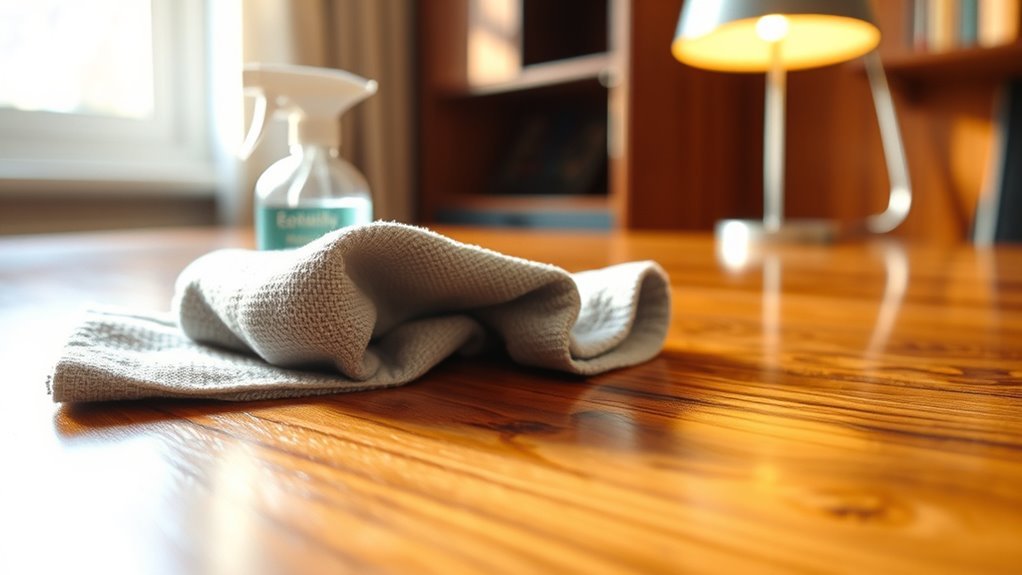
Once you’ve picked the right dusting tools, the next step is to tackle the actual removal of dust and loose dirt from your wood surfaces. Effective dusting means using gentle, consistent strokes to lift dust without scratching the wood. You’ll want to work in one direction, capturing particles rather than pushing them around. Here’s a quick comparison of dust removal techniques to keep your office wood clean and free:
| Technique | Best Use |
|---|---|
| Microfiber cloth | Traps dust, gentle on wood |
| Soft-bristle brush | Reaches grooves and crevices |
| Vacuum with brush | Removes heavy dust without damage |
Using Mild Soap Solutions for Cleaning
Although wood is a durable material, it still needs gentle care to maintain its natural beauty. Using mild soap solutions for cleaning is a smart way to protect your office wood surfaces without harsh chemicals. The mild soap benefits include preserving the wood’s finish and preventing damage. Here’s how you can create effective cleaning solution recipes:
Gentle care with mild soap keeps wood surfaces beautiful and protected without harsh chemicals.
- Mix a few drops of mild dish soap with warm water
- Use a soft cloth or sponge dipped in the solution
- Wring out excess liquid to avoid soaking the wood
- Gently wipe the surface in the direction of the grain
- Dry promptly with a clean, dry cloth
This approach keeps your wood fresh and vibrant, giving you freedom from worry while maintaining a professional look.
Tackling Stubborn Stains and Spots
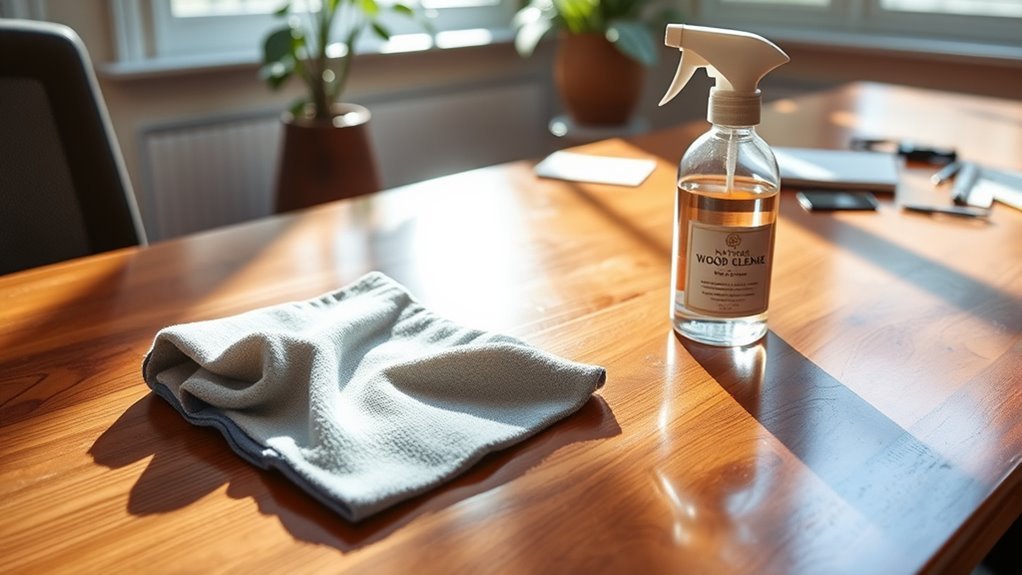
While mild soap solutions work well for regular cleaning, some stains and spots on wood surfaces need a bit more attention. For effective stain removal and spot treatment, you’ll want to tackle each type of stain with the right approach to keep your wood looking fresh without damage.
| Stain Type | Recommended Spot Treatment |
|---|---|
| Coffee | Dab with a mixture of baking soda and water |
| Ink | Use a cotton swab with rubbing alcohol |
| Grease | Apply cornstarch to absorb, then wipe gently |
| Water Rings | Lightly rub with a paste of baking soda & water |
Use these targeted methods to reclaim your wood surfaces and enjoy a clean, free-spirited workspace.
Polishing and Protecting Wood Surfaces
To keep your wood surfaces looking their best, you’ll want to polish and protect them regularly. Wood polishing not only enhances the natural grain but also adds a protective layer against everyday wear. Here’s how you can maintain freedom over your office space’s wood surfaces:
- Choose a polish suited for your wood type to avoid damage.
- Apply polish sparingly with a soft cloth for even coverage.
- Buff gently to bring out a natural shine without buildup.
- Use surface protection like wax or oil to seal and guard wood.
- Reapply polish every few months to maintain luster and defense.
Preventing Damage From Moisture and Heat
Polishing and protecting your wood surfaces helps keep them looking great, but you’ll also need to guard against moisture and heat to prevent lasting damage. To preserve your wood’s natural beauty, use moisture barriers like coasters or mats under drinks and plants. These simple tools stop water rings and stains, giving you freedom from constant worry. For heat protection, avoid placing hot items directly on wood surfaces; use trivets or heat-resistant pads instead. This prevents warping and discoloration caused by direct heat. By incorporating these moisture barriers and heat protection methods, you guarantee your wood remains sturdy and attractive. Taking these steps lets you enjoy your office space without being tied down by damage concerns, giving you peace of mind and freedom to focus on your work.
Establishing a Regular Wood Cleaning Schedule
You’ll want to set a regular cleaning schedule to keep your office wood looking its best without overdoing it. Consider how often your space is used and pick the best times, like after hours or weekends, to avoid disruptions. Using scheduling tools can help you stick to this routine consistently.
Frequency of Cleaning
Although wood surfaces in office spaces can appear durable, they actually require consistent care to maintain their beauty and functionality. You’ll want to establish a cleaning frequency that fits your space’s use and traffic. A solid maintenance routine keeps wood looking fresh and prevents damage over time. Consider these guidelines to help you set your schedule:
- Dust wood surfaces weekly to avoid buildup
- Wipe spills immediately to prevent stains
- Deep clean monthly with appropriate wood cleaners
- Polish or condition every 3-6 months for protection
- Adjust frequency based on office activity and environment
Best Cleaning Times
When setting a cleaning schedule for wood in your office, timing plays an essential role in maintaining its condition without disrupting your workflow. Knowing the best cleaning times helps you balance care and convenience, ensuring your wood surfaces stay pristine without feeling tied down. The ideal cleaning frequency depends on your office’s activity level and natural light exposure.
| Time of Day | Recommended Activity |
|---|---|
| Early Morning | Light dusting before work |
| Midday | Quick wipe if needed |
| After Work Hours | Thorough cleaning and polish |
Stick to these best cleaning times to protect your wood and enjoy a flexible routine. This approach lets you keep your space fresh without sacrificing your freedom.
Scheduling Tools Usage
Since keeping wood surfaces in top condition requires consistency, using scheduling tools can help you stay on track without extra mental load. You want to free up your mind while ensuring your office wood stays pristine. Here’s how to make scheduling work for you:
- Use calendar integration to sync cleaning tasks with your daily agenda.
- Set task reminders that alert you before it’s time to clean.
- Choose apps that allow recurring events for hassle-free repetition.
- Prioritize cleaning times based on office traffic and wood type.
- Review and adjust your schedule monthly to fit your evolving needs.
Frequently Asked Questions
Can I Use Vinegar to Clean Wood Surfaces in Offices?
You can use vinegar for cleaning wood surfaces, but you’ll want to be cautious. Vinegar benefits include its natural disinfectant properties, making it a great choice if you want something chemical-free. However, undiluted vinegar can damage wood surface safety by stripping finishes or drying the wood out. To keep your wood safe, dilute vinegar with water and test a small area first. This way, you get effective cleaning without risking your wood’s finish.
How Do I Handle Mold on Office Wood Furniture?
If you spot mold on your office wood furniture, don’t panic. For effective mold removal, mix a bit of mild detergent with water, gently scrub the area, and dry it thoroughly. To keep mold away, focus on prevention strategies like controlling humidity and ensuring good ventilation. You’ve got the freedom to maintain a fresh, clean workspace by tackling mold early and keeping moisture in check.
Are There Eco-Friendly Wood Cleaning Products Suitable for Offices?
Imagine a fresh breeze flowing through your office, carrying the scent of natural oils instead of harsh chemicals. You’ll find plenty of eco-friendly wood cleaning products that use biodegradable cleaners, letting you care for your workspace and the planet simultaneously. These natural solutions not only preserve wood’s beauty but also free you from toxic fumes, giving you the freedom to work in a healthier, greener environment every day.
Can Wood Be Cleaned With Steam Cleaners Safely?
You might wonder if steam cleaner safety applies to wood surfaces. It’s essential to take into account wood finish considerations before using steam cleaners—high heat and moisture can damage certain finishes, causing warping or discoloration. If your wood has a durable, sealed finish, you could try steam cleaning cautiously, but always test a small area first. To keep your freedom intact, opt for gentler methods when in doubt, ensuring your wood stays beautiful and safe.
How to Clean Wood Without Causing Allergens in Office Spaces?
You’ll want to choose allergen free solutions to keep your space fresh and safe. Start by using a microfiber cloth or a vacuum with a soft brush attachment for gentle dust removal, avoiding harsh chemicals that can trigger sensitivities. Natural oils mixed with water can help clean wood surfaces without adding irritants. This way, you maintain a clean, allergen-free environment while enjoying the freedom of a healthy workspace.