How to Clean Wood Railing
To clean your wood railing, start by dusting off debris and inspect for damage. Gather gentle cleaners, such as mild soap or vinegar solutions, and soft cloths. Apply the cleaner with a sponge along the wood grain, then rinse off with a damp cloth. Be sure to wear protective gear and keep the area slip-free. Regular maintenance keeps your railing looking great, and there’s more to learn about protecting and maintaining wood surfaces.
##
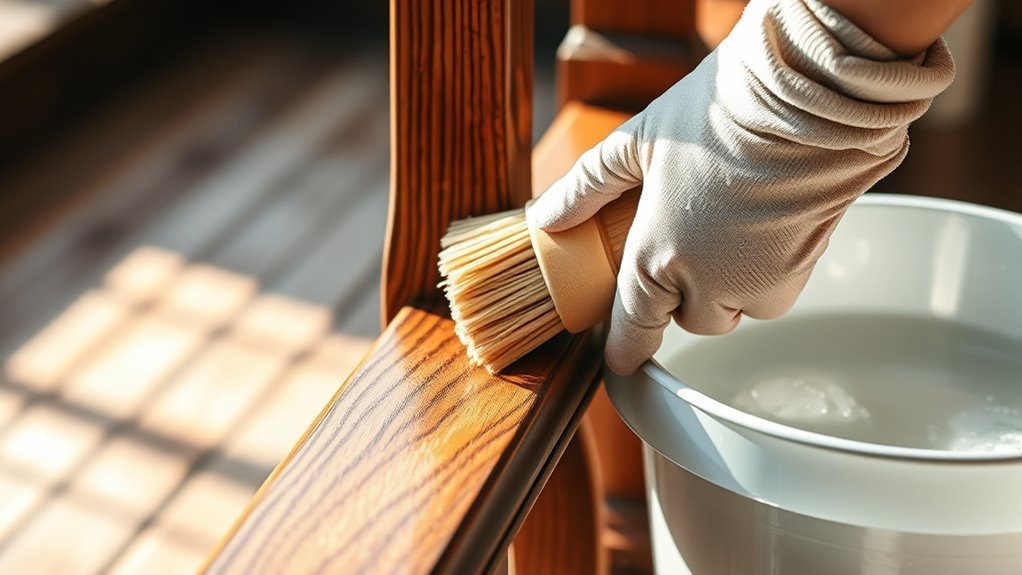
Cleaning wood railing may seem straightforward, but it requires careful attention to detail to avoid damaging the wood. In this article, you’ll discover essential steps tailored to different wood types, such as oak and pine, ensuring you know how to properly care for your railing. We’ll discuss the importance of maintaining a regular cleaning schedule, especially for railings exposed to the elements, to prevent dirt buildup and preserve the wood’s aesthetic appeal. Additionally, you’ll learn about the best cleaning products to use, focusing on gentle options that protect the finish rather than strip it away. By following our expert guidance, you’ll be equipped with the knowledge to keep your wood railing looking beautiful and enduring for years to come.
Preparation For Cleaning
Before you start cleaning your wood railing, it’s important to gather the right tools and materials. Begin by doing a thorough surface inspection. Look for any signs of damage, dirt buildup, or discoloration, as this will help you choose the best approach for cleaning. Next, collect your cleaning supplies. You’ll need a gentle cleaner suitable for wood, soft cloths, and possibly a sponge or brush for tougher spots. Don’t forget to have water on hand for rinsing. Preparing your space is also key; clear away any obstacles around the railing. This way, you’ll have the freedom to move easily while you work. Taking these steps will guarantee a more efficient and effective cleaning process. It is also advisable to use plant-based solutions as gentle cleaners that maintain the wood’s integrity during cleaning.
Tools and Chemical Required
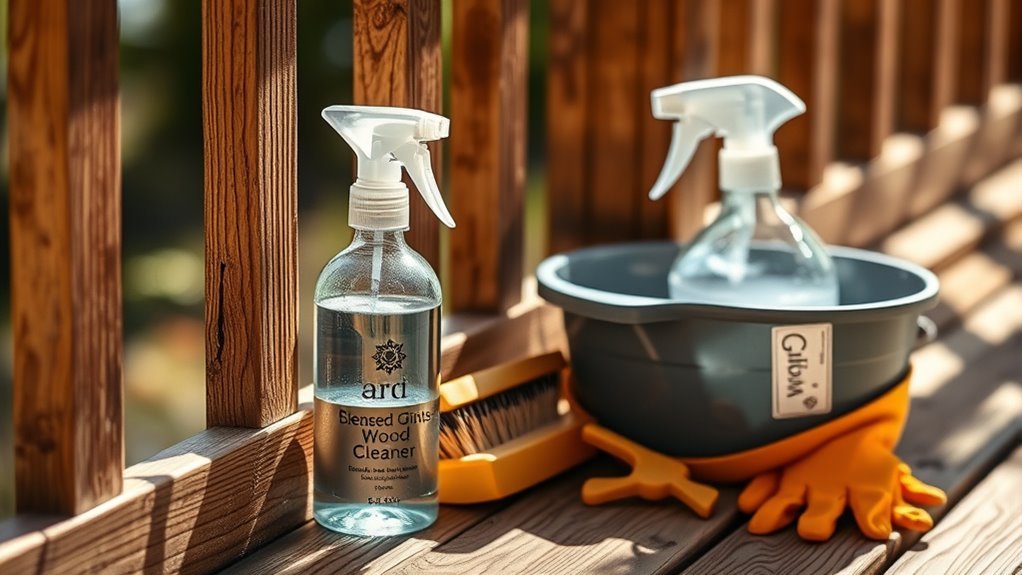
To effectively clean wood railing, you’ll need a few essential tools and chemicals. Be certain you gather the right items before diving into the cleaning process. Here’s a handy table to help you out:
| Tools | Chemicals |
|---|---|
| Scrubbing brushes | Mild dish soap |
| Soft cloths | Vinegar solution |
| Buckets | Wood cleaner |
| Garden hose or spray bottle | Bleach (optional) |
With these tools and cleaning solutions, you’re set to tackle dirt and grime. Scrubbing brushes will help reach crevices, while soft cloths guarantee a gentle touch on the wood surface. Don’t forget to choose environmentally friendly options when possible for a cleaner experience! Using a mixture of vinegar and baking soda can provide a natural and effective cleaning method that’s safe for most wood surfaces, but always test on a small area first to avoid damage to the wood finish.
How to Clean:
Step 1: Gather Your Tools and Cleaning Solutions
- Collect all necessary cleaning materials before starting. You will need:
- Soft cloth or broom for dusting
- A suitable cleaning solution (mild soap, vinegar, or a commercial wood cleaner)
- Sponge or soft-bristle brush
- Damp cloth or hose for rinsing
- Sealant (if needed)
Step 2: Dust Off Loose Debris
- Begin by removing any dust and loose debris from the wood railing.
- Use a soft cloth or broom to gently wipe the surface.
- Ensure you reach all corners and crevices to remove any accumulated dirt.
Step 3: Prepare the Cleaning Solution
- Mix your chosen cleaning solution as per the manufacturer’s instructions.
- If using a homemade solution, a mixture of warm water and mild soap or vinegar works well.
- Make sure to stir thoroughly to ensure the solution is well combined.
Step 4: Apply the Cleaning Solution
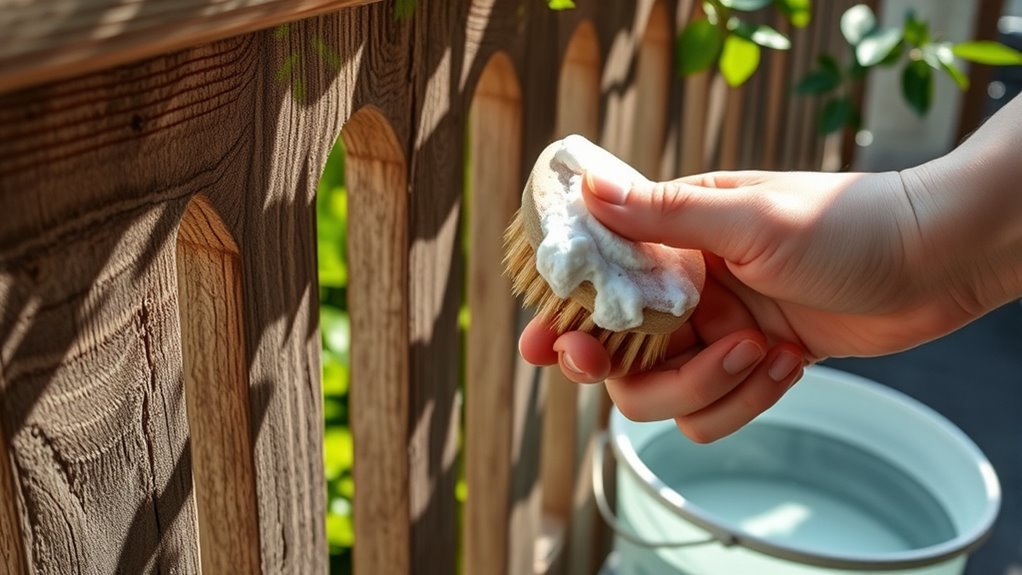
- Using a sponge or soft-bristle brush, apply the cleaning solution to the wood.
- Always work in the direction of the wood grain to prevent damage.
- Apply the solution generously but avoid soaking the wood.
Step 5: Rinse the Wood Railing
- After scrubbing, it’s crucial to rinse off the cleaning solution.
- Use a damp cloth to wipe down the railing or a hose to gently rinse.
- Be careful not to soak the wood; the goal is to remove any residual cleaning solution.
Step 6: Dry the Wood Completely
- Allow the wood railing to dry completely before taking any further steps.
- You can speed up the drying process by using a dry cloth to wipe off excess moisture.
- Ensure it is fully dry to prevent any moisture damage or mold growth.
Step 7: Apply Sealant (if needed)
- If your wood railing requires sealant, apply it only after the wood is completely dry.
- Choose an appropriate sealant for wood and follow the instructions for application.
- This step will help protect the railing from future damage and extend its lifespan.
Step 8: Regular Maintenance
- Incorporate these cleaning techniques into your regular maintenance routine.
- Regular cleaning will keep your railing looking great and prolong its life.
- Avoid using abrasive tools that can scratch and damage the wood surface.
- Enjoy your space without worry, knowing your wood railing is well-maintained!
Safety Consideration
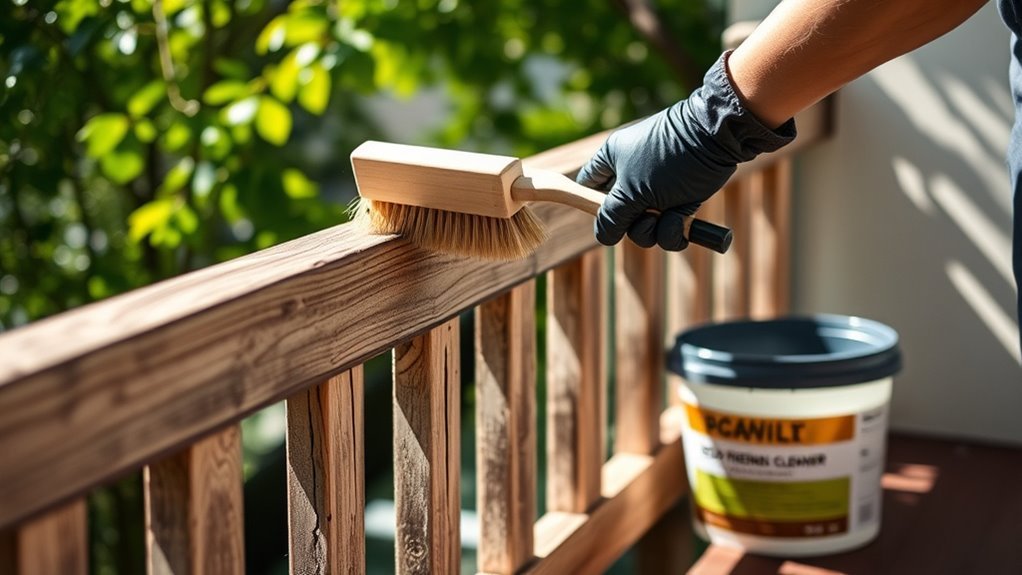
While cleaning your wood railing can rejuvenate its appearance, it’s essential to prioritize safety throughout the process. You want to enjoy the freedom of a fresh look without any accidents. Always wear protective gear to shield yourself from any harmful chemicals in cleaning solutions. Additionally, be aware of slip hazards that can occur, especially if you’re working with water or cleaning agents.
- Use non-slip footwear for better grip.
- Confirm the area is well-ventilated to avoid inhaling fumes.
- Keep tools and cleaning supplies organized to prevent tripping.
Be sure to read and follow product precautions on cleaning labels to ensure safe and effective use of disinfectants.
Tips to keep clean for long time
After ensuring your safety during the cleaning process, maintaining the cleanliness of your wood railing is key to its longevity and aesthetic appeal. To keep your railing looking great, commit to regular maintenance. Dust and wipe down the surface weekly to prevent dirt buildup. Every few months, check for any signs of wear, and reapply protective finishes as needed. These finishes not only enhance the railing’s natural beauty but also shield it from moisture and UV damage. If you notice any scratches or stains, address them promptly to avoid further deterioration. Using non-abrasive cleaners can help preserve the wood’s finish while cleaning. With a little effort and care, your wood railing can remain a stunning feature of your home for years to come, giving you the freedom to enjoy its beauty without worry.
Frequently Asked Questions
Can I Use Vinegar for Cleaning Wood Railing?
Yes, you can use vinegar for cleaning wood railing! Vinegar’s benefits include its natural ability to cut through grime and disinfect surfaces without harsh chemicals. Mix equal parts vinegar and water for an effective cleaning solution. Just be sure to test it on a small area first to verify it doesn’t damage the finish. With a little elbow grease, you’ll have your railing looking fresh and clean, allowing you to enjoy your space freely!
How Often Should I Clean Wood Railings?
You should clean your wood railings at least once every season to maintain their beauty and integrity. Regular cleaning frequency helps prevent dirt buildup and potential damage. Consider using gentle, non-abrasive cleaners to protect the wood. If your railings are exposed to harsh weather, you might need to clean them more often. Following these maintenance tips keeps your railings looking great and guarantees they last longer, giving you the freedom to enjoy your space!
Is Pressure Washing Safe for Wood Railings?
Pressure washing can be risky for wood railings. While it offers a quick clean, it can strip away protective layers and damage the wood, much like a tempest can erode a shoreline. For effective wood maintenance, consider gentler methods, like using a soft brush and mild detergent. This way, you preserve the beauty and integrity of your railings, ensuring they stand strong against the elements, giving you the freedom to enjoy your space worry-free.
What Types of Wood Are Most Durable for Railings?
Teak wood and oak wood are two of the most durable options for railings. Teak’s natural oils make it resistant to moisture and decay, perfect for outdoor settings. Oak, on the other hand, offers strength and stability, making it a classic choice for any style. When you’re looking for longevity and minimal upkeep, these woods stand out. They’ll not only enhance your space but also give you the freedom to enjoy it worry-free!
How Can I Remove Stains From Wood Railing?
To remove stains from your wood railing, start by mixing equal parts vinegar and water for a natural cleaning solution. Picture the sun filtering through the leaves as you gently scrub the stained area with a soft cloth. If the stain’s stubborn, try a commercial stain removal product designed for wood. Rinse thoroughly and let it dry. You’ll feel that sense of freedom in restoring your railing’s beauty and protecting it for years to come.