How to Clean Your Laminate Safely
To clean your laminate safely, pick cleaners labeled safe for laminate and avoid harsh chemicals that can scratch or dull your floor. Start by removing furniture and dust with a microfiber cloth or soft broom. Use a damp, not soaking wet, mop to clean without warping the surface. Quickly blot spills with a soft cloth and treat stains gently. Taking these steps will keep your floor looking fresh and protected, and there are even more tips to help you maintain it perfectly.
Choosing the Right Cleaning Products
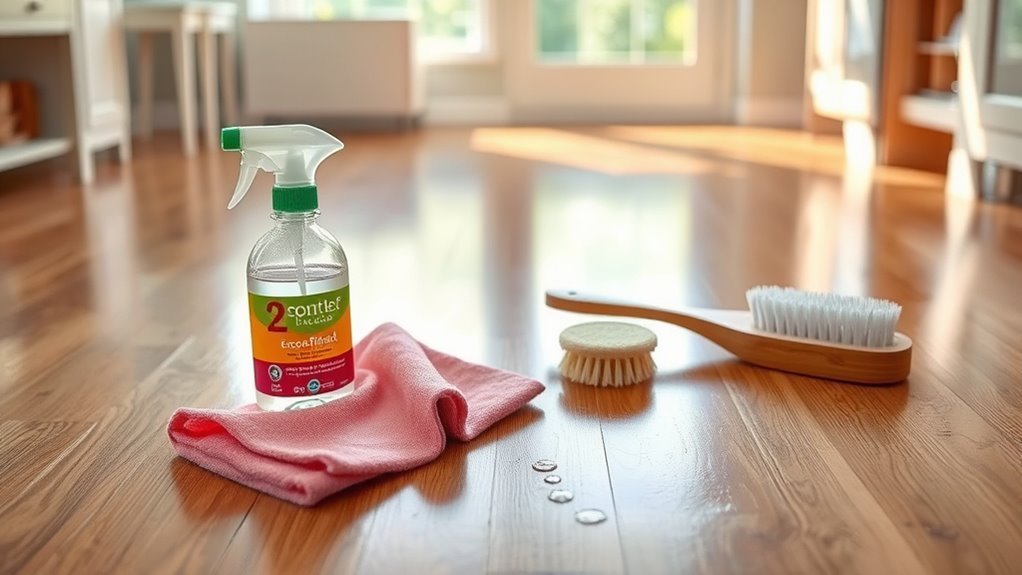
Although you might be tempted to use any cleaner you have on hand, choosing the right cleaning products for laminate is crucial to avoid damage. You want products that respect your floor’s finish while giving you the freedom to clean without worry. Look for eco friendly options that are gentle yet effective—these not only protect your health but also the planet. Always check product compatibility with laminate surfaces; harsh chemicals or abrasive cleaners can cause scratches or dullness. Sticking to products labeled safe for laminate guarantees you maintain that fresh, vibrant look. By picking the right cleaner, you’re freeing yourself from the stress of accidental harm and embracing a simple, responsible approach to keeping your floors pristine.
Preparing Your Laminate Floor for Cleaning
Before you start cleaning, it’s important to prepare your laminate floor properly to secure the best results and prevent damage. Begin by removing any furniture or rugs that might get in your way, giving you full freedom to move around. Check your cleaning equipment to make sure it’s suitable for laminate—avoid anything too abrasive that could scratch the surface. Inspect the floor for stubborn spots or sticky residues and plan to treat them carefully. Proper floor maintenance starts with this thoughtful prep, setting the stage for effective cleaning without risking harm. Taking these steps not only protects your floor but also makes the cleaning process smoother and more efficient, letting you enjoy a fresh, spotless space with minimal effort.
Effective Techniques for Dusting and Sweeping
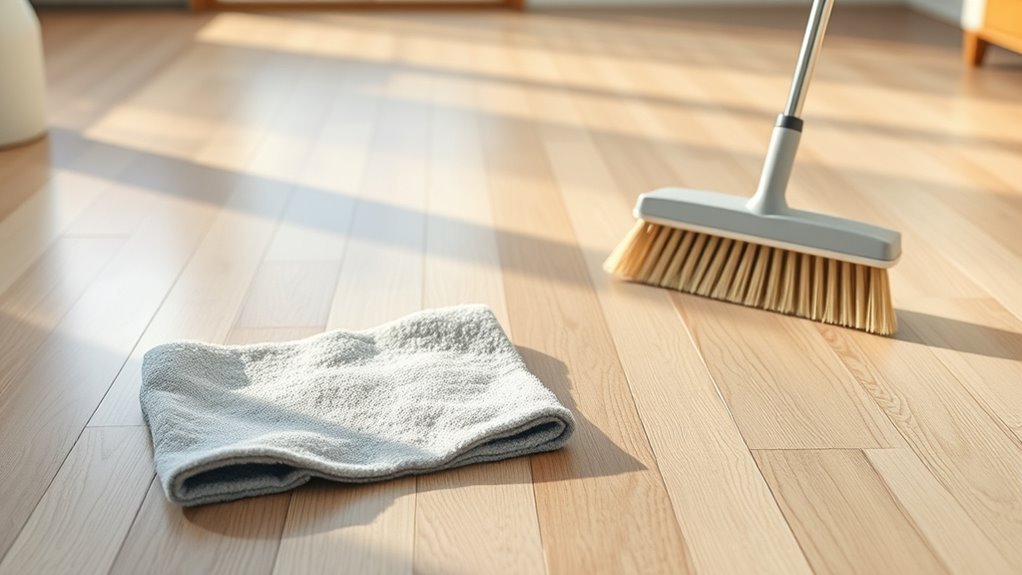
Once you’ve prepared your laminate floor, dusting and sweeping are essential steps to keep dirt and debris from scratching the surface. Using the right dusting tools, like microfiber cloths, helps trap dust without spreading it around. You want to move freely and quickly, so your laminate stays spotless without extra effort.
Here’s a quick guide to effective dusting and sweeping:
| Tool Type | Best Use |
|---|---|
| Microfiber Cloths | Quick dusting of small areas |
| Soft Broom | Sweeping larger debris |
| Dust Mop | Covering wide floor spaces |
Choose tools that glide smoothly, and dust regularly to protect your floor’s finish and enjoy the freedom of a clean, scratch-free space.
Safe Methods for Mopping Laminate Floors
Mopping your laminate floors the right way is key to keeping them clean without causing damage. Choose mop types that won’t saturate your floor—microfiber mops or flat mops work best because they use minimal water. Avoid string mops that hold too much liquid, which can seep into seams and cause swelling. Stick to a damp mop rather than soaking wet. As for cleaning frequency, mop your floors once a week or whenever you notice dirt build-up. Over-mopping can wear down the protective layer, while too little can leave grime behind. Remember, your goal is to refresh your floors, not drench them. With the right mop and balanced cleaning frequency, your laminate will stay beautiful and durable, giving you the freedom to enjoy your space worry-free.
Handling Spills and Stains Without Damage
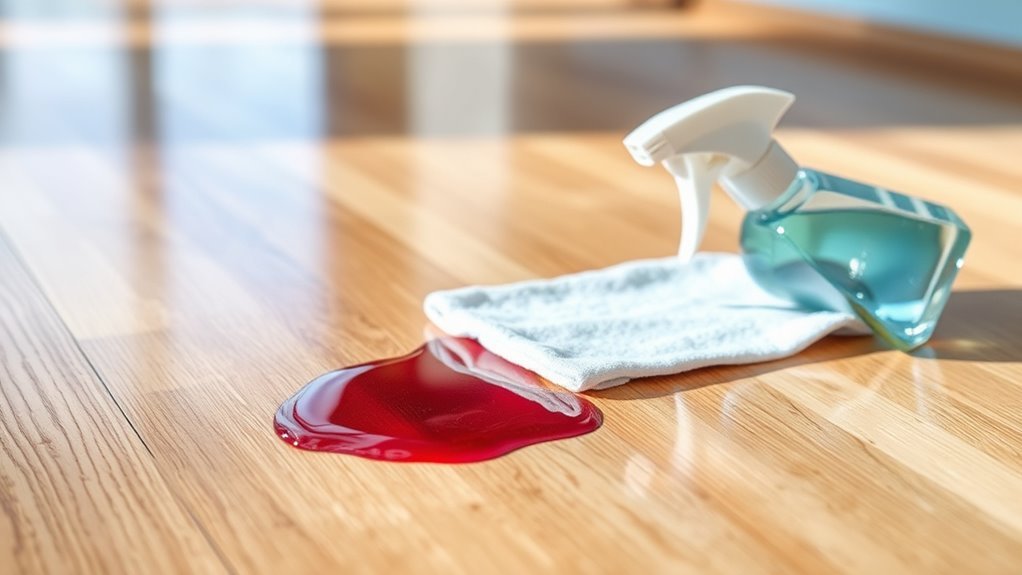
Dealing with spills quickly is essential to prevent stains and water damage on your laminate floors. When something spills, grab a clean, soft cloth and blot it up immediately—don’t rub, as that can spread the stain. For stain removal, use a gentle cleaner designed for laminate or a mix of water and vinegar; avoid harsh chemicals that can damage the surface. Spill prevention is all about staying proactive—place mats in high-traffic areas and keep food and drinks in designated spots. If you catch spills early and clean them properly, you’ll protect your floors without hassle. By handling spills and stains carefully, you maintain your laminate’s look and feel, giving you the freedom to enjoy your space without worry.
Frequently Asked Questions
Can Laminate Floors Be Cleaned With Vinegar or Homemade Solutions?
Think of your laminate floors as the foundation of your home’s freedom—solid yet delicate. You can use a gentle vinegar solution or homemade cleaners to keep them shining, but you’ve got to be careful. Too much acidity or harsh ingredients can strip away their protective layer, limiting their lifespan. So, dilute vinegar well and avoid soaking. This way, you maintain your floors’ beauty and your freedom to walk barefoot without worry.
How Often Should I Deep Clean My Laminate Flooring?
You should aim for a deep cleaning frequency of about once every 1 to 3 months to keep your laminate floors looking fresh and lasting longer. This balance in laminate care lets you enjoy your space without feeling tied down by constant upkeep. If you have pets or kids, you might want to deep clean more often. Just remember, regular light cleaning between deep cleans helps maintain freedom from dirt buildup.
Are Steam Cleaners Safe for Laminate Floors?
You might wonder about steam cleaner effectiveness on laminate floors. While steam cleaners can sanitize, they often release heat and moisture that may damage laminate floor maintenance efforts. So, it’s best to avoid them if you want to keep your floors looking great and lasting longer. Instead, stick to gentle cleaning methods that preserve your freedom to enjoy your space without worrying about warping or peeling.
What Should I Avoid Placing on Laminate Floors to Prevent Damage?
You’ll want to avoid placing heavy furniture directly on laminate floors—use furniture pads to prevent scratches and dents. Also, stay clear of moisture buildup; water and spills can cause swelling or warping, so moisture control is key. Don’t drag anything across the floor, and keep rubber mats or non-breathable rugs off, as they can trap moisture. By taking these steps, you’ll keep your laminate looking great while enjoying your space freely.
Can Laminate Flooring Be Refinished or Repaired if Scratched?
If you’ve got scratched laminate, don’t worry—you can’t refinish it like hardwood, but laminate repair kits work wonders. These kits usually include putty or markers that match your floor’s color, letting you fix minor scratches and chips yourself. For deeper damage, you might need to replace the affected plank. So, while you can’t sand it down, you still have plenty of freedom to keep your floor looking great with simple laminate repair methods.