How to Clean Your Sofa Safely
To clean your sofa safely, first identify its fabric type using the care tag or a damp cloth test. Gather cleaning supplies suited for your material, then perform a spot test on a hidden area to avoid damage. Vacuum thoroughly, including under cushions, to remove dust. Treat stains with gentle cleaners and let your sofa dry completely in a well-ventilated space out of direct sunlight. Follow these steps to keep your sofa fresh, and you can explore easy ways to maintain it longer.
Identify Your Sofa’s Fabric Type
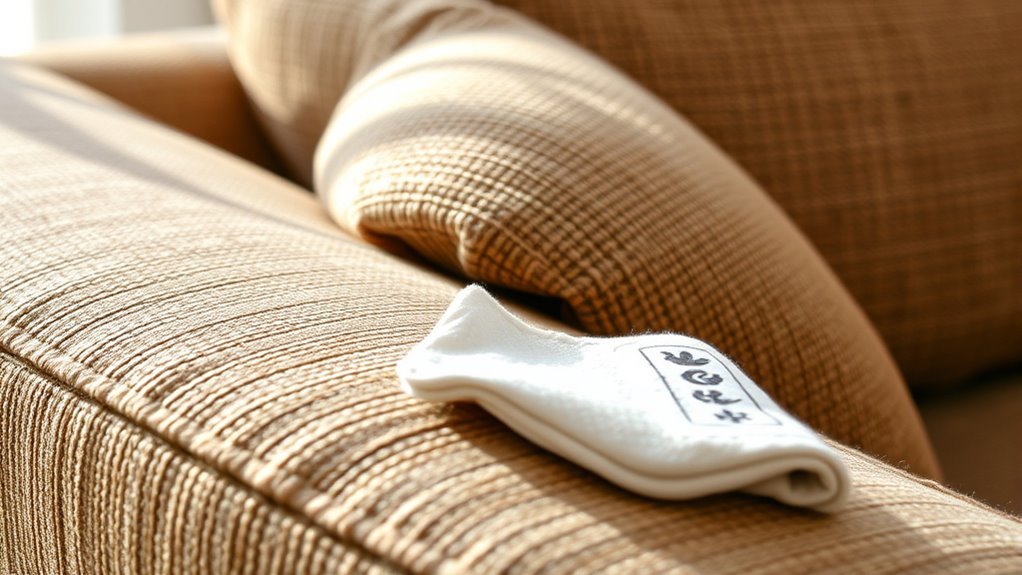
Before you start cleaning, you’ll need to identify your sofa’s fabric type because different materials require different care methods. To enjoy the freedom of cleaning confidently, use simple fabric identification methods. Check the manufacturer’s tag—it usually reveals the sofa material care instructions or fabric code. If the tag’s missing, test a hidden area by lightly rubbing a damp cloth to see how the material reacts. Natural fibers like cotton or linen absorb moisture differently than synthetics such as polyester or microfiber. Knowing your sofa’s fabric type guarantees you pick the safest cleaning approach, avoiding damage and preserving its look. This step empowers you to maintain your sofa without restrictions, keeping it fresh and inviting for years to come.
Gather the Right Cleaning Supplies
Once you know your sofa’s fabric, you can gather the right cleaning supplies tailored to its needs. Choosing appropriate cleaning tools and safe materials guarantees you protect your investment while maintaining freedom from harsh chemicals. Here’s a quick guide to what you might need:
| Fabric Type | Recommended Cleaning Tools | Safe Materials |
|---|---|---|
| Leather | Soft cloth, vacuum with brush | Mild soap, leather conditioner |
| Microfiber | Soft brush, lint roller | Rubbing alcohol, water |
| Cotton/Polyester | Vacuum, soft-bristle brush | Mild detergent, water |
| Velvet | Soft brush, vacuum with upholstery attachment | Mild detergent, water |
With the right supplies, you’re ready to clean confidently and safely, keeping your sofa fresh without risking damage.
Perform a Spot Test Before Cleaning
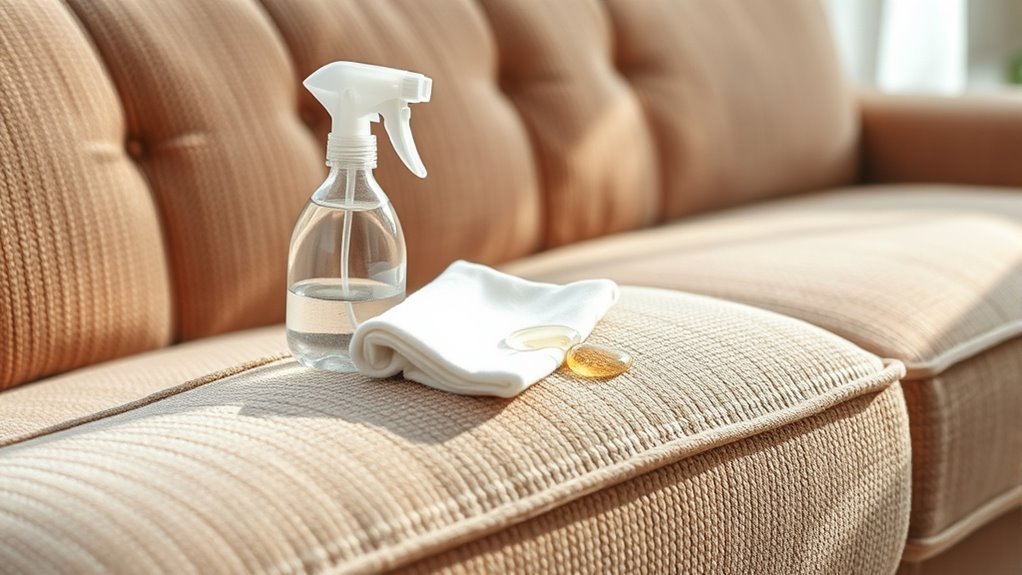
Your sofa’s fabric can react unpredictably to cleaning solutions, so you’ll want to perform a spot test before applying any product broadly. This simple step guarantees fabric compatibility and prevents damage or discoloration. Choose an inconspicuous area, like the back or underside of a cushion, and apply a small amount of your cleaning solution. Wait a few minutes to see if any adverse reaction occurs, such as fading, staining, or texture changes. If everything looks good, you’re free to proceed with spot cleaning the rest of your sofa confidently. Skipping this test might limit your freedom to clean effectively and safely, so take this precaution seriously to keep your sofa looking fresh without risking costly mistakes.
Vacuum Your Sofa Thoroughly
Vacuuming your sofa thoroughly is an essential step to remove dust, dirt, and debris trapped deep in the fabric and crevices. To do this effectively, use the sofa attachments on your vacuum cleaner—these are designed to reach tight spots without damaging your upholstery. Adjust your vacuum settings to a lower suction if you have delicate fabric; stronger suction works well for durable materials but might harm sensitive ones. Don’t forget to remove cushions and vacuum underneath them, as dirt tends to accumulate there. Taking the time to vacuum every nook and cranny not only keeps your sofa looking fresh but also improves air quality around you. This simple step empowers you to maintain a clean, inviting space effortlessly.
Treat Stains With Appropriate Solutions

Although stains can be frustrating, treating them promptly with the right solutions is key to preserving your sofa’s appearance. When you spot a spill, don’t wait—grab a suitable cleaning agent designed for your sofa’s fabric. For example, water-based stains respond well to mild soap and water, while oil-based stains might need a solvent-based cleaner. Always test any cleaning agents on a hidden area first to avoid damage. Dab the stain gently instead of rubbing; this helps prevent spreading or deeper fabric penetration. By acting quickly and choosing the proper stain removal method, you maintain your sofa’s fresh look and extend its life. Taking control with the right cleaning agents gives you the freedom to enjoy your space without worry.
Use Gentle Cleaning Techniques
You’ll want to choose mild cleaning solutions that won’t damage your sofa’s fabric. Always test any cleaner on a small, hidden area first to make sure it won’t cause discoloration or harm. Taking these gentle steps helps keep your sofa looking fresh without risking damage.
Choose Mild Cleaning Solutions
When cleaning your sofa, it’s important to opt for mild solutions that won’t damage the fabric or cause discoloration. You want to keep your space fresh without locking yourself into harsh chemicals. Choosing eco friendly options lets you protect both your sofa and the environment, giving you the freedom to maintain a healthy home. Homemade cleaners are a great choice—simple mixes like diluted white vinegar or gentle dish soap can tackle stains without overwhelming your fabric. These solutions are easy to customize and safe to use regularly. Remember, mild doesn’t mean ineffective; it means smart. By picking gentle, natural cleaners, you preserve your sofa’s look and feel while staying true to your values. It’s cleaning that respects your freedom and your furniture.
Test Fabric Before Cleaning
How can you be sure your cleaning method won’t harm your sofa’s fabric? Before diving in, always test your chosen cleaning methods on fabric swatches or a hidden area. This simple step gives you the freedom to clean confidently, without risking discoloration or damage. Start with gentle cleaning techniques, like using a mild detergent diluted in water or a soft cloth. Apply a small amount to the swatch, wait a few minutes, then check for any changes. If the fabric reacts well, you’re good to proceed. If not, try another method or solution. Testing first saves you from costly mistakes and keeps your sofa looking fresh and vibrant, allowing you to enjoy your space without worry.
Allow Your Sofa to Dry Properly
After cleaning, you’ll want to make sure your sofa dries thoroughly to prevent mold and odors. Keep the area well-ventilated to promote air circulation, but avoid placing your sofa in direct sunlight, which can fade the fabric. Proper drying helps maintain your sofa’s look and longevity.
Importance of Air Circulation
Because moisture can easily get trapped in your sofa’s fabric and cushions, ensuring proper air circulation is essential to avoid mold and unpleasant odors. Good air quality depends on effective ventilation methods, letting your sofa dry faster and fresher. You want your space to feel open and free, so here’s a simple guide to keep airflow moving:
| Ventilation Method | Benefit | Tip |
|---|---|---|
| Open windows | Fresh air circulation | Use cross-ventilation |
| Fans | Speeds up drying | Position near sofa |
| Dehumidifiers | Removes excess moisture | Place close to damp areas |
| Air purifiers | Improves air quality | Use regularly |
| Ceiling fans | Enhances airflow | Keep on low speed |
Avoid Direct Sunlight
While direct sunlight might seem like a quick way to dry your sofa, it can actually damage the fabric and cause fading. You want your sofa to look great for years, so avoiding excessive sunlight exposure is key. Instead, let your sofa dry naturally in a shaded, well-ventilated area where air can circulate freely. This approach prevents the harsh rays from breaking down fibers and dulling colors, preserving the vibrant look you love. Remember, quick fixes like placing your sofa under direct sun might feel tempting, but they sacrifice longevity for speed. Give your sofa the freedom to dry gently, and you’ll maintain its beauty without risking fabric fading or damage. Patience here means your sofa stays fresh and strong longer.
Maintain Your Sofa’s Cleanliness Regularly
Regularly maintaining your sofa’s cleanliness is key to keeping it looking fresh and extending its lifespan. By sticking to a regular cleaning schedule, you take control of your living space, avoiding buildup of dust, dirt, and allergens that can weigh you down. Simple sofa maintenance tips like vacuuming weekly and promptly addressing spills empower you to preserve your sofa’s appearance without hassle. Don’t wait for stains to set or odors to linger—consistent care frees you from tough, time-consuming cleanups later. Embrace this routine as a way to enjoy your home fully and comfortably. With minimal effort, your sofa stays inviting and vibrant, giving you the freedom to relax and live your way. Prioritize regular upkeep and watch your sofa thrive alongside your lifestyle.
Frequently Asked Questions
Can Professional Cleaning Services Damage My Sofa?
You might worry if professional cleaning services can damage your sofa, but generally, they won’t—especially if they understand different fabric types and use the right cleaning products. Professionals know how to tailor their methods to your sofa’s material, preventing harm while freeing you from tough stains. Just make sure you choose a reputable service that respects your furniture’s unique needs, so your sofa stays safe and looks great without you lifting a finger.
How Often Should Deep Cleaning Be Scheduled?
You should aim for deep cleaning frequency of your sofa about once or twice a year to keep it fresh and inviting. Of course, if you have pets or kids, you might want to do it more often. Regular sofa maintenance tips include vacuuming weekly and spot-cleaning spills right away. Staying on top of these habits lets you enjoy your sofa freely without worrying about stubborn dirt or stains building up over time.
Are Steam Cleaners Safe for All Sofa Types?
When it comes to steam cleaner types, you can’t paint with too broad a brush. Not all sofas are steam-cleaner friendly; fabric compatibility is key. Delicate materials like silk or velvet might get damaged, while synthetic fabrics often handle steam well. You’ll want to check your sofa’s care tag and choose a steam cleaner with adjustable settings to keep your freedom intact—clean smartly without boxing yourself in or risking a costly mistake.
What Are Eco-Friendly Cleaning Alternatives?
If you want freedom from harsh chemicals, try natural cleaning solutions like vinegar and baking soda—they’re gentle and effective. You can also use biodegradable products that break down easily, keeping your space and the planet safe. These eco-friendly alternatives let you clean without worry, giving you peace of mind while caring for your sofa. Embrace these options to maintain a fresh, healthy home environment naturally.
Can Pets Affect Sofa Cleaning Methods?
Oh, sure, pets make cleaning your sofa a breeze—if you love endless pet hair and mysterious stains! You’ll quickly learn pet hair clings like it owns the place, and stain removal gets trickier with every paw print. But hey, embracing this chaos means you get creative and free with your cleaning methods. You can’t just grab any cleaner; you’ve got to pick ones that handle pet messes gently while keeping your sofa comfy and vibrant.