How to Keep a Pool Clean Without Chlorine
To keep your pool clean without chlorine, consider saltwater systems or UV light for effective sanitization. Regularly skim the surface and scrub the walls and floor to remove debris. Use a quality water test kit to monitor chemistry, maintaining proper pH levels with alternatives like vinegar. Guarantee efficient water circulation by running your filtration system daily. Also, keep the area around the pool tidy and safe. There’s more to maintaining a pristine pool that you’ll want to know.
##

If you’re looking to maintain a pristine pool without the use of chlorine, you’ve come to the right place. This article will guide you through various alternative sanitization methods that not only keep your water clean but also enhance your overall swimming experience. From saltwater systems that minimize the harsh effects of traditional chemicals to UV light systems that effectively eliminate harmful pathogens, we’ll cover the most effective strategies for achieving a refreshing, chemical-free pool. Additionally, we will discuss the importance of proper water circulation and maintenance practices that play a crucial role in enhancing water clarity and cleanliness. By the end of this article, you’ll be well-equipped with the knowledge to create a healthier and more enjoyable swimming environment for you and your family.
Preparation For Cleaning
Before diving into the cleaning process, it’s essential to gather the right tools and prepare your pool area to guarantee an efficient and effective cleaning session. A well-organized space helps you stick to your cleaning schedule and maintain your pool effortlessly.
Gathering the right tools and organizing your pool area ensures an efficient and effective cleaning process.
Here are a few items to have on hand:
- Skimmer net: To remove leaves and debris from the surface.
- Pool brush: For scrubbing the walls and floor.
- Vacuum: To clean up sediment and dirt that settles on the bottom.
Tools and Chemical Required

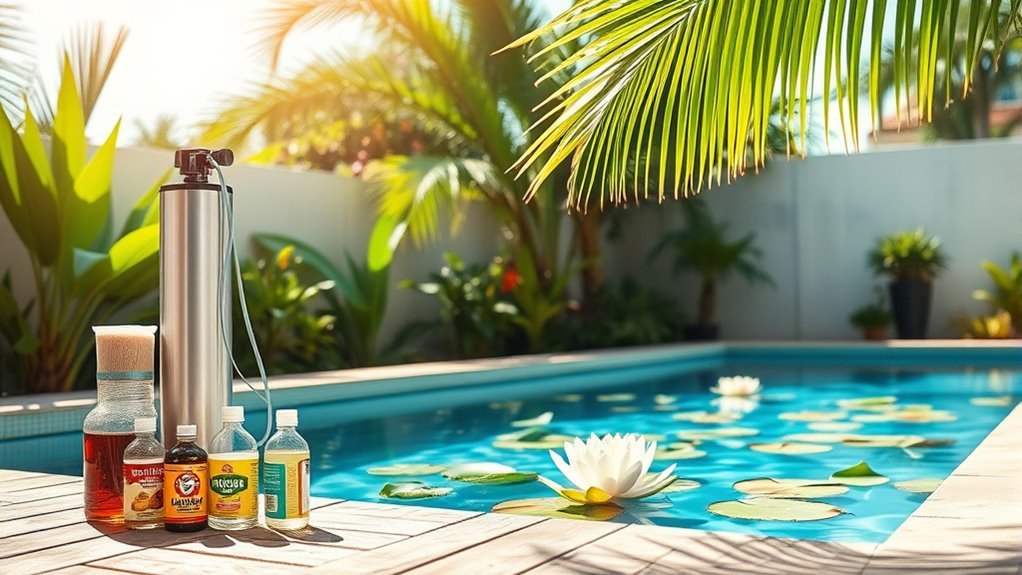
To maintain a chlorine-free pool, you’ll need a few essential tools and natural alternatives that help keep your water clean and clear. Investing in the right cleaning equipment guarantees your pool stays inviting. Here’s a handy table to guide you:
| Tool/Chemical | Purpose | Natural Alternative |
|---|---|---|
| Pool Skimmer | Removes debris from the surface | Leaf rake |
| Pool Vacuum | Cleans the pool floor | Baking soda solution |
| Water Test Kit | Monitors water chemistry | Vinegar for pH balancing |
| Filter System | Circulates and cleans water | Sand filter |
| Algaecide | Prevents algae growth | Hydrogen peroxide |
With these tools and natural alternatives, you’ll enjoy a clean pool without the harshness of chlorine.
How to Clean:
Sure! Here’s a step-by-step guide on how to clean a chlorine-free pool, organized using headings and bullet points for clarity.
Step 1: Regular Skimming
- Frequency: Skim the pool surface daily.
- Tools Needed: Use a pool skimmer net.
- Procedure:
- Hold the skimmer net over the pool surface.
- Move the net in a slow, sweeping motion to collect leaves, insects, and debris.
- Dispose of the collected debris in a trash bag or compost bin.
- Benefits: This prevents dirt buildup and keeps the water looking clear and inviting.
Step 2: Brushing Walls and Floor
- Frequency: Brush the pool surfaces weekly.
- Tools Needed: Use a pool brush with a telescoping pole.
- Procedure:
- Start at the top of the walls and work your way down to the floor.
- Use a back-and-forth motion to remove algae and grime from walls and steps.
- Ensure to pay extra attention to corners and the waterline where buildup is common.
- Benefits: Regular brushing helps maintain a smooth surface and prevents algae growth.
Step 3: Water Circulation
- Frequency: Run the filtration system consistently, ideally 8-12 hours a day.
- Tools Needed: Pool filtration system.
- Procedure:
- Turn on the filtration system and ensure it is functioning properly.
- Check that the filter is clean and replace or backwash as needed.
- Monitor water flow to ensure proper circulation throughout the pool.
- Benefits: Keeping the water moving helps distribute natural cleaning agents evenly and prevents stagnation.
Step 4: Monitor Water Chemistry
- Frequency: Test water chemistry weekly.
- Tools Needed: Water testing kits or strips.
- Procedure:
- Collect a water sample from elbow depth in the pool.
- Follow the instructions on the testing kit to measure pH, alkalinity, and other factors.
- Adjust water chemistry as needed using natural alternatives like baking soda or vinegar.
- Benefits: Maintaining balanced water chemistry is essential for a healthy swimming environment.
Step 5: Maintain Surrounding Areas
- Frequency: Check the pool area weekly.
- Tools Needed: Broom or leaf blower.
- Procedure:
- Sweep or blow away leaves, dirt, and debris from around the pool deck.
- Inspect and clean any furniture or accessories around the pool.
- Ensure that the drainage system is clear to avoid water pooling around the pool area.
- Benefits: A clean surrounding area helps prevent debris from entering the pool and maintains a pleasant atmosphere.
Safety Consideration
Even though maintaining a chlorine-free pool can be rewarding, it’s crucial to prioritize safety to guarantee a pleasant swimming experience. First, confirm proper filtration and circulation to minimize harmful bacteria and algae growth. Regularly monitor water quality using test kits, as chemical exposure—even from natural alternatives—can pose risks. Always keep pool areas clear of debris and hazards to promote pool safety. Educate everyone about safe pool behavior, especially children, to avoid accidents. Additionally, consider using pool covers when not in use to prevent contaminants and reduce evaporation. Finally, make certain that any alternative sanitizers you choose are safe for both swimmers and the environment. By implementing these practices, you’ll enjoy a clean and safe swimming environment.
Tips to keep clean for long time
Maintaining a clean pool for the long haul requires consistent effort and a few strategic practices. By embracing natural alternatives and committing to regular maintenance, you can enjoy a sparkling oasis all season long. Here are some effective tips:
- Use a pool cover: This prevents debris from entering and minimizes cleaning time.
- Regularly test the water: Keeping an eye on pH and alkalinity helps maintain balance, reducing algae growth.
- Incorporate plants: Adding native aquatic plants can naturally filter water, enhancing its cleanliness.
Frequently Asked Questions
Can I Use Saltwater Instead of Chlorine for Pool Maintenance?
Yes, you can use saltwater systems for pool maintenance instead of chlorine. Saltwater pools generate chlorine through electrolysis, providing a gentler option for sanitizing your water. This method often results in softer water, reducing skin and eye irritation. While you’ll still need to monitor your salt levels and pH balance, many find this system more convenient and cost-effective in the long run. Plus, it gives you a more natural swimming experience.
How Often Should I Clean a Chlorine-Free Pool?
You should clean a chlorine-free pool at least once a week, as studies show that regular maintenance can reduce algae growth by up to 90%. For ideal cleaning frequency, consider skimming debris daily, while vacuuming and brushing should happen weekly. Incorporate maintenance tips like using enzyme-based cleaners to break down organic matter, and invest in a quality filter system to guarantee your pool remains crystal clear and inviting. Enjoy your freedom from harsh chemicals!
Are There Natural Alternatives to Chlorine for Pool Sanitation?
Yes, there are several natural pool options for sanitation. Consider using eco-friendly sanitizers like saltwater systems, which produce chlorine naturally, or mineral systems that utilize minerals like copper and silver to inhibit algae and bacteria growth. You might also explore ultraviolet (UV) light systems, which effectively kill pathogens without chemicals. Each option offers a unique approach, allowing you to enjoy a clean pool while embracing a more sustainable, chemical-free lifestyle.
Will Non-Chlorine Methods Affect Water Temperature?
Non-chlorine methods typically won’t affect water temperature considerably. While some alternatives like saltwater systems can create a slight difference, it’s usually negligible. You’ll find that maintaining proper water temperature relies more on your pool’s environment and heating systems than the sanitation method you choose. So, you can enjoy a clean pool with various non-chlorine methods without worrying about losing that rejuvenating swim experience you love.
Can I Use a Solar Cover With a Chlorine-Free Pool?
Yes, you can definitely use a solar cover with a chlorine-free pool! In fact, a solar cover offers several benefits, like helping to retain heat and reduce evaporation. This can save you on water and heating costs. For effective pool maintenance, remember to clean the cover regularly and check for debris. Using a solar cover also helps keep your pool cleaner, giving you more freedom to enjoy your oasis without constant upkeep.