How to Make Homemade Germs Cleaner
You can make an effective homemade germ cleaner using simple ingredients like white vinegar, hydrogen peroxide, baking soda, and essential oils. Mix equal parts white vinegar and water with a few drops of essential oil for daily disinfecting, or combine hydrogen peroxide and water for a stronger cleaner. Baking soda helps scrub surfaces and deodorize. Store your mixtures safely in labeled bottles away from children. Keep going to discover how to tailor these cleaners for different surfaces and maximize their germ-fighting power.
Essential Ingredients for Effective Homemade Germ Cleaners
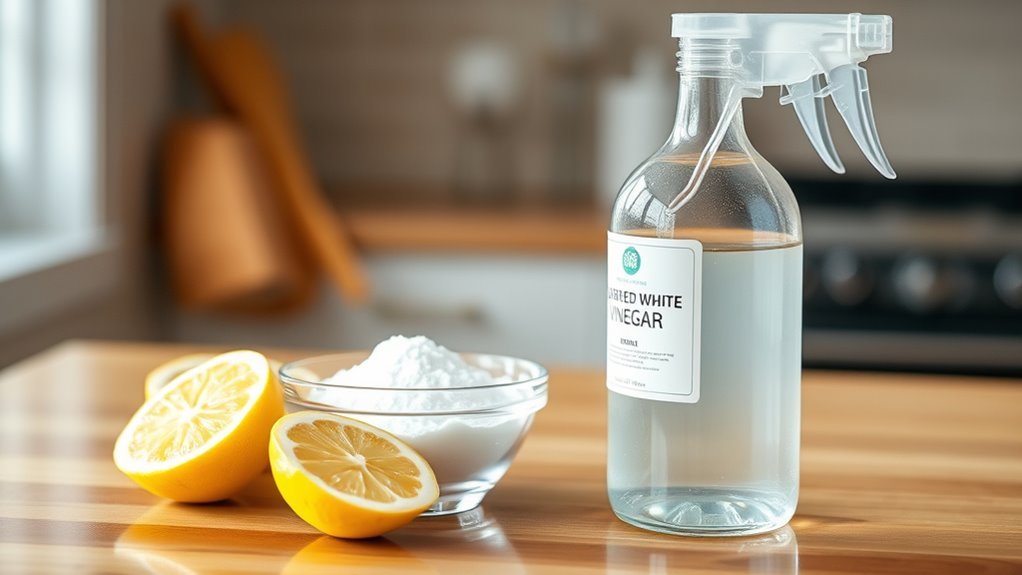
To create an effective homemade germ cleaner, you’ll need just a few key ingredients that work together to kill bacteria and viruses. Choosing natural alternatives like white vinegar, hydrogen peroxide, and essential oils gives you control over what touches your home while maintaining cleaning effectiveness. These ingredients not only disinfect but also avoid harsh chemicals, letting you keep your space safe and fresh. Baking soda adds gentle scrubbing power without damaging surfaces. By combining these natural alternatives thoughtfully, you guarantee your cleaner is potent yet free from unnecessary toxins. This approach empowers you to take charge of your environment, embracing freedom from commercial cleaners’ unknown additives while achieving the cleaning effectiveness you expect.
Step-by-Step Guide to Making a Vinegar-Based Disinfectant
Although vinegar alone isn’t a registered disinfectant, when combined with other ingredients like hydrogen peroxide and essential oils, it becomes a powerful cleaner you can make at home. This DIY approach offers you freedom from harsh chemicals while enjoying vinegar benefits and effective disinfectant alternatives.
Here’s a simple step-by-step:
| Step | Action |
|---|---|
| 1 | Mix 1 cup white vinegar |
| 2 | Add 1 cup water |
| 3 | Stir in 10 drops essential oil |
| 4 | Pour into spray bottle |
| 5 | Shake well before each use |
Use this vinegar-based spray to disinfect surfaces naturally. Remember, it’s great for daily cleaning but not a substitute for registered disinfectants in high-risk areas.
Creating a Powerful Hydrogen Peroxide Cleaner
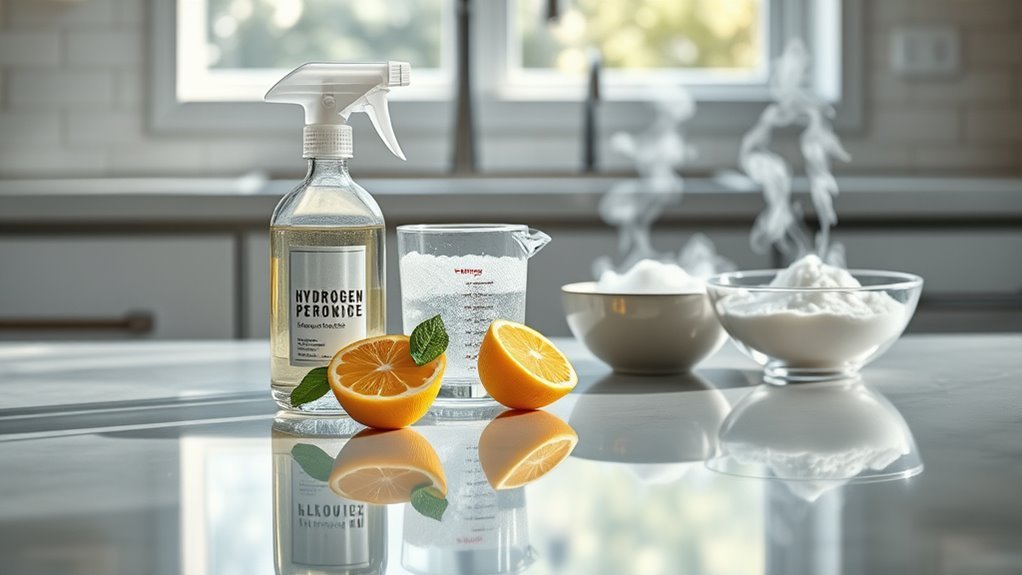
While vinegar-based cleaners work well for everyday use, hydrogen peroxide offers a stronger, chemical-free alternative for disinfecting your home. You’ll appreciate the hydrogen peroxide benefits, especially its ability to kill germs quickly and effectively without harsh chemicals. To create your powerful cleaner, simply mix equal parts of 3% hydrogen peroxide and water in a spray bottle. This solution boosts cleaner effectiveness by breaking down stubborn bacteria and viruses on surfaces. Remember to store your mix in a dark container or away from sunlight, as light can degrade hydrogen peroxide’s potency. Using this homemade cleaner gives you freedom from toxic ingredients while ensuring your space stays hygienic and safe. It’s a smart, eco-friendly choice for anyone wanting a reliable germ-fighting solution.
How to Use Baking Soda for Surface Cleaning and Deodorizing
Since baking soda is a natural, gentle abrasive, you can use it to clean surfaces without scratching them. Sprinkle baking soda directly onto stubborn stains or wet surfaces, then scrub lightly with a damp cloth or sponge for effective stain removal. For surface deodorizing, baking soda absorbs odors effortlessly—just leave a thin layer on carpets, upholstery, or countertops, let it sit for 15 minutes, then wipe or vacuum away. One handy cleaning tip is mixing baking soda with water to form a paste for tougher grime. This simple method frees you from harsh chemicals while keeping your home fresh and clean. Embrace baking soda in your routine, and you’ll enjoy a powerful, eco-friendly way to tackle dirt and odors with ease.
Combining Essential Oils for Added Germ-Fighting Power
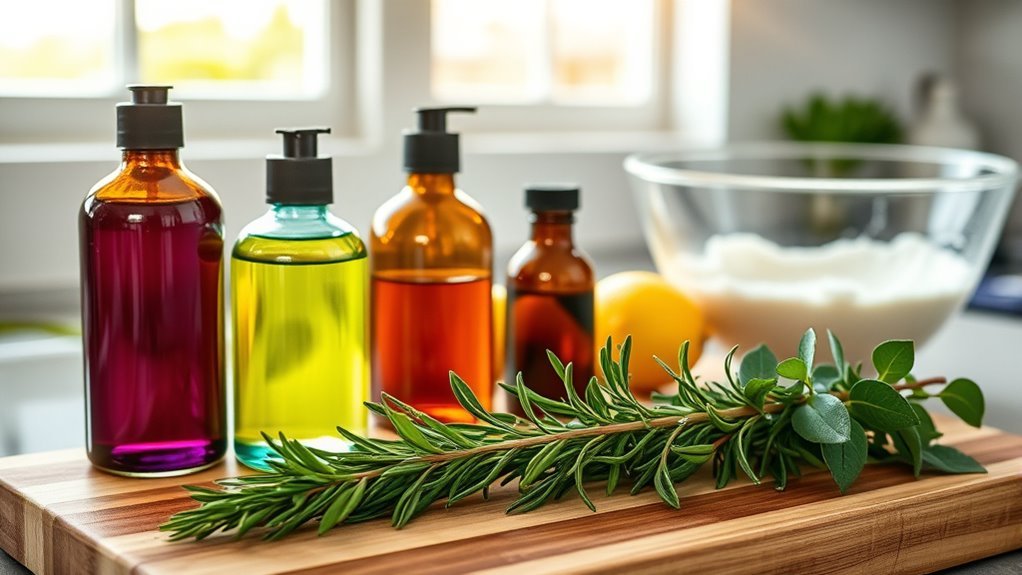
When you combine essential oils, you can boost their natural germ-fighting abilities to create a more powerful homemade cleaner. Blending oils like tea tree, eucalyptus, and lemon creates effective germ fighting blends that tackle bacteria and viruses more efficiently than a single oil. You’re free to tailor these mixes to your preferences, experimenting with different ratios to find the perfect balance of scent and strength. Essential oils not only disinfect but also add uplifting aromas, making cleaning less of a chore. Keep your blends simple—start with a few drops of each oil in a base like vinegar or water. This way, you harness the full potential of essential oils, crafting a cleaner that’s potent, natural, and aligned with your desire for freedom from harsh chemicals.
Safe Storage and Usage Tips for Your Homemade Cleaners
To keep your homemade germ cleaner effective and safe, you’ll want to store it in the right container, like a glass or sturdy plastic bottle with a secure lid. Always label your cleaner clearly and keep it out of reach of kids and pets. When using it, follow proper safety guidelines, such as wearing gloves and avoiding contact with your eyes.
Proper Container Selection
Choosing the right container for your homemade germ cleaner is essential for maintaining its effectiveness and ensuring safety. When picking container materials, opt for glass or high-quality plastic that won’t react with your cleaner’s ingredients. Avoid metal containers, as they can corrode or leach unwanted substances. Also, consider container sizes carefully—you want enough room to mix and shake without spills, but not so much that your cleaner sits unused for too long, risking potency loss. Smaller containers work great for daily use, while larger ones are perfect for refills. Remember, a well-chosen container preserves your cleaner’s strength and makes your cleaning routine smoother, giving you freedom from store-bought products and control over your environment.
Usage and Safety Guidelines
Although homemade germ cleaners are effective, you’ll want to handle and store them properly to keep your environment safe. Always follow clear usage instructions—apply the cleaner to surfaces, let it sit for a few minutes, then wipe away to guarantee maximum germ-killing power. Keep your cleaner in a labeled, airtight container away from children and pets. Safety precautions are essential: avoid mixing your cleaner with other chemicals, and wear gloves if you have sensitive skin. Store your homemade cleaner in a cool, dark place to maintain its potency. By respecting these usage instructions and safety precautions, you can enjoy the freedom of a natural, effective cleaner without compromising your home’s safety or your peace of mind.
Best Practices for Cleaning Different Surfaces With DIY Solutions
When you’re using homemade germ cleaners, it’s important to match the solution to the surface to avoid damage and guarantee effective cleaning. Start by considering surface material considerations: wood needs milder solutions like diluted vinegar to prevent warping, while glass and stainless steel can handle stronger mixtures such as alcohol-based cleaners. For porous surfaces, test a small area first to verify no discoloration occurs. Stick to cleaning frequency recommendations—high-touch areas like doorknobs and countertops benefit from daily cleaning, whereas less-used spots can be cleaned weekly. This balance keeps germs at bay without overdoing it and harming surfaces. By tailoring your DIY cleaner to each surface and following smart routines, you’ll maintain a fresh, germ-free space while enjoying the freedom of natural, homemade solutions.
Frequently Asked Questions
Can Homemade Germ Cleaners Kill Viruses Like the Flu or COVID-19?
You want to kill viruses like the flu or COVID-19, to stay safe and feel free, but you wonder about effectiveness comparison and ingredient safety. Homemade germ cleaners can help, but they often aren’t as strong as commercial disinfectants approved by health authorities. You can trust some ingredients like alcohol or bleach if used properly, but you’ve got to be careful with concentrations. Always balance safety with freedom—you deserve both.
Are Homemade Cleaners Safe to Use Around Pets and Children?
You’ll want to prioritize pet safety and child safety when using any cleaner. Homemade cleaners can be safer than harsh chemicals, but you still need to use them carefully. Always keep your pets and kids away until the surface is dry, and store cleaners out of reach. Natural ingredients like vinegar or baking soda are generally safer, but never assume they’re completely harmless. Staying cautious lets you enjoy freedom without risking your loved ones’ health.
How Long Do Homemade Germ Cleaners Remain Effective Once Mixed?
You’ll find that homemade germ cleaners usually have a short shelf life, often about one to two weeks, depending on the ingredients. To keep them effective, store your mixture in a cool, dark place and use airtight containers. Avoid exposure to heat or sunlight, which can degrade their potency. Remember, making smaller batches more frequently guarantees you always have fresh, powerful cleaner ready when you need it.
Can I Use Homemade Cleaners for Laundry Disinfection?
You can definitely use homemade solutions for laundry disinfection, but you’ll want to be careful with the ingredients. Natural options like white vinegar or hydrogen peroxide work well to kill germs without harsh chemicals. Just add them to your wash cycle along with your detergent. Keep in mind, though, homemade solutions might not be as powerful as commercial disinfectants, so for heavy-duty disinfection, you might want to use specialized products.
What Are the Environmental Benefits of Using Homemade Germ Cleaners?
Imagine your home as a garden, blossoming with life and free from toxic storms. When you choose eco-friendly ingredients, you’re planting seeds of sustainability, letting nature’s rhythm guide your cleaning. By embracing sustainable practices, you’re not just fighting germs—you’re freeing the Earth from harsh chemicals. This way, you protect your space and the planet, letting both breathe easy while you enjoy the liberty of a cleaner, greener lifestyle.