How to Remove Dishwasher From Germs
To remove germs from your dishwasher, start by emptying it and cleaning the filters thoroughly under warm water with a soft brush. Run a hot cycle with a cup of white vinegar on the top rack to break down grease and kill bacteria. Wipe down seals and edges to prevent mold, and leave the door slightly open after cycles to dry it out. Regularly following these steps keeps your dishwasher fresh and germ-free. You’ll also find easy ways to maintain hygiene and prevent buildup.
Understanding Common Germs in Dishwashers

Although dishwashers use hot water and detergent, they can still harbor germs like bacteria, mold, and mildew. You might think your dishwasher is spotless, but common germ types can cling to crevices and seals, compromising dishwasher hygiene. These germs thrive in damp, warm environments, making your dishwasher a cozy home if not cleaned regularly. Understanding these germ types helps you take control, ensuring your dishes are truly clean and safe. Bacteria can cause odors and potential health risks, while mold and mildew affect your dishwasher’s efficiency and air quality. By recognizing the invisible threats lurking inside, you empower yourself to maintain a germ-free dishwasher, reclaiming your freedom from hidden contaminants and keeping your kitchen fresh and hygienic.
Preparing Your Dishwasher for Cleaning
Before you start cleaning, you’ll want to prepare your dishwasher properly to guarantee the process is effective. Begin by emptying the dishwasher completely—no dishes or utensils should be inside. Check the manufacturer’s manual for any specific dishwasher maintenance tips. Gather all necessary cleaning supplies, such as a soft cloth, a gentle scrub brush, white vinegar, baking soda, and a dishwasher-safe cleaner if preferred. Make certain you have gloves on to protect your hands. Also, inspect the spray arms and door seals for debris or buildup, but save deep cleaning for the next step. Preparing your dishwasher this way guarantees you tackle germs efficiently and maintain your appliance’s performance. Proper preparation is essential to enjoy the freedom of a clean, germ-free dishwasher every time you run it.
Removing and Cleaning Dishwasher Filters
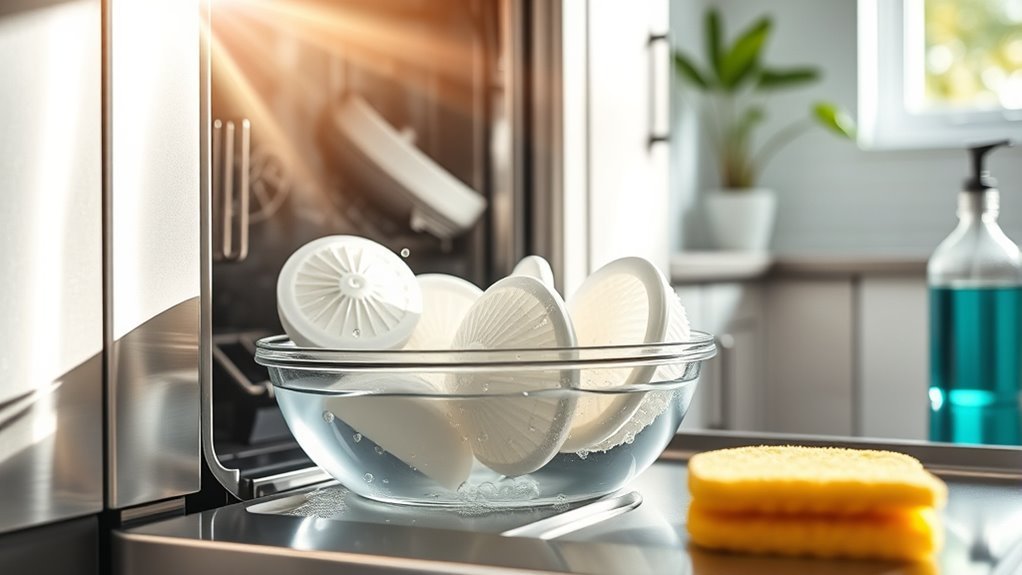
Once you’ve prepared your dishwasher, you’ll want to remove the filters to clean them thoroughly, as they trap food particles and grease that can harbor germs. Start by locating the filter at the bottom of your dishwasher; usually, it twists or lifts out easily. Rinse it under warm water, using a soft brush to remove stubborn debris. Regular filter maintenance not only keeps your dishwasher running effectively but also prevents unpleasant odors and buildup. If you notice any damage or persistent grime, consider a filter replacement to guarantee ideal hygiene and performance. Keeping your filters clean gives you the freedom to rely on your dishwasher without worrying about hidden germs, letting you enjoy spotless dishes every time.
Using Vinegar to Eliminate Bacteria and Odors
If you want to tackle bacteria and odors effectively, vinegar is a simple, natural solution you can use in your dishwasher. Its powerful vinegar benefits include breaking down grease, killing germs, and neutralizing unpleasant smells without harsh chemicals. Just place a cup of white vinegar in a dishwasher-safe container on the top rack and run a hot water cycle. This process promotes odor elimination by flushing out trapped residues and bacteria hiding in nooks and crannies. Using vinegar lets you maintain a fresh, hygienic dishwasher while keeping your cleaning routine eco-friendly and free from toxic additives. Embracing vinegar gives you freedom from lingering smells and harmful germs, ensuring your dishwasher stays clean and your dishes come out spotless every time.
Applying Baking Soda for Deep Cleaning
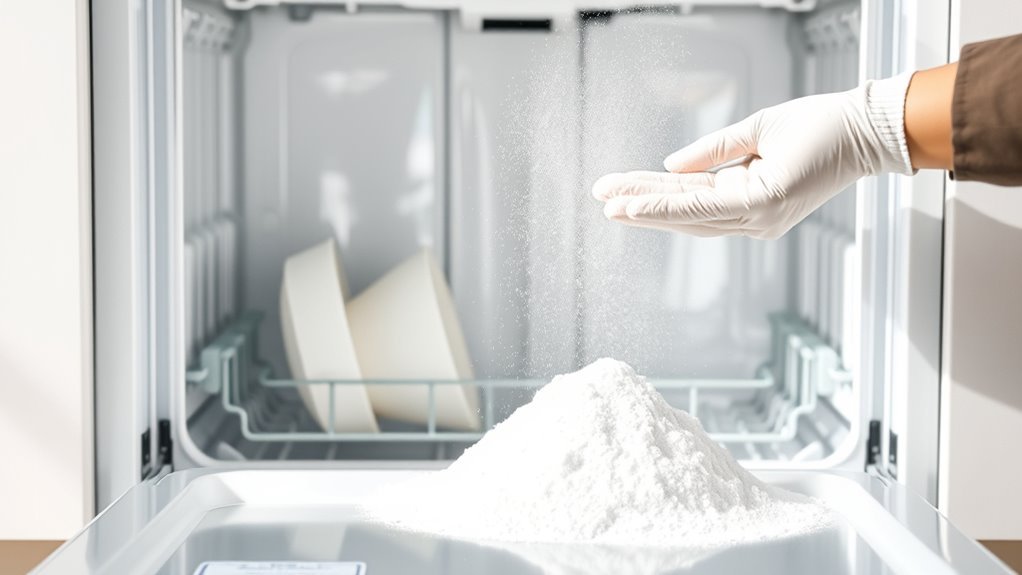
While vinegar handles odors and bacteria well, baking soda offers a powerful boost for deep cleaning your dishwasher. You’ll want to sprinkle about a cup of baking soda across the bottom of the empty dishwasher. Baking soda’s natural abrasiveness loosens grime and buildup without harsh chemicals, giving your dishwasher a fresh, clean feel. Run a short hot water cycle to let it work its magic, breaking down residue and neutralizing any lingering smells. This step not only cleans but also helps keep your dishwasher running smoothly, freeing you from worries about hidden germs or stubborn stains. By incorporating baking soda into your routine, you’re choosing a simple, effective way to maintain a truly clean dishwasher, freeing yourself from the hassle of deep cleaning with toxic products.
Disinfecting With Bleach Safely
Although bleach is a powerful disinfectant that can eliminate stubborn germs in your dishwasher, you need to use it carefully to avoid damaging your appliance or harming yourself. First, verify your dishwasher is empty and remove any food debris. Then, dilute bleach properly—never pour it directly into your dishwasher. Add about one cup of bleach to the bottom of the dishwasher and run a short hot water cycle without detergent. This method respects bleach safety by preventing corrosion and toxic fumes. Always keep your kitchen well-ventilated and wear gloves to protect your skin. Avoid mixing bleach with other cleaners, as this can create dangerous gases. By following these disinfecting techniques, you maintain your dishwasher’s freedom from germs without compromising its function or your health.
Cleaning Dishwasher Spray Arms and Nozzles
Since spray arms and nozzles play an essential role in distributing water evenly throughout your dishwasher, keeping them clean is crucial for effective germ removal. To start, remove the spray arms carefully—check your manual for guidance. Use a toothpick or a small brush to clear out any debris or mineral buildup blocking the tiny holes in the nozzles. Soaking the spray arms in white vinegar for 15-20 minutes helps dissolve stubborn gunk, making nozzle cleaning easier. After rinsing thoroughly, reinstall the spray arms securely. Regular spray arm maintenance guarantees water flows freely, preventing germs from hiding and multiplying. By staying on top of this simple task, you maintain your dishwasher’s cleaning power and enjoy the freedom of knowing your dishes come out truly clean every time.
Maintaining Your Dishwasher to Prevent Germ Build-Up
To keep germs from building up in your dishwasher, stick to a regular cleaning schedule and use the right detergent for your machine. You’ll also want to watch out for mold and mildew by ensuring your dishwasher dries properly between uses. These simple steps will help maintain a cleaner, healthier appliance.
Regular Cleaning Routine
Even if your dishwasher seems clean after each cycle, germs can still build up over time. To keep your appliance fresh and hygienic, setting a consistent cleaning frequency is key. Aim to clean your dishwasher at least once a month, or more often if you use it heavily. Using effective tools like a soft brush, microfiber cloth, and a vinegar rinse can target hidden grime and bacteria. Focus on areas like the filter, spray arms, and door seals where debris and mold tend to accumulate. By sticking to this regular cleaning routine, you’ll prevent germ buildup, ensuring your dishwasher runs efficiently and your dishes come out sparkling clean. Freedom from worry starts with simple, consistent care.
Proper Detergent Usage
Using the right detergent in your dishwasher is essential for keeping germs at bay and maintaining ideal cleanliness. Choosing the correct detergent types and following dosage recommendations can make a huge difference in how effectively your dishwasher eliminates bacteria.
- Select the appropriate detergent type: Powder, gel, or pods each have unique strengths. Pick one that suits your water hardness and dishwasher model to maximize germ removal.
- Follow dosage recommendations carefully: Using too little detergent won’t clean well; too much can leave residue that attracts germs.
- Avoid mixing detergent types: Stick with one kind to prevent chemical reactions that reduce cleaning power and encourage buildup.
Mold and Mildew Prevention
While dishwashers clean your dishes, they can also become breeding grounds for mold and mildew if not properly maintained. To keep mold growth in check, make certain you regularly clean the dishwasher’s interior, including the door seals and filter. These areas trap moisture and food particles, creating the perfect environment for mold. For mildew prevention, leave the dishwasher door slightly open after each cycle to allow air circulation and drying. You can also run a monthly cycle with vinegar or a dishwasher cleaner to break down buildup that encourages mold. By staying on top of these simple steps, you reclaim control over your dishwasher’s cleanliness and guarantee it stays a germ-free zone, letting you enjoy freedom from worry every time you run it.
Tips for Keeping Your Dishwasher Fresh Between Deep Cleans
How often do you think about keeping your dishwasher fresh between deep cleans? Staying on top of dishwasher maintenance tips and germ prevention strategies can save you time and keep your appliance running smoothly. Here are three simple ways to maintain freshness:
- Run a vinegar rinse: Once a week, run an empty cycle with a cup of white vinegar to break down residue and kill bacteria.
- Wipe the seals and edges: After each use, quickly wipe down the door seals and edges where grime and moisture collect.
- Keep it dry: Leave the door slightly open after cycles to allow air circulation and prevent mold growth.
These straightforward habits help you enjoy a cleaner, germ-free dishwasher without sacrificing your freedom or time.
Frequently Asked Questions
Can Dishwasher Odors Indicate Harmful Bacteria Presence?
You might wonder if dishwasher odors mean harmful bacteria are lurking. While odors can hint at germ detection, they’re not always a sure sign of danger. Often, odor sources come from food debris or buildup, not just harmful bacteria. You’ve got the freedom to investigate and clean regularly to keep things fresh and safe. Trust your nose but don’t rely solely on smell to judge your dishwasher’s cleanliness.
How Often Should Dishwasher Seals Be Replaced?
Did you know that 30% of dishwasher leaks come from worn-out seals? To keep your dishwasher running smoothly and maintain good hygiene practices, you should check and replace the seals every 1 to 2 years. Regular seal maintenance prevents mold and bacteria buildup, giving you more freedom from constant cleaning worries. Staying on top of this simple task guarantees your dishwasher stays fresh and efficient, so you’re never stuck with a smelly appliance again.
Is It Safe to Run a Dishwasher Empty for Cleaning?
Yes, it’s safe to run your dishwasher on an empty cycle for cleaning. Doing so actually boosts cleaning efficiency by allowing the machine to focus on removing buildup without dishes in the way. You’ll free yourself from stubborn grime and odors without hassle. Just add a dishwasher cleaner or some vinegar, and let the empty cycle work its magic—giving you a fresher, more efficient dishwasher without any extra effort.
Do Dishwasher Detergents Kill All Types of Germs?
You might think dishwasher detergents are like a knight in shining armor, banishing every germ, but they don’t kill all types of germs completely. Their effectiveness varies depending on germ survival rates and detergent ingredients. While they handle common bacteria well, some stubborn viruses or spores can survive. So, you should embrace freedom by combining good dishwasher detergent effectiveness with high-temperature cycles to truly conquer those microscopic invaders.
Can Dishwasher Water Temperature Affect Germ Removal?
Absolutely, water temperature plays a big role in germ survival during your dishwasher cycle. If the water’s too cool, germs can hang around, making your dishes less hygienic. You want the temperature to be hot enough—usually around 140°F (60°C)—to really break down grime and kill most bacteria. So, don’t settle for lukewarm water; crank up that temperature and enjoy the freedom of truly clean, germ-free dishes every time.