Natural Alternatives to AC
You can cool your home naturally by improving airflow with cross ventilation, which lets warm air escape and fresh air in. Planting trees and vines provides shade that blocks heat before it enters your space. Adding water features cools through evaporation, while reflective window films reduce direct sunlight inside. Choose breathable fabrics like cotton to stay comfortable indoors. If you want to explore more ways to keep your home cool without AC, there are plenty of effective strategies to contemplate.
Enhancing Airflow Through Strategic Ventilation
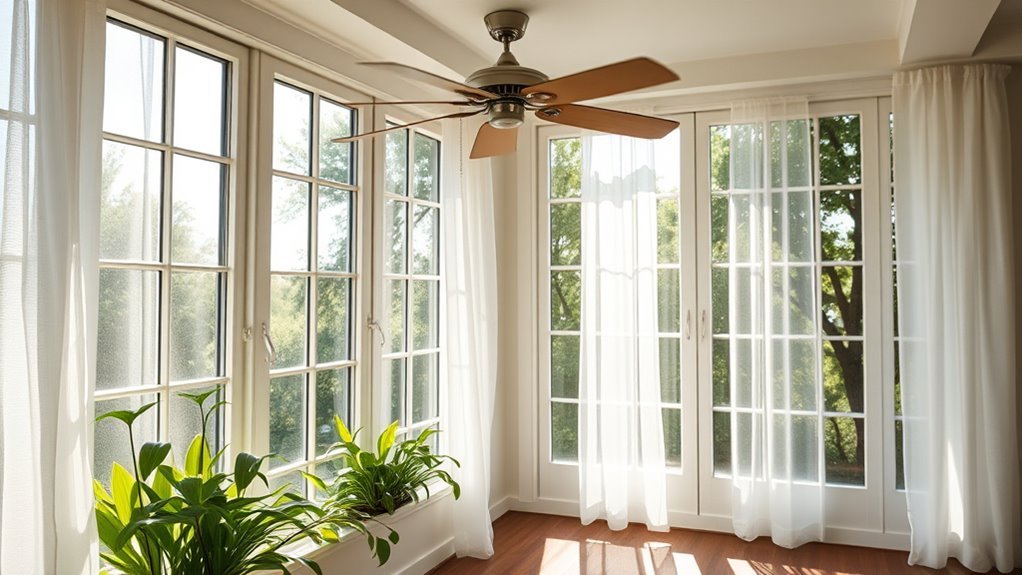
While it might seem simple, enhancing airflow through strategic ventilation can make a big difference in cooling your space naturally. You can attain true freedom from heat by mastering cross ventilation techniques, which create a steady flow of fresh air throughout your home. By positioning windows or vents on opposite sides of a room, you optimize airflow, allowing warm air to exit while pulling in cooler air. You don’t need complicated systems—just a thoughtful arrangement that encourages air to move freely. When you focus on airflow optimization, you reduce reliance on electrical cooling and embrace a more natural, invigorating breeze. This approach not only cools your space but also gives you control over your environment, letting you live comfortably without feeling trapped by heat.
Utilizing Natural Shade With Trees and Plants
Because trees and plants provide natural cooling, utilizing their shade can greatly reduce indoor temperatures. When you focus on tree placement, think about positioning them to block the harsh afternoon sun hitting your walls and windows. This strategic placement not only cools your home but also gives you the freedom to enjoy your outdoor space without the heat’s grip. Plant selection matters too—opt for deciduous trees that shed leaves in winter, allowing sunlight to warm your home during colder months. Shrubs and vines can add extra shade and insulation around your foundation. By carefully choosing and placing vegetation, you create a natural barrier that cuts down on your reliance on AC, letting you live comfortably while staying connected to nature.
Incorporating Water Features for Cooling Effects
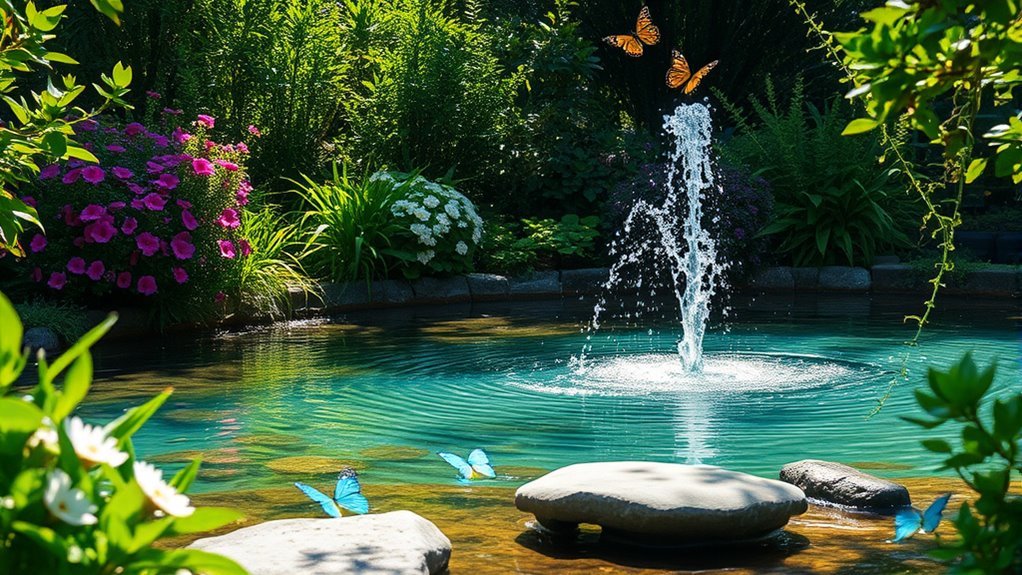
You can use water features to naturally cool your space through evaporative cooling, which lowers the surrounding temperature as water evaporates. To get the best results, design your fountains, ponds, or misting systems in spots with good airflow. With the right setup, these water features not only add beauty but also help keep your environment comfortably cool.
Evaporative Cooling Benefits
If you’ve ever felt the invigorating mist from a garden fountain on a hot day, you know how water can naturally cool the air around you. This is evaporative cooling in action—water absorbs heat as it evaporates, lowering air temperature. Plus, it helps with humidity control, creating a comfortable environment without energy-hungry AC units. Embracing this method means you get fresh, cooler air while staying eco-friendly and free.
| Benefit | Description |
|---|---|
| Energy Efficient | Uses natural processes, cuts electricity use |
| Humidity Control | Balances moisture, improves comfort |
| Eco-Friendly | Reduces carbon footprint, conserves resources |
Designing Effective Water Features
When incorporating water features for cooling effects, thoughtful design is key to maximizing their natural benefits. You want your space to feel fresh and inviting, so focus on balancing function with aesthetic appeal. Proper water circulation keeps the feature effective and prevents stagnation, enhancing cooling through evaporation. Here’s how to design effectively:
- Position features where breezes can carry evaporative coolness into living areas.
- Use pumps to maintain steady water circulation, boosting cooling and preventing algae.
- Choose natural materials that blend with your environment, adding aesthetic appeal without sacrificing function.
- Integrate plants around the feature to increase shade and humidity, amplifying the cooling effect.
Employing Reflective and Insulating Window Treatments
Though it might seem like a small change, employing reflective and insulating window treatments can considerably reduce heat gain in your home. You don’t have to surrender comfort or freedom when the sun is blazing. Installing solar films on your windows reflects a significant amount of solar radiation, keeping your indoor spaces cooler without blocking your view. Pairing these with blackout curtains gives you control over light and heat, creating a barrier that insulates against external temperatures. These treatments not only cut down on the need for air conditioning but also empower you to manage your environment naturally. By taking charge of your windows, you’re choosing freedom from high energy bills and relentless heat, making your home a cooler, more comfortable sanctuary.
Designing Outdoor Spaces to Minimize Heat Absorption

Taking control of your home’s interior temperature starts with managing how heat enters through your windows, but it doesn’t stop there. Designing outdoor spaces with smart landscape design plays an essential role in effective heat mitigation. Here’s how you can create a cooler environment around your home:
- Plant shade trees strategically to block direct sunlight before it hits your walls and windows.
- Use ground covers or mulch to reduce heat reflection from bare soil or concrete.
- Incorporate water features like fountains to cool the air through evaporation.
- Choose light-colored or reflective materials for patios and driveways to minimize heat absorption.
Using Natural Fabrics and Materials for Home Comfort
You’ll find natural fabrics like cotton and linen are great for keeping your home cool because they breathe better than synthetic materials. These fabrics help regulate temperature by allowing air to flow and moisture to evaporate quickly. Choosing natural materials for curtains, bedding, and upholstery can make a noticeable difference in your comfort without relying on AC.
Benefits of Natural Fabrics
Natural fabrics like cotton, linen, and wool offer a breathable and comfortable alternative to synthetic materials, helping you stay cool without relying heavily on air conditioning. Choosing sustainable textiles not only benefits the environment but also enhances your home’s comfort through natural thermal regulation. These materials allow your skin to breathe and adapt to temperature changes, freeing you from the confines of artificial cooling.
Here’s why natural fabrics make sense for your lifestyle:
- Improved airflow keeps you feeling fresh and dry.
- They absorb moisture, reducing sweat and discomfort.
- Durable and long-lasting, minimizing waste and replacements.
- Hypoallergenic properties make them gentle on sensitive skin.
Cooling Properties of Materials
Choosing fabrics that breathe well is just one piece of the puzzle when it comes to keeping your home cool without AC. You’ll want to embrace natural materials that balance thermal mass and insulative properties. Natural fabrics like cotton, linen, and wool not only allow air to flow freely but also help regulate temperature by absorbing and releasing moisture. Beyond fabrics, using materials with good thermal mass—such as stone or clay—can store coolness during the day and release it at night, reducing temperature swings. Insulative materials like cork and natural fibers also prevent unwanted heat from infiltrating your space. By combining these elements thoughtfully, you create a home environment that stays comfortably cool, giving you the freedom to enjoy natural comfort without relying on energy-hungry cooling systems.
Frequently Asked Questions
Can Natural Alternatives Reduce Humidity Levels Effectively?
You might wonder if natural alternatives can reduce humidity levels effectively. They can, especially when you use dehumidifying plants known for their moisture absorption abilities. These plants help draw excess moisture from the air, creating a more comfortable environment without relying on machines. Embracing such natural methods gives you the freedom to enjoy a fresh, less humid space while staying connected to nature and avoiding energy consumption.
How Do Natural Cooling Methods Impact Indoor Air Quality?
When you rely on natural cooling methods, indoor ventilation plays a huge role in keeping the air fresh and breathable. Properly designed airflow helps reduce stale air, boosting air purification without relying on machines. This means you can enjoy cleaner, healthier environments while feeling free from noisy, energy-heavy systems. By enhancing natural ventilation, you’re not just cooling your space—you’re creating a more vibrant, invigorating atmosphere that lets you breathe easier and live freer.
Are There Specific Plants That Repel Heat-Generating Insects?
Imagine stepping into your garden, greeted by the soothing scent of insect repellent herbs like lavender and citronella, which not only smell great but keep heat-generating bugs away. You might think these heat repelling plants are just decorative, but they actually create a natural barrier, freeing you from chemical sprays. By planting them around your home, you reclaim your space, enjoying cooler, bug-free moments without sacrificing your freedom or comfort.
What Are the Cost Savings of Natural Cooling Compared to AC?
When you choose natural cooling methods, you boost energy efficiency by cutting down on electricity use, which means your bills shrink considerably. You won’t be tied to rising energy costs, giving you more financial freedom. Over time, these methods bring long term savings since you avoid pricey repairs and replacements common with AC units. Plus, you gain independence from the grid, making your comfort truly self-sustained and cost-effective.
Can Natural Cooling Methods Be Combined With Solar Energy Systems?
Did you know solar integration can boost energy efficiency by up to 30%? You can definitely combine natural cooling methods with solar energy systems to maximize your home’s comfort and freedom from high bills. By pairing shading, ventilation, or evaporative cooling with solar panels, you reduce reliance on traditional AC while harnessing clean energy. It’s a smart way to stay cool and keep control over your energy use.