
Natural Cleaning Hacks for Your Coffee Machine
You can easily keep your coffee machine clean using natural ingredients like vinegar, baking soda, and lemon juice. Vinegar helps remove mineral buildup, while baking soda tackles coffee stains without harsh chemicals. Lemon juice acts as a gentle descaler, keeping your machine fresh and efficient. Regularly cleaning removable parts and preventing mold with simple tricks guarantees better coffee flavor and machine health. Stick with these natural hacks, and you’ll find plenty more ways to maintain your coffee maker naturally.
Why Clean Your Coffee Machine Naturally?
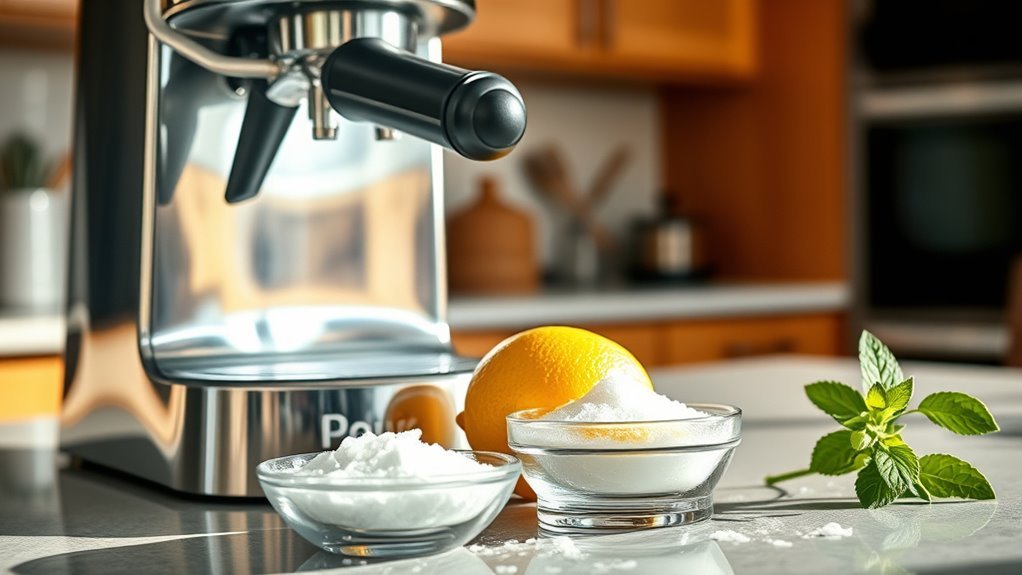
Although you might not think about it often, cleaning your coffee machine naturally is essential for both your health and the machine’s longevity. When you choose natural methods, you avoid harsh chemicals that can leave residues, protecting your well-being and ensuring every cup tastes pure. Plus, natural cleaning methods offer significant environmental benefits—they reduce chemical waste and pollution, letting you care for your coffee maker without harming the planet. By embracing these health considerations, you’re not only freeing yourself from synthetic toxins but also extending the life of your machine, saving money and hassle in the long run. Cleaning naturally means you’re in control, making choices that align with your values for freedom, health, and a cleaner environment.
Using Vinegar to Remove Mineral Buildup
You can easily tackle mineral buildup in your coffee machine using vinegar, a natural and effective cleaner. Vinegar breaks down deposits without harsh chemicals, keeping your machine running smoothly. Let’s go through a simple step-by-step process to get your coffee maker sparkling again.
Vinegar Cleaning Benefits
Since mineral buildup can affect your coffee machine’s performance and taste, using vinegar is one of the simplest and most effective natural solutions you can try. Vinegar advantages include its ability to dissolve mineral deposits quickly without harsh chemicals. It’s an eco friendly cleaning option that saves your machine and the planet. Plus, it’s cheap and easy to find.
Here’s a quick look at vinegar’s benefits:
| Benefit | Description | Why It Matters |
|---|---|---|
| Mineral Removal | Breaks down calcium deposits | Restores machine flow |
| Eco Friendly | Biodegradable, non-toxic | Safe for environment |
| Cost Effective | Affordable and readily available | Saves money on cleaners |
Using vinegar empowers you to maintain your coffee machine naturally and freely.
Step-by-Step Vinegar Use
Cleaning your coffee machine with vinegar can be done in just a few simple steps that restore its performance and taste. Start by creating a vinegar mixture—combine equal parts water and white vinegar. Pour this into your machine’s water reservoir. Run a brew cycle halfway, then turn off the machine and let it sit for 30 minutes. This pause allows the vinegar mixture to break down mineral buildup effectively. Afterward, complete the brewing cycle. To finish your cleaning routine, run two or three full cycles with plain water to flush out any lingering vinegar taste. Doing this regularly frees you from costly repairs and keeps your coffee tasting fresh. Stick to this natural cleaning routine, and your machine will stay in top shape without harsh chemicals.
Baking Soda for Coffee Stain Removal
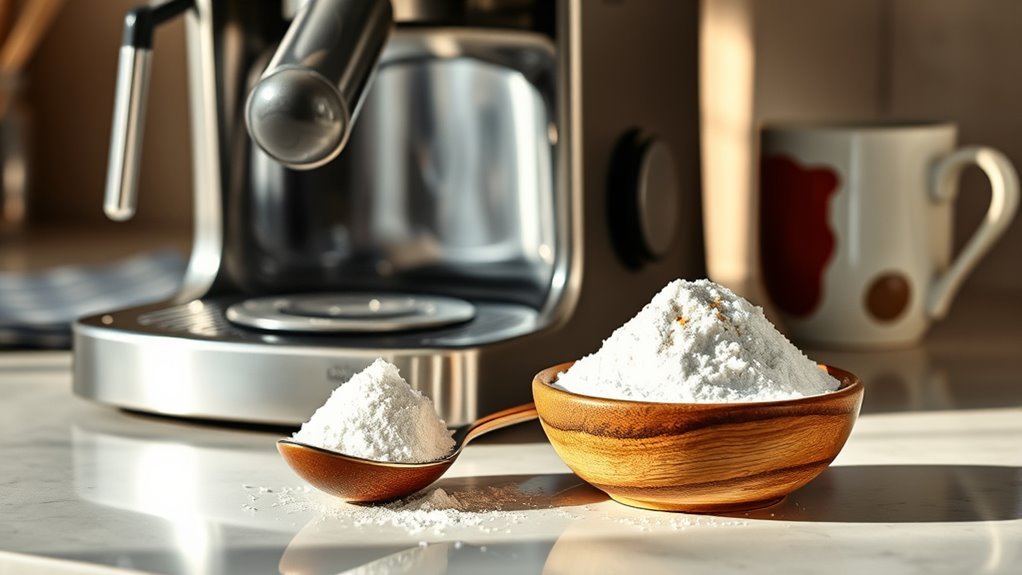
You can rely on baking soda to tackle stubborn coffee stains without worrying about harsh chemicals. It’s a gentle yet effective cleaner that’s safe for your machine’s surfaces. Let’s explore how this simple ingredient can keep your coffee maker looking fresh.
Effective Stain Removal
Although coffee stains can be stubborn, using baking soda makes removing them much easier and safer than harsh chemicals. It’s a natural, effective stain removal method for your coffee machine, giving you freedom from tough residue without risking damage.
Here’s a simple guide to clean your coffee machine using baking soda:
| Step | Action |
|---|---|
| 1. Mix | Combine 2 tbsp baking soda + water |
| 2. Apply | Scrub stained parts gently |
| 3. Wait | Let it sit for 15 minutes |
| 4. Rinse | Use warm water thoroughly |
| 5. Dry | Wipe with a clean cloth |
This approach not only removes stains but also freshens your machine naturally, keeping it in top shape without chemicals.
Safe Cleaning Method
Since harsh chemicals can damage your coffee machine, using baking soda offers a safe and effective alternative for removing stains. This natural ingredient works wonders by gently lifting coffee residue without harming your machine’s interior. Just mix a tablespoon of baking soda with a little water to form a paste, then apply it to stained areas. Let it sit for a few minutes before scrubbing lightly with a soft cloth or brush. Rinse thoroughly to guarantee no residue remains. By choosing baking soda, you’re embracing eco friendly products that protect both your coffee maker and the environment. This simple, natural cleaning method gives you the freedom to maintain your machine safely, avoiding harsh chemicals while keeping your coffee tasting fresh and clean every day.
Lemon Juice as a Natural Descaler
Lemon juice works wonders as a natural descaler for your coffee machine. Thanks to its natural acidity, it effortlessly breaks down mineral buildup without harsh chemicals. You get to enjoy the lemon benefits while keeping your machine running smoothly and tasting fresh.
Here’s how you can use it:
- Mix equal parts lemon juice and water to fill your machine’s water reservoir.
- Run a brewing cycle without coffee grounds, letting the natural acidity tackle the scale.
- Follow up with two cycles of clean water to flush out any lemony residue.
This simple hack frees you from synthetic cleaners, keeping your coffee ritual pure and your machine in top shape. Embrace the natural way and savor every cup!
How to Clean Coffee Filters With Natural Ingredients

Keeping your coffee machine free of mineral buildup is just one part of maintaining great taste. Coffee filter maintenance plays an essential role, too. If you use reusable filters, cleaning them regularly with natural ingredients like white vinegar or baking soda keeps them fresh without harsh chemicals. Simply soak your filter in a solution of one part vinegar to three parts water for 30 minutes, then rinse thoroughly. Baking soda works well for stubborn stains—make a paste, scrub gently, and rinse. If you prefer natural filter alternatives, consider unbleached paper filters or gold mesh filters, which are easier to clean and eco-friendly. These simple steps free you from synthetic cleaners, ensuring every cup tastes pure and freeing you to enjoy coffee on your terms.
The Role of Water Quality in Coffee Machine Maintenance
Water quality plays an essential role in how well your coffee machine performs and how long it lasts. Hard water, loaded with minerals, can cause scale buildup, making your machine work harder and shortening its lifespan. To keep freedom in your brewing routine, here’s what you can do:
- Test your water hardness regularly to understand the mineral content.
- Use filtration systems designed to reduce minerals and impurities.
- Opt for filtered or bottled water if your tap water is too hard.
Using Hydrogen Peroxide for Deep Cleaning
Mineral buildup isn’t the only thing that can affect your coffee machine’s performance—bacteria and mold can also hide in hard-to-reach places. Using hydrogen peroxide for deep cleaning is a powerful way to tackle these unseen culprits. You can mix equal parts hydrogen peroxide and water, then run this solution through your machine just like you would with regular water. This natural method boosts cleaning effectiveness by breaking down organic residues and disinfecting internal components without harsh chemicals. Afterward, flush your machine thoroughly with plain water to rinse away any remaining solution. By incorporating hydrogen peroxide into your routine, you maintain your coffee maker’s freedom to deliver fresh, great-tasting coffee while keeping it hygienic and efficient. It’s an easy, eco-friendly hack that gives you control over your machine’s cleanliness.
Preventing Mold and Mildew Naturally
Because coffee machines provide a warm, moist environment, they can easily become breeding grounds for mold and mildew if not properly cared for. To keep your machine fresh and free, focus on mold prevention and mildew deterrence with these simple steps:
- After each use, run a hot water cycle to flush out moisture and coffee residue.
- Leave the machine’s lid or water reservoir open to air dry completely.
- Wipe down any damp surfaces with a natural solution like diluted vinegar to inhibit mold growth.
Cleaning Removable Parts With Natural Solutions
When you take apart your coffee machine, cleaning the removable parts with natural solutions is an easy way to keep everything spotless without harsh chemicals. Start by soaking these parts in a mixture of warm water and white vinegar for about 30 minutes. This simple solution breaks down coffee oils and mineral buildup while being gentle on your hands and the environment. After soaking, scrub gently with a soft brush or cloth to remove any stubborn residue. Rinse thoroughly with clean water to avoid any lingering vinegar taste. Using natural solutions lets you maintain your coffee machine’s removable parts freely and safely, without relying on artificial cleaners. This approach keeps your appliance fresh and ready for your next brew, giving you peace of mind and a cleaner cup every time.
Regular Maintenance Tips for a Fresh Coffee Taste
To keep your coffee tasting fresh, you’ll want to stick to a regular maintenance routine that goes beyond just cleaning removable parts. Maintaining coffee freshness means embracing a simple maintenance schedule that fits your freedom-loving lifestyle. Here’s what to focus on:
- Descale monthly: Use natural descaling agents like vinegar or citric acid to prevent mineral buildup, keeping your machine efficient and your brew pure.
- Wipe the exterior and steam wand weekly: A quick clean with a damp cloth and mild soap keeps bacteria and residue at bay without hassle.
- Replace water filters regularly: Fresh filters guarantee clean water, enhancing flavor and protecting your machine.
Frequently Asked Questions
Can Natural Cleaning Harm My Coffee Machine’S Warranty?
You want freedom to clean, freedom to care, freedom to maintain without worry. When it comes to warranty implications, you have to be careful with cleaning materials. Using harsh chemicals might void your warranty, but natural cleaners like vinegar or baking soda usually won’t harm it if used properly. Still, you should check your coffee machine’s manual to see what’s allowed, so you can keep both your machine and your warranty intact.
How Often Should I Deep Clean My Coffee Machine Naturally?
You should aim for a deep cleaning frequency of about once a month to keep your coffee machine running smoothly. Sticking to a cleaning schedule helps prevent buildup and guarantees every cup tastes fresh. Of course, if you use your machine daily, you might want to deep clean more often. Trust your instincts and adjust the routine to fit your lifestyle—freedom means doing what works best for you and your coffee ritual.
Are Natural Cleaning Methods Safe for Espresso Machines?
Yes, natural cleaning methods can be safe for your espresso machine when you choose the right cleaning solutions. You’ll want to avoid anything too acidic or abrasive, as it could damage delicate parts. For effective espresso maintenance, stick to gentle options like vinegar diluted with water or baking soda mixtures. These let you keep your machine fresh without relying on harsh chemicals, giving you freedom to enjoy great coffee without worry.
Can Natural Cleaners Remove Coffee Oil Buildup Effectively?
You might wonder if natural remedies can truly tackle coffee oil buildup, and the answer is yes. These natural solutions, like vinegar or baking soda, break down stubborn coffee oil without harsh chemicals, giving you a safe, effective clean. Using them means you’re free to enjoy your espresso without worrying about residue affecting flavor or machine performance. So, go ahead and embrace these simple, eco-friendly methods for a fresher brew.
What Natural Scents Can I Add to Freshen My Coffee Machine?
When it comes to freshening your coffee machine, you can really hit the nail on the head by adding natural scents. Try a citrus infusion with lemon or orange peels—they bring a zesty, uplifting aroma that wakes up your senses. You can also add a touch of herbal essence like rosemary or mint for a rejuvenating twist. These natural scents let you enjoy freedom from harsh chemicals while keeping your coffee experience vibrant and clean.