Removing Grease Stains From Refrigerator
To remove grease stains from your refrigerator, start by unplugging it and wiping down the surface with a soft cloth dipped in warm, soapy water using dish soap to break down the grease. For tougher spots, apply a baking soda paste, let it sit briefly, then scrub gently. You can also use vinegar solutions or commercial degreasers carefully. Regular cleaning and preventing stains with liners help keep your fridge spotless. If you want to keep your refrigerator looking fresh, there are more handy tips ahead.
Understanding Common Causes of Grease Stains
Although grease stains on your refrigerator might seem random, they usually come from a few common sources. You’re likely dealing with grease splatters from common cooking tasks—frying or sautéing foods releases tiny oil droplets that can drift through the air and settle on nearby surfaces. If your refrigerator placement is near the stove or cooking area, it’s more vulnerable to these airborne grease particles. Even if you’re careful, kitchen grease can accumulate over time, especially if ventilation isn’t ideal. Understanding these causes helps you address the problem effectively and regain control of your kitchen’s cleanliness. Recognizing how your cooking habits and fridge location contribute to grease buildup empowers you to prevent stains and keep your space feeling fresh and free.
Essential Tools and Supplies Needed
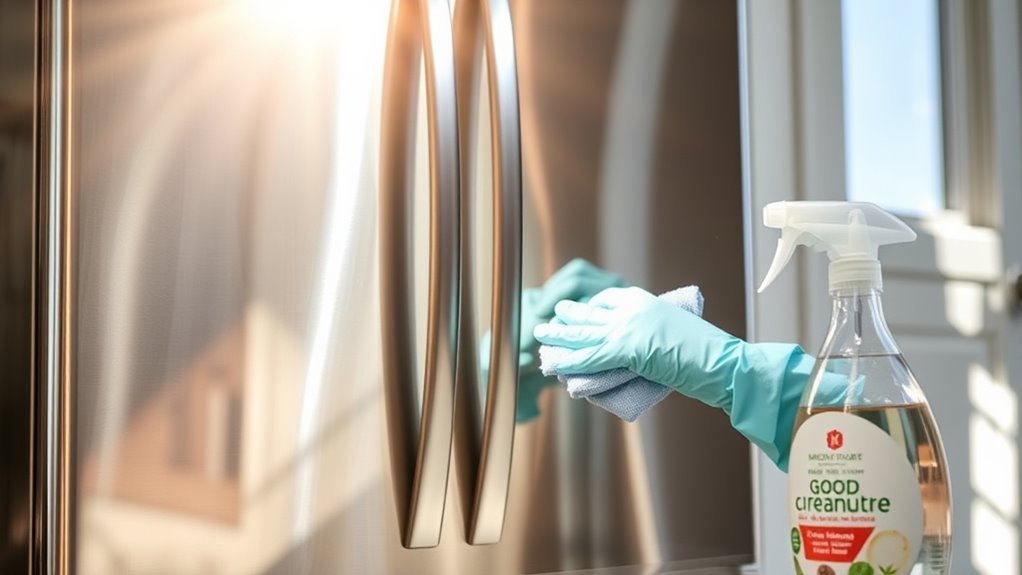
Now that you know where grease stains typically come from, it’s important to have the right tools and supplies on hand to tackle them effectively. Start with quality cleaning cloths—they’re essential for wiping away loosened grease without scratching your refrigerator’s surface. Microfiber cloths work especially well because they trap dirt and grease effortlessly. You’ll also want a couple of scrub brushes with soft to medium bristles. These help you reach stubborn stains in crevices and corners without damaging the finish. Don’t forget a gentle, grease-cutting cleaner or a mix of natural ingredients like vinegar and baking soda. Having these tools ready gives you the freedom to clean quickly and efficiently, keeping your fridge spotless without hassle.
Preparing Your Refrigerator Surface for Cleaning

Before you start removing grease stains, it’s important to prepare your refrigerator’s surface properly. Surface preparation sets the stage for effective cleaning techniques, ensuring grime lifts easily without damage. Begin by unplugging the fridge to avoid electrical hazards. Next, clear away any magnets, notes, or decorations—this gives you full access to every greasy spot. Wipe down the surface with a dry cloth to remove loose dust and crumbs. Finally, gather your cleaning tools nearby to keep the process smooth and efficient. Here’s your quick checklist for prepping:
Properly prep your refrigerator by unplugging, clearing decorations, and dusting for easier grease stain removal.
- Unplug the refrigerator for safety
- Remove all items stuck on the surface
- Use a dry cloth to dust off loose debris
- Identify the grease stain areas clearly
- Organize your cleaning supplies within reach
This surface preparation helps you clean smarter, not harder.
Using Dish Soap and Warm Water Effectively
When you combine dish soap with warm water, you get a simple yet powerful solution that cuts through grease effectively. The dish soap benefits come from its grease-fighting molecules that break down oily residues, making it easier to wipe them away. Make sure the warm water temperature is just right—comfortably warm but not hot—to maximize the soap’s ability to dissolve grease without damaging your refrigerator’s surface. Mix a few drops of dish soap into a bowl of warm water, then dip a soft cloth or sponge into the solution. Wring out the excess water to avoid drips, then gently scrub the greasy spots. This method frees you from harsh chemicals while keeping your fridge clean and fresh with minimal effort.
Applying Baking Soda for Tough Grease Spots

Tackle stubborn grease spots by applying baking soda, a natural abrasive that gently lifts grime without scratching your refrigerator’s surface. You’ll appreciate how simple and effective this method is for grease removal. Here’s how you can use baking soda for tough stains:
- Mix baking soda with a small amount of water to form a paste.
- Apply the paste directly onto the grease spot.
- Let it sit for 10-15 minutes to break down the grease.
- Gently scrub with a soft cloth or sponge in circular motions.
- Wipe clean with a damp cloth and dry thoroughly.
This approach gives you freedom from harsh chemicals while restoring your fridge’s shine effortlessly. Baking soda’s gentle power guarantees your refrigerator stays clean and scratch-free.
Utilizing Vinegar Solutions for Grease Removal
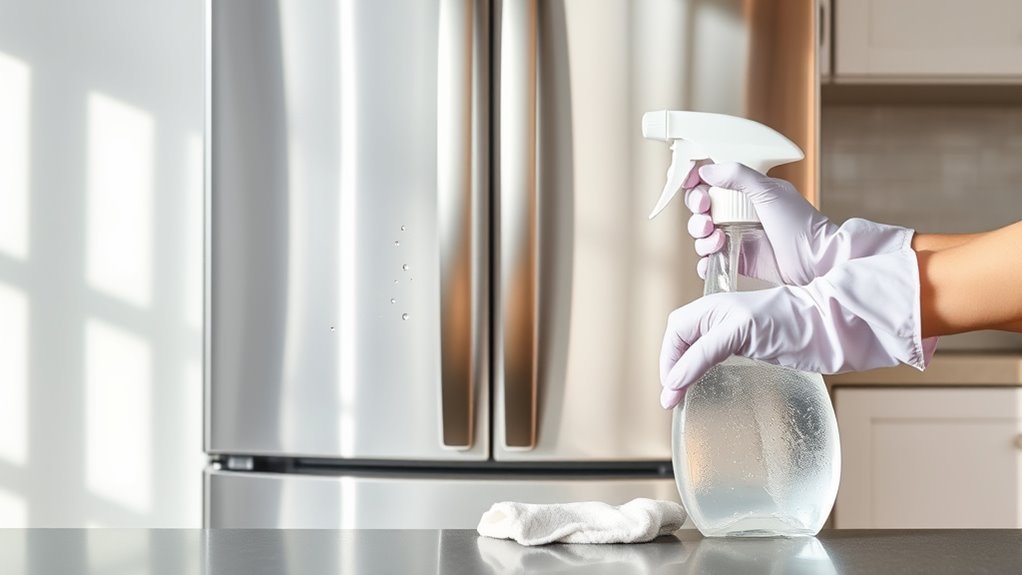
Although vinegar might seem like a simple kitchen staple, it’s surprisingly effective at cutting through grease on your refrigerator. You can harness vinegar benefits by mixing equal parts white vinegar and water in a spray bottle—this creates a powerful, natural cleaning solution. Spray it directly onto greasy spots, let it sit for a few minutes, then wipe away with a clean cloth. This method not only removes stubborn grease but also deodorizes and disinfects without harsh chemicals. Using vinegar in your cleaning solutions gives you the freedom to keep your fridge spotless while avoiding toxins. Plus, it’s affordable and easy to find. So next time grease builds up, reach for vinegar and reclaim your kitchen’s fresh, clean feel effortlessly.
The Role of Commercial Degreasers
When tackling tough grease stains, commercial degreasers can be a real lifesaver. You’ll find different types designed for various surfaces, so it’s important to choose the right one and apply it properly. Just make sure you follow safety guidelines to protect yourself and your fridge.
Types of Degreasers
Since grease stains can be stubborn, choosing the right degreaser makes a big difference in how easily you’ll remove them. You want a solution that fits your style—whether you lean toward eco-friendly biodegradable options or need the power of strong industrial products. Knowing your choices frees you to tackle stains effectively without compromise.
Here are common types of degreasers you might consider:
- Biodegradable Degreasers: Eco-friendly and safe for the environment.
- Solvent-Based Degreasers: Great for heavy-duty grease removal.
- Water-Based Degreasers: Versatile and easy to rinse off.
- Industrial Degreasers: Designed for tough, commercial-grade stains.
- Natural Degreasers: Made from ingredients like citrus or vinegar for gentle cleaning.
Pick what fits your needs and lifestyle—freedom in cleaning starts with the right degreaser.
Application Techniques
If you want to tackle tough grease stains on your refrigerator effectively, understanding how to apply commercial degreasers is key. Start by choosing the right spray techniques: hold the bottle about 6-8 inches from the surface, and apply a fine, even mist to avoid over-saturating. Let it sit for a few minutes to break down grease. Next, pick the best cloth types—microfiber cloths work wonders because they trap grime without scratching. Use gentle circular motions to wipe away loosened grease, flipping the cloth frequently to avoid spreading residue. For stubborn spots, a soft-bristle brush can help. By mastering these application techniques, you’ll keep your fridge spotless and enjoy the freedom of a clean kitchen without harsh scrubbing.
Safety Precautions
Although commercial degreasers are powerful tools for removing stubborn grease stains, you’ll need to handle them with care to guarantee your safety and protect your refrigerator’s finish. Prioritizing chemical safety is essential since these products often contain strong agents that can harm your skin, eyes, or respiratory system. Always wear appropriate protective gear, like gloves and goggles, to shield yourself during use. Ventilate the area well to avoid inhaling fumes and test the degreaser on a small, hidden spot first to prevent damage. Here’s how to stay safe:
- Use gloves and eye protection
- Work in a well-ventilated space
- Avoid mixing chemicals
- Follow label instructions strictly
- Keep degreasers out of children’s reach
This way, you maintain freedom while cleaning efficiently and safely.
Preventative Tips to Avoid Future Grease Stains
To keep your refrigerator looking clean and grease-free, you’ll want to adopt a few simple habits that prevent stains before they start. Practicing preventative maintenance is key—wipe up spills immediately and avoid placing greasy items directly on surfaces. Regular inspections help you catch any buildup early, making cleaning less of a chore and protecting your fridge’s finish. Use liners or mats on shelves to shield against drips and crumbs. Also, be mindful when handling oily foods; use containers with secure lids to minimize leaks. By staying proactive and attentive, you free yourself from stubborn stains and keep your refrigerator fresh and inviting. These small actions give you control and ease, ensuring your kitchen stays a space of freedom, not frustration.
Maintaining a Sparkling Refrigerator Surface Regularly
Keeping your refrigerator surface sparkling requires consistent care, but it doesn’t have to take much time. Sticking to a simple cleaning schedule helps you stay on top of surface maintenance without feeling overwhelmed. By making it a regular habit, you’ll prevent grease build-up and keep your fridge looking fresh and inviting.
Try these quick tips for effortless upkeep:
- Wipe down the exterior weekly with a damp microfiber cloth.
- Use mild detergent or vinegar solutions to cut grease without harsh chemicals.
- Dry surfaces immediately to avoid streaks and water spots.
- Clean handles and high-touch areas more frequently.
- Schedule a monthly deep clean to tackle hidden grime.
With this routine, you’ll enjoy a spotless fridge surface, freeing up your time for what truly matters.
Frequently Asked Questions
Can Grease Stains Damage My Refrigerator’S Finish Permanently?
You might wonder if those stubborn grease stains could ruin your fridge’s finish forever. The truth? If left unchecked, they can cause lasting damage. But don’t worry—you’ve got the power with the right grease removal techniques. Regular refrigerator maintenance tips, like quick cleaning with gentle solutions, help keep it looking fresh and free. Stay on top of stains, and your fridge will keep shining as the heart of your kitchen freedom!
Are There Any Natural Oils That Help Remove Grease Stains?
You might think natural oils like coconut oil or olive oil could help remove grease stains, but they usually do the opposite—they tend to add more oiliness and make stains worse. Instead, you’ll want to steer clear of these oils for cleaning tasks. If you’re craving a natural solution, try using a mix of baking soda and water or vinegar. That way, you keep your space fresh without trapping yourself in oily residue.
How Often Should I Deep Clean the Inside of My Fridge?
You should stick to a cleaning schedule that includes deep cleaning your fridge every three to four months. This keeps odors at bay and prevents buildup, making your fridge feel fresh and organized. As maintenance tips, wipe spills immediately and regularly check expiration dates to avoid messes. Keeping up with this routine gives you freedom from last-minute scrambles and keeps your fridge running smoothly, so you can focus on enjoying life without hassle.
Can Grease Stains Cause Odors Inside the Refrigerator?
Yes, grease stains can definitely cause grease odors inside your refrigerator. When grease builds up, it traps food particles and bacteria, leading to unpleasant smells that can linger. Keeping up with regular refrigerator maintenance helps you avoid this problem and keeps your fridge smelling fresh. You don’t have to be stuck with funky odors—just make cleaning a part of your routine and enjoy the freedom of a clean, odor-free fridge.
Is It Safe to Use Bleach on Refrigerator Grease Stains?
You’re probably wondering if bleach is safe for tackling those stubborn grease stains. While bleach can disinfect, it’s pretty harsh and might damage surfaces or leave strong odors. Instead, consider bleach alternatives like vinegar or baking soda—they’re great for grease removal and won’t harm your fridge. Using these options keeps things fresh and safe without restricting your freedom to clean effectively and naturally.