Removing Stains From Attic Effectively
To remove attic stains effectively, first identify the stain type—water, mold, or pest-related—to choose the right cleaner. You’ll need gloves, masks, mild detergents, or natural remedies like vinegar or baking soda. Clear the area, ventilate well, and test solutions on a small spot before full application. Address moisture sources to prevent recurrence. For tough or mold-infested stains, professional help might be necessary. Keep going to explore detailed stain treatments and prevention tips.
Identifying Common Types of Attic Stains
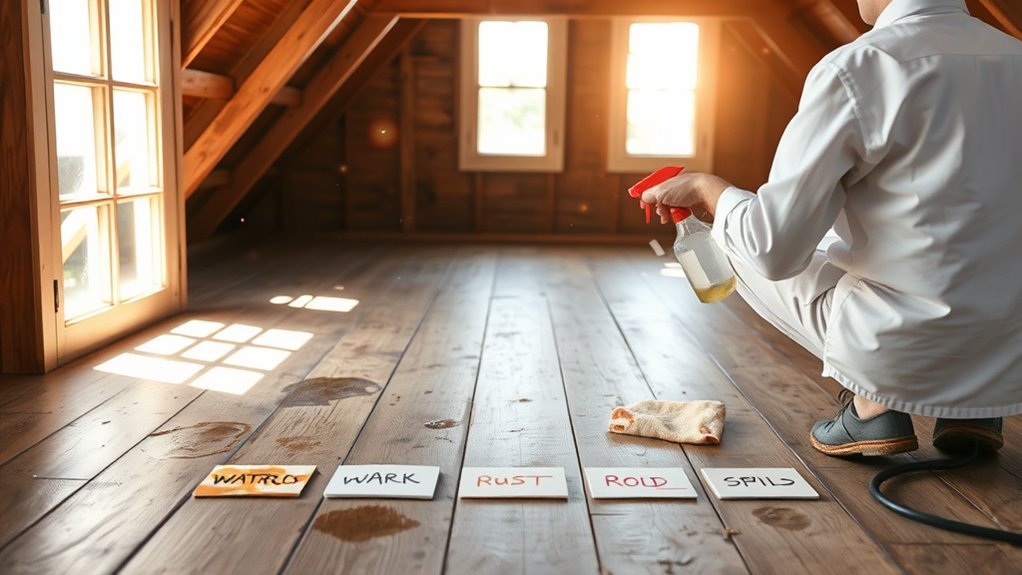
Before you can effectively remove stains from your attic, you need to identify the common types you’re dealing with. Attic stains often result from various types of discoloration, each indicating different underlying issues. You might see yellow or brown water stains caused by attic moisture due to roof leaks or poor ventilation. Mold and mildew present as dark spots or patches, signaling persistent dampness that needs attention. Rust stains can appear around metal fixtures, suggesting condensation problems. In some cases, you may encounter stains from animal droppings or dirt, which require different removal techniques. By recognizing these types of discoloration early, you gain the freedom to choose the right cleaning method and prevent further damage to your attic space.
Assessing the Extent of Stain Damage
When you’re ready to tackle attic stains, you need to assess how extensive the damage is to plan your approach effectively. Begin your stain assessment by inspecting all affected surfaces carefully—ceilings, walls, beams, and insulation. Look for discoloration, size, and spread of the stains to determine severity. Use a flashlight to reveal hidden spots in dark corners. Damage evaluation isn’t just visual; consider if moisture or mold is present, as this can worsen the problem and require specialized treatment. Document your findings to prioritize areas needing urgent attention. This methodical assessment guides you in choosing the right cleaning techniques and prevents overlooking hidden damage. By conducting a thorough damage evaluation, you gain control and freedom to restore your attic efficiently and safely. Also, ensuring proper attic ventilation can help prevent further moisture-related stains and damage.
Gathering Essential Cleaning Supplies
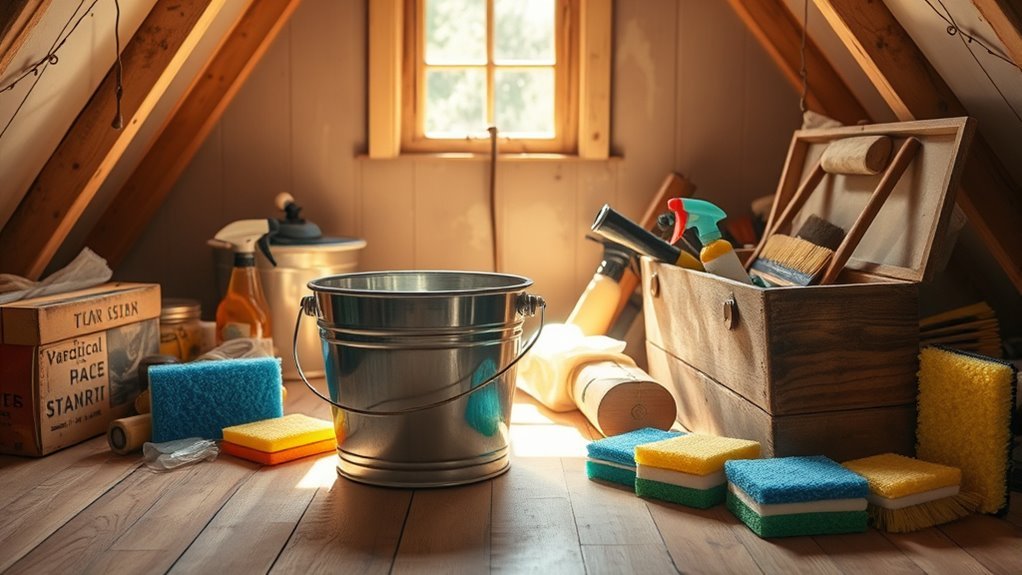
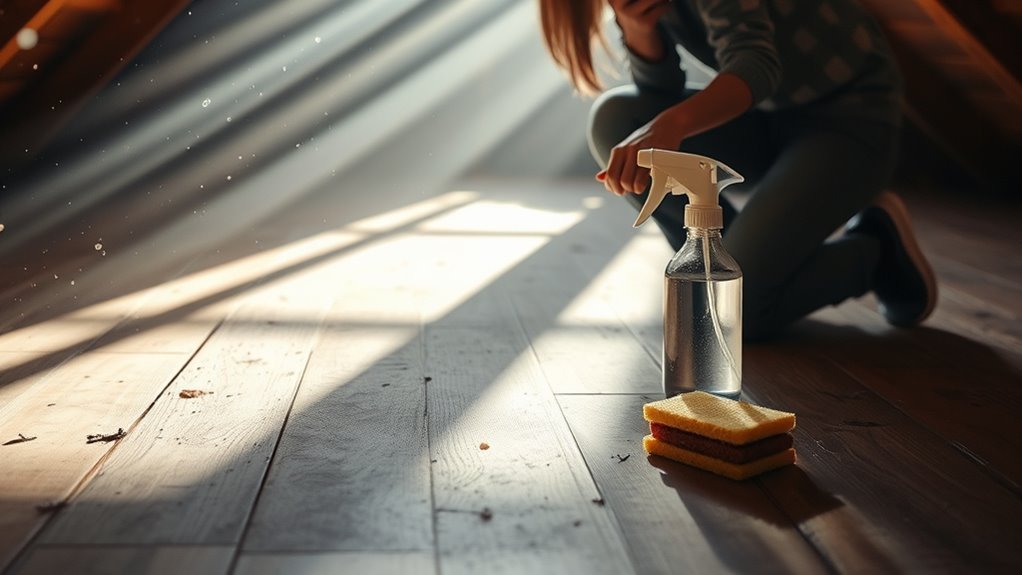
Three key types of cleaning supplies are essential for tackling attic stains effectively: protective gear, cleaning agents, and tools. Start by assembling your cleaning checklist to guarantee you don’t miss any essential tools. Protective gear like gloves, a mask, and goggles will guard you against dust and chemicals. For cleaning agents, choose stain removers suitable for your attic’s surface—mild detergents or specialized products depending on the stain type. Essential tools include scrub brushes, sponges, and spray bottles. A vacuum with a HEPA filter can help remove loose debris before treatment. Having everything ready means you can work efficiently and safely, maintaining your freedom to manage the project without interruptions. Stick to your checklist to stay organized and focused throughout the cleaning process. Additionally, using natural detergents can be an eco-friendly and skin-safe option when selecting cleaning agents.
Preparing the Attic for Cleaning
Before you start cleaning, make certain to clear out any debris from the attic to create a safe workspace. Next, guarantee proper ventilation by opening windows or using fans to keep air flowing. These steps will help you clean effectively and avoid inhaling dust or fumes.
Clear Out Debris
Start by removing all loose debris from your attic to create a clean workspace. Clearing out clutter is essential for effective attic organization and stain removal. Focus on debris disposal to prevent dust and allergens from spreading.
Here’s what you should do:
- Collect and bag all loose insulation scraps and dust.
- Remove old boxes, broken items, and unused materials.
- Sweep or vacuum floors and corners thoroughly.
- Check for and discard any moldy or water-damaged debris.
- Organize remaining items neatly to maximize space.
Ensure Proper Ventilation
Although clearing out debris is essential, you’ll also need to guarantee proper ventilation in your attic to maintain air quality and prevent moisture buildup during cleaning. Effective ventilation techniques are key to ensuring fresh air circulation, which helps in drying surfaces and reducing the risk of mold growth. Start by opening any existing vents or installing temporary fans to boost airflow. Position fans strategically to create a cross breeze, improving air circulation throughout the space. This not only keeps the environment safe but also speeds up stain removal by preventing dampness. Remember, good ventilation protects both your health and the attic’s structural integrity. By prioritizing ventilation techniques, you’ll create a cleaner, drier attic ready for effective stain treatment and long-term maintenance.
Removing Water Stains From Attic Surfaces
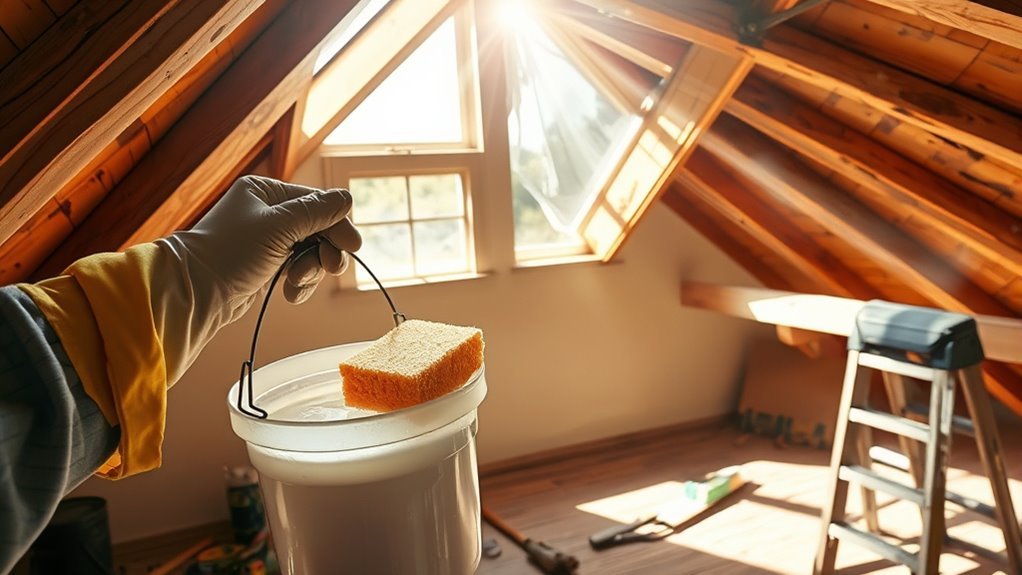
When you notice water stains on your attic surfaces, it is crucial to address them promptly to prevent mold growth and structural damage. Ignoring water damage can lead to costly ceiling repairs and weakened support beams. To effectively remove these stains, follow these steps:
- Identify and fix the source of the leak to stop further water damage.
- Dry the affected area thoroughly using fans or dehumidifiers.
- Clean the stained surfaces with a mixture of water and mild detergent.
- Apply a stain-blocking primer to prevent the water stain from reappearing.
- Repaint or replace damaged ceiling materials if necessary.
Treating Mold and Mildew Stains Safely
You’ll want to start by accurately identifying mold and mildew stains, as each requires specific treatment. Use protective gear and choose safe cleaning solutions like diluted vinegar or specialized mold removers. Taking these precautions will help you remove stains effectively without risking your health. Always ensure proper ventilation during cleaning to reduce the spread of mold spores and maintain air quality.
Identifying Mold and Mildew
Mold and mildew stains often appear as black, green, or white specks or patches on attic surfaces, signaling moisture problems. To protect your space, you need solid mold identification techniques and mildew prevention strategies. Start by inspecting areas with poor ventilation or water leaks. Use these tips for clear identification:
- Look for fuzzy or slimy textures.
- Note musty or damp odors.
- Check for discoloration around insulation or wood.
- Use a flashlight to spot hidden growth.
- Consider moisture meters to detect dampness.
Recognizing these signs early helps you act quickly, preventing further damage. Knowing the difference between mold and mildew empowers you to maintain a healthier attic environment and enjoy your home’s freedom without worry.
Safe Cleaning Methods
Once you’ve identified mold or mildew in your attic, tackling the stains safely is the next step to prevent health risks and further damage. Start by wearing protective gear—gloves, goggles, and a mask—to avoid inhaling spores. Choose eco friendly products or DIY solutions like a mixture of white vinegar and water. Spray the affected area, let it sit for 15 minutes, then scrub gently with a brush. Avoid harsh chemicals that can harm your health and attic materials. Guarantee proper ventilation throughout the process to disperse fumes and moisture. After cleaning, dry the area thoroughly to inhibit regrowth. Regularly inspect your attic to catch stains early, and maintain dryness to keep mold and mildew at bay. This method keeps you safe and your attic stain-free.
Cleaning Stains Caused by Pests and Insects
Although pest and insect stains in your attic can be stubborn, addressing them promptly prevents further damage and health risks. Start by identifying the affected areas and wearing protective gear. Then, follow these steps to clean effectively:
- Remove droppings and debris using a vacuum with a HEPA filter.
- Apply an enzyme-based cleaner to break down organic stains.
- Scrub gently with a brush to avoid damaging surfaces.
- Rinse with water and dry thoroughly to prevent mold growth.
- Implement pest prevention and insect control measures to avoid recurrence.
Using Natural Remedies for Attic Stain Removal
You can tackle attic stains using common natural remedies like vinegar, baking soda, and lemon juice. Applying these solutions properly involves testing a small area first and gently scrubbing the stain. Choosing eco-friendly options not only protects your attic materials but also reduces harmful chemical exposure.
Common Natural Stain Removers
When tackling stains in your attic, natural remedies can offer effective and safe solutions without harsh chemicals. Common natural stain removers are versatile, easy to find, and gentle on surfaces. Here are five you should consider:
- Baking soda: Absorbs odors and lifts stains when mixed into a paste.
- Vinegar solution: A mix of white vinegar and water that breaks down grime and mildew.
- Lemon juice: Acts as a natural bleach and deodorizer.
- Hydrogen peroxide: Disinfects and lightens stubborn stains.
- Castile soap: A gentle cleanser that works well on various stain types.
Using these natural options lets you maintain your attic’s integrity while keeping your space toxin-free and fresh.
Application Techniques for Stains
Since natural stain removers are gentle yet effective, applying them correctly is key to achieving the best results in your attic. Start by testing your chosen cleaning product recommendations on a small, hidden area to guarantee no damage occurs. Use a soft brush or cloth to apply the natural solution evenly, focusing on the stained spots with moderate pressure. Allow the remedy to sit for 10-15 minutes to break down the stain. Next, gently scrub using circular motions to lift the stain without harming surfaces. Rinse the area with clean water and dry thoroughly to prevent moisture buildup. These stain removal techniques help preserve attic materials while effectively clearing stains, giving you freedom from harsh chemicals and maintaining your attic’s integrity.
Benefits of Eco-Friendly Solutions
Mastering application techniques with natural stain removers sets the stage for understanding why eco-friendly solutions are worth choosing. When you opt for eco friendly products, you’re embracing sustainable practices that protect both your home and the environment. These natural remedies reduce harmful chemical exposure, ensuring safer indoor air quality. Plus, they often cost less and are biodegradable, minimizing waste and pollution. Here’s why going green makes sense:
- Non-toxic ingredients safeguard your health
- Biodegradable formulas prevent environmental damage
- Cost-effective compared to harsh chemical cleaners
- Supports sustainable practices for long-term impact
- Safer for pets and children around your attic space
Preventative Measures to Avoid Future Stains
Although stains can be removed from your attic, preventing them in the first place is far more effective. You should focus on preventative maintenance by sealing leaks, improving ventilation, and controlling moisture levels. Regular inspections help identify potential issues early, such as roof damage or plumbing leaks, before they cause stains. Check your attic after heavy rain or snow to catch problems quickly. Installing vapor barriers and ensuring proper insulation reduces condensation buildup, which often leads to staining. By staying proactive with these measures, you maintain a cleaner, healthier attic space and avoid costly repairs. Taking control through consistent upkeep gives you the freedom to enjoy your home without worrying about recurring attic stains. Prevention is key to long-term stain management and overall attic health. Additionally, setting up a maintenance schedule to check your attic regularly can help you stay ahead of any developing problems.
When to Call a Professional for Stain Removal
Even with the best preventative steps, some stains may require professional attention. Knowing when to call professional services can save you time, effort, and potential damage. A thorough stain assessment is essential before deciding to tackle the problem yourself or seek help.
Consider contacting professionals if you notice:
- Large or persistent stains that don’t respond to cleaning
- Stains accompanied by mold or strong odors
- Damage to insulation or structural materials
- Uncertainty about the stain’s source or composition
- Previous unsuccessful DIY stain removal attempts
Relying on expert stain assessment guarantees the right methods are applied, protecting your attic and your freedom from ongoing issues. Don’t hesitate to call a pro when stains impact your attic’s safety or appearance beyond your control. It’s also important to understand that mold is a common allergy trigger, causing symptoms that can affect your health and well-being.
Frequently Asked Questions
Can Attic Stains Affect Home Insurance Coverage?
You might think attic stains are as harmless as a single dust speck, but they can seriously impact your insurance claims. If the stains indicate underlying damage, insurers could limit your coverage or even deny claims related to that area. It’s essential to address these issues promptly because coverage limits often depend on the home’s condition. Keeping your attic stain-free helps guarantee your policy works when you really need it.
How Do Attic Stains Impact Indoor Air Quality?
Attic stains often signal mold growth, which can seriously impact your indoor air quality. When mold develops, it releases spores that circulate through your home’s air, especially if your air circulation is poor. You’ll want to address these stains promptly because mold can trigger allergies and respiratory issues. Improving ventilation and removing mold sources will help you keep your indoor air fresh, giving you the freedom to breathe easier and live healthier.
Are There Stain Removal Methods Safe for Old Insulation?
When tackling those unwelcome marks, you’ll want to choose a gentle approach that respects your attic’s delicate charm. Safe cleaning methods, like using mild detergents or vinegar solutions, work well without disturbing insulation types such as fiberglass or cellulose. Avoid harsh chemicals that could compromise old insulation’s integrity. Always test a small area first, and consider protective gear to keep your freedom from irritants intact while preserving your attic’s cozy embrace.
What Are the Best Protective Gear for Attic Stain Cleaning?
When cleaning attic stains, you’ll want to wear protective gloves to shield your hands from harsh chemicals and contaminants. Safety goggles are essential to protect your eyes from dust, debris, and splashes. Consider a respirator mask to avoid inhaling harmful particles. Long sleeves and pants help defend your skin. This gear guarantees you stay safe and free to tackle the job without risking irritation or injury in tricky attic spaces.
How Long Does It Take for Stains to Reappear After Cleaning?
Imagine stains that cling like shadows at midnight—stubborn and relentless. The stain longevity depends on factors like moisture, ventilation, and type of stain. Usually, stains can reappear within months if conditions don’t improve. So, your cleaning frequency should be regular, perhaps biannual, to keep them at bay. By staying proactive, you’ll enjoy a fresher space and the freedom from constant worry about those pesky marks returning.